
Happy Wednesday everyone! Wednesdays also mean WWW Wednesday updates. WWW Wednesday is a bookish meme hosted originally by SAM@TAKING ON A WORLD OF WORDS.
The mechanics for WWW Wednesday are quite simple, you just have to answer three questions:
- What are you currently reading?
- What have you finished reading?
- What will you read next?

What are you currently reading?

Time is zooming fast. Just like that, we are nearly done with 2024. We are on the cusp of welcoming a new year. Before that, I hope the year has been kind to everyone. I hope everyone will end the year on a high note. I hope everyone has completed their goals or is on track to achieving them. I hope that everyone gets repaid for their hard work. I hope the remainder of the year will shower everyone with blessings and good news. More importantly, I hope everyone is doing well in body, mind, and spirit. Thankfully, I finished nearly all my reading goals this year. The only stain on my record is my 2024 Top 10 Books I Look Forward To List. I guess this is nothing new. Still, I am glad I could complete my 2024 Top 24 Reading List and my 2024 Beat the Backlist Challenge with ample time to spare. This allowed me to foray into other worlds.
Speaking of other worlds, 2024 is the first time I have not hosted a Japanese literature month in a while. The past few months have been chaotic, reading-wise. However, I am glad I was able to finally obtain my copy of a book I have been looking forward to, Haruki Murakami’s latest novel, The City and its Uncertain Walls which was originally published in Japanese last year. It is also his first novel since 2019, as such, the anticipation. At the heart of the novel is an anonymous male narrator. When the story started, he was seventeen and fell in love with a sixteen-year-old girl after they both won an essay writing contest. However, the girl kept the male protagonist at bay because her real self exists in a city beyond a wall. The structure and premise immediately reminded me of an older Murakami novel, Hard-Boiled Wonderland and the End of the World. Because this is Murakami’s universe, I was not surprised when the story digressed and pursued a different path although I surmise that these paths will eventually converge as the story progresses. I can’t wait to see how the story unfolds.
What have you finished reading?

With the year-end approaching, the past few weeks have been tedious because regulatory requirements are looming. I have been caught up in the preparation for them. Nevertheless, I try to find some time to read as many books as I can and I am glad I was able to complete three books. My December reading month has been quite prolific, ironically. The first of the three books I finished was Hiromi Kawakami’s Under the Eye of the Big Bird. I wasn’t even aware that Kawakami is releasing a new translated book this year but when I came across the book during one of my ventures into the bookstore, I bought the book without further ado. I have been meaning to explore Kawakami’s oeuvre ever since my not-so-satisfactory encounter with The Nakano Thrift Shop which I read back in 2019.
Structurally, Under the Eye of the Big Bird is almost akin to The Nakano Thrift Shop. They are comprised of interconnected vignettes. Both offer a different dimension of Kawakami’s body of work. Set thousands of years into the future, Kawakami’s latest translated novel paints a grim portrait of humanity. The human race is on the cusp of extinction. Once powerful nation-states have been dismantled. In a bid to survive, humans reform into small and isolated societies across the globe. There is very little contact between the communities. The chapters comprising the novel are narrated by different beings who provide glimpses into how the future looks. The beings are generally human-like but differences have also evolved. Some of the characters developed remarkable powers such as the ability to “scan” (read) other people’s minds while some beings’ physical attributes have been greatly altered. A major concern among the denizens of this imagined future is the ability to procreate. Natural procreation was a rarity while various forms of artificial life-creation are more prevalent. The book is less focused on the characters but more on the dynamics of the world that Kawakami conjured. The fragmented structure can be disorienting but Kawakami’s worldbuilding was fascinating. The vivid descriptions made it come alive.
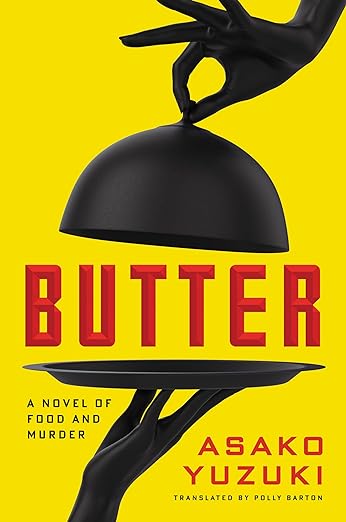
As mentioned above, I was not able to hold a Japanese literature month this year. Because of this, I have decided to have a mini-foray into works of Japanese literature to close the reading year. I noticed that recently, a spate of Japanese works have been made available to Anglophone readers. Among these books is Asako Yuzuki’s Butter. I had not heard of Yuzuki until early this year when Butter was ubiquitous; I kept encountering it whenever I dropped by the bookstore. This naturally piqued my interest. Curious about what the book has in store, I obtained a copy of the book and made it part of my mini-Japanese literature run.
At the heart of Butter is Rika Machida, a young journalist working for a men’s magazine. Born and raised in Tokyo, Rika is the only woman in her news office Rika was often assigned to work on the most controversial pieces but she rarely gets credit as the credits are given to the editorial board. Nevertheless, she is adamant in her pursuit of becoming the first woman on the editorial board. Rika finds comfort in the company of her best friend Reiko. The crux of the story, however, was the upcoming retrial of gourmet cook Manako Kajii, otherwise known as Kajimana, who was convicted of killing three of her lovers. Her lovers share a common denominator: they are lonely businessmen who are beyond their forties and are in want of a female companion, regardless of how she looks; Kajimana is not conventionally attractive. She is fat and is not the type that the victims’ families think their murdered family member would date. It is alleged that Kajimana seduced them with her cooking. Because of her exterior, Kajimana was subjected to prejudice, especially when her case became a national sensation. The novel, however, was not an indictment on Kajimana’s character. Her case, however, was a crucible through which the grander subject of misogyny in Japanese society is explored. The novel, however, has the tendency to meander but, overall, it was a riveting read. Kajimana was quite the character.
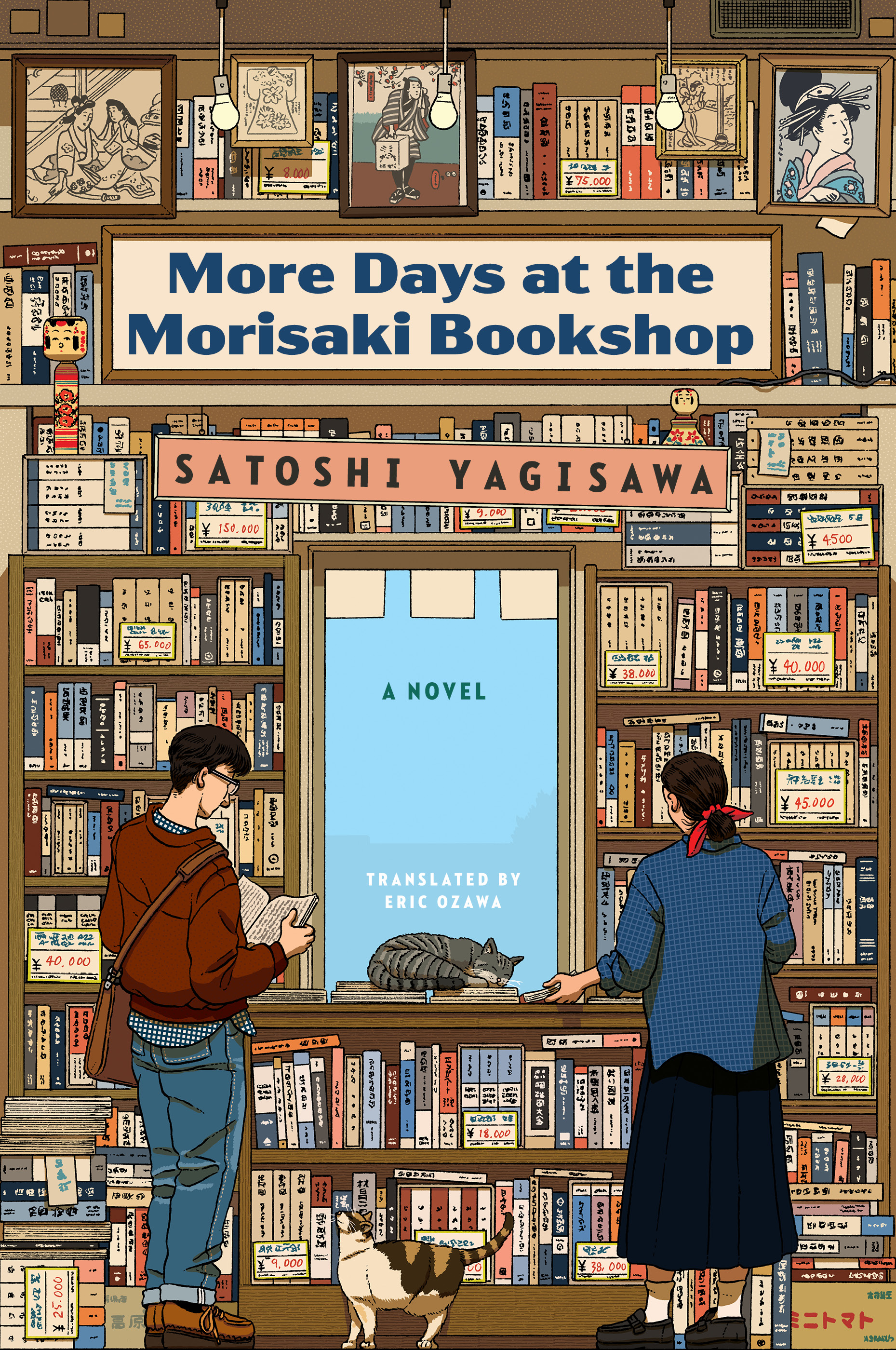
My three-book stretch was capped by a familiar name, at least I was introduced to him in the past year. Satoshi Yagisawa’s Days at the Morisaki Bookshop, like Butter, was ubiquitous when it was released last year. I couldn’t resist the temptation of reading the book; I actually read it while I was in Tokyo. Too bad I was not able to allot time to visit Jimbocho where the story was set. I liked the heartwarming story and when its sequel, More Days at the Morisaki Bookshop, was released, I was looking forward to it. Thankfully, I was able to obtain a copy of More Days at the Morisaki Bookshop without a hitch. It was my Christmas Day read and I was able to read it in one sitting.
More Days at the Morisaki Bookshop reintroduces the readers to Takako, the heroine of the first book. After a rough patch following a heartbreak, she was able to pick up the pieces and heal from her heartbreak while looking after the titular Morisaki Bookshop run by her uncle Satoru. Despite moving to a different part of the city, Takako occasionally visits the bookshop. Morisaki Bookshop remains unchanged, for the most part. Bookshop regulars still drop by if not to buy books but to converse with Satoru. Saveur, the community coffee shop, is still teeming with activities. Life goes on as usual. However, the reappearance of Satoru’s wife Momoko altered the dynamics a little bit; five years ago, she abandoned her husband without even uttering goodbye. While the first book focused on Takako and her uncle, the second book expanded and included the other members of the community. Wada, Takako’s lover, was planning to write his own novel. Takano was dealing with his own heartbreak. And then there is Momoko. The mystery behind her sudden disappearance was slowly brought to light. It drove the story toward a devastating and heartbreaking conclusion. Nevertheless, More Days at the Morisaki Bookshop maintains the sense of community that elevated its predecessor.
What will you read next?


 The Pine-Scented Chronicles