
And that’s a wrap for 2024. Happy New Year everyone! I hope 2025 will be a great year for everyone. May it be a year brimming with positive changes, growth, development, life-changing lessons, and blessings.

As we wave December and 2024 goodbye, I fervently hope you have achieved all your goals for the year. I hope your hard work gets repaid. If it goes otherwise, I hope the new year will provide you with the plot twist you have been hoping for. I hope 2025 will go everyone’s way and everyone’s wishes and prayers will be answered. But before I could wave 2024 goodbye, let me share the book titles I acquired during the month. I will be dividing my book haul into two parts. The first part features books originally written in a language other than English. Without ado, here is the first part of my December book haul.

Title: The City and Its Uncertain Walls
Author: Haruki Murakami
Translator (from Japanese): Philip Gabriel
Publisher: Harvill Secker
Publishing Date: 2024 (2023)
No. of Pages: 445
Synopsis:
When a young man’s girlfriend mysteriously vanishes, he sets his heart on finding the imaginary city where her true self lives. His search will lead him to take a job in a remote village with mysteries of its own.
When he finally makes it to the walled city, a shadowless place of horned beasts and willow trees, he finds his beloved working in a different library – a dream library. But she has no memory of their life together in the other world and, as the lines between reality and fantasy start to blur, he must decide what he’s willing to lose.
A love story, a quest, an ode to books and to the libraries that house them, The City and Its Uncertain Walls is a parable for these strange times.

Title: My Name is Red
Author: Orhan Pamuk
Translator (from Turkish): Erdağ M. Göknar
Publisher: Faber and Faber
Publishing Date: 2001 (1998)
No. of Pages: 666
Synopsis:
In Istanbul, in the late 1590s, the Sultan secretly commissions a great book: a celebration of his life and his empire, to be illuminated by the best artists of the day. But when one of the miniaturists is murdered, their master has to seek outside help. Did the dead painter fall victim to professional rivalry, romantic jealousy or religious terror?
A thrilling murder mystery, My Name is Red is also a stunning meditation on love, artistic devotion and the tensions between East and West.

Title: The Flounder
Author: Günter Grass
Translator (from German): Ralph Manheim
Publisher: Harcourt, Inc.
Publishing Date: 1989 (1977)
No. of Pages: 547
Synopsis:
Five years before his fiftieth birthday, Günter Grass decided that he would write a major novel as a present for himself. The Flounder, punctually finished, was immediately recognized as “a work of that elemental originality which made The Tin Drum a literary event” (Neue Zurcher Zeitung). It also became an instant best seller.
It all begins in the Stone Age, when a talking fish is caught by a fisherman, at the very spot where millennia later Grass’s home town, Danzig, will arise. Like the fish, the fisherman is immortal. Down the ages they move together, from matriarchy to patriarchy, the latter brought about by the Flounder’s insidious counseling to the males held under female subjection.
Despite the Flounder’s advice the narrator remains subject to women – all of them cooks. To his pregnant wife, the insatiable Ilsebill, he tells the tales of his entanglements with cooks throughout his various lifetimes, one cook for each month of pregnancy, with two more thrown in for good measure.
Parallel to his tales runs a contemporary story: the Flounder has again allowed himself to be caught, this time by a woman, who promptly recognizes his insidiousness and brings him before a Women’s Tribunal, where he is tried for treacherous male chauvinism.
The relationship of the sexes in the in the periods when men made history and women’s contribution went largely unacknowledged, and the history and importance of nutrition throughout the ages, form the two great themes of the novel. As he blends his ingredients into a powerful brew, Grass shows himself at the peak of his linguistic inventiveness, with ingenious construction and imaginative richness and scope, buoyed throughout by irreverent, frequently outrageous Rabelaisian humor.
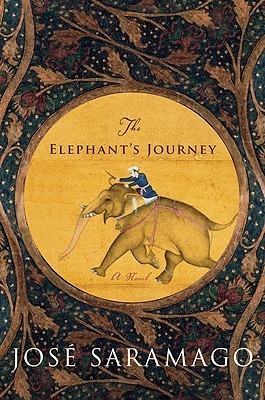
Title: The Elephant’s Journey
Author: José Saramago
Translator (from Portuguese): Margaret Jull Costa
Publisher: Houghton Mifflin Harcourt
Publishing Date: 2010 (2008)
No. of Pages: 205
Synopsis:
In 1551, King João III of Portugal decided to give Archduke Maximilian an unusual wedding present: an elephant named Solomon, along with his keeper, Subhro. The two have been living in dismal conditions, forgotten in a corner of the palace grounds. When it occurs to the king and queen that an elephant might be an appropriate wedding gift, everyone rushes to get them ready: Subhro is given two new suits of clothes and Solomon a long-overdue scrub.
Accompanied by the archduke, his new bride, and the royal guard, our unlikely heroes traverse a continent riven by the Reformation and civil war. They make their way through the storied cities of northern Italy: Genoa, Piacenza, Mantua, Verona, Venice, and Trent, where the Council of Trent is in session. They brave the Alps and the terrifying Isarco and Brenner passes; they sail across the Mediterranean Sea and up the Inn River. (Elephants, it turns out, are natural sailors.) At last they make their grand entry into the imperial city of Vienna.
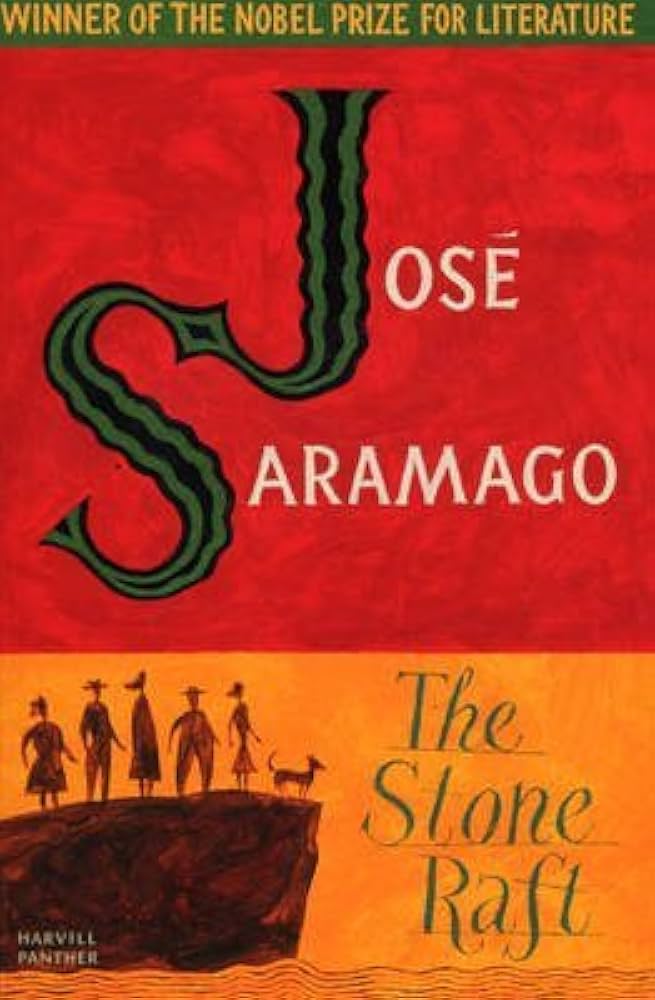
Title: The Stone Raft
Author: José Saramago
Translator (from Portuguese): Giovanni Pontiero
Publisher: The Harvill Press
Publishing Date: 2000 (1986)
No. of Pages: 263
Synopsis:
What if, one day, Europe was to crack along the length of the Pyrenees, separating the Iberian peninsula?
In Saramago’s lovely fable, the new island is sent spinning, like a great stone raft, towards the Azores. While the authorities panic and tourists and investors flee, three men, two women and a dog are drawn together by portents that burden them into a bemusing sense of responsibility. Travelling at first packed into a car, then into a wagon, they take to the road to explore the limits of their now finite land, adrift in a world made new by this radical shift in perspective.

Title: The Silent Angel
Author: Heinrich Böll
Translator (from German): Breon Mitchell
Publisher: Picador
Publishing Date: August 1995 (1992)
No. of Pages: 182
Synopsis:
Rejected by German publishers in 1950, this recently discovered first novel by Nobel Prize winner Heinrich Böll is a treasure for scholars, students, and contemporary readers.
Just days after the end of World War II, German soldier Hans Schnitzler returns to a bombed German city, carrying a dead comrade’s coat to his widow – not knowing that the coat contains a will. Soon Hans is caught in a dangerous intrigue involving the will; he also begins a tentative romance with another grieving woman, as together they seek an identity and a future together in the ruined city.
Raw and masterful, The Silent Angel summons the full horror of war, while affirming the human heart’s enduring strength.

Title: Out in the Open
Author: Jésus Carrasco
Translator (from Spanish): Margaret Jull Costa
Publisher: Riverhead Books
Publishing Date: 2017 (2013)
No. of Pages: 226
Synopsis:
A searing dystopian vision of a boy’s flight through an unnamed, savage country, searching for sanctuary and redemption – the bestselling debut from one of Europe’s rising literary stars.
A young boy has fled his home. He’s pursued by dangerous forces. What lies before him is an infinite, arid plain, one he must cross in order to escape those from whom he’s fleeing. One night on the road, he meets an old goatherd, a man who lives simply but righteously, and from that moment on, their fates are tied together.
Out in the Open tells the story of this journey through a drought-stricken country ruled by violence. A world where names and dates don’t matter, where morals have drained away with the water. In this landscape the boy – not yet a lost cause – has the chance to choose hope and bravery, or to live forever mired in the cycle of violence in which he was raised. Jésus Carrasco has masterfully created a high–stakes world, a dystopian tale of life and death, right and wrong, terror and salvation.

Title: Irretrievable
Author: Theodor Fontane
Translator (from German): Douglas Parmée
Publisher: New York Review of Books
Publishing Date: 2011 (1964)
No. of Pages: 256
Synopsis:
Opposites attract, and Helmut Holk and Christine Arne, the appealing married couple at the center of this engrossing book by one of Germany’s greatest novelists, could not be less alike. Christine is a serious soul from a devout background. She is brooding and beautiful and devoted to her husband and their two children. Helmut is lighthearted and pleasure-loving and largely content to defer to his wife’s deeper feelings and better wisdom. They live in a beautiful large house overlooking the sea, which they built themselves, and have been happily married for twenty-three years – only of late a certain tension has crept into their dealings with each other. Little jokes, casual enderaments, long-meditates plans: they all hit a raw nerve.
How a couple can slowly drift apart, until one day they find themselves in a situation which is nothing they ever wished for but from which they cannot go back, is at the heart of this timeless story of everyday life. Theodor Fontane’s great gift is to tell the story effectively in his characters’ own words, listening to how they talk and fail to tlk to each other, watching them turn away from their own true feelings as much as from each other. Irretrievable is nuanced, affectionate, enormously sophisticated, and profoundly humane reckoning with the blindness of love.
 The Pine-Scented Chronicles