Hello, readers! It is Monday again! As it is Monday, welcome to another #5OnMyTBR update. The rule is relatively simple. I must pick five books from my to-be-read piles that fit the week’s theme.
This week’s theme: No Prompt
Because there is no prompt this week, I decided to feature books whose English translations are to be released this year. This is in line with my goal of reading more translated works.

5OnMyTBR is a bookish meme hosted by E. @ Local Bee Hunter’s Nook where you chose five books from your to-be-read pile that fit that week’s theme. If you’d like more info, head over to the announcement post!
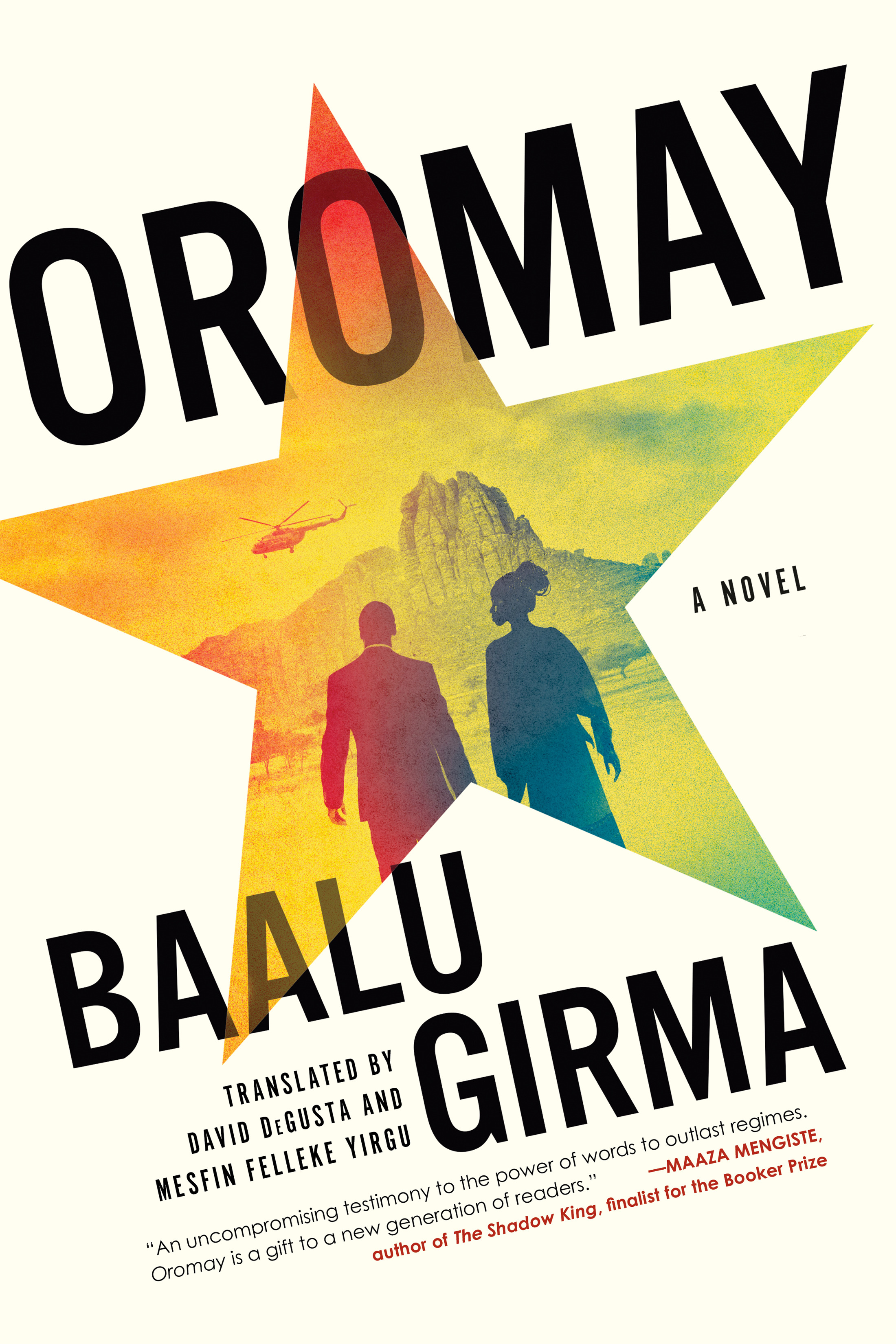
Title: Oromay
Author: Baalu Girma
Translator (from Amharic): David Degusta
Release Date: February 4
Synopsis:
A journalist finds himself embroiled in a disastrous government campaign as well as a sweeping romance in this landmark English translation of Ethiopia’s most famous novel.
An engrossing political thriller and a tale of love and war for readers of John Le Carré and Philip Kerr.
December 1981, Ethiopia. Tsegaye Hailemaryam, a well-known journalist for the state-run media, has just landed in Asmara. He is on assignment as the head of propaganda for the Red Star campaign, a massive effort by the Ethiopian government to end the Eritrean insurgency. There, amid the city’s bars and coffeehouses buzzing with spies and government agents, he juggles the demands of his superiors while trying to reassure his fiancée back home that he’s not straying with Asmara’s famed beauties.
As Tsegaye falls in love with Asmara—and, in spite of his promises, with dazzling, enigmatic local woman Fiammetta—his misgivings about the campaign grow. Tsegaye confronts the horror of war when he is sent with an elite army unit to attack the insurgents’ mountain stronghold. In the aftermath, he encounters betrayals that shake his faith in both the regime and human nature.
Oromay became an instant sensation when first published in 1983 and was swiftly banned for its frank depiction of the regime. The author vanished soon thereafter; the consensus is that he was murdered in retaliation for Oromay. A sweeping and timeless story about power and betrayal in love and war, the novel remains Girma’s masterpiece. (Source: Goodreads)
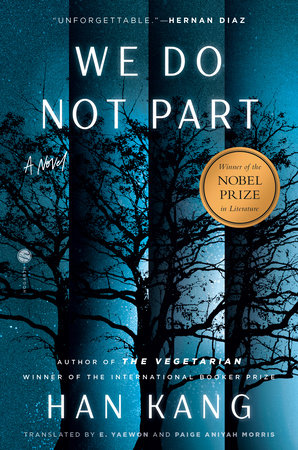
Title: We Do Not Part
Author: Han Kang
Translator (from Korean): Paige Aniyah Morris
Release Date: January 21
Synopsis:
Han Kang’s most revelatory book since The Vegetarian, We Do Not Part tells the story of a friendship between two women while powerfully reckoning with a hidden chapter of Korean history.
One winter morning, Kyungha receives an urgent message from her friend Inseon to visit her at a hospital in Seoul. Inseon has injured herself in an accident, and she begs Kyungha to return to Jeju Island, where she lives, to save her beloved pet—a white bird called Ama.
A snowstorm hits the island when Kyungha arrives. She must reach Inseon’s house at all costs, but the icy wind and squalls slow her down as night begins to fall. She wonders if she will arrive in time to save the animal—or even survive the terrible cold that envelops her with every step. Lost in a world of snow, she doesn’t yet suspect the vertiginous plunge into the darkness that awaits her at her friend’s house.
Blurring the boundaries between dream and reality, We Do Not Part powerfully illuminates a forgotten chapter in Korean history, buried for decades—bringing to light the lost voices of the past to save them from oblivion. Both a hymn to an enduring friendship and an argument for remembering,it is the story of profound love in the face of unspeakable violence—and a celebration of life, however fragile it might be. (Source: Goodreads)
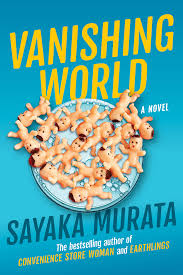
Title: Vanishing World
Author: Sayaka Murata
Translator (from Japanese): Ginny Tapley Takemori
Release Date: April 24
Synopsis:
From the author of the bestselling literary sensations Convenience Store Woman and Earthlings comes a surprising and highly imaginative story set in a version of Japan where sex between married couples has vanished and all children are born by artificial insemination
Sayaka Murata has proven herself to be one of the most exciting chroniclers of the strangeness of society, x-raying our contemporary world to bizarre and troubling effect. Her depictions of a happily unmarried retail worker in Convenience Store Woman and a young woman convinced she is an alien in Earthlings have endeared her to millions of readers worldwide. Vanishing World takes Murata’s universe to a bold new level, imagining an alternative Japan where attitudes to sex and procreation are wildly different to our own.
As a girl, Amane realizes with horror that her parents “copulated” in order to bring her into the world, rather than using artificial insemination, which became the norm in the mid-twentieth century. Amane strives to get away from what she considers an indoctrination in this strange “system” by her mother, but her infatuations with both anime characters and real people have a sexual force that is undeniable. As an adult in an appropriately sexless marriage—sex between married couples is now considered as taboo as incest—Amane and her husband Saku decide to go and live in a mysterious new town called Experiment City or Paradise-Eden, where all children are raised communally, and every person is considered a Mother to all children. Men are beginning to become pregnant using artificial wombs that sit outside of their bodies like balloons, and children are nameless, called only “Kodomo-chan.” Is this the new world that will purify Amane of her strangeness once and for all? (Source: Goodreads)

Title: The Café with No Name
Author: Robert Seethaler
Translator (from German): Katy Derbyshire
Release Date: February 25
Synopsis:
From one of Austria’s most beloved and best-selling authors, comes this vibrant tale of love, loss, and renewal set against the transformations of 1960s Vienna.
Summer 1966. Robert Simon is in his early thirties and has a to open a café. Raised in a home for war orphans run by the Sisters of Charity, Robert is warm-hearted, hard-working, and determined. When the corner café in the Carmelite market square closes, Robert realizes that his chance has come.
The place, dark and dilapidated, is in a poor neighborhood of the Austrian capital, but for some time now a new wind has been blowing, and the air is filled with an inexplicable energy and a desire for renewal. In the newspapers with which fishmongers wrap the char and trout from the Danube, one can read about great things to come, a bright future beginning to rise from the quagmire of the past. Enlivened by these promises, Robert refurbishes the café, painting the walls, varnishing the furniture, and polishing the stove plates. Rewarding Robert’s efforts and in search of a congenial place to gather, talk, read, or just sit and be, customers arrive, bringing their stories of passions, friendships, abandonments, and bereavements. Some are in search of company, others long for love, or just a place where they can feel understood. As the city is transformed, Robert’s cafe becomes at once a place of refuge and one from which to observe and rejoice.
Combining the enchantment of warm prose with tender humor, Robert Seethaler has written a charming parable of human existence animated by unforgettable characters and a kaleidoscope of human stories. (Source: Goodreads)

Title: The Director
Author: Daniel Kehlmann
Translator (from German): Ross Benjamin
Release Date: May 22
Synopsis:
An artist’s life, a pact with the devil, a novel about the dangerous illusions of the silver screen.
G.W. Pabst, one of cinema’s greatest, perhaps the greatest director of his when the Nazis seized power he was filming in France, to escape the horrors of the new Germany he flees to Hollywood. But under the blinding California sun, the world-famous director suddenly looks like a nobody. Not even Greta Garbo, who he made famous, can help him. And thus, almost through no fault of his own, he finds himself back in his homeland of Austria, which is now called Ostmark. The returning family is confronted with the barbaric nature of the regime. But Goebbels, the minister of propaganda in Berlin, wants the film genius, he won’t take no for an answer and makes big promises. While Pabst still believes that he will be able to resist these advances, that he will not submit to any dictatorship other than art, he has already taken the first steps into a hopeless entanglement.
Daniel Kehlmann’s novel about art and power, beauty and barbarism is a triumph. The Director shows what literature is capable of. (Source: Goodreads)
 The Pine-Scented Chronicles