
Hello, readers! It is Monday again! As it is Monday, welcome to another #5OnMyTBR update. The rule is relatively simple. I must pick five books from my to-be-read piles that fit the week’s theme.
This week’s theme: No Prompt
Because there is no prompt this week, I decided to feature books that won the Booker Prize.

5OnMyTBR is a bookish meme hosted by E. @ Local Bee Hunter’s Nook where you chose five books from your to-be-read pile that fit that week’s theme. If you’d like more info, head over to the announcement post!

Title: Rites of Passage
Author: William Golding
Publisher: Faber and Faber Limited
Publishing Date: 1981
No. of Pages: 278
Synopsis:
An ancient ship of the line converted to general purposes is making her way from the South of England to Australia. She carries a few guns, some cargo, some animals, some seamen, some soldiers, some emigrants and a few ladies and gentlemen. There is a clergyman of the Church of England. There is Wilmot Brocklebank, lithographer, marine artist and portrait painter. There is a young army officer.
Representing the higher echelons of administration is young Mr Talbot, setting out with utmost confidence towards a distinguished career. But the voyage teaches him some unexpected things. It affords him more opportunities for observing the ceremonies that mark a progress through life – more chances for a mixture of acute observation and sheer misjudgement – than he could possibly record in his journal; though, for his godfather’s entertainment, he tries his best. Though Talbot is mistaken in Deverel, instructed by Mr Summers, seduced by Miss Brocklebank, and shocked by Miss Granham, he finds it unnecessary in the event to keep an eye on Mr Prettiman. But it is a sadder and more responsible man who learns from the Reverend Robert James Colley what a bitter taste there is to remorse when it is unavailing.

Title: Hotel du Lac
Author: Anita Brookner
Publisher: Book Club Associates
Publishing Date: May 1985
No. of Pages: 184
Synopsis:
Edith Hope is in disgrace and working out her probation on the shores of Lake Geneva. Friends and family have banished her to seemly Swiss solitude – out of season – until such time as she may recover her lost senses. Her crime? It all subtly unfolds in Hotel du Lac.
Edith reminds herself that the hotel at least provides an excellent opportunity to finish writing her latest romantic novel. Fantasy and obfuscation are her business: they are also in her nature. In the quiet opulence of the Swiss dining room pampered widows languish in luxury, providing irresistible diversion to such an imaginative and compulsive observer: the carefully elegant Iris Pusey, ‘respectable duenna’, so utterly fulfilled in her desires that she prompts daring thoughts of possession even in the likes of someone as unprepossessing as Edith; Iris’s daughter Jennifer, determinedly gamine, who has inherited her mother’s profound, if good-natured, indifference to anyone but herself. Edith finds their simple greed heartening, enviable.
Enter Mr. Neville, devil’s advocate, also spreading the gospel of seizing what you want. ‘If your capacity for bad behaviour were being properly used,’ he tells Edith, ‘you would not be moping around in that cardigan… Whoever told you that you looked like Virginia Woolf did you a grave disservice.
With characteristic wit and beautifully observed detail, Anita Brookner has created perhaps her most memorable heroine yet. Edith Hope, as reluctant to be recruited by the ultra-feminine as by feminists, adept as a romantic writer yet contending with her own puzzled view of romance comes marvellously to life in this humorous and touching new novel.

Title: Oscar and Lucinda
Author: Peter Carey
Publisher: Faber and Faber
Publishing Date: 1989
No. of Pages: 515
Synopsis:
Peter Carey’s Booker Prize winning novel imagines Australia’s youth, before its dynamic passions became dangerous habits. It is also a startling and unusual love story. Oscar is a young English clergyman who has broken with his past and developed a disturbing talent for gambling. A country girl of singular ambition, Lucinda moves to Sydney, driven by dreams of self-reliance and the building of an industrial Utopia. Together this unlikely pair create and are created by the spectacle of mid-nineteenth century Australia. Peter Carey’s visionary brilliance, and his capacity to delight and surprise, propel this story to its stunning conclusion. (Source: Goodreads)

Title: The Ghost Road
Author: Pat Barker
Publisher: Penguin Books
Publishing Date: 2008
No. of Pages: 276
Synopsis:
‘Unforgettable, frightening… at the end, I had tears running down my cheeks.” Observer
1918, the closing months of the war. Army psychiatrist William Rivers is increasingly concerned for the men who have been in his care – particularly Billy Prior, who is about to return to combat in France with young poet Wilfred Owen. As Rivers tries to make sense of what, if anything, he has done to help these injured men, Prior and Owen await the final battles in a war that has decimated a generation.
The Ghost Road is the Booker Prize-winning account of the devastating final months of the First World War.

Title: Amsterdam
Author: Ian McEwan
Publisher: Jonathan Cape
Publishing Date: 1998
No. of Pages: 178
Synopsis:
On a chilly February day two old friends meet in the throng outside a crematorium to pay respects to Molly Lane. Both gave Clive Linley and Vernon Halliday had been Molly’s lovers in the days before they reached their current eminence, Clive as Britain’s most successful modern composer, Vernon as editor of the quality broadsheet, The Judge. Gorgeous, feisty Molly had other lovers too, notably Julian Garmony, Foreign Secretary, a notorious right-winger tipped to be the next prime minister.
In the days that follow Molly’s funeral Clive and Vernon will make a pact that will have consequences neither has foreseen. Each will make a disastrous moral decision, their friendship will be tested to its limits and Julian Garmony will be fighting for his political life.
A contemporary morality tale that is as profound as it is witty, this short novel is perhaps the most purely enjoyable fiction Ian McEwan has ever written. And why Amsterdam? What happens there to Clive and Vernon is the most delicious shock in a novel brimming with surprises.

Title: Vernon God Little
Author: DBC Pierre
Publisher: Faber and Faber
Publishing Date: 2003
No. of Pages: 277
Synopsis:
Reading his book made me think of how the English language was in Shakespeare’s day, enormously free and inventive and very idiomatic and full of poetry as well.” John Carey, Chair of the Booker Prize
The riotous adventures of fifteen-year-old Vernon Gregory Little in small-tow Texas and beach-front Mexico mark one of the most spectacularly irreverent, satirically acute and critically acclaimed debuts of the 21st century so far. The only novel to be set in the barbecue sauce capital of central Texas, Vernon God Little suggests that desperate times throw up the most unlikely of heroes.
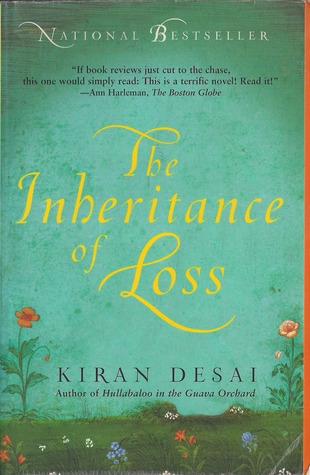
Title: The Inheritance of Loss
Author: Kiran Desai
Publisher: Grove Press
Publishing Date: 2006
No. of Pages: 358
Synopsis:
In a crumbling, isolated house at the foot of Mount Kanchenjunga in the Himalayas lives an embittered judge who wants only to retire in peace, when his orphaned granddaughter, Sai, arrives on his doorstep. The judge’s cook watches over her distractedly, for his thoughts are often on his son, Biju, who is hopscotching from one gritty New York restaurant to another. Kiran Desai’s brilliant novel, published to huge acclaim, is a story of joy and despair. Her characters face numerous choices that majestically illuminate the consequences of colonialism as it collides with the modern world.

Title: Wolf Hall
Author: Hilary Mantel
Publisher: Fourth Estate
Publishing Date: 2009
No. of Pages: 650
Synopsis:
England in the 1520s is a heartbeat from disaster. If the king dies without a male heir, the country could be destroyed by civil war. Henry VIII wants to annul his marriage of twenty years, and marry Anne Boleyn. The pope and most of Europe oppose him. The quest for the petulant king’s freedom destroys his advisor, the brilliant Cardinal Wolsey, and leaves a power vacuum and a deadlock.
Into this impasse steps Thomas Cromwell. Son of a brutal blacksmith, a political genius, a briber, a bully and a charmer, Cromwell has broken all the rules of a rigid society in his rise to power, and is prepared to break some more. Rising from the ashes of personal disaster – the loss of his young family and of Wolsey, his beloved patron – he picks his way deftly through a court where ‘man is wolf to man.’ Pitting himself against parliament, the political establishment and the papacy, he is prepared to reshape England to his own and Henry’s desires.
From one of our finest living writers, Wolf Hall is that very rare thing: a truly great English novel, one that explores the intersection of individual psychology and wider politics. With a vast array of characters, and richly overflowing with incident, it peels back history to show us Tudor England as a half-made society, moulding itself with great passion and suffering and courage.

Title: Bring Up the Bodies
Author: Hilary Mantel
Publisher: Fourth Estate
Publishing Date: 2012
No. of Pages: 407
Synopsis:
By 1535 Thomas Crowell, the blacksmith’s son, is far from his humble origins. Chief Minister to Henry VIII, his fortunes have risen with those of Anne Boleyn, Henry’s second wife, for whose sake Henry has broken with Rome and created his own church. But Henry’s actions have forced England into dangerous isolation, and Anne has failed to do what she promised: bear a son to secure the Tudor line. When Henry visits Wolf Hall, Cromwell watches as he falls in love with the silent, plane Jane Seymour. The minister sees what is at stake: not just the king’s pleasure, but the safety of the nation. As he eases a way through the sexual politics of the court, its miasma of gossip, he mus negotiate a ‘truth’ that will satisfy Henry and secure his own career. But neither minister nor king will emerge undamaged from the bloody theatre of Anne’s final days.
In Bring Up the Bodies, sequel to the Man Booker Prize-winning Wolf Hall, Hilary Mantel explores one of the most mystifying and frightening episodes in English history: the destruction of Anne Boleyn. This new novel is a speaking picture, an audacious vision of Tudor England that sheds its light on the modern world. It is the work of one of our great writers at the height of her powers.
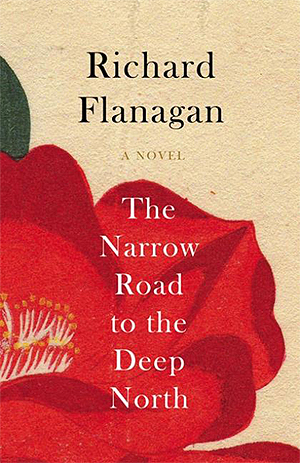
Title: The Narrow Road to the Deep North
Author: Richard Flanagan
Publisher: Chatto & Windus
Publishing Date: 2014 (2013)
No. of Pages: 448
Synopsis:
In the despair of a Japanese POW camp on the Burma Death Railway, surgeon Dorrigo Evans is haunted by his love affair with his uncle’s young wife two years earlier. Struggling to save the men under his command from starvation, from cholera, from beatings, he receives a letter that will change his life forever.
Richard Flanagan’s savagely beautiful novel is a story about the many forms of love and death, of war and truth, as one man comes of age, prospers, only to discover all that he has lost.
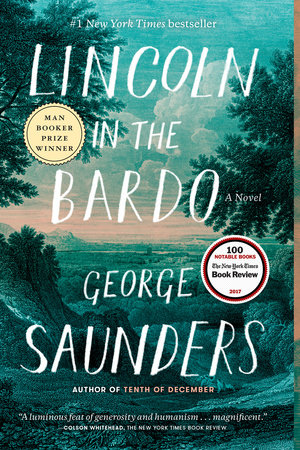
Title: Lincoln in the Bardo
Author: George Saunders
Publisher: Random House
Publishing Date: 2017
No. of Pages: 343
Synopsis:
February 1862. The Civil War is less than one year old. The fighting has begun in earnest, and the nation has begun to realize it is in for a long, bloody struggle. Meanwhile, President Lincoln’s beloved eleven-year-old son, Willlie, lies upstairs in the White House, gravely ill. In a matter of days, despite predictions of a recovery, Willie dies and is laid to rest in a Georgetown cemetery. “My poor boy, he was too good for this earth,” the president says at the time. “God has called him home.” Newspapers report that a grief-stricken Lincoln returns, alone, to the crypt several times to hold his boy’s body.
 The Pine-Scented Chronicles