History and Art
The journey to our destination is rarely straightforward. Along the way, we get waylaid. It is not unusual that we get rerouted. Sometimes we even get detours; they are natural parts of navigating the labyrinth that is life. Getting from Point A to Point B entails several curves and detours. In literature, it is not uncommon to meet writers who started in a different profession before taking on writing as a full-time career. Take the case of Douglas Stuart who had a successful career in fashion before pursuing a career in writing. His debut novel, Shuggie Bain, won the Booker Prize. Amor Towles, on the other hand, was initially part of the corporate world – a tough choice he had to make to earn a stable salary to support his family – before pursuing his dream of being a writer. His first novel, The Rules of Civility, was a commercial and critical success, establishing Towles as a writer to watch out for.
Also taken from the same mold is Derek B. Miller. Post-university, he built an extensive career in international security affairs where he thrived for over a decade. However, his interest in writing took root earlier while studying at Sarah Lawrence College. His time there did not inspire him to write immediately but it dismantled his perception that writing was only for geniuses. While traveling around working for the United Nations, he wrote on the sly. He did publish works of nonfiction but made the leap to fiction with his debut novel, Norwegian Nights which was initially published in Norway in 2010; the English transcript was eventually released in 2013. It was warmly received by readers and critics alike. It even earned Miller various accolades. It marked, to say the least, the ascension of a new and excitable voice in literature. He consolidated his status among the upper echelons of contemporary literature with his succeeding works.
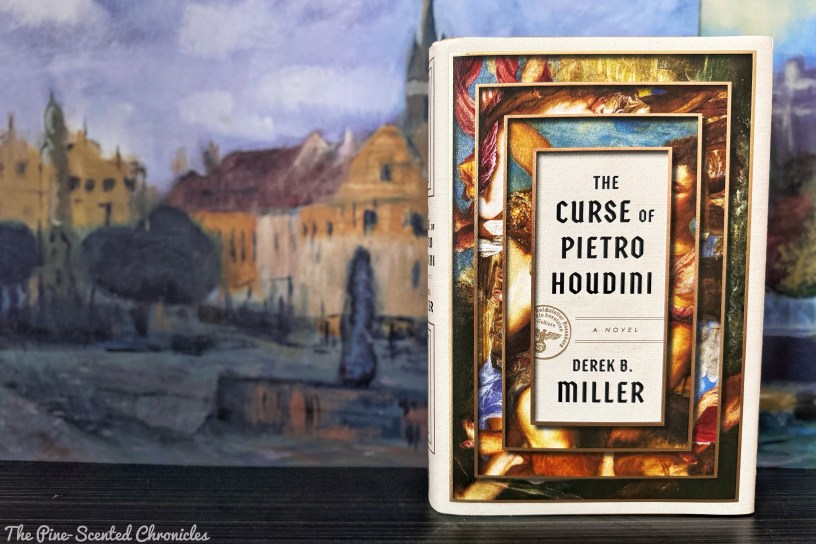
In 2024, Miller made his literary comeback with the publication of The Curse of Pietro Houdini. One of the most anticipated releases in 2024, The Curse of Pietro Houdini transports the readers to the twilight years of the Second World War. The story commences in German-occupied Rome where intensifying Allied bombardment left a fourteen-year-old girl orphaned. She narrowly escaped the Allied offensive and started her journey toward Naples where the rest of her family resided. However, on her way south, she got waylaid and encountered an obstacle in the small village of Cassino. She was blocked and attacked by a group of boys and left in a ditch where she was rescued by the titular Pietro Houdini, a fifty-year-old man on his way to the Benedictine monastery of Montecassino. Pietro took her with him. To gain entry to the monastery, Houdini presented himself as an art restorer authorized by the Vatican while introducing the girl as his assistant. The girl also assumed a male identity as Massimo.
Pietro Houdini had the sorted mind of a scientist but the spirit of a shaman who had seen too much and expected to see much more of it, a thinker and a storyteller and a liar who had as little reverence for the facts as P.T. Barnum. And yet, his dedication to truth—to God’s own truth, a truth Pietro claimed to know and I now believe he did—was bottomless.
Derek B. Miller, The Curse of Pietro Houdini
Told primarily from the point-of-view of Massimo, we learn about Pietro’s intention. The enigmatic but magnetic Pietro – his provenance was unclear – traveled to Montecassino, an abbey founded by St. Benedict, to catalog and restore art housed in the monastery; he was a self-proclaimed master artist and confidant of the Vatican. During the Second World War, the abbey served as the repository for over 70,000 manuscripts and invaluable works of art, most of which were moved from other museums for safekeeping during the war. Pietro even referred to the monastery as one of the greatest repositories of culture on earth. It wasn’t long before the monastery’s extensive art collection earned the interest of the Nazi Germans – they have already occupied the village below the monastery – who want to have the art collection themselves.
From Abbot Tobias, Pietro learns of the Nazi plot to secure the monastery’s countless works of art, rare books, and even sacramental gold in the guise of protecting them from the Allied forces. Executing the plan were two real-life German officers, Lieutenant Colonel Julius Schlegel and Maximilian Becker, who were secretly carting the monastery’s treasures out as quickly as possible, supposedly sending them back to the Vatican. The Allied forces were also making their way to the village; believing that the Nazis were using the Monastery as part of their strategy to thwart the Allied forces, they were considering bombing the Monastery. The looming presence of the two opposing forces prompted Pietro to hatch his own scheme which he referred to as the first art heist within an art heist in the history of the world. The plan involves painting over three undiscovered Titian paintings, hiding them in tubes with Nazi labels, and burying them until it is time to escape.
Executing the plan, however, entails hiding it under the noses of the Germans. Pietro then enlists Massimo’s help to go down to the village and find a lone German soldier who is willing to sell them a gun. However, Massimo instead encountered two German officials camping outside a cafe owned by Bella. Cognizant of their predicament, Massimo enlisted the help of Bella. A successful plan allowed Bella and her children to flee the cafe and the crutches of the German soldiers. However, the time to save the paintings was running out. The Germans were transporting more and more art out of the Monastery. The bombing by the Allied forces was becoming more imminent. It has become imperative for Pietro to revise his plan which now includes Bella and her children, and the denizens of the monastery. A different escape route must also be utilized to ensure the safety of the Renaissance paintings and sack of Greek gold.
Massimo was proving to be a helpful assistant. While at Montecassino, Pietro taught Massimo about the art of misdirection. After all, Pietro derived his name from the renowned Hungarian escapologist Harry Houdini. Massimo also learned about sleight of hand. When the time to escape finally arrived, Bella, Massimo, and Pietro fled on foot, with the artworks and the golds in tow. During their journey, they encountered Ada, a nurse, who had been caring for Harald, a wounded German who turned against the Nazis. They also met and took into their fold Dino and Lucia, young lovers who were escaping from Nazi tyranny. In a rundown house, the motley crew – which also included a mule named Ferrari – found refuge, hoping they wouldn’t be discovered. What was once a story about saving art slowly developed into something more complex.
The wrinkles around his eyes and on his forehead spoke more of wear than years and I felt his presence to be dramatic and theatrical and magnetic: as though my eyes couldn’t help but fall on him and when they did—like being drawn to a performer under a spotlight onstage—I was unable to break away because of the promise of some inexplicable drama yet to come.
Derek B. Miller, The Curse of Pietro Houdini
Miller’s seventh novel, The Curse of Pietro Houdini was, at its heart, is deeply steeped in history. It vividly captured the twilight years of the Second World War. It also places the proverbial microscope on a subject connected to the War that is rarely discussed in the ambit of literature. When the Führer – who considered himself a savant – rose to power, one of his more obscure objectives was to steal art not only from the Jews who were the primary subjects of his oppression but also from European nations who had fallen under his control, including Italy. This scheme was referred to as the Raubkunst (Nazi Plunder). The Nazis stole paintings, ceramics, books, and even religious treasures. Post-war, some of the Third Reich’s loot – they amassed thousands – was recovered by the Allies’ Monuments, Fine Arts, and Archives program (MFAA, also known as the Monuments Men and Women). However, some remain unrecovered. Some were also returned to their countries but not to their original owners.
However, the novel is more than a story about stolen artworks and the efforts to restore and save them from the greed of the Nazis. When the characters retreated from the safety of the Monastery – Montecassino would eventually become the site of one of the Allied forces’ most gruesome offensives – the novel developed into a story of survival. Through the characters, the readers vicariously experience the atrocities and the intricacies of the war. However, Miller was equally critical of the Allied forces as he was of the Nazis. Through his unclouded lenses, Miller captured the atrocities committed by both sides. The Allied forces were equally duplicitous during the War. Their bombing of the Monastery was one of their most despicable acts. The novel also referenced the regiment of Allied Moroccan troops who left a trail of rapes and pillages as they make their way across the Italian bootheel. The perspectives of Lucia, Dino, Bella, and even Massimo, provide glimpses into the plight of the ordinary denizens.
Beyond the war and its atrocities, the shroud of mystery that enveloped Pietro Houdini was one of the novel’s more interesting facets; he loomed above the story. A cipher, his progeny was initially a mystery but as the story moved forward, the layers surrounding him started to unpeel. While he remains largely an enigma, throughout each chapter, Massimo witnesses Pietro’s life stories. However, Pietro still conceals his actual name. Pietro was originally from Naples and even confesses love for his wife Oriana and family. Pietro opens up about some of the decisions he made in life. Pietro is also capable of cynicism and when the moment calls for it, duplicity and even murder. Nevertheless, Pietro has exhibited kindness and loyalty. Massimo compensates by also revealing secrets about himself.
Indeed, the true heart of the novel is the growing bond between the novel’s two main characters. Their friendship – with tender and warm moments – provided reprieve and a breath of fresh air from the turmoil that surrounded them. They share a singleness of purpose that reels the readers into the story. They were flanked by equally interesting secondary characters whose stories add texture to the story. Their stories provide a portrait of the war. They formed an unlikely bond that transcended both the terrors surrounding them and even time. These details were woven together into a lush tapestry by Miller’s dexterous hands. He managed to write an atmospheric tale about one of the most horrifying moments in modern history but also managed to interject humor. Miller, however, never shirks from the real horrors of the war.
That was the idea. It was all very youthful and bold and inspirational, but. . . we have only one life and when any person makes an irrevocable decision, it is a profound and somber matter. To make such a decision out of rebellion is to be forever defined and controlled by what you hate.
Derek B. Miller, The Curse of Pietro Houdini
A facet of the story worthy of note and discussion is the shift in gender expression through the narrator. The story commences with the first-person point of view but the narrator is unnamed. The narrator then assumes the persona of Massimo. For most of the story, he inhabits the persona of Massimo. At this juncture, the story voice shits to a third person. When they were hiding from the Nazis, Massimo was forced to embrace another persona, now that of a girl. Lucia was cognizant that men were most likely going to be the targets of the Nazis, hence, she disguised Massimo into a young girl and named her Eva; it was still not her true name. The changes in gender underscore the lengths that civilians had to go to to escape the enemies’s crutches and hence, to survive.
The Curse of Pietro Houdini is a multifaceted novel. It is a lush and intricate tapestry brimming with rich historical contexts, making it work well as a wartime tale and chronicle of history. Miller vividly paints the atrocities committed by and the duplicity of both the Nazis and the Allied forces. The atmospheric story, however, does not reduce itself to a mere wartime tale because it is also a heist thriller and an expansive lesson on history and art. The Curse of Pietro Houdini is also Massimo/Eva’s coming-of-age story that guides the readers through the harrowing landscape of war. Miller is a gifted storyteller that Montecassino even transforms into a character of its own. On the lighter side, the novel is about establishing genuine connections that flourish despite the war and the odds. Beyond the war, The Curse of Pietro Houdini brims with hope, bravery, and loyalty. It is a fascinating and immersive story from a talented storyteller.
We are part of something larger: something mystical and beyond the realm of human understanding that impinges on our stories and our lives.
Derek B. Miller, The Curse of Pietro Houdini
Book Specs
Author: Derek B. Miller
Publisher: Avid Reader Press
Publishing Date: January 2024
No. of Pages: 353
Genre: Historical, Literary, Coming-of-age
Synopsis
August 1943. Fourteen-year-old Massimo is all alone. Newly orphaned and fleeing from Rome after surviving the American bombing raid that killed his parents, Massimo is attacked by thugs and finds himself bloodied at the base of Montecassino, the hilltop upon which a Benedictine abbey stands in all its imposing glory. It is there, in the abbey’s shadow, that a charismatic and eccentric man called Pietro Houdini, the self-proclaimed “master artist and confidant of the Vatican,” rescues Massimo and brings him up the mountain to serve as his assistant in preserving the treasures that lie within the monastery walls.
But can Massimo believe what Pietro is saying, particularly when Massimo has secrets too? Who is this extraordinary man? When it becomes evident that Montecassino will soon be the front line in the war, Pietro and Massimo set out to smuggle three priceless Titiann paintings to safety down the mountain. They are joined by a nurse concealing a nefarious past, a cafe owner turned murderer, a wounded but chipper German soldier, and a pair of lovers along with their injured mule, Ferrari. Together they will lie, cheat, steal, fight, kill, and sin their way through battlefields to survive, all while smuggling the Renaissance masterpieces and the bag full of ancient Greek gold they have rescued from the “safekeeping” of the Germans.
Heartfelt, fast-paced, and profoundly moving, The Curse of Pietro Houdini is a work of storytelling bravado: a thrilling action-packed adventure heist, an imaginative chronicle of forgotten history, and a philosophical coming-of-age in which a child navigates one of the most enigmatic and morally complex fronts of World War II and lives to tell the tale.
About the Author
Derek B. Miller was born in 1970 in Boston, Massachusetts, USA, and grew up in Wellesley. His family emigrated from Eastern Europe to Massachusetts in the late 1800s and early 1900s from the Jewish Pale of Settlement. Miller attended Wellesley High School and completed a Bachelor of Arts in Liberal Arts at Sarah Lawrence College. He finished his M.A. in national security studies from the Edmund A. Walsh School of Foreign Service at Georgetown University. He also earned a D.E.S. in international relations (1998) and a Ph.D. (2004) from The Graduate Institute of International and Development Studies of Geneva, Switzerland. He also attended St. Catherine’s College at the University of Oxford (1995-1996) and later Linacre College (1999-2000) on scholarship from the Europaeum Consortium, also at Oxford.
Post-university, Miller worked in international affairs, starting his career as an intern on Capitol Hill for then-Senator William S. Cohen (R – Maine). He was the founding editor of Georgetown’s National Security Studies Quarterly. He held positions with, or consulted for, many think tanks and organizations including The Mission of the Republic of Korea to the United Nations at Geneva; The Small Arms Survey; International Alert; the United Nations Development Programme; and The United Nations Institute for Disarmament Research, among others. Since 2015, he has been the Adjunct Senior Fellow at the Pell Center for International Relations and Public Policy, Salve Regina University, and Research Associate at the Centre on Conflict, Development, and Peacebuilding at the Graduate Institute Geneva.
After working for nearly a decade in international affairs, Miller made a foray into writing. In 2013, he published his debut novel, Norwegian Nights; it was originally published in Norwegian in 2010. The book earned Miller various accolades, winning the Crime Writers’ Association’s John Creasy Dagger Award for a debut crime novel. It was also nominated for the Strand Magazine Critic’s Award for Best First Novel, the American Bookseller’s Association’s 2014 Indie Choice Award, the Barry Award for Best First Novel, and the Macavity Award for Best First Mystery. Building momentum, he published his sophomore novel, The Girl in Green, in 2016 and followed it up with American by Day (2018), Radio Life (2021), How to Find Your Way in the Dark (2021), and Quiet Time (2021). His most recent novel, The Curse of Pietro Houdini, was published in 2024. His works earned him various accolades.
Miller has lived abroad for over twenty-five years in Israel, the United Kingdom, Hungary, Switzerland, Norway, and Spain.
 The Pine-Scented Chronicles