
Happy Wednesday everyone! Wednesdays also mean WWW Wednesday updates. WWW Wednesday is a bookish meme hosted originally by SAM@TAKING ON A WORLD OF WORDS.
The mechanics for WWW Wednesday are quite simple, you just have to answer three questions:
- What are you currently reading?
- What have you finished reading?
- What will you read next?

What are you currently reading?
Just like that, we are already midway through February. How time flies! A lot has happened since we greeted the new year but it also feels like nothing consequential happened. Ironic isn’t it? Regardless, I hope that your year is going your way. I hope that 2025 will be a year of prayers answered and goals achieved. I hope it will usher in good news, healing, and prosperity. I hope that you are already making progress on your goals and targets. If not, it is still fine. Sometimes just being alive is enough. I fervently wish that everyone achieves their goals and even dreams this year. Personally, I have several goals this year in all facets of life. In reading and writing alone, I have lined up several already. For one, I already set my Goodreads goal to 100 books, the first time I am doing so from the onset. It is my goal to end the year with more translated books than books originally written in English. I am hopeful that I will be able to achieve them.
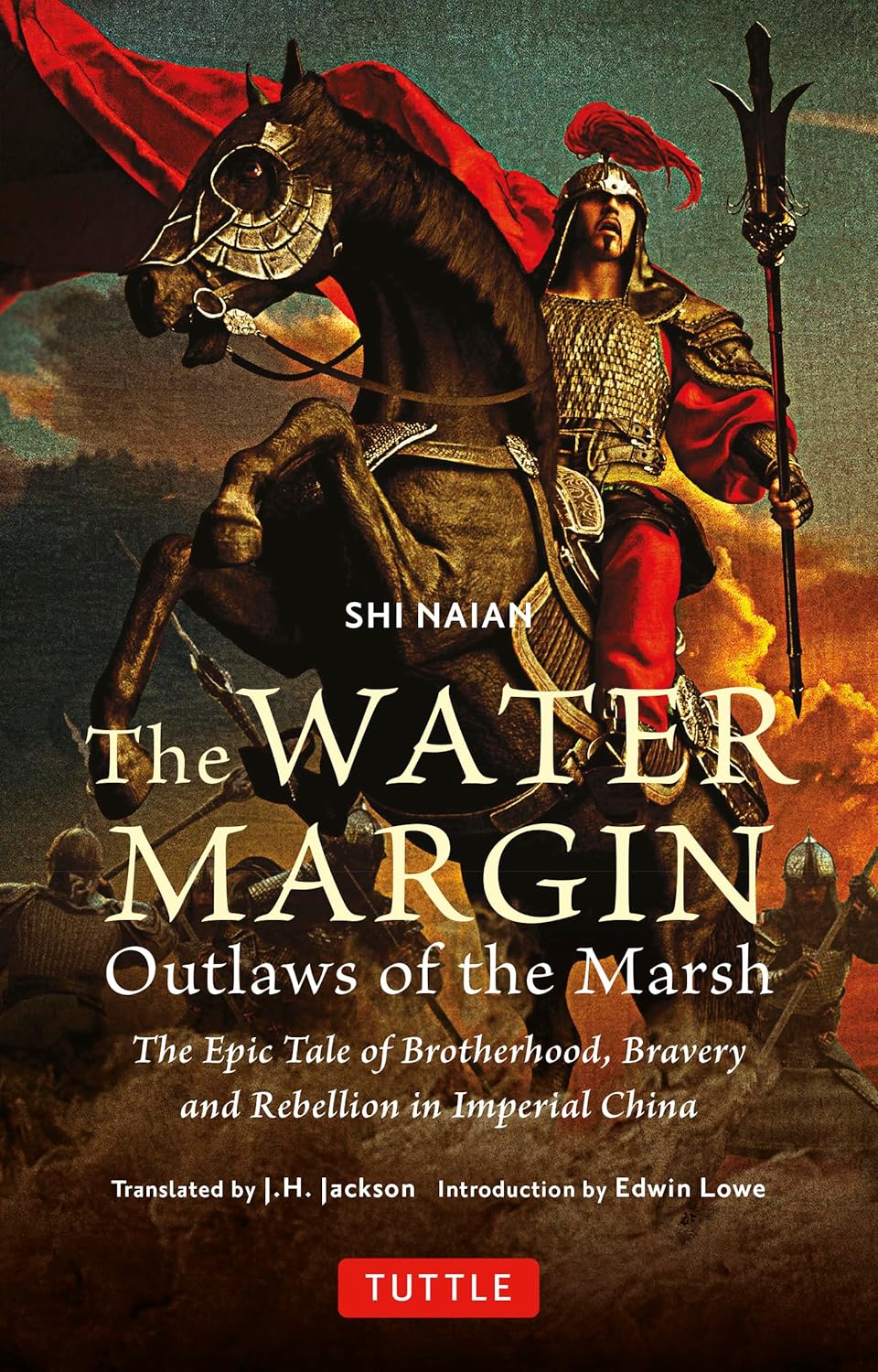
With this in mind, I commenced my reading year by immersing myself in the works of East Asian writers which was driven by my failure to host a Japanese literature month last year. A foray into Japanese literature is a staple of my reading year which made it all the more imperative for me to make up for lost time. Another main driver for this decision is my relatively sparse foray into the works of Chinese writers. Chinese literature is obviously one of the most extensive and influential literatures out there which makes my limited venture into Chinese literature baffling. Anyway, I have been trying to redress this in the past few years. My current read, Shi Naian’s The Water Margin, is already the fourth book written by a Chinese writer I read this year. What makes it even more memorable is that the book is one of the Four Classics of Chinese literature; I have already read an abridged version of f Cao Xueqin’s Dream of the Red Chamber during the first year of the pandemic.
When I started reading The Water Margin. I had very little inkling of what the book was about. Thankfully, the introduction provided me glimpses into what the book was about. The book introduces a vast cast of characters, among them the 108 outlaws-cum-demons released by Marshal Hong Xin during a visit to a Taoist monastery to seek a cure for a plague currently afflicting the denizens of Kaifeng, the Eastern Capital of the Song Dynasty; other translations of the novel carried the titles Outlaws of the Marsh or All Men Are Brothers. The outlaws all converged and established a stronghold in the fictional Liangshan Marsh (梁山泊) area. The vast cast of characters can be daunting although there are characters the novel focuses on such as Lin Chong, Wu Song, and Song Jiang; Song Jiang is one of the leaders of the bandits. The novel is quite eventful as it guides the readers across the landscape of Song Dynasty China. I am halfway through the book but it seems that there is still a lot that is going to happen. It is no wonder that this novel is a masterpiece of Chinese literature.
What have you finished reading?

The past week has been less productive than the previous weeks. This is primarily because I decided to read The Water Margin; yes, it is quite thick. After Otohiko Higa’s Marshland, The Water Margin will be my second-longest novel this year. Because of this, I only managed to complete one book in the past week. Interestingly, it was also my current read in the past week’s WWW Wednesday update. The only book I finished last week was Keigo Higashino’s The Miracles of the Namiya General Store. This is the third book by the Japanese writer I read. The first time I encountered the book, I immediately wanted to read it because it is a deviation from Higashino’s typical story; he is renowned as a writer of mystery/suspense fiction.
The novel was originally published in 2012 as ナミヤ雑貨店の奇蹟 (Namiya Zakkaten no Kiseki). The story commences in 2012 and introduces three delinquents: Atsuya, Kohei, and Shota. After committing some petty crimes and finding themselves stuck in a sleepy neighborhood, they took shelter in the abandoned Namiya General Store. Out of the blue, an advice letter dropped through the shutter, although nobody is outside. The letter was addressed to Yūji Namiya, the owner of the store. The letter naturally piqued the three boys’ curiosity, especially after reading more about the store’s history. In the 1980s, the store gained popularity for accepting the local’s advice letters. They were seeking pieces of advice for their troubles. It started as a joke among the elementary children but Namiya regaled them but providing unconventional but logical solutions to their dilemmas. Through the first letter the boys received and tried to address they learned that the letter was written in the lead-up to the 1982 Olympic Games. The story moves forward by detailing the stories of other individuals whose lives have been touched and altered by Namiya. The fragmented structure, thematically linked, reminds me of the current trend in the works of literary fiction in the ambit of Japanese literature. They are usually slice-of-life and impart wisdom and insights while creating heartwarming moments. Overall, The Miracles of the Namiya General Store is a pleasant surprise from Higashino.
What will you read next?


 The Pine-Scented Chronicles