
Happy Tuesday everyone! As it is Tuesday, it is time for a Top Ten Tuesday update. Top Ten Tuesday is an original blog meme created by The Broke and the Bookish and is currently hosted by That Artsy Reader Girl.
This week’s given topic: Books Set in Another Time
These can be historical, futuristic, alternate universes, or even in a world where you’re not sure when it takes place you just know it’s not right now.


The Name of the Rose by Umberto Eco
Setting: 14th Century
Snippet from my review: The story contained numerous allusions to a plethora of religious dogmas and subjects. This was balanced by the mystery part of the book, which had a Sherlock Holmes feel to it. Eco was successful in keeping the reader on tenterhook all throughout the story. The mystery is muddled until the very end of the story. Just like any successful mystery piece, unmasking the murderer was a great challenge.

Before the Coffee Gets Cold by Toshikazu Kawaguchi
Setting: Mainly the past as the novel features time travel. Travel to the future, however, is possible.
Snippet from my review: On the other side of the spectrum, we are provided with glimmers of hope from making peace with these regrets and words left unsaid; their stories brimmed with hope. Traveling to the past and/or the future, despite knowing that the present won’t change, gave the characters hope they were not expecting. It did not provide the resolution they were hoping for but it gave them something to look forward to. They find answers that help in their own healing. The novel also captured the beauty of connections and community. The café symbolizes community and friendship. The café is the most palpable allegory of community where friendship thrives and connections between unsuspecting individuals are established and built. It was heartwarming how the characters, both the customers and the café staff slowly built rapport and eventually became part of each others’ lives. As if to underline connectivity, the complexities of families were also underscored in the story.

To Kill A Mockingbird by Harper S. Lee
Setting: The story takes place between 1932 and 1935
Snippet from my review: Although it had local flavor, To Kill a Mockingbird was packed with themes that appeal universally, especially its take on racism and social injustice. The narrative shone brightly when it depicted how the primary characters come to grips with these dark realities. It is these elements that opened the Finch children’s eyes, essentially making them lose their innocence at such young ages. This is also referenced in the novel’s title alone. One must not kill mockingbirds because they are harmless creatures, only providing pleasure with melodies.
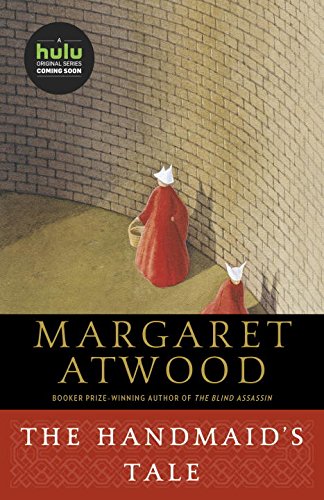
The Handmaid’s Tale by Margaret Atwood
Setting: The dystopian future.
Snippet from my review: The true gem in the story is Margaret Atwood’s writing she told the story as it is without it going awry. The storytelling is packed with heavy punches but it was not overbearing and overwhelming. It is straightforward and the reader can immediately distinguish what the story is about without having to exert very much effort. The writing wasn’t poetic put it possesses a certain ring to it that makes it engaging from the start until the end. It is also filled with prophetic but wonderful quotes.

Gone with the Wind by Margaret Mitchell
Setting: The American Civil War and Reconstruction era
Snippet from my review: Amidst the plethora of subjects and varying themes, one centrifugal element stands out throughout the narrative. From the onset, the prevailing theme was survival; even Mitchell herself acknowledged that it was the novel’s heart. She was once quoted saying, “What makes some people come through catastrophes and others, apparently just as able, strong, and brave, go under? It happens in every upheaval. Some people survive; others don’t. What qualities are in those who fight their way through triumphantly that are lacking in those who go under? I only know that survivors used to call that quality ‘gumption.’ So I wrote about people who had gumption and people who didn’t.”

The Old Capital by Yasunari Kawabata
Setting: 1950s, post-war.
Snippet from my review: Beyond traditions and culture, the novel explores the indelible connection with nature; it is a fundamental facet of Japanese life. The novel was brimming with imagery and intricate details of nature, from weeping willows to tall cedar trees to cherry blossoms. This was established from the onset when Chieko was studying two violets growing on the trunk of an old maple tree. This made her wonder if they would grow close together. In a way, nature and other imageries that riddle the novel are vessels upon which Kawabata explores other subjects. The beauty, and perhaps even complexity of Kawabata’s works are in his metaphors which often straddle the borders of ambiguity. A casual line, seemingly innocent, encapsulates sexual awakening. This is one of several instances of subtly embedded subjects, characteristic of Kawabata’s writing and of Japanese literature in general.

The Covenant of Water by Abraham Verghese
Setting: Between 1900 and 1977.
Snippet from my review: The legacies of colonialism added layers and textures to the story. After all, the story captured the years leading up to India’s declaration of independence and the years immediately following it. The colonizers’ exploitation of India was captured in the novel. Vestiges of their exploitation can be gleaned in several facets of contemporary Indian society. Ironically, the Western characters in the novel were far from the villains they are often portrayed as. Digby’s role was allegorical as he represented both the oppressor and the oppressed; his story underlined the class system in the United Kingdom, contrasting India’s own caste system. Digby and Rune’s presence also showed the interactions between the East and the West. The events of the novel were juxtaposed with seminal historical events shaking up contemporary India.

The Women of Troy by Pat Barker
Setting: The Trojan War.
Snippet from my review: The women of Troy, despite the oppression surrounding them, exhibited resilience. They were able to adjust to their situation and, in the process, they managed to build relationships. They managed to thrive. On the other side of the spectrum, Barker captures how violence can adversely impact men. This was captured primarily through Pyrrhus whose voice intertwines with Briseis’. His psychological profile was vividly built by Barker. The story captured his doubts, fears, and the pressures of living up to his father’s name. All throughout, he was overshadowed by his father’s greatness. Pyrrhus was an entirely different character compared to his father. Perhaps to partake of his father’s greatness or to commemorate him, Pyrrhus polished his father’s shield.

Devils by Fyodor Dostoevsky
Setting: 1870s rural Russia
Snippet from my review: The novel’s lush political discourses characterized it. However, it does not reduce itself to a mere political novel. Rather, it was also a novel about a man caught in the crossfire. When he was younger, Stavrogin embraced and eventually cast off, different ideologies. These ideologies were then adopted by other intellectuals who were drawn to Stavrogin. Stavrogin was a man of paradoxes. Because of his social standing, he was self-assured. However, his demeanor showed distractedness. Stavrogin lived a life of decadence and was even involved in crime, may it be in Moscow or abroad. Even in his spirituality, Stavrogin exhibited polar opposites. One side careened to rationality, intellect, and even egoism. The other side was pegged on spiritual longing inculcated into him Stepan.

A Man Called Ove by Fredrik Backman
Setting: The outer space where time was fluid.
Snippet from my review: Overall, The Hitchhiker’s Guide to the Galaxy lived up to my expectations. Although it was primarily scientific fiction, it reminded me again why I am riveted with adventure novels. Douglas Adams gave me more than enough fuel to keep up with the rest of the series. The interesting storyline, the colorful and peculiar characters, and the witty one-liners all added up to a compelling, humorous, and riveting narrative that is simply out of this world. As I have completed all five books, I am now longing to finish all of it. I guess I have found my cup of scientific fiction.
 The Pine-Scented Chronicles