And with that, the year’s second month has closed. How time flies. While at times it still feels like yesterday when we welcomed 2025 with quite a fanfare, it also feels like a lot has already happened. Anyway, how has the year been so far? I hope that it is going your way. If it went otherwise, I hope you will have a reversal of fortune in the coming months. We have the rest of the year to pursue our passions, embark on new journeys, and achieve our goals. I hope that the rest of the year will be one of healing, positive news and energies, and prayers answered. However, if your goal this year is just to make it from one point to another, then it is still fine. For those who have set their goals, I wish you all the best. I hope you get to accomplish them all. More importantly, I hope everyone stays healthy, in mind, body, and spirit.
Reading-wise, I have quite lofty goals this year although I wanted to lay low for a bit because the past few months have been quite hectic. Nevertheless, I am up and running. It is a shame to waste the momentum I gained. To commence my 2025 reading journey, I have been immersing myself in the works of East Asian writers. This is driven by several factors. The primary reason is that I was not able to hold a Japanese literature month last year for the first time in a while; Japanese literature has been a staple of my annual reading journey, particularly during the pandemic period. Another reason is Korean writer Han Kang’s recognition by the Swedish Academy, making her the first female Asian writer to earn the Nobel Prize in Literature last year. An English translation of a recent work by Kang has also just been released in January. Chinese literature, one of the most extensive and influential literatures in the world, is one part of the literary world I have rarely ventured into.
So before I move on to the next month of the year, let me share the continuation of my foray into works of East Asian literature. Happy reading!
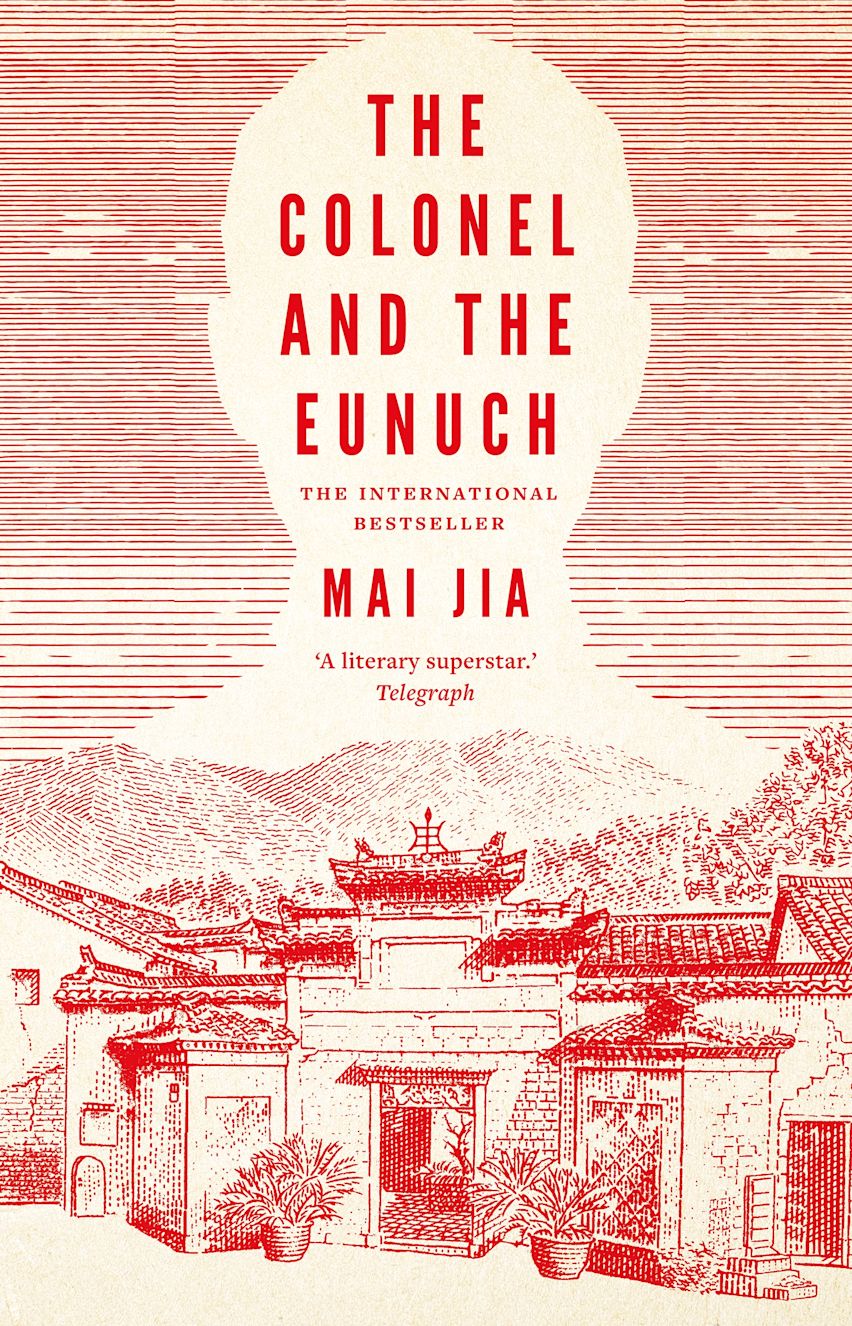
The Colonel and the Eunuch by Mai Jia
The second leg of my foray into East Asian literature took me back to Mainland China. My first read for February is a writer who I have never come across before; this only underlies the limited extent of my knowledge and exploration of Chinese literature. Had it not been for a random excursion to the local bookstore, I might have not encountered Mai Jia, a well-respected figure in Chinese literary circles. When I encountered The Colonel and the Eunuch, it immediately piqued my curiosity. I even included it to my 2025 Top 25 Reading List. Originally published in 2019 as 人生海海, The Colonel and the Eunuch transports the readers to the 1960s rural China. Narrating the story is a boy who is fascinated by the novel’s central figure, the Colonel; the locals also refer to him as the Eunuch behind his back. The boy’s father and the Colonel were childhood friends and remained to be so. The boy’s father gladly let his friend overshadow him in every aspect. Their path diverged when the Colonel left for the army. Upon his return, he gained repute as a senior officer in both the Nationalist and Communist armies in China’s various wars and an eminent surgeon. However, he was also shrouded in mystery, with gossip abound due to the secrecy of what he had done during the war. His refusal to conform to norms made locals resent him. The teenage boy was nevertheless fascinated by the Colonel and his mysterious persona. As the story moves forward, the boy gets to hear and witness how the Colonel’s personal story gets told and retold, how the Colonel was maligned. Personally, I find the writing pedestrian; this may be due to the function of translation. Nevertheless, The Colonel and the Eunuch is a riveting read.
Goodreads Rating:


The Miracles of the Namiya General Store by Keigo Higashino
From China, my literary journey next took me to a familiar territory and a familiar writer. It was through works of mystery and suspense fiction that I first came across Keigo Higashino; this is in itself interesting because I have rarely encountered works of mystery fiction in the ambit of Japanese literature. My fourth Higashino book, The Miracles of the Namiya General Store, however, is a deviation from Higashino’s typical works. The novel was originally published in 2012 as ナミヤ雑貨店の奇蹟 (Namiya Zakkaten no Kiseki). The story commences in 2012 and introduces three delinquents: Atsuya, Kohei, and Shota. After committing some petty crimes. they found themselves stuck in a sleepy neighborhood where they took refuge in the abandoned Namiya General Store. Their reverie was disrupted when an advice letter dropped through the shutter; nobody was outside. The letter was addressed to Yūji Namiya, the owner of the store, naturally piquing the three boys’ curiosity. In the 1980s, the store gained popularity for accepting letters from anonymous writers who were seeking advice for their troubles. It started as a joke among the elementary children but Namiya regaled them but providing seemingly eccentric but logical solutions to their dilemmas. The story moves forward by detailing the stories of other individuals whose lives have been touched and altered by Namiya. The fragmented structure, thematically linked, reminds me of the current trend in the works of literary fiction in the ambit of Japanese literature. Each story imparts wisdom and insights while creating heartwarming moments. Overall, The Miracles of the Namiya General Store is a pleasant surprise from Higashino.
Goodreads Rating:

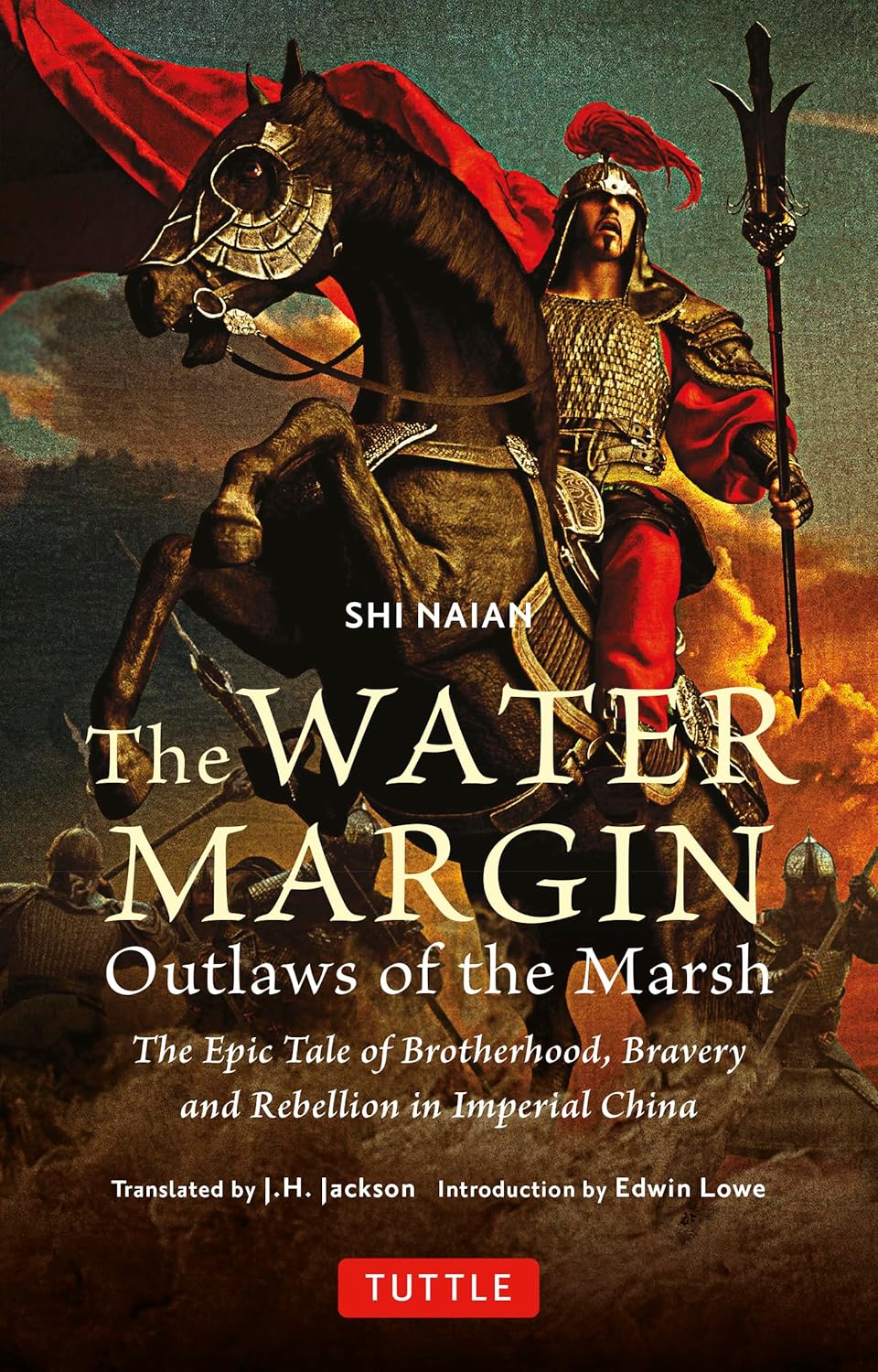
The Water Margin by Shi Naian
Chinese literature, I have learned, is bannered by the four classics; there is a six-book variation. One of the four classics of Chinese literature is Shi Naian’s The Water Margin; I have previously read an abridged version of Cao Xueqin’s Dream of the Red Chamber. With The Water Margin, I am actually hitting several birds with one stone because The Water Margin is also listed as one of the 1,001 Books You Must Read Before You Die. Originally titled 水滸傳 (Shuihu Zhuan), The Water Margin – or in some versions Outlaws of the Marsh or All Men Are Brothers – is one of the earliest novels originally written in vernacular Mandarin. Admittedly, I had very little inkling of what the book was about; the introduction provided me an overview. The book has a vast cast of characters At the heart of the story were 108 outlaws-cum-demons released by Marshal Hong Xin during a visit to a Taoist monastery to seek a cure for a plague that afflicted Kaifeng, the Eastern Capital of the Song Dynasty. Slowly, the novel paints a vivid portrait of Song Dynasty China. Cities were governed by abusive and corrupt prefects who were supported by equally corrupt generals. The vast cast of characters can be daunting but the novel focuses on a limited cast, including Lin Chong, Wu Song, and Song Jiang; Song Jiang is one of the leaders of the bandits. Their lives were altered by the corruption, both moral, social, and political, that pervaded Chinese society. The outlaws all converged and established a stronghold in the fictional Liangshan Marsh (梁山泊) area, hence, the book’s title. The novel is quite eventful as it guides the readers across the landscape of Song Dynasty China where rebellion and general discontent were ubiquitous. As such, outlaws-cum-demons were either heretics or heroes who could cause the collapse of institutions or usher change. Overall, The Water Margin, despite some sloppy translations here and there and graphic details of violence, was a memorable read, worthy of being called one of the four classics of Chinese literature.
Goodreads Rating:

We’ll Prescribe You a Cat by Syou Ishida
Over the past few years, I have noted a remarkable increase in the number of Japanese novels made available to Anglophone readers. Several unfamiliar names have hit the stand. Among my latest discoveries is Syou Ishida’s We’ll Prescribe You a Cat. What piqued my interest is that it involved cats; Japanese literary works integrating cats have become ubiquitous. In the past two years, I have read several cat books as more works of Japanese literature is being made available to Anglophone readers. Joining this growing list of cat books is Syou Ishida’s We’ll Prescribe You a Cat which was originally published in 2023 as 猫を処方いたします。In a way, the novel shares parallels with other recent Japanese titles. Instead of straightforward prose, thematically interconnected stories comprise the novel. These stories converged at Nakagyō Kokoro Clinic for the Soul, a clinic catering to individuals in need of healing. Like the popular Before the Coffee Gets Cold series’ Funiculi Funicula, the clinic is located in a quaint and obscure location. While the café is accessible to everyone, the Kokoro Clinic only opens its doors to those who are in dire need of help or are at a crossroads. The in-house doctor then prescribes a cat to the “patients”. On the surface, it is quite an unusual prescription. However, these cats were catalysts for the changes that would take over the characters’ lives. The diversity of the characters’ concerns – they suffered from the stresses of quotidian existence – make for a smorgasbord of relatable heartwarming stories. One character had trouble at work while another one was grappling with change. Overall, We’ll Prescribe a Cat is a lighthearted story that reminds us to brace for the uncertainties of life.
Goodreads Rating:

The Setting Sun by Osamu Dazai
From two new-to-me writers, my next read brought me back to a more familiar name. Osamu Dazai, born Shūji Tsushima, passed away shortly after the end of the Second World War but his works are enjoying a second wave of growing interest. Actually, it was through fellow book bloggers that I first came across the Japanese writer who is considered one of the pioneers of the I-novel, a major literary movement in Japan. The Setting Sun is Dazai’s second novel I read. Originally published in 1947 as 斜陽 (Shayo), The Setting Sun is among Dazai’s most popular works and is often considered a classic of modern Japanese literature. The story was primarily narrated by twenty-nine-year-old Kazuko who belongs to an impoverished aristocratic family living in post-war Tokyo. Her younger brother Naoji’s whereabouts have been unknown. Kazuko, on the other hand, was divorced and returned to the family household, joining their mother. Kazuko claimed that she had an extramarital affair with a painter she admired. A wave of misfortunes forced the family to move to Izu in the countryside. Despite struggling with her feeling of inadequacy, Kazuko tried to adapt to life in the countryside. However, the past kept disrupting the present. The crux of the story, however, was Kazuko’s affair with Mr. Uehara, a married novelist and an acquaintance of Naoji. Despite its slender appearance, the novel is lush. The story of Kazuko’s family’s decline echoes the decline of the aristocracy following the end of the Second World War; this gives the title a different layer as Japan is also known as the Land of the Rising Sun. On the other hand, it is the story of resilience and seizing one’s destiny. The Setting Sun is a riveting read from one of the masters of modern Japanese literature.
Goodreads Rating:

The Bridge of Heaven by S.I. Hsiung
If February is any gauge, I am quite happy with my progress in making a dent in Chinese literature. In February, I completed three works written by Chinese writers. The third of these books is Hsiung Shih-I’s The Bridge of Heaven. Before the pandemic, I had never encountered Hsiung before but through an online bookseller, I came across him. Originally published on January 1, 1943, the novel commences in the 5th year of the reign of Emperor Kwang Hsu (1879), with the construction of a bridge across a small river outside of Nanchang, Kiangsi (Jiangxi). At the heart of the story is the Li family, starting with brothers Ming and Kang; they divide the family home equally between them. However, the brothers are the antithesis of each other. While Ming is devoted “to such excellent and praiseworthy work,” his younger brother is the proverbial black sheep although he is more clever and is respected for his progressive ideas. The story’s driver, however, was when Ming’s son died during childbirth. Heartbroken, Ming went and bought the son of an impoverished couple who gave birth at the same time as his wife. However, Ming returned home to learn that his wife had given birth to a twin. Ming raised the two boys, Li Ta Tung and Li Shiao Ming. The brothers also had a precarious relationship because of their disparities. The Bridge of Heaven, however, delves beyond family dynamics. Contemporary Chinese history figured prominently in the story. Romance and the slow integration of Chinese traditions with Western ideals take the forefront of the story. The Bridge of Heaven provides an evocative portrait of a nation at the crossroads of history.
Goodreads Rating:

Love in the Big City by Sang Young Park
From China, my next read took me to the Korean peninsula. It has not escaped my notice how Korean literature has slowly been taking over the global stage. I guess this can be attributed to Han Kang’s 2016 International Booker Prize victory with The Vegetarian which opened the gates (and global interest) for other Korean writers. Some of these works have also been earning accolades across the globe. Among them is Sang Young Park’s Love in the Big City which was longlisted for the 2022 International Booker Prize. While it did not win the prize, it piqued my interest. Originally published in 2019 as 대도시의 사랑법, the novel was translated into English in 2021. Love in the Big City deviates from the traditional novel structure. The novel weaves in and out of different periods while capturing the story of Young, a homosexual Korean man in his thirties. His story started when he was 20 years old when he met a fellow university student Jaehee who became his best friend. The focus of the story, however, was Young’s homosexual awakening and how he navigated adulthood as a gay Korean man. H was raised by an evangelical Christian mother who, upon recognizing her son’s homosexuality when he was still young, sent him to a gay conversion therapy center. Young’s mother’s attitude toward his sexuality is reflective of how Korea views homosexuality. The attitude of Koreans toward homosexuality became more apparent as Young navigated the world of adulthood. Young experienced being in a relationship with a discreet gay man who was a good decade older than him. The Korean gay man’s experience – particularly the difficulties of finding love in a society that is not homosexual-friendly – was vividly captured by Park but the novel provides pleasure in its easy-going style.
Goodreads Rating:

We Do Not Part by Han Kang
Speaking of Han Kang, my next read is her latest translated novel, We Do Not Part. Imagine my surprise when Han Kang was announced as the awardee of the 2024 Nobel Prize in Literature. I was pleasantly surprised but very happy with the announcement. While I was not initially a fan of her most successful novel, The Vegetarian (I like it now after some reflection), she won me over with Human Acts and The White Book. Fast forward to 2025, I was ecstatic when I learned about her latest release. The novel was originally published in 2021 and is narrated by Kyungha, a woman living alone in Seoul on the brink of depression. Kyungha’s torpor was disrupted by a call from her friend Inseon who was recuperating in a hospital following a work accident. Unable to attend to her pet bird Ama in Jeju, Inseon asked Kyungha to travel to Jeju to feed Ama. Despite the snowstorm that swept Jeju, Kyungha made her way to Inseon’s family home where she learned more about Inseon’s family’s troubled history. Through Inseon’s family’s history, Kyungha learns more about Jeju’s contemporary history, particularly the Jeju Massacre which I first learned about in Lisa See’s The Island of Sea Women. Starting in 1948, state-sponsored killings rocked the island. The aim was to purge it of communists. While there were no official figures, it was estimated that at least 30,000 people, including 1,500 children, were killed by authorities and by extreme-right militant groups. Kang’s latest novel reminds me of two of Kang’s previous works: Human Acts in its exploration of Korea’s ruptured history and White Book in the novel’s pensive tone. While it is not as intense as Human Acts, the novel is a compelling read that further underlines Han’s status as a premier chronicler of ruptured histories.
Goodreads Rating:

The Frolic of the Beasts by Yukio Mishima
I concluded my February reading journey with a very familiar name and a very familiar literary territory. It cannot be denied that Japanese literature is one of my, if not my favorite literatures in the world. One of the writers who made me fall in love with Japanese literature is Yukio Mishima. Mishima has also become a staple of my annual Japanese literature month; 2025 is no different. The Frolic of the Beasts is the sixth novel by Mishima I read. Originally published in 1961 as 獣の戯れ (Kemono no Tawamure), The Frolic of the Beasts charts the intersection of three characters in post-war Japan: Ippei Kusakado, his wife Yūko, and the youthful Kōji. The prologue opens with a picture of them together smiling while standing on the harbor wall in Iro Village, a rural fishing port in Izu Peninsula in Shizuoka Prefecture. Their story, however, started in Tokyo where Kōji, while studying, worked for a Western ceramics shop in Ginza, Tokyo owned by 41-year-old Ippei. While drunk, Ippei confessed to Kōji his marital troubles. Ippei tried making his wife jealous and even confessing several affairs. Yūko, however, was nonplussed. Kōji fell in love with Yūko despite having not met her yet; they would eventually commence an illicit affair. Yūko admitted being aware of her husband’s infidelities. Tension escalates and Kōji finds himself in prison. The story’s first chapter opens with Kōji getting released from prison and traveling back to Iro Village where he meets the couple again. The novel has interesting and even intriguing elements; this is Mishima territory after all. However, the story leaves so much to be desired. The characters remain shrouded in mystery and the plot is disjointed.
Goodreads Rating:

Reading Challenge Recaps
- 2025 Top 25 Reading List: 3/25
- 2025 Beat The Backlist: 2/20; 20/60
- 2025 Books I Look Forward To List: 0/10
- Goodreads 2025 Reading Challenge: 20/100
- 1,001 Books You Must Read Before You Die: 1/20
- New Books Challenge: 0/15
- Translated Literature: 18/50
Book Reviews Published in February
- Book Review # 569: The Curse of Pietro Houdini
- Book Review # 570: The City and its Uncertain Walls
- Book Review # 571: Playground
- Book Review # 572: The Devotion of Suspect X
- Book Review # 573: The Strangeness of Beauty
I was looking forward to bouncing back in February after a very busy January. I tried to make up for lost time by aiming to complete as many book reviews as I could. Unfortunately, I was unable to do so because several things took precedence. Further, my body has been trying to cope after the mentally exhausting opening month. Balancing work with personal life is quite a challenge. Nevertheless, I was able to publish five book reviews, a far cry from the twelve I published in February 2024. But five is still a good number. I am now down to my last two pending reviews from April 2023. I have also published my first review of a book I read this year. There are so many things to celebrate despite yet another slow writing month. For March, it is still my goal to make up for lost time. I will try to complete as many book reviews as I can. The mantra, however, will be to take it one step at a time. I hope I find the motivation.
Reading-wise, March will still see me navigating the labyrinth of East Asian literature. I will still immerse myself in the works of Japanese, Korean, and Chinese writers. However, I am tweaking it a bit because, for this month, I will focus on the works of female writers from the region. This is in line with the month’s theme; March is Women’s History Month. Further, March 8 is International Women’s Day. This is the reason why I pushed back reading the works of female Japanese writers. I have included several of their works in my 2025 Top 25 Reading List: Yūko Tsushima’s Woman Running in the Mountains, Riku Onda’s Honeybees and Distant Thunder, and Mieko Kanai’s Mild Vertigo. March will also see me reading Bae Suah’s Untold Night and Day, Sawako Ariyoshi’s The River Ki, Banana Yoshimoto’s Moshi Moshi, Lee Geum-Yi’s Can’t I Go Instead, Yoko Tawada’s Scattered All Over the Earth, and Jungeun Yun’s Marigold Mind Laundry. I am still looking for Chinese titles to include on my list. I have my hands full this month but I am looking forward to how March will pan out.
How about you fellow reader? How is your own reading journey going? I hope you enjoyed the books you have read. For now, have a great day. As always, do keep safe, and happy reading everyone!
 The Pine-Scented Chronicles