
Happy Wednesday everyone! Wednesdays also mean WWW Wednesday updates. WWW Wednesday is a bookish meme hosted originally by SAM@TAKING ON A WORLD OF WORDS.
The mechanics for WWW Wednesday are quite simple, you just have to answer three questions:
- What are you currently reading?
- What have you finished reading?
- What will you read next?

What are you currently reading?
Just like that, we are nearly halfway through the third month of the year. How time flies! Time just keeps flowing, any regard for us. This is the reality we have to deal with. Anyway, how has your year been? I hope that it is going your way. I hope that favors and blessings are going your way. I hope that this year will be prosperous, brimming with wealth but more importantly, health. I hope that you are already making progress on your goals and targets. For those whose year has been going otherwise, I hope you experience a fortune reversal in the coming months. Speaking of goals, this year, I immediately set my reading goal to 100 books for the fourth year in a row. Historically, my initial goal is set at a more conservative level. Should there be no major obstacles, I know I can end the year with at least 100 books. Another goal I have this year is to read more translated works of literature than works originally written in English.
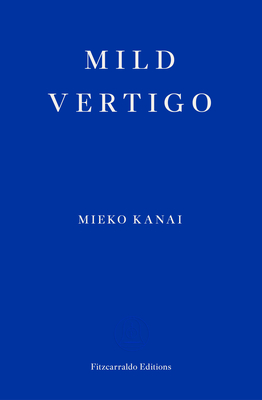
With the second goal in mind, I commenced my reading year with the works of East Asian writers. This brings me to a name whose oeuvre I have not explored before. I believe it was during the lead-up to the announcement of the 2023 Nobel Prize in Literature awardee that I first came across Mieko Kanai (金井 美恵子). She was among the leading candidates; it was Norwegian writer Jon Fosse who was eventually announced as the Laureate. Despite this, my interest in her was piqued, hence, the inclusion of Mild Vertigo to my 2025 Top 25 Reading List. Originally serialized in Katei gahō, the book was eventually published as a collective in 1997 as 軽いめまい (Karui memai). The novel charts the story of Natsumi, a housewife living in modern Tokyo. The novel is divided into vignettes, typical of contemporary Japanese literary works. Each chapter provides details of domestic life. It is seemingly mundane but each chapter provides insights; these reel me in. The book is a rather slender one but it brims with warmth and tenderness.
What have you finished reading?
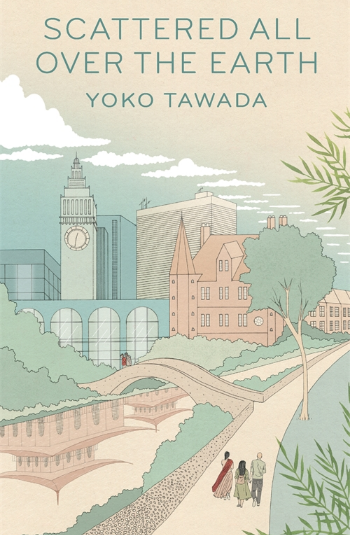
After some rather slow reading weeks, I have picked up in the previous week. I was able to complete four books in a week. I guess what is propelling me is the number of books I want to read during my foray into the works of female East Asian writers; this is also to commemorate Women’s History Month. The first of these four books was Yōko Tawada’s Scattered All Over the Earth. This is my third novel by Tawada, making her just the third female (and eleventh overall) Japanese writer with whom I have read at least three books; she joins Mieko Kawakami and Yōko Ogawa. Like in the case of Kanai, it was through the lead-up to the 2018/2019 Nobel Prize in Literature awardee that I first came across her.
Originally published in 2018 as 地球にちりばめられて (Chikyū ni chiribame rarete), the novel was made available to Anglophone readers in 2022. Like the first two Tawada books I read, Scattered All Over the Earth is a work of dystopian fiction and commences in the Danish capital where Knut, a linguistics student, finds himself captivated by a woman he saw on a random talk show. The woman was Hiruko. Born in a country that no longer exists, she was on a quest to find other speakers of her native tongue so that she could speak it again. She speaks a homemade language she referred to as Panska; it is a unique combination of Scandinavian languages. With his interest piqued, Knut contacted the station and connected with Hiruko. Together, Hiruko and Knut embarked on a journey to find another person speaking the language of her homeland. Each chapter is narrated by a new character, including Akash, Nora, and Tenzo. The quintessential Tawada novel, Scattered All Over the Earth is a depiction of Japan that is slowly disappearing although the story starts in medias res. Tawada does not provide any context as to what happened; she leaves it to the reader’s imagination. However, Scattered All Over the Earth tackles the disintegration of language but it is a microcosm of a world descending into chaos. Interestingly, Japan was never directly mentioned in the novel although one could glean from the finer details that it is Hiruko’s birthplace. Details of Japanese pop culture – such as sushi – remind the readers of this. Overall, Scattered All Over the Earth is an interesting take on an interesting subject.

From Japan – well, technically, from Europe -my literary journey next took me to the Chinese mainland. My foray into the works of East Asian writers is in full swing. Unfortunately, my foray into the works of Chinese writers has been quite limited. In fact, I have not read any works by female Chinese writers originally written in Chinese although I have read the works of Amy Tan and Yuan-tsung Chen which were both originally written in English. This places Xiaolu Guo’s Twenty Fragments of a Ravenous Youth in a very unique spot. While it is the first novel by Guo I read, it is the sixth novel written by a Chinese writer I read this year. This makes 2025 my most prolific reading year in terms of books written by Chinese writers.
Twenty Fragments of a Ravenous Youth was originally published in 2000 as 芬芳的37.2度. The novel charts the fortunes of Fenfang, a young female film extra living in Beijing. At the age of seventeen, Fenfang left her parents in the countryside where they ran a potato farm. She wanted to start a new life in the bustling Chinese capital and had no desire to return to the countryside. The novel was told in vignettes – hence the twenty fragments of the title – and captures Fenfang’s new life. The pursuit for success in the bustling capital, however, proved to be a long and winding journey, especially as Fenfang was navigating uncharted territories. In Beijing, success was elusive. landed mostly dead-end roles with no lines in television shows. Opportunities with substantial pecuniary gains came once in a blue moon if they even come at all. Failures, nevertheless, left Fenfang unfazed. An engaging facet of the novel was the details of communist Beijing. Fenfang lived in the Chinese Rose Garden Estate, one of several Beijing estates constructed to replace the traditional hutongs. While the estates seemed new, they were crumbling inside. Fenfang also tried her best to upskill, earning diplomas and certifications which she kept in her Mao drawer. At one point, Fenfang had to report to the police station under the suspicion of being a perpetrator of a crime. A significant part of her story also captured her romantic but disappointing affairs. Twenty Fragments of a Ravenous Youth is a quick but engaging coming-of-age story in communist China.

In back-to-back reads, I am reading a work by a writer whose oeuvre I have yet to explore. This then takes me to the Korean Peninsula which has recently been gaining some attention in the global literary scene, particularly after Han Kang became the first Korean writer to win the International Booker Prize with her novel The Vegetarian. It opened the doors for Korean writers as more of their works were translated, with some even nominated for prestigious literary prizes. With Han’s awarding of the Nobel Prize in Literature in 2024, Korean literature is bound to gain more attention. Anyway, one of the recently translated Korean works that has become ubiquitous is Jungeun Yun’s The Marigold Mind Laundry which I included to my 2025 Top 25 Reading List.
Marigold Mind Laundry was originally published in 2023 as 메리골드 마음 세탁소. On the surface, it seems to have come from the same template as Hwang Bo-Reum’s Welcome to the Hyunam-Dong Bookshop and Yeon Somin’s The Healing Season of Pottery. After all, these three books are all about healing in a tumultuous world; this literary genre is certainly establishing its niche. What sets Marigold Mind Laundry apart from the other two books is its integration of magical realist elements. Yun’s novel transports the readers to a fictional village referred to as a village of wondrous powers. Jieun, the novel’s main character, was born with the power to heal and make wishes come true. However, she got separated from her parents, prompting Jieun to travel across time in search of them. Trapped in a cycle of rebirth and despair, Jieun eventually settled in an idyllic seaside village where she conjures up a hilltop laundromat, a space where stains of the heart would be removed. The rest of the story then follows Jieun as she deals with different individuals who seek to heal from their trauma. Yun endeavors to highlight several modern concerns such as the follies of social media, society’s absurd beauty standards, and gender expectations. However, Yun fails to live up to the expectation as she is more fixated with the idea of sharing more stories rather than exploring these subjects deeper.

This four-book stretch concluded with a familiar name from a very familiar literary territory. I first came across Banana Yoshimoto through must-read lists. Her debut novel, Kitchen, was a recurring presence in such lists. Kitchen would also be the first Yoshimoto book I read; I read it during the height of the pandemic. It was a fitting introduction to the Japanese writer’s oeuvre. A couple of years later, I read my third Yoshimoto novel, Moshi Moshi, making her the fourth female Japanese writer with whom I read at least three works. In a way, this is a conscious effort to balance the gender scale.
Moshi Moshi was originally published in 2012 as もしもし下北沢 (Moshi moshi Shimokitazawa). The novel started on a bleak note as the catalyst to it was the death of Yoshie’s father; Yoshie was the novel’s main character and primary narrator. Yoshie’s father was a talented but minor musician who committed suicide with his younger lover who was also his cousin. The titular Moshi Moshi refers to the phone that Yoshie’s father left at home before he went to commit suicide; his suicide came as a complete surprise to both his wife and daughter. They were oblivious to the life he led as a musician but as they both reflected on his absences, details were not adding up, adding salt to the injury. This also prompted Yoshie to ruminate on her relationship with her father. To move on from her grief and her father’s act of betrayal, Yoshie moved out of their condo and started working in a bistro called Les Liens. However, questions about her father’s life lingered. As such, Yoshie started digging into her father’s past. The novel, however, pans into Yoshie’s romantic life while, at the same, it captures the essence of a place, particularly the neighborhood of Shimokitazawa. In bustling Tokyo, the neighborhood is calm. Moshi Moshi is, like Kitchen, about grief but also about rebuilding one’s life and finding new joy from this grief.
What will you read next?


 The Pine-Scented Chronicles