
Happy Wednesday everyone! Wednesdays also mean WWW Wednesday updates. WWW Wednesday is a bookish meme hosted originally by SAM@TAKING ON A WORLD OF WORDS.
The mechanics for WWW Wednesday are quite simple, you just have to answer three questions:
- What are you currently reading?
- What have you finished reading?
- What will you read next?

What are you currently reading?

How time flies! It still feels like yesterday when the year started but in a flash, we are nearly a quarter through it. Time, after all, just keeps flowing, sans any regard for us. This is the reality we have to deal with. Regardless, how has your 2025 been? I hope that it is currying you with favors. I hope you are being showered with blessings and good news. I hope that this year will be prosperous, brimming with wealth but more importantly, health. I hope that you are already making progress on your goals and targets. For those whose year has been going otherwise, I hope you experience a fortune reversal in the coming months. Speaking of goals, this year, I have several, primary of which is completing 100 books for the fourth year in a row. Historically, my initial goal is set at a more conservative level. Barring any major obstacles, I know I can end the year with at least 100 books. Another goal I have this year is to read more translated works of literature than works originally written in English.
With the second goal in mind, I commenced my reading year with the works of East Asian writers. One of the reasons for this is the glaring lack of Chinese voice in my reading list. Zhang Yueran’s Cocoon is just the second novel written by a female Chinese writer originally written in Chinese that I read. Originally published in 2016 as 茧, Cocoon chronicles the fortunes of two friends Li Jiaqi and Cheng Gong. The novel was framed like a present-day conversation between the two of them. The story alternated between their two perspectives, providing readers intimate glimpses into their psychological profiles. As the story moves forward, they grappled with their memories and their past. The introduction provided a hint on what the story was about: the impact of the Cultural Revolution not only to those who witnessed it but to the succeeding generations. Zhang herself was raised in the years immediately after the Cultural Revolution. This makes for an interesting read. I will be sharing more of my impressions on the book in this week’s First Impression Friday update.
What have you finished reading?
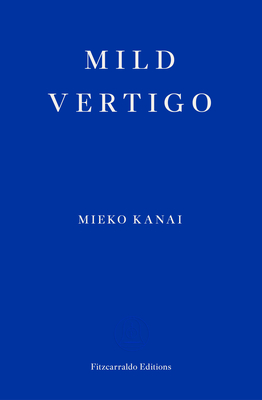
After a very prolific reading week, I hit a slump in the past week. I guess this is also due to more hectic days at the office. Regardless, I was able to complete two books which is still a good number. The first of these two books is an unfamiliar name from a very familiar territory. One of the reasons why I kicked off my reading year with works of East Asian writers is my inability to host a Japanese literature month in 2024, the first time in a while I failed to do so. As such, I resolved to read as many as I can this year. For March, I have been focusing on the works of female writers, in line with this month being Women’s History Month. This brings me to Mieko Kanai’s Mild Vertigo.
I believe it was during the lead-up to the announcement of the 2023 Nobel Prize in Literature awardee that I first came across Mieko Kanai (金井 美恵子). She was among the leading candidates. Despite not getting the award, my interest in her was piqued, hence, the inclusion of Mild Vertigo to my 2025 Top 25 Reading List. Originally serialized in Katei gahō, the book was eventually published as a collective in 1997 as 軽いめまい (Karui memai). The novel charts the story of Natsumi, a housewife living in modern Tokyo. She is living in Tokyo with her husband and their two sons. The novel is divided into vignettes, a facet I found ubiquitous in the landscape of contemporary Japanese literature. Essentially a slice-of-live story, each chapter provides details of domestic life; we see Natsumi making dinner, washing dishes, eating out with friends, and even gossiping with neighbors. On the surface, this sounds mundane. However, each chapter, alternating between between internal monologues and interactions with her family, provides insights about life that reeled me in. The novel also paints a vivid portrait of Natsumi’s community and how it affects her life. The book is a rather slender one but it brims with warmth and tenderness stemming from Natsumi’s ruminations about her life and the people around her. These are reflections many can relate to.

From Japan, I crossed the Korean Strait – not literally of course – for a venture into Korean literature. With the growing prominence of KPop and KDrama, it was just a matter of time before Korean literature would seize the global stage. And sure, Korean literature did take the global stage. It all started with Han Kang’s victory at the 2017 International Booker Prize. The Vegetarian’s success was eventually followed by more translated works of Korean literature, several of which would be nominated for the same award. More and more Korean titles were also made available to Anglophone readers. Among these writers is Lee Geum-Yi who has a prolific career as a children’s story writer. Can’t I Go Instead is the first book by the Korean writer I read.
Can’t I Go Instead commences on April 29, 1920, with the opening sequences capturing the labor of Lady Gwak, the mistress of the Gahoe-dong mansion in Japanese Empire-ruled Seoul. Her father-in-law was Viscount Yun Byeongjun who recently passed away under scandalous circumstances, leaving his son, Hyeongman, to occupy the position he once led. Lady Gwak and the Viscount’s relationship, however, was on the rocks; her only saving grace was her father-in-law. After several failed births, Lady Gwak finally gave birth to a daughter the Viscount named Chaeryeong, one-half of the two girls/women at the heart of the novel. When Chaeryeong’ turned eight, her father brought her to a countryside village to retrieve her present, a maidservant. It was not the present she expected. Another girl was bought to be her maidservant but seven-year-old Sunam stepped up and presented herself on behalf of the other girl. “Can’t I go instead?” she asked. This question sealed her fate; she was the other half that formed the novel’s backbone. The novel provides a cursory glance at their childhood and slowly moves into their adulthood. On the backdrop, the story covers germane historical events that shaped contemporary Korean landscape. It also captures how these events have altered the two characters’ lives. Can’t I Go Instead navigates war and the intricacies of growing in the midst of violence. What illuminates, however, are their resilience and unwavering spirit in the midst of a world continually shifting. Overall, Can’t I Go Instead is a riveting read.
What will you read next?



 The Pine-Scented Chronicles