Happy Tuesday everyone! As it is Tuesday, it is time for a Top Ten Tuesday update. Top Ten Tuesday is an original blog meme created by The Broke and the Bookish and is currently hosted by That Artsy Reader Girl.
This week’s given topic: Books You’d be a Fool Not to Read
Happy April Fool’s Day! In honor of this silly holiday, share the books you think people must read for whatever reason. They could be your favorites, books you deem classics, books that you learned something important from, books you wish you’d read sooner, etc. You could even narrow it down to a specific genre and share the must-reads for that genre. Get creative!


The Name of the Rose by Umberto Eco
Snippet from my review: The story contained numerous allusions to a plethora of religious dogmas and subjects. This was balanced by the mystery part of the book, which had a Sherlock Holmes feel to it. Eco was successful in keeping the reader on tenterhook all throughout the story. The mystery is muddled until the very end of the story. Just like any successful mystery piece, unmasking the murderer was a great challenge.

Murder on the Orient Express by Agatha Christie
Snippet from my review: Another element that truly shone in the novel is Agatha Christie’s writing prowess. She was on point the entire time. She deviated from the formulaic storytelling that I have gotten used to. She got the pacing right while maintaining a sense of tenterhook and tension in the atmosphere. The way she carried on with the narrative is something that one rarely encounters. The novel is a collection of wonderful attributes that were carefully weaved together to create a masterpiece.

Human Acts by Han Kang
Snippet from my review: Human Acts sheds light not just on the horrors of the Gwangju incident but on the challenges of finding beauty and meaning after scenes of unbearable cruelty and raw violence. It appeals to the collective consciousness of humanity that is in want of an escape from the physical. The silhouettes of death and pain accompany the readers as they navigate the labyrinthine literary journey. Its presence is not overwhelming nor is it unmistakable for it is an essential element of the story.
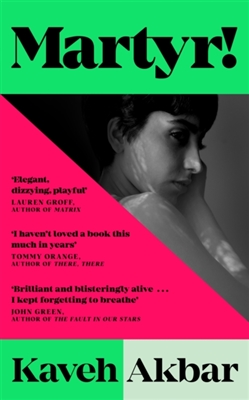
Martyr! by Kaveh Akbar
Snippet from my review: Beyond the extensive probe into the various definitions and manifestations of martyrdom, the novel also deftly examines the intricacies of identity and sexuality. Cyrus not only had to confront his inner demons but also had to deal with the complexities that inherently came along with his provenance. Due to his mixed heritage, Cyrus is caught in between two glaringly contrasting cultures that prompt him to submit to a pathological politeness that exists in the intersection of Iranian-ness and Midwestern-ness. He inhabits a space where he cannot fully claim belonging to either group, a struggle several individuals of mixed heritage experience. Being a question mark exacerbated his hatred for himself. He always finds himself in a quandary, conscious of how he should act in certain circumstances, an elaborate and almost entirely unspoken choreography of etiquette.

No Longer Human by Osamu Dazai
Snippet from my review: For all its exploration of the intricacies of the human spirit and the darker aspects of the human experience, No Longer Human beacons with hope. As the story approaches its inevitable close, Ōba starts to establish a genuine connection with himself and even acknowledges the despair that reverberates throughout his existence. In doing so, he started to embrace his true self. He slowly took off the mask of clownery that he had been wearing all his life. He decided to embrace his imperfections. No Longer Human was Dazai’s final published work. Interestingly, a couple of months after its publication, Dazai took his own life. As such, one can surmise the parallels between Dazai and Ōba’s life. Both were born into affluent families, they both neglected their studies and took an interest in communism and other vices.
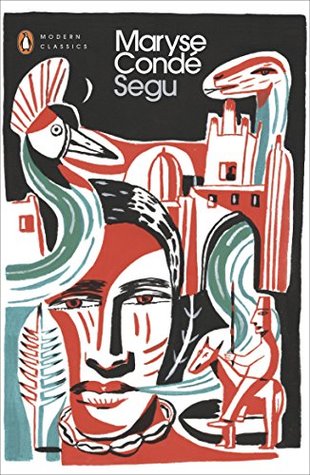
Segu by Maryse Condé
Snippet from my review: In Segu, Condé delivered a literary masterpiece that challenged how we understand colonialism, religious fanaticism, and the scars they have left on different quarters of the world. The book was even more effective in its undoing of the preconceived notions most of us have formed on Africa, its customs, and its people. In Segu, we see a civilization on the precipice of collapse as it was slowly being choked to surrender by various foreign elements. The book had its fair share of flaws but the book’s successes far outweighed its flaws. Parts-family saga, parts-history textbook, Segu was a lush tapestry of western African history explored through the strands of the Traore clan.

The House of the Spirits by Isabel Allende
Snippet from my review: But The House of the Spirits is more than just the story of the Trueba family. It delved into more important facets that were subtly obscured for most of the narrative. In a triumph of creative writing, Allende combined a political atmosphere into the narrative. Midway through the story, the narrative begins shifting as different political ideologies are incorporated into the story. This introduction to a different subject stirred the story in a different direction. One can easily glean the subtle references to Chilean history, from democracy to socialism to military junta and eventually to absolute dictatorship.
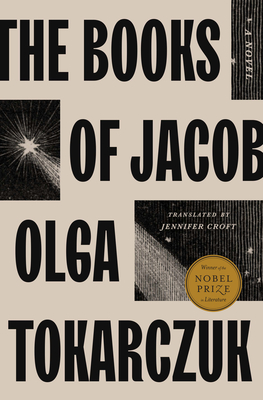
The Books of Jacob by Olga Tokarczuk
Snippet from my review: Encyclopedic is but one adjective that can be used to describe the hefty The Books of Jacob. Juxtaposed to Jacob’s story is a wealth of historical information, and details. The plights and history of Eastern European Jewry were extensively dealt with in the novel. Tokarczuk vividly captured seminal events of the era, including plagues, pogroms, and wars. As Jacob journeys across Ukraine and Poland and across seven borders, the readers get to witness the political and philosophical transformation taking place all over Europe. While Englightenment emerged late in Poland, it nonetheless ushered in diversification to every level of society. As depicted by the story of Jacob and his disciples, various ideas, from the liberal to the conservative to the outright brazen, have trickled into religion, people, and even ideas.
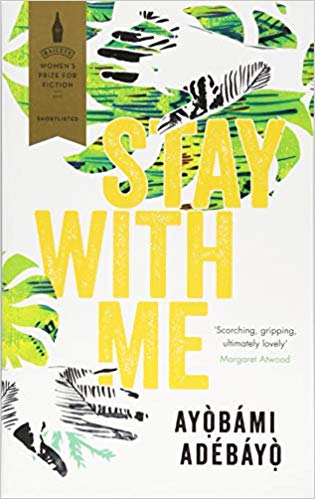
Stay With Me by Ayọ̀bámi Adébáyọ̀
Snippet from my review: Stay With Me is an intersection of modern and traditional Nigeria. Yejide and Akin’s marriage isn’t fixed, like most traditional African weddings are. They are both university-educated and financially capable – Yejide manages her own salon while Akin works for a bank. Their modernity is a stark dichotomy to their parents and extended family’s beliefs which were steeped in tradition, including polygamy and child brides. They obnoxiously shoved their agenda down Yejide and Akin’s throats, wreaking unnecessary havoc on what had been a peaceful union.

A Man Called Ove by Fredrik Backman
Snippet from my review: There was an undertone of an old adage murmuring underneath the surface – that it takes a village to raise a child. Ove and Sonja’s love story was a luminous part of the story. A Man Called Ove is a generally light read but it also has heavier and darker undertones subtly hidden underneath its heartwarming tale. Backman ingeniously incorporated the context of depression and suicide into his prose. It wasn’t overwhelming but it was depicted enough not to escape one’s attention.
 The Pine-Scented Chronicles