
Happy Wednesday everyone! Wednesdays also mean WWW Wednesday updates. WWW Wednesday is a bookish meme hosted originally by SAM@TAKING ON A WORLD OF WORDS.
The mechanics for WWW Wednesday are quite simple, you just have to answer three questions:
- What are you currently reading?
- What have you finished reading?
- What will you read next?

What are you currently reading?
How time flies! It still feels like yesterday when the year started but in a flash, we are now in the fourth month and the second quarter of the year. Time, after all, just keeps flowing, sans any regard for us. It does not wait for anyone, a reality we have to deal with. With a quarter down, how has your 2025 been? I hope that it is currying you with favors. I hope you are being showered with blessings and good news. I hope the rest of the year will be prosperous, brimming with wealth and, more importantly, health. For those whose year has been going otherwise, I hope you experience a fortune reversal in the coming months. I also hope everyone is making progress on their goals. Reading-wise, I have several goals I want to achieve, primarily to complete 100 books for the fourth year in a row. Barring any major obstacles, I know I can end the year with at least 100 books.
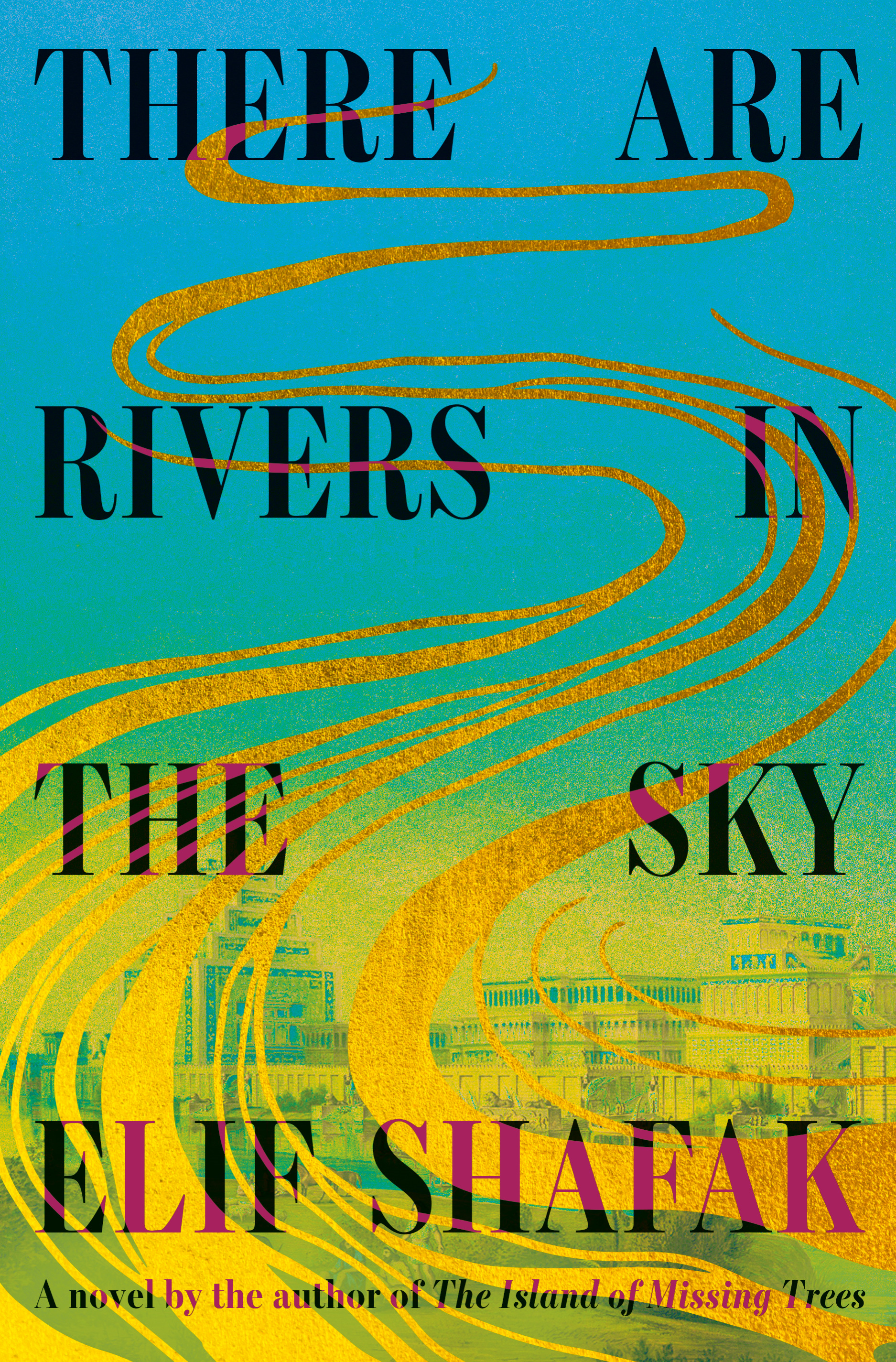
After a full quarter of reading exclusively works of East Asian writers, I am now pivoting toward the rest of Asia. Commencing this journey is a title I have been looking forward to last year, Elif Shafak’s latest novel, There Are Rivers in the Sky. Unfortunately, I was not able to obtain a copy of the book last year but I knew I had to read it immediately once I get to obtain a copy of it. There Are Rivers in the Sky takes the readers across various periods, starting in 640 BCE when a raindrop fell on the head of Assyrian King Ashurbanipal in Mesopotamia. The story then moves forward in time and introduces the three main characters at the heart of the story. In 19th-century England, we meet Arthur Smyth. In 2014, Shafak introduced Narin, a Yazidi girl who moves between Turkey and Iraq. Lastly, Turkish English hydrologist Zaleekhah is residing in England in 2018. Each voice and storyline, so far, is promising. I can’t wait to see how Shafak unspools their stories.
What have you finished reading?

I was not able to complete my WWW Wednesday update last week. As such, I am going to catch up on all the books I have completed since my last WWW update on Wednesday. The first quarter of the year was dedicated to the works of East Asian writers. This was driven mainly by my failure to hold a Japanese Literature Month in the previous year. The past three months also allowed me to expand my foray into Chinese literature, an expansive part of the literary world that, ironically, remains largely unexplored by me. Indeed, 2025 is my most prolific reading year, at least in Chinese literature. Zhang Yueran’s Cocoon is the seventh book written by a Chinese writer I read this year. It was during one of my random ventures into the bookstore that I first came across the novel. Curious about what it has in store, I obtained a copy of the book and made it part of my ongoing venture into East Asian literature.
Originally published in 2016 as 茧, Cocoon commences with the reunion of two childhood friends: Li Jiaqi and Cheng Gong. Now in their twenties, they have been incommunicado for nearly two decades. In alternating fashion, they related their individual stories. The critical juncture in their reunion was when Li Jiaqi was called back to the family home in Jinan to look after her dying grandfather. Her grandfather was an iron-willed patriarch who, during his heyday, was the most famous heart surgeon in China. Meanwhile, Gong’s grandfather lies in a vegetative state in Room 317 of the local hospital. He has been in this state since the Cultural Revolution when an unknown assailant drove a nail into his skull. This was the first cue as to what the novel was about although the introduction did provide me an iota on what the book was about. Both Jiaqi and Gong were raised by dysfunctional families born out of the shadows of the Cultural Revolution. The Cultural Revolution is, without a doubt, a widely depicted historical event although, unfortunately, it is a subject I rarely encountered in literature. The Cultural Revolution, apparently, has birthed its own literature referred to as scar literature. Cocoon, however, focuses on the impact of the Cultural Revolution on the generation immediately succeeding it. Yueran herself is a part of this generation so, in a way, the novel was a personal one. Overall, Cocoon is a vivid portrayal of a seminal historical event and its legacy.

From China, I traveled to a more familiar literary territory. Without a doubt, Japanese literature has become a home for me, especially during the pandemic. It has become one of my, if not my favorite literature. One thing, however, was glaring. As I immerse myself in the works of Japanese literature, I have noted how sparse the Japanese female voice is, particularly in the 20th century, at least in works that have been translated into English. The names one would associate with 20th-century Japanese literature are Yasunari Kawabata, Osamu Dazai, Jun’ichirō Tanizaki, Yukio Mishima, Natsume Sōseki, and Shūsaku Endō, among others. They are all men. This is not to say that there were no female Japanese writers who rose to prominence.
Among the female Japanese writers who made a mark was Sawako Ariyoshi who I first came across during the pandemic. Her novel, The River Ki, was ubiquitous. Originally published in 1959 in serialized form in the magazine Fujin Gahō, it was eventually published as a complete book carrying the title 紀ノ川 (Kinokawa). The novel commences at the turn of the 20th century and introduces the beautiful Hana Kimoto and her grandmother, Toyono. We first met them as they were visiting a temple in Wakayama before Hana’s wedding; Hana was just twenty. Hana excelled in her studies at Wakayama Girls School. Her grandmother also taught her traditions, such as playing the ‘koto‘ and the elegance of the tea ceremony. While there was a strike of balance between tradition and female liberty, traditions eventually prevailed as Hana was set to marry Keisaku Matani. The succeeding chapters captured two more sets of mother-daughter relationships: Hana and her daughter Fumio and Fumio and her daughter Hanako. Through their stories, Ariyoshi captures how Japan is slowly moving toward modernization although it is still largely tied up to tradition. But while it celebrates moving forward, it is also an ode to the passage of time and the slow disintegration of traditions. The River Ki is as equally engaging as The Doctor’s Wife, the first Ariyoshi novel I read.
For my next read, I stayed in Japan. Speaking of female Japanese writers, another prominent name is Yūko Tsushima who was born Satoko Tsushima. She was the daughter of famed novelist Osamu Dazai (born Shūji Tsushima). With her birth pedigree, I guess it was a no-brainer that Tsushima would rise to literary prominence. To be fair, she stepped out of the shadows of her famous father and built a literary career that is entirely her own. Her career, which spanned decades, has earned her many of Japan’s top literary prizes, including the Izumi Kyōka Prize for Literature, the Noma Literary New Face Prize, the Noma Literary Prize, the Yomiuri Prize, and the Tanizaki Prize.
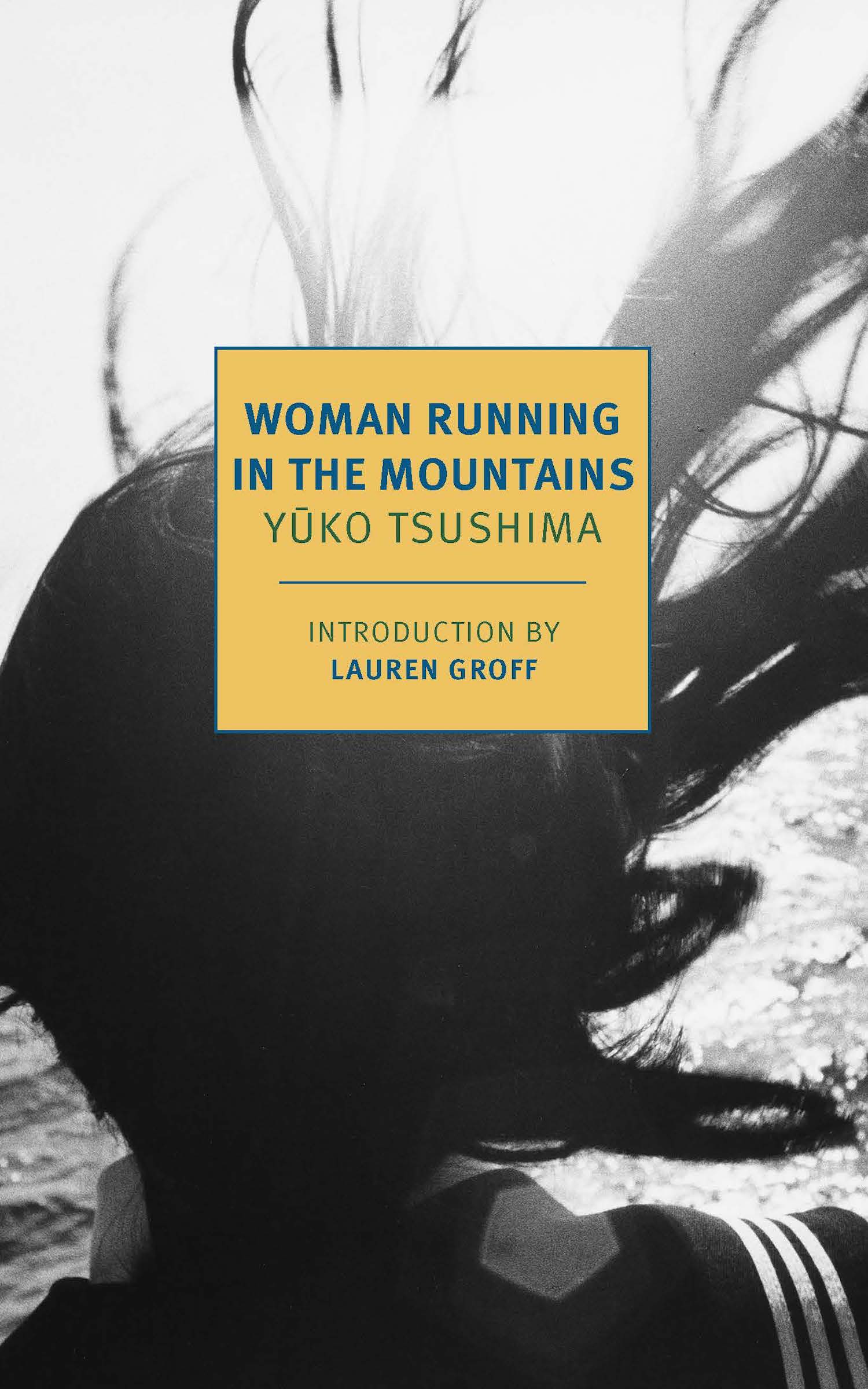
Among Tsushima’s renowned works is Woman Running in the Mountains. Originally published in 1980 as 山を走る女 (Yama o hashiru onna), the novel charts the fortune of Takiko Odaka in 1970sd Japan. At the start of the novel, we meet her as she makes her way to the hospital. Heavily pregnant, she was due to give birth. The crux is that Takiko is twenty-one years old and unmarried. Her situation was exacerbated by the fact that the baby was the result of an affair with a married man; he never made an appearance in the story. Takiko’s parents were naturally against her pregnancy. Japanese society also frowned upon her. These, however, did not stop her from pushing through with the pregnancy. The birth goes smoothly but things started to change after Takiko and her son were discharged from the hospital. Takiko, however, was tenacious. She was determined to be a good mother. More importantly, she did not let her motherhood and the obstacles she had to endure redefine her. Takiko was very much her own. She worked hard for a decent job and a life away from her neighborhood’s prying eyes, vicious parents, and the threat of destitution. Woman Running in the Mountains vividly captures the experience of being a single mother in Japan albeit during a different time, hence, different prevailing attitudes which could potentially shock some readers.

From Japan, I crossed the Korean Strait – not literally of course – for a venture into Korean literature. With the growing prominence of KPop and KDrama, it was just a matter of time before Korean literature would seize the global stage. And sure, Korean literature did take the global stage. It all started with Han Kang’s victory at the 2017 International Booker Prize. The Vegetarian’s success was eventually followed by more translated works of Korean literature, several of which would be nominated for the same award. More and more Korean titles were also made available to Anglophone readers. Among these writers is Bae Suah who made her literary debut in 1993 with A Dark Room. Throughout her career, she published short stories and novels, elevating her to being one of South Korea’s more renowned contemporary authors.
Originally published in 2013 as 알려지지 않은 밤과 하루 (Allyeojiji Anh-Eun Bamgwa Halu), Untold Night and Day charts the fortunes of twenty-eight-year-old Kim Ayami. She dropped out of law school to pursue a career in acting. She is currently working at a theater library for the blind in Seoul. Before this, she was juggling waitressing jobs. However, the theater was about to shut its doors permanently which means Ayami is on the brink of unemployment once again. Fortunately, her German teacher, Yeoni, brought a work opportunity. A German writer who required an assistant was about to arrive in Seoul. This prompted Ayami to set off to meet him at the airport. A second character, Buha, soon enters the scene. Buha is a former businessman who roamed the streets looking for a woman whose picture he saw in the newspaper years ago. When his path crosses with Ayami’s, he confronts her because Ayami reminds him of someone else. He wanted to confirm if she was the woman he’d been looking for. But this is just the surface. Bae takes the readers on an unusual ride which can be quite disconcerting particularly if one is seeking a linear story. For a book seemingly slender, it is brimming with images and repetitions Untold Night and Day was certainly an experience.
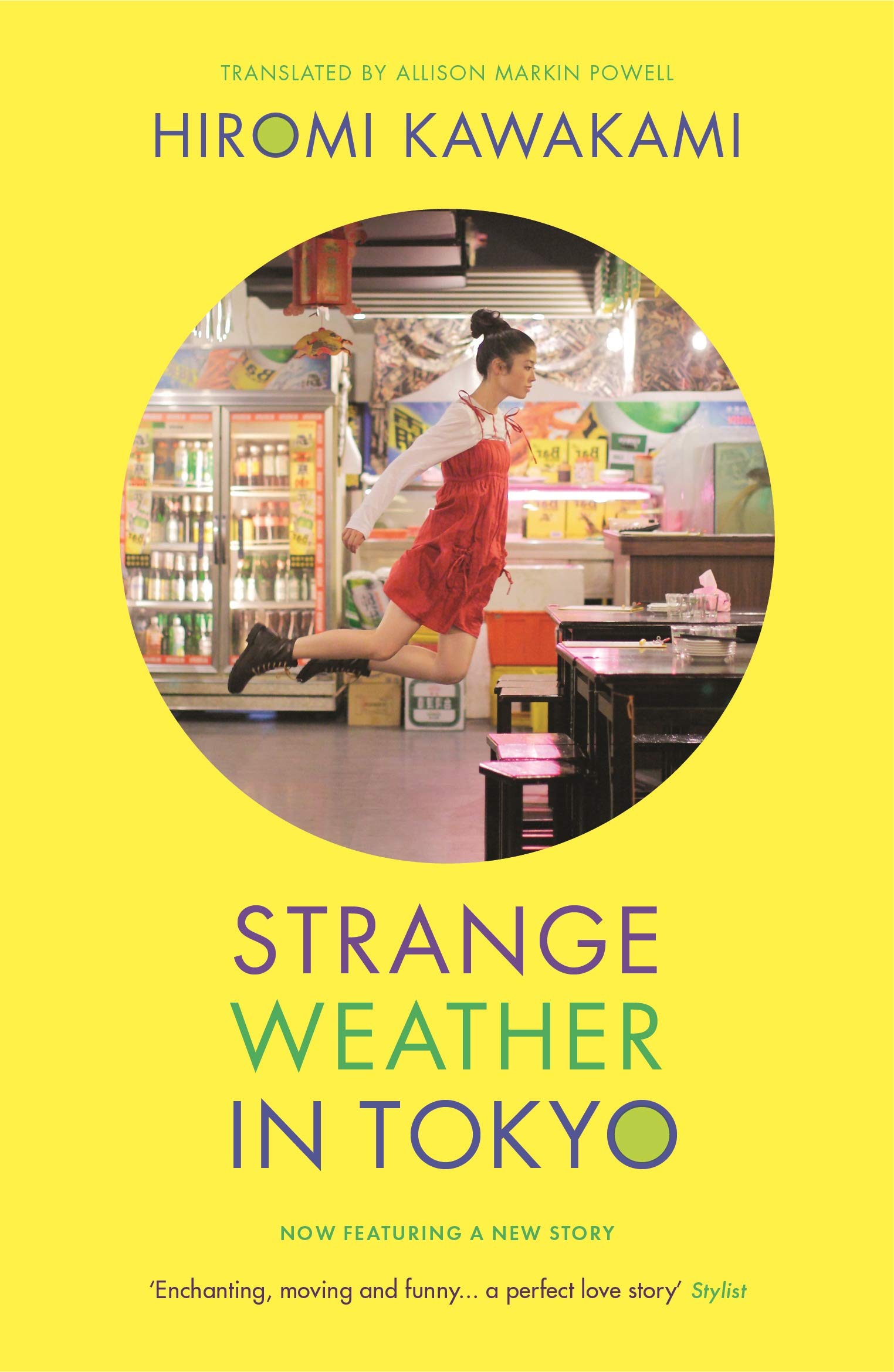
To conclude my March reading journey, and, in the process, effectively closing my foray into East Asian literature, I traveled from South Korea to Japan, once again crossing the Korean Strait. I guess I have been traveling to and fro between these two countries. Concluding my three-month venture into works of Japanese, Korean, and Chinese literature is Hiromi Kawakami’s Strange Weather in Tokyo. I first came across Kawakami back in 2019 when I read The Nakano Thriftshop out of curiosity. I was not totally impressed by the book but after reading wonderful reviews of Kawakami’s other works, I resolved to give her oeuvre another chance. Last year, I read Under the Eye of the Big Bird which was just announced as part of the International Booker Prize longlist.
This year, I read Strange Weather in Tokyo. From what I understand, the book was the first that elevated Kawakami to global recognition. Originally published in 2001 as センセイの鞄 (Sensei no kaban), the novel won the 37th Tanizaki Prize and was originally translated into English as The Briefcase. It was later republished as Strange Weather in Tokyo. The novel charts the fortunes of thirty-seven-year-old Tsukiko Omachi, a woman living a solitary existence in Tokyo. She spent her free time alone in her apartment, reading books, bathing, and talking to herself. Her life was altered by a serendipitous encounter with an individual from her past. At a local bar near Tokyo Station called Satoru’s, Tsukiko ran into sixty-seven-year-old Harutsuna Matsumoto. Matsumoto had been observing Tsukiko for some time before finally approaching her to confirm if she was indeed Tsukiko Omachi. Tsukiko soon realizes that the man who approached her was once her high school teacher; Tsukiko referred to Matsumoto as sensei. Over the following months, the two kept encountering each other at the bar despite not arranging any meeting. The two bonded and soon forged a friendship built around their encounters at the bar. They were slowly rebuilding their connection through their memories and shared interests. Like Tsukiko, Matsumoto is living alone; he is a widower. Sensei is also rather old-fashioned and is very critical of Tsukiko’s unladylike demeanor. They were full of contrasts and yet their friendship blossomed. Strange Weather in Tokyo is a bittersweet story of friendship, the passage of time, and, ultimately, parting.
What will you read next?
 The Pine-Scented Chronicles
Currently- “Somewhere Beyond the Sea” (have been reading it since Feb.)
Next- “Islands of the Blessed”
Finished- “House in the Cerulean Sea”, which is why I am on my current read
LikeLike