
First Impression Friday will be a meme where you talk about a book that you JUST STARTED! Maybe you’re only a chapter or two in, maybe a little farther. Based on this sampling of your current read, give a few impressions and predict what you’ll think by the end.
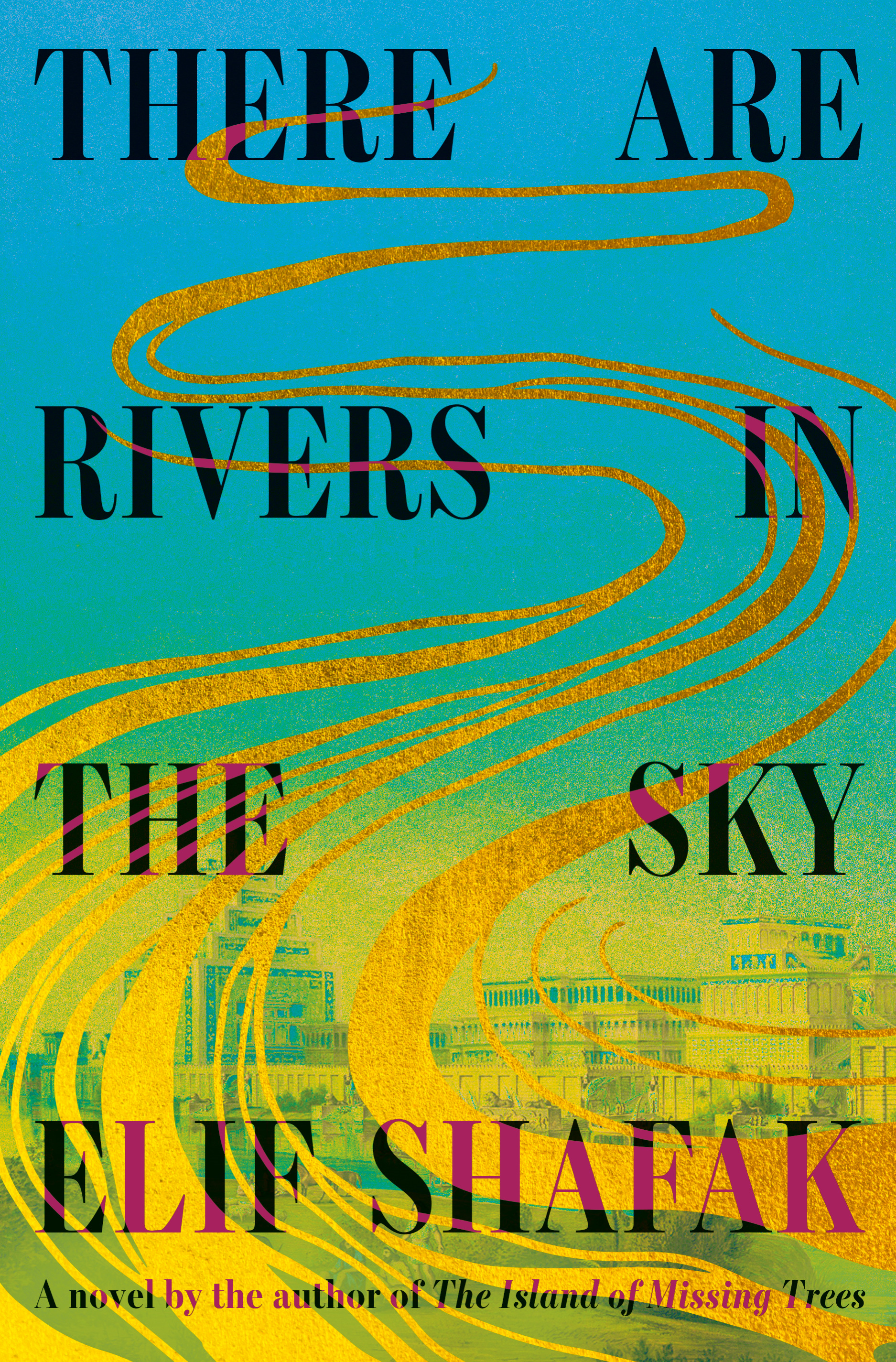
Synopsis:
This is the story of one lost poem, two great rivers and three remarkable lives – all connected by a single drop of water.
In the ruins of Nineveh, that ancient city of Mesopotamia, hidden in the sand, lie the fragments of a long-forgotten poem: the Epic of Gilgamesh.
In Victorian London, an extraordinary child is born at the edge of the dirt-black Thames. Arthur’s only chance of escaping poverty is his brilliant memory. When his gift earns him a spot as an apprentice at a printing press, Arthur’s world opens up far beyond the slums, with one book soon sending him across the seas: Nineveh and Its Remains.
In 2014 Turkey, Narin, a Yazidi girl living by the River Tigris, waits to be baptized with water brought from the holy city of Lalish in Iraq. The ceremony is cruelly interrupted, and soon Narin and her grandmother must journey across war-torn lands in the hope of reaching the sacred valley of their people.
In 2018 London, brokenhearted Zaleekhah moves to a houseboat on the Thames to escape the wreckage of her marriage. Zaleekhah foresees a life drained of all love and meaning – until an unexpected connection to her homeland changes everything.
A dazzling feat of storytelling from one of the greatest writers of our time, Elif Shafak’s There Are Rivers in the Sky is a rich, sweeping novel that spans centuries, continents and cultures, entwined by rivers, rains and waterdrops. It asks who gets to control memory. And it tells a powerful story about the cost of forgetting.
Happy Friday everyone! Finally, we made it through another work week. I hope the previous week hasn’t been too tedious for everyone. Thankfully, we only had to work for four days this week as Tuesday (April 1) was a national holiday here in the Philippines. This is not to say that the previous week didn’t have its own set of challenges. With this, I hope everyone is ending the work week on a high note. I hope everyone was able to accomplish all the tasks they set to accomplish this week. I hope everyone managed to survive the work week and is diving into the weekend without much worry. If the workweek went otherwise, I hope you get to spend the weekend recovering your mojos. It is a brief respite but I hope we all get to optimize it. It is also an opportunity to pursue things that we are passionate about. More importantly, I hope everyone is doing well, in body, mind, and spirit.
I also can’t help but notice how time has been flying fast. Just like that, we are already a quarter through 2025. It still feels like yesterday when we welcomed the new year. Time flows, taking its natural course sans any regard to anyone. Anyway, how has the year been so far? I hope that everyone that it is going great or is going the way you wanted it to. If your year is going awry, I hope you experience a reversal of fortune in the coming months. I hope positive energies, blessings, and good news flow into your lives. I hope that you are well on your way to achieving your goals this year. Personally, I have several goals, reading-wise. One of my goals this year is to expand my foray into translated literature, hence, why I kicked off my 2025 reading journey with the works of East Asian writers. It was, as always, a fascinating and memorable experience that introduced me to new worlds I hadn’t been to before.
But with the quarter done, it is also time to explore other worlds. I didn’t have to go too far as I decided to immerse myself in the works of Asian writers. Commencing this journey is Elif Shafak’s latest novel, There Are Rivers in the Sky. I didn’t even know about the book’s release last year until midway through the year. When I heard of its release, I did not hesitate to add the book to my growing reading list; that time, I had just read The Architect’s Apprentice which I liked. During the pandemic years, the Turkish writer has certainly grown on me. Unfortunately, obtaining a copy of the book proved to be quite a challenge although I was able to acquire my copy toward the end of the year. So here I am, reading my sixth Shafak novel; how far I have come since reading 10 Minutes 38 Seconds in this Strange World.
There Are Rivers in the Sky opens in Mesopotamia in the 640s BCE. A raindrop fell onto the head of Assyrian King Ashurbanipal. Considered an “erudite king”, the Assyrian despot boasts an extraordinary library that includes the Epic of Gilgamesh. He was also cognizant of the powers of storytelling, hence, his extensive collection. It was an interesting premise but this barely scratches the surface. The story then moves forward in time. From Ancient Mesopotamia, Shafak transports the readers to Victorian England and introduces the first of three voices that comprise the story. Arthur Smyth was born by the River Thames in 1840 to a destitute family with a father who was occasionally absent. Despite the abject poverty, Arthur has an extraordinary memory. He also has an affinity for languages that allowed him to obtain an apprenticeship in a printing press as a young boy; he also earned the owner’s admiration and trust.
Arthur, christened “King Arthur of the Sewers and Slums,” read all the books printed by the press. One book, however, caught his fascination: Nineveh and Its Remains. His interest in Mesopotamia was piqued when he witnessed stone sculptures called lamassus being brought into the British Museum (interestingly, the repository of some of the ancient world’s treasures). The sculptures were brought from the banks of the Tigris river where they were excavated. His job also allowed him to encounter Charles Dickens (yes, the renowned writer). Once Dickens learned about Arthur’s interest in ancient civilization, the writer sent Arthur some clothes he could wear to visit the British Museum. Once allowed entry to the Museum, Arthur spent his lunch breaks deciphering cuneiform writing on the clay tablets. During one of his studies, he was discovered by Samuel Birch, one of the museum officials. Birch was amazed by Arthur’s ability to read the tables, prompting him to offer Arthur a part-time job at the museum to pursue what he had started. It was an opportunity for the young Arthur.
In alternating narratives, the novel introduces two more characters. Move forward to 2014 to the city of Hasankeyf (previously Castrum Kefa) where nine-year-old Yazidi girl Narin was about to be baptized. The ceremony, however, was disrupted by men working on a dam. Her grandmother Besma then decided to take her granddaughter to Lalish, the holiest of Yazidi sites located in Iraq, to complete the ceremony. This was against the advice of their relatives who informed them that traveling to Iraq is dangerous because of growing military forces. Narin’s father Khaled, a qanun player, does not heed their advice. It was through this journey that Narin learns about her heritage. This is one of the reasons I like the book because I am learning about Yazidi culture at the same time Narin is learning about it. I admit that it was only through this book that I learned about them; I heard more about their neighboring Kurdish.
The last thread of the novel introduces Zaleekhah, a thirty-one-year-old female hydrologist of Turkish origin living in 2018 London. Following a bump in her marital life, Zaleekhah decided to move into a houseboat on the River Thames. As the story moves forward, we learn that she was orphaned when she was just seven. Her parents were swept by a flash flood when they were camping by the Tigris. Zaleekhah was then raised by her mother’s brother, Uncle Malek. Zaleekhah also befriends Brennen, or “Nen”, an Irish woman who owns Zaleekhah’s houseboat. Like Arthur, Nen had a childhood fascination with Mesopotamia. She owns a tattoo shop where she tattoos customers in cuneiform.
So there goes. The characters were, in one way or another, connected to Mesopotamia. One facet of the story that immediately floats to the surface is the characters’ proximity to rivers: London with River Thames, Mesopotamia with Rivers Tigris and Euphrates, and Paris with River Seine. This reminds me of what I once read. Great civilizations (and cities) sprouted along great rivers. These three are just some of the many examples. I can name several but that would be for another day. I guess this is also where the novel derives its title. Each chapter also introduces the setting with phrases such as “By the River Thames” or “By the River Tigris.” This only underlines the seminal role rivers and, by extension, bodies of water played in the flourishing of ancient civilizations and great cities.
I also liked that the story covers various periods and is set in various locations. I get to learn not only about ancient history but also modern history. As I mentioned, the subject of Yazidis piqued my interest. Other cultural touchstones are also reeling me in. Take the case of The Epic of Gilgamesh. I kept on encountering it but I really don’t know much about it. It is also through There Are Rivers in the Sky that I am learning about how it was discovered. I also can’t help but giggle at the British Museum’s portrayal as a repository for ancient knowledge. There is somehow a subtle remark about the Museum’s complicity. It has, over the years, been portrayed as an institution that “steals” ancient treasures such as the tablets where The Epic of Gilgamesh was written. Not that Shafak is portraying it as a villain but somehow the novel reverberates with it.
As for the story, it seems that a lot is happening. I can’t wait to see how the three threads eventually converge. Apart from their connections to Ancient Mesopotamia – and Narin coming across Arthur’s grave – there is very little to connect the three characters. The stories are also a little uneven. I find Arthur’s story more engaging. I guess because there is more adventure to his story; he also visits Constantinople, the muse and the jewel of Shafak’s stories. Narin’s and Zaleekhah’s stories are also engaging to some extent because they introduce different subjects. One thing, however, is certain. There Are Rivers in the Sky has really caught my attention. It helps that I like reading about ancient civilizations. How about you fellow reader? What book or books have you read over the weekend? I hope you get to enjoy whatever you are reading right now. Happy weekend!
 The Pine-Scented Chronicles