
Happy Wednesday everyone! Wednesdays also mean WWW Wednesday updates. WWW Wednesday is a bookish meme hosted originally by SAM@TAKING ON A WORLD OF WORDS.
The mechanics for WWW Wednesday are quite simple, you just have to answer three questions:
- What are you currently reading?
- What have you finished reading?
- What will you read next?

What are you currently reading?

How has your week been? Thankfully, it is a holiday here in the Philippines. Well, not really thankful because I still had to report to work because I had upcoming deadlines I had to meet. Regardless, I hope everyone’s week is going well. We are nearly midway through April. How time flies! Time, after all, just keeps flowing, sans any regard for us. With a quarter down, how has your 2025 been? I hope that it is currying you with favors. I hope you are being showered with blessings and good news. I hope the rest of the year will be prosperous, brimming with wealth and, more importantly, health. For those whose year has been going otherwise, I hope you experience a fortune reversal in the coming months. I also hope everyone is making progress on their goals. Reading-wise, I have several goals I want to achieve, primarily to complete 100 books for the fourth year in a row. Barring any major obstacles, I know I can end the year with at least 100 books.
After a full quarter of reading exclusively works of East Asian writers, I am now venturing into the even more extensive world of Asian literature. Opening this reading adventure are back-to-back works of Turkish writers who have both become some of my favorites. After Elif Shafak’s latest novel, I am currently reading Orhan Pamuk’s My Name is Red. The novel, originally published as Benim Adım Kırmızı, is among the reasons why Pamuk was awarded the 2006 Nobel Prize in Literature. My Name is Red transports readers to late sixteenth-century Constantinople, present-day Istanbul and the muse of Pamuk’s (and Shafak’s) works. The story commences with the murder of Elegant Effendi (his opening chapter is titled I am a Corpse), an illuminator working for a workshop of miniaturists in the Ottoman Empire during the reign of Murad III. The story then introduces more characters, prominently Black and Shekure.
After 12 years of being away, Black, a civil servant, returned to Constantinople shortly after Elegant’s murder. He was originally sent away by his uncle Enishte Effendi who was also the father of Shekure. This was after Enishte learned that Black fell in love with Shekure. With Black back, Enishte wants Black to work on a secret book commissioned by the Sultan and illustrated by the three master miniaturists, Butterfly, Stork, and Olive who were all under the tutelage of Master Osman. Meanwhile, Black rekindles his romance with Shekure, especially with Shekture’s husband being in absentia. The plot thickens when Elegant’s murderer confessed his deed to Enishte then murdered him. My Name is Red is quite an eventful story with different voices, including those of a coin and even a painting, taking the narrator’s role. With the story evolving into a detective novel, I can’t wait to see how Black unravels the case; he was issued a moratorium by the Sultan himself.
What have you finished reading?
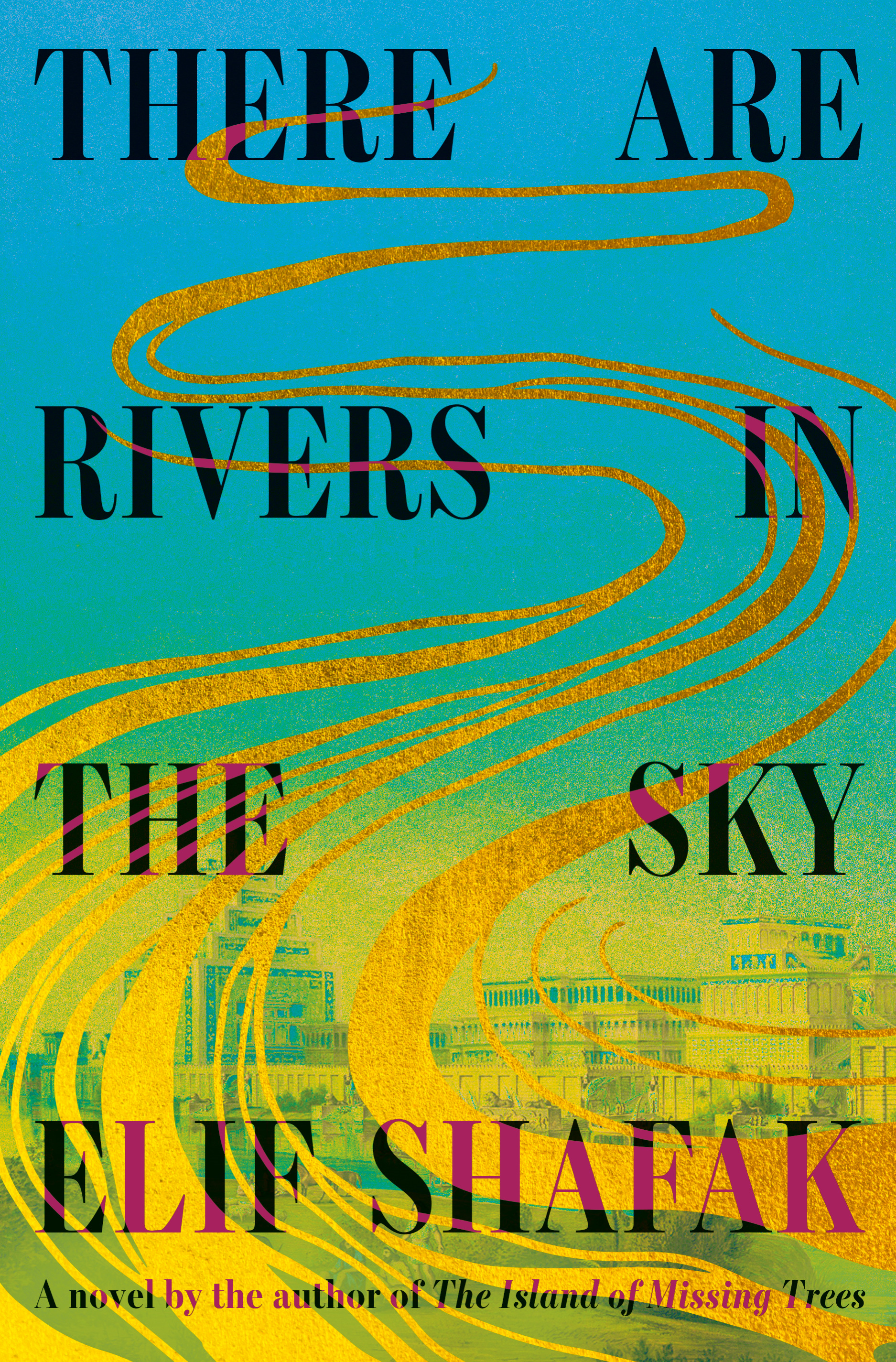
The previous week has been a rather slow reading week. I managed to read just one book. I guess this can be attributed to two factors. For one, I have been quite occupied at work as I try to meet a deadline. The second factor is Pamuk’s My Name is Red; it is quite a thick book that requires attention. Nevertheless, I was able to complete one book, the aforementioned There Are Rivers in the Sky by Pamuk’s countrywoman, Elif Shafak. I wasn’t aware of the book’s release last year until midway through the year. When I heard of its release, I did not hesitate to add the book to my growing reading list. During the pandemic years, Shafak has certainly grown on me. Unfortunately, obtaining a copy of the book proved to be quite a challenge although I was able to acquire my copy toward the end of the year.
There Are Rivers in the Sky is my sixth Shafak novel. The novel opens in Mesopotamia in the 640s BCE when a raindrop fell onto the head of Assyrian King Ashurbanipal. Considered an “erudite king”, the Assyrian despot boasts an extraordinary library that includes the Epic of Gilgamesh. He was also cognizant of the powers of storytelling, hence, his extensive collection. The story then moves forward in time. From Ancient Mesopotamia, Shafak transports the readers to Victorian England and introduces the first of three voices that comprise the story. Arthur Smyth was born by the River Thames in 1840 to a destitute family with a father who was occasionally absent. Despite the abject poverty, Arthur has an extraordinary memory. He also has an affinity for languages that allowed him to obtain an apprenticeship in a printing press as a young boy; he also earned the owner’s admiration and trust. Move forward to 2014 to the city of Hasankeyf (previously Castrum Kefa) where nine-year-old Yazidi girl Narin was about to be baptized. The ceremony, however, was disrupted by men working on a dam. Her grandmother Besma then decided to take her granddaughter to Lalish, the holiest of Yazidi sites located in Iraq, to complete the ceremony despite warnings regarding the growing presence of military forces in the region. It was through this journey that Narin learns about her heritage.
The last thread of the novel introduces Zaleekhah, a thirty-one-year-old female hydrologist of Turkish origin living in 2018 London. Following marital woes, Zaleekhah moved into a houseboat on the River Thames. She was orphaned when she was just seven. Her parents were swept by a flash flood when they were camping by the Tigris. Zaleekhah was then raised by her mother’s brother, Uncle Malek. The characters were, in one way or another, connected to Mesopotamia. One facet of the story that immediately floats to the surface is the characters’ proximity to rivers: London with River Thames, Mesopotamia with Rivers Tigris and Euphrates, and Paris with River Seine. Each chapter also introduces the setting with phrases such as “By the River Thames” or “By the River Tigris.” This only underlines the seminal role rivers and, by extension, bodies of water played in the flourishing of ancient civilizations and great cities. Overall, There Are Rivers in the Sky is a riveting read that underlines Shafak’s fluency of painting works of historical fiction.
What will you read next?

 The Pine-Scented Chronicles