
Happy Wednesday, everyone! Wednesdays also mean WWW Wednesday updates. WWW Wednesday is a bookish meme hosted originally by SAM@TAKING ON A WORLD OF WORDS.
The mechanics for WWW Wednesday are quite simple: you just have to answer three questions:
- What are you currently reading?
- What have you finished reading?
- What will you read next?

What are you currently reading?
How has your week been? I hope it’s going well and going in your desired direction. Thankfully, the last two working days of the week are holidays in the Philippines. Oh well. It also happens that I am on vacation the entire week. It has been a resplendent week so far, far from my responsibilities. I hope everyone is going to spend the rest of the Holy Week (for Christians) reflecting. For the non-Christian world, I hope that the last two days of the week will be productive and that you get to finish all your tasks this week. With a quarter down, how has your 2025 been? I hope it is going your way, that you are being showered with blessings and good news. I hope the rest of the year will be prosperous, brimming with wealth and, more importantly, health. I hope everyone is making progress on their goals. Reading-wise, I have several goals I want to achieve, primarily to complete 100 books for the fourth year in a row. Barring any major obstacles, I know I can end the year with at least 100 books.
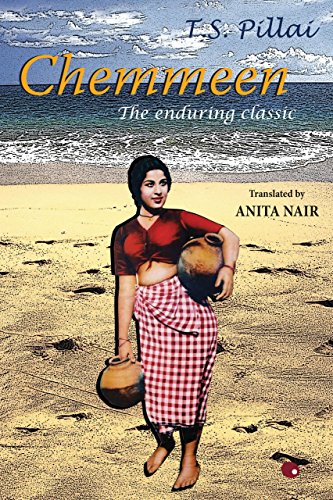
After a full quarter of reading exclusively works of East Asian writers, I am now venturing into the even more extensive world of Asian literature. I am currently reading my first work of an Indian writer this year, Thakazhi Sivasankara Pillai’s Chemmeen. Originally published in 1956, this is the first novel originally written in Malayalam that I read. Set in the southern state of Kerala, the novel charts the fortunes of Karuthamma, the young daughter of Hindu fisherman Chembankunju. The novel primarily revolves around her romance with Pareekutty, the son of a Muslim fish trader. However, due to social and religious differences, their love is nipped in the bud. As such, Karuthamma marries Palani, an orphan fisherman. The novel is starting to get more interesting because it is the intersection of romance and traditions. It is also an opportunity for me to understand more about the southern portion of the Indian subcontinent.
What have you finished reading?

The past week has been a rather slow reading week. The primary reason was this book by Orhan Pamuk. The awardee of the 2006 Nobel Prize in Literature, it was through an online bookseller that I first came across the Turkish writer. Snow was my introduction to his body of work; back then, I barely had any idea about the prestige that comes with being recognized by the Swedish Academy. After Snow and understanding more about the Nobel Prize in Literature, my foray into Pamuk’s oeuvre expanded in the succeeding years. I have already read five of his works, making My Name is Red his sixth novel I read. The novel is also part of my 2025 Top 25 Reading List and 2025 Beat the Backlist Challenge.
Originally published in 1998 as Benim Adım Kırmızı, My Name is Red was among Pamuk’s works cited by the Swedish Academy when they awarded the Prize to Pamuk. It is also cited by many literary pundits as among his best works and has also won the International Dublin Literary Award. The novel transports the readers to late sixteenth-century Constantinople, present-day Istanbul, and the muse of Pamuk’s works. The story commences interestingly, with the voice of a recently departed man in an opening chapter titled I am a Corpse; chapter titles started with I am. The first chapter conveys the recent murder of Elegant Effendi, an illuminator working for a workshop of miniaturists in the Ottoman Empire during the reign of Murad III. Elegant. While his body was lying at the bottom of a well, Elegant was talking directly to the reader, speculating about the reasons for his murder without mentioning who his murderer was.
The story then introduces more characters and even objects and paintings, taking the narrative voice. However, as the story progresses, two characters loom above the story. After twelve years of being banished to the countryside from Istanbul, Black returns to the city of his birth shortly after Elegant’s murder. Upon his return, he renewed his relationship with his uncle, Enishte Effendi, a book dealer. Interestingly, Black’s banishment was his uncle’s doing after Enishte learned that Black had fallen in love with Shekure, Enishte’s daughter. Following her cousin’s exile, Shekure, the second prominent character of the story, married a soldier with whom she bore two sons. With Black’s return and her husband being in absentia after fighting the war, Shekure and Black rekindled their romance. While the romance seems like a deflection, the story still corresponds to the mystery surrounding Elegant’s death; Black was commissioned to get to the bottom of it. My Name is Red is a textured and multilayered but compelling tale from a master storyteller.

From Turkey, my literary journey took me across the Asian continent, to a more familiar literary territory, or at least a territory that should at least feel familiar, to my own country. Ironically, Philippine literature is a part of the literary world that I rarely ventured into, even though it is my very own. Nevertheless, I have been trying to redress this glaring disparity as I integrated more works of Filipino writers into my annual reading journey. The majority of the Filipino works I read so far I read during the pandemic period. When I decided to pivot to Asian literature, I knew that a venture into Philippine literature was a must. This then brings me to Lope K. Santos’ Radiance and Sunrise, a book which I first learned about when I was still in high school because it is mentioned in history classes.
Originally published in Tagalog in 1906 as Banaag at Sikat, the novel is considered the first Asian proletarian novel. It follows the fortunes of two friends: Delfin and Felipe. They are the antithesis of each other. Felipe is born to a rich family of landowners. He is also an anarchist, but he loathes his father, who is a local leader in Silangan. His friend, on the other hand, was born to a poor family. He was working for a newspaper and was studying law while advocating for socialist reforms. It is quite palpable that the novel is laden with social and political commentaries. Both capture the condition of the Philippines during this period, but, interestingly, several of these conditions persist in the contemporary period, making the book relevant even in the present. One believes in the importance of education, a call that remains prevalent in the Philippines’ contemporary landscape; it is also a universal truth. On the other end of the spectrum, Felipe believes in the breaking down of social barriers. Delfin and Felipe, while polar opposites in their political stance, both challenge Philippine norms and standards of the period. On top of these socio-political commentaries, the novel follows the characters’ romance, particularly that of Delfin and Meni, the daughter of a capitalist. Overall, Banaag at Sikat is a rich novel that reminds me of Amado V. Hernandez’s The Preying Birds.
What will you read next?

 The Pine-Scented Chronicles