
Happy Wednesday, everyone! Wednesdays also mean WWW Wednesday updates. WWW Wednesday is a bookish meme hosted originally by SAM@TAKING ON A WORLD OF WORDS.
The mechanics for WWW Wednesday are quite simple: you just have to answer three questions:
- What are you currently reading?
- What have you finished reading?
- What will you read next?

What are you currently reading?
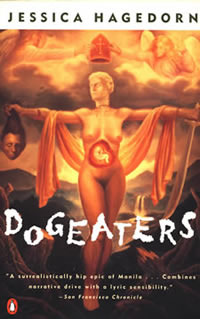
How has your week been? I hope it’s going well and going in your desired direction. After a week-long vacation, I am now back to regular programming, i.e., reporting to the office. Regardless, I am grateful that we are already midway through the week. I hope that the rest of the workweek will go well. With a quarter down and April nearly done, how has your 2025 been? I hope it is going your way, that you are being showered with blessings and good news. I hope the rest of the year will be prosperous, brimming with wealth and, more importantly, good health. I hope everyone is making progress on their goals. Reading-wise, I have several goals I want to achieve, primarily to complete 100 books for the fourth year in a row. Barring any major obstacles, I know I can end the year with at least 100 books. After a full quarter of reading exclusively works of East Asian writers, I am now venturing into the even more extensive world of Asian literature. My current read is from a more personal territory.
Admittedly, Philippine literature is a part of the literary world that is largely unexplored by me. I have been redressing this in the pandemic years and I am glad I am making a dent. Jessica Hagedorn’s Dogeaters is the second novel by a Filipino writer I read this year. Originally published in 1990, Dogeaters is written from the point of view of various characters, starting with Rio Gonzaga who reminisced about her youth in Manila in 1956. The Gonzagas are an upper middle-class family consisting of Rio; her older brother, Raul; her mother, Delores; and her father, Freddie. But this just scratches the surface. The story weaves in and out of various periods. This can be disconcerting but the story eventually establishes a rhythm. Interestingly, the first reference to dogeaters in the book is to an Igorot character; I am a member of the Igorot tribe. It is a derogatory term used to describe the natives like us Igorots but I don’t take offense because, from what I can surmise, the term is a metaphor for bigger concerns that the novel is addressing.
What have you finished reading?
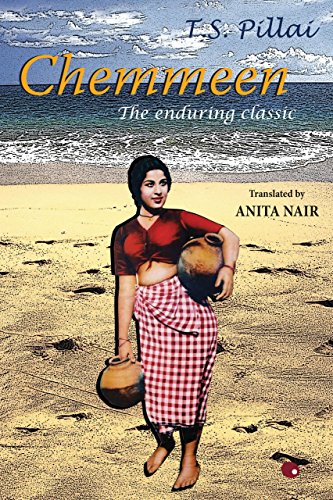
The past few weeks have been rather slow in terms of reading progress. I guess this can be attributed to my long break. I have been trying to get time to rest as well. Nevertheless, my foray into Asian literature is in full swing. I was able to complete two books; this is my average. My reading journey next took me to the Indian subcontinent. It was actually during the pandemic years that I learned about the various languages that thrive in India; I have always thought that it was just Hindi. Imagine my surprise when I learned about Malayalam through a random encounter with Thakazhi Sivasankara Pillai through an online bookseller. His novel Chemmeen piqued my interest because it was an unusual title. A couple of years after obtaining it, I finally got to read the book.
Originally published in 1956, this is the first novel originally written in Malayalam that I read. The novel transports the readers to a tiny fishing community in Alappuzha in the southern state of Kerala. The novel charts the fortunes of Karuthamma, the young daughter of Hindu fisherman Chembankunju. The novel primarily revolves around her romance with Pareekutty, the son of a Muslim fish trader. However, due to social and religious differences, their love is nipped in the bud. This prompted Karuthamma to marry Palani, an orphaned fisherman discovered by Chembankunju in the course of one of his fishing expeditions. Against her parent’s wishes, Karuthamma moved to her husband’s village. In her husband’s village, Karuthamma and Palani thrived but whispers of Karuthamma’s forbidden love threaten the harmony of their union. There is some melodramatic overtones to the story but what makes the novel fascinating is its portrait community life on the Malabar coast. While on the surface it is a romance story, Chemmeen is the story of some of the poorest people in India, the fisherfolk of the Malabar coast. There is no certainty to their daily survival and only one season, Chagara, is rewarding for them. In his most renowned work, Thakazhi was also subtly underscored how traditions dictate the community’s life. Cultural touchstones provide textures to the story. It is these elements that reeled me into the story.

From the Indian subcontinent, my next read took me to a familiar territory. I recognize that I should have ended my venture into East Asian literature. After a full quarter of venturing into works of East Asian literature, it was just logical to avoid reading works of East Asian literature. However, there is just something about Japanese literature that make me gravitate toward it. The stay, nevertheless, is temporary. Natsume Sōseki’s Light and Darkness is the fourth novel by the Japanese writer I read. Admittedly, I am only aware of three Sōseki novels: Botchan, Kokoro, and I Am A Cat. Imagine my surprise when I encountered Light and Darkness through an online bookseller. I just knew I wanted to read the book, hence, its inclusion to my ongoing reading journey.
Originally appearing in serialized form in Asahi Shimbun, Light and Darkness was first collectively published in 1916 as 明暗 (Meian). It is the last major novel written by Sōseki although it is unfinished at the time of his death. Set in Tokyo in the years immediately before the First World War, the novel charts the fortunes of newlyweds couple Yoshio Tsuda, a thirty-year-old company worker, and Nobiko, who was ten-years her husband’s junior and is familiarly referred to as O-Nobu. The main catalyst of the story is Tsuda’s stay at an obscure doctor’s clinic to undergo, and then recover from, minor surgery. During his stay at the clinic, Tsuda receives visits from a motley crew of his most intimate friends and family members: his coquettish young wife, O-Nobu; his unsparing younger sister, O-Hide; Tsuda’s self-deprecating and unemployed friend, Kobayashi; and Tsuda’s employer’s wife, Madam Yoshikawa. Each character provided layers to Tsuda’s story. It was even made more interesting by their palpable resentment toward each other; each had a different interest. It is in creating these complex characters that Soseki displays the best facet of his writing. The characters were all complex and compelling in their own way. Even though the story was unfinished, the novel was a cohesive one. The lack of clear conclusion also does not weigh heavily on the story. Overall, Light and Darkness is an engaging story about the intricacies of married life.
What will you read next?



 The Pine-Scented Chronicles