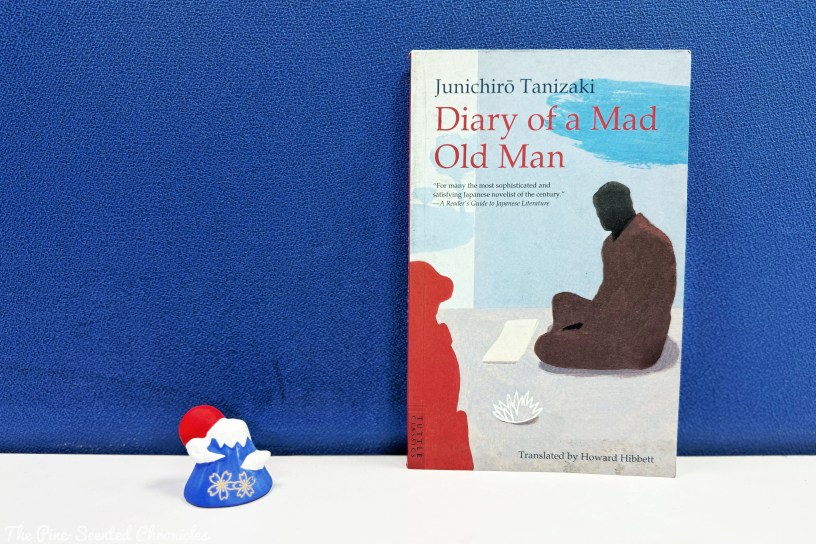
A Swan Song
Born on July 24, 1886, in the Nihonbashi section of Tokyo, Jun’ichirō Tanizaki is, without a doubt, one of the most recognized and influential names in the vast landscape of Japanese literature. He boasts a literary career that spanned decades and features timeless classics such as The Makioka Sisters, Some Prefer Nettles, Quicksand, and Naomi. These works are widely regarded as classics, not only in Japanese literature but in the wider ambit of world literature. For decades, he built a literary legacy that transcends time. His works remain among the most studied and his legacy is timeless and one of Japan’s most prestigious literary awards was named after him. It is no wonder that he is among the first 20th-century Japanese writers to receive international acclaim as a major literary figure.
Tanizaki’s literary inclinations manifested even when he was a young boy. While attending primary school, he joined a group of friends in starting a hand-copied magazine. His interest in literature only grew further when he entered middle and high school where he regularly contributed to his school’s literary journals. A path toward a literary career was imminent. Pursuing this path, he earned a degree in literature at Tokyo Imperial University. To allow him time to pursue his own writing, Tanizaki majored in Japanese literature; it was considered less demanding. In no time – just a year after entering university – Tanizaki published his first major literary work, a one-act stage play, in a literary magazine of which he was one of the founders. There was no way but up for Tanizaki.
He gained more attention with his short story Shisei (The Tattooer, 1910). He experienced a minor setback when he was forced to drop out of the university in 1911 when he could no longer afford to pay his tuition. While he was born to a well-to-do family, their fortune dwindled when they experienced a reversal in fortune following the passing of Tanizaki’s grandfather Kyuemon. But Tanizaki’s spirit was indomitable. He did not let this minor setback stop him from pursuing his dreams. Driven by passion and dedication, he rose from the quagmires of poverty to become a household name in Japanese literature, and eventually, in world literature. Tanizaki was nominated several times for the Nobel Prize in Literature for his oeuvre and a career that spanned decades. At one point, he was on the cusp of being awarded the most prestigious literary prize.
Perhaps everyone is like this in his old age, but lately I never spend a day without thinking of my own death. In my case, though, it’s hardly anything new. I’ve done it for a very long time, since my twenties, but now more than ever. Two or three times a day I think to myself: Maybe I’ll die today. Not that I am necessarily frightened by such thoughts. When I was young they did terrify me, but now they even give me a certain pleasure. I let my imagination picture the scene of my last moments, and what will follow my death.
Jun’ichirō Tanizaki, Diary of a Mad Old Man
Among his later works is Diary of a Mad Old Man. Originally published in 1961 as 瘋癲老人日記 (Fūten rōjin nikki), the diary was written by Utsugi Tokusuke, a seventy-seven-year-old man; he was the titular mad old man. Due to his old age, he has been experiencing a plethora of maladies. He is in poor health, suffering from high blood pressure and neuralgia in his left hand. He also experienced difficulties balancing himself. His condition was exacerbated by an ache in his neck. As a remedy to his bodily pains, he lies down on a hard wooden blockhead upside down while temporarily wearing a corset. At the story’s start, Tokusuke was recovering from a stroke which prompted him to start writing his journal. His diary contains details of his waning health, his thoughts about his illnesses, and how he remedies them. He also mentions about the medication he needs. It is didactic, painting a portrait of a man in the twilight of his life.
Tokusuke was cognizant of his impending mortality. Despite his frail health, he does not fear death. Apart from details of his health and his thoughts regarding it, Tokusuke’s diary also contains the minutiae of his daily routine and his inclinations. Perhaps the most engaging facet of his diary is the sections that provided glimpses into his psychological profile. For one, he is impotent and frustrated because of it. Nevertheless, his impotence did not hinder him from being sexually attracted toward the opposite sex: As long as I live I cannot help feeling attracted to the opposite sex…I’m almost completely impotent. Even so, I can enjoy sexual stimulation in all kind of distorted, indirect ways. This was even though he was married. His wife, however, sleeps at the opposite end of the house. On the days that his nurse is off-duty, his wife sleeps in the same room, but not the same bed.
Interestingly, Tokusuke’s diary begins with a casual confession of being more attracted to onnagata. Onnagata are handsome young men in feminine attire portraying women’s roles in Kabuki theater. It is for this reason that Tokusuke frequents the theater. But as the story moves forward, the readers learn more about what truly stimulates him and captures his fancy. Tokusuke and his wife have three children: a son, Jokichi, and two daughters, Kugako and Itsuko. All three are married and, except for Itsuko who lives in Kyoto, Tokusuke’s children live in Tokyo, with Jokichi and his family living with their parents in their stately home. The real object of Tokusuke’s fascination, however, was Jokichi’s wife, Satsuko. Tokusuke suspected that his son’s marriage was on the rocks; Tokusuke’s relationship with his son was also frail. Jokichi travels a lot for business. On the occasions he is at home, he goes out a lot without Satsuko.
As Satsuko develops into the object of Tokusuke’s fixation, she indirectly turns into the story’s main character. This was even though Satsuko’s past was shady; she was deemed an unsuitable woman for Jokichi but Jokichi insisted on marrying her despite her past. She was a dancer and lacked the sophistication that was expected from Japanese women. It was her unconventionality that reeled Utsugi in: I might be all the more attracted to a woman knowing that she was a sneak thief. He even compares her to Takahashi Oden, a renowned female Japanese murderer. Thus commenced an erotic obsession that Satsuko did not discourage, constantly teasing him. At one point, she even allowed her father-in-law to kiss parts of her body, particularly her lower legs. Tokusuke, in turn, showers his daughter-in-law with expensive gifts. How will this relationship alter the dynamics of the Utsugi household?
Then after I die, which won’t be long from now, she’ll find herself thinking: That crazy old man is lying under these beautiful feet of mine, at this very moment I’m trampling on the buried bones of the poor old fellow. No doubt it will give her a certain pleasurable thrill, though I dare say the feeling of revulsion will be stronger. She will not easily – perhaps never – be able to efface that repulsive memory.
Jun’ichirō Tanizaki, Diary of a Mad Old Man
As he has demonstrated in his prolific literary career, Tanizaki delved into the intricacies of human behavior. Impotence did not hinder Tokusuke from having and entertaining erotic fantasies and thoughts. He had no scruples admitting about his sexual fantasies. It was not candid but his admissions provide a discursive point for the story. Tanizaki, after all, has been renowned for dissecting the perversities of the mind. This is palpable in Some Prefer Nettles and The Key and is also evident in Diary of a Mad Old Man. Tokusuke’s sexual desires for his daughter-in-law is akin to narcissism. further manifested through his foot fetish. When describing his ideal feminine beauty, Tokusuke mentioned that Above all, it’s essential for her to have white, slender legs and delicate feet.
However, Tokusuke’s foot fetish was no mere fetish. It was, in a way, metaphorical. The female feet were a vessel upon which Tokusuke ruminated on the changes in the cultural landscape that took place during his lifetime. At one point, he compared the feet of women of the 1890s and the feet of contemporary women (women of postwar Japan). The former were described as tiny but broad while the latter were described as elegant but slender. Tokusuke’s observation about the evolution of women’s feet was also a microcosm of an even more extensive subject. In the novel, Satsuko is the representation of the modern Japanese woman. She stepped out of the image of sophistication Japanese women of yore are renowned for. She was more liberated, the antithesis of her more traditional sisters-in-law. Tanizaki vividly captured the intersection of Japan’s traditions with the shift of values, riddled with eroticism as impulse takes over sanity.
As if to further underline the shift from traditional to modern, Tanizaki subtly contrasted Tokyo, the beacon of modernization, with Kyoto, the traditional capital. While he was obsessed with the idea of the liberated woman, Tokusuke was still grounded in tradition. He was fascinated by conventional cultures while feeling disdain for modernity. He had no qualms describing Tokyo as an overturned rubbish heap. He writes that modernization is vulgar and even messy. This prompted him to seek a burial site in Kyoto. Indeed, because of his age and his frail health, Tokusuke was preoccupied with death although he does not fear it. Beyond the eroticism that permeates the story, details of existentialist concerns propped the story. It can be surmised that Tokusuke’s perversion towards sex is the only pleasure he has as he approaches the twilight of his life.
Through Tanizaki’s portrait of the Utsugi family, he explored the intricacies of family dynamics within an affluent home. The occupants of the Utsugi’s household and the family members have contentious relationships. Loyalty and betrayal pervades the family home, as the family members also have different values. Tokusuke’s relationship with his unnamed wife and son was more formal than cordial. Tokusuke’s daughters also struggle with their father’s indifference. Jokichi and Satsuko’s marriage was also on the rocks, slowly undone by extramarital affairs; it was implied that Jokichi allowed his wife sexual liberty. Satsuko was a femme fatale who had no scruples using her feminine wiles to her advantage and keeping Tokusuke shackled to her. Satsuko was impertinent but it was also her impudence that reeled Tokusuke in. Meanwhile, Tokusuke’s obsession with Satsuko bordered on sadomasochistic gratification.
I am not in the least afraid of death, and yet to be confronted with it, to feel it pressing in on me- the very thought is terrifying. I wish I could die as if I were falling asleep, so gently that no one would realize when it happened.
Jun’ichirō Tanizaki, Diary of a Mad Old Man
Tanizaki’s last book, Diary of a Mad Old Man encapsulates the qualities that have defined his work. It is a palpable exploration of the intricacies of the perverse mind. It is also the vivid portrait of a man on the cusp of his mortality. It was through explicit sexual attraction that Tokusuke coped with his looming death. In capturing the intersection of sexual desire and aging, the novel is reminiscent of Yasunari Kawabata’s The House of Sleeping Beauties and Gabriel García Márquez’s Memories of My Melancholy Whores. Diary of a Mad Old Man, however, goes beyond the exploration of this subject. Tokusuke’s story was juxtaposed to the shifting tides of time. He was anchored on tradition but Japanese society keeps moving forward to modernization. Overall, Diary of a Mad Old Man is a compelling read, an ideal swan song to cap what has been a soaring literary career.
Book Specs
Author: Jun’ichirō Tanizaki (谷崎 潤一郎)
Translator (from Japanese): Howard Hibbett
Publisher: Tuttle Publishing
Publishing Date: 1967 (1961)
Number of Pages: 177
Genre: Literary
Synopsis
In the last book he wrote before he died, Jun’ichirō Tanizaki returns to a theme that dominates much of his earlier work: the relationship between sexual desire and the will to live. Diary of a Mad Old Man, first published as Fūten Rōjin Nikki in 1962, is the journal of Tokusuke Utsugi, a 77-year-old man of refined tastes who is recovering from a stroke caused by an excess of sexual excitement. He discovers that even while his body is breaking down, his libido rages on, unwittingly sparked by the gentle, kindly attentions of his daughter-in-law Satsuko, a sophisticated, flashy, cosmopolitan dancer with a shady past. Utsugi records both his past desires and his current efforts to bribe his daughter-in-law to provide sexual favors in return for Western baubles. Pitiful and ridiculous as he is, he is without a trace of self-pity, and much of the book, especially the scene in which Satsuko explains the difference between necking and petting, shines with humor. Here in this short novel is much of the tragicomedy of human existence.
About the Author
To learn more about one of the most influential voices of Japanese literature, click here.
 The Pine-Scented Chronicles