How time flies! It certainly flows sans any regard to anyone. Who’d have thought that we’d zoom past four months? We are already a third through 2025. It feels like a lot has happened but, at the same time, it doesn’t feel like anything consequential happened at all. I guess that is a good thing. Anyway, how has the year been so far? I hope that it is going your way and is granting you favors. I hope you are having a head start on your goals. If the year is going awry, I hope you will have a reversal of fortune in the coming months. Eight months can be short or long depending on how we utilize it. Nevertheless, we are granted time to pursue our passions, embark on new journeys, and achieve our goals. I hope you do well in your individual journeys. I pray for a year of joy, healing, goals achieved, and prayers answered. It is still okay for those whose goals are just to make it from one point to another. With the turmoil enveloping us, muting the noise can be challenging. More importantly, I hope everyone stays healthy, in mind, body, and spirit.
Reading-wise, I have quite some lofty ones. It is my goal to complete 100 books this year,. I usually set a conservative target at the start of the year and recalibrate it as the year goes on. Should it materialize, 2025 will be the fourth consecutive year I have crossed the three-digit mark. It is also my goal to read more translated books than books originally written in English. I noted how my reading list is dominated by books originally written in English; the United States and the United Kingdom, after all, are my most-read countries by a long mile. This is the reason why I spent an entire quarter reading works of East Asian writers to open my 2025 reading journey. In April, I made a pivot toward the rest of the Asian continent to immerse myself in the works of Asian writers. Both journeys have so far been memorable. So before I move on to the next month of the year, let me share the conclusion of my foray into works of Asian literature. Happy reading!
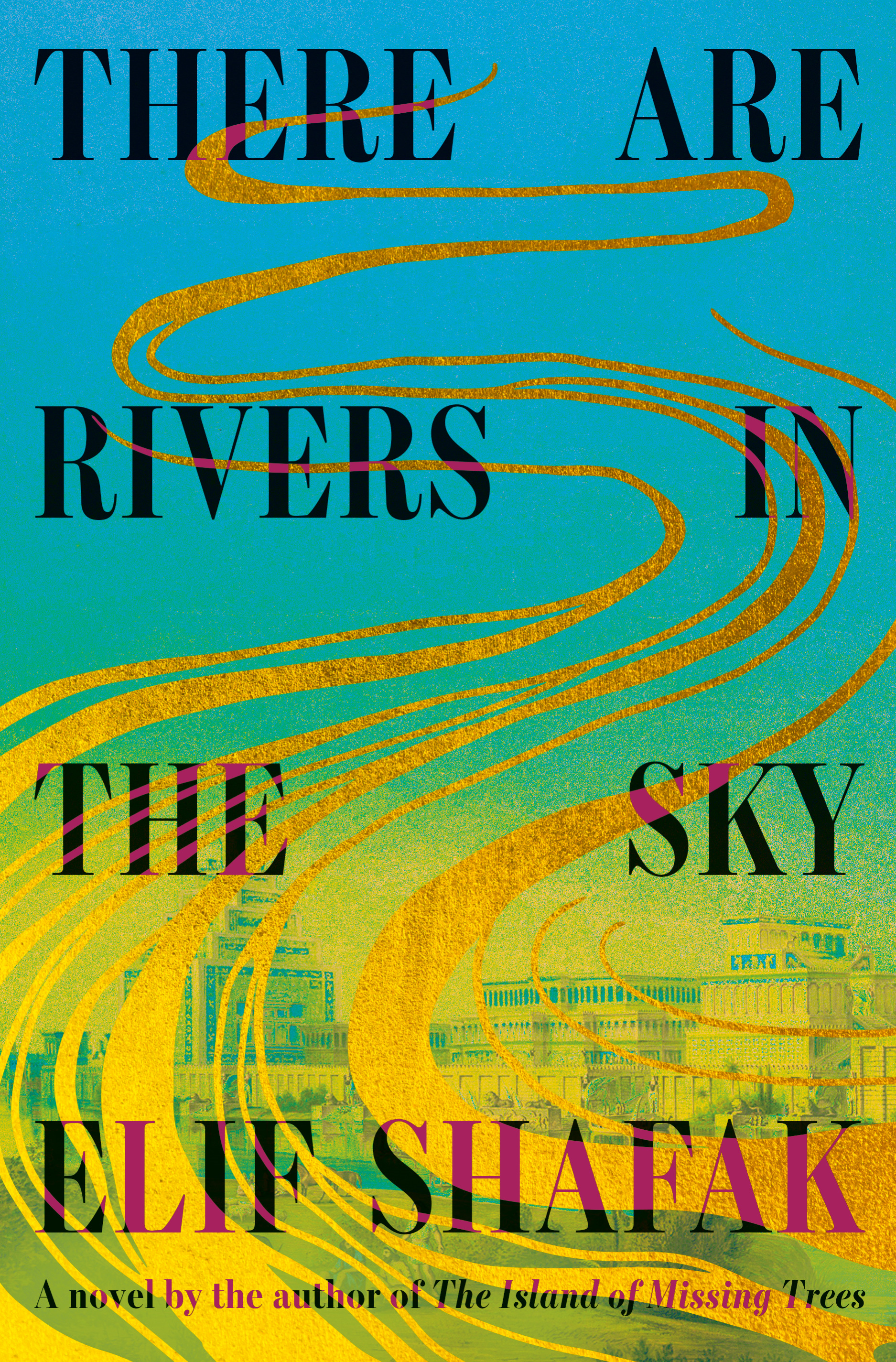
There are Rivers in the Sky by Elif Shafak
Elfi Shafak’s latest novel, There are Rivers in the Sky not only served as my April reading month opening salvo. It is also a transitory book as it marked the shift from the works of female East Asian writers to full Asian literature. During the pandemic years, Shafak has certainly grown on me. I was delighted when I learned about her latest release. My sixth Shafak novel, There Are Rivers in the Sky opens in the 640s BCE Mesopotamia when a raindrop fell onto the head of Assyrian King Ashurbanipal. An “erudite king” and a lover of storytelling, the Assyrian despot boasts an extraordinary library that includes the Epic of Gilgamesh. The story, however, follows three different characters from different periods. Victorian England introduces Arthur Smyth who was born by the River Thames in 1840 to a destitute family. With an extraordinary memory and an affinity for languages, he obtained an apprenticeship in a printing press as a young boy. In 2014 in the city of Hasankeyf, nine-year-old Yazidi girl Narin’s baptism ceremony was disrupted by men working on a dam. Her grandmother Besma then decided to take her granddaughter to Lalish, the holiest of Yazidi sites located in Iraq, to complete the ceremony despite warnings regarding the growing presence of military forces in the region. Thirty-one-year-old female hydrologist Zaleekhah is of Turkish origin and lives in 2018 London. Following marital woes, Zaleekhah moved into a houseboat on the River Thames. As can be gleaned from the title, rivers featured prominently in the novel: London with the River Thames, Mesopotamia with Rivers Tigris and Euphrates, and Paris with the River Seine. Rivers and, by extension, bodies of water played a germane role in the flourishing of ancient civilizations and great cities. Overall, There Are Rivers in the Sky is a riveting read that underlines Shafak’s fluency of painting works of historical fiction.
Goodreads Rating:


My Name is Red by Orhan Pamuk
From one Turkish writer to another. Apart from Shafak, Orhan Pamuk is also a writer who has grown on me during the pandemic. The awardee of the 2006 Nobel Prize in Literature, it was through an online bookseller that I first came across the Turkish writer. From my first Pamuk novel, Snow, I have now read six of his works, the latest being My Name is Red which is also a part of my 2025 Top 25 Reading List and 2025 Beat the Backlist Challenge. Originally published in 1998 as Benim Adım Kırmızı, My Name is Red was among Pamuk’s works cited by the Swedish Academy when they awarded the Prize to Pamuk. The winner of the International Dublin Literary Award, the is set in late sixteenth-century Constantinople, present-day Istanbul. The story commences with the voice of a recently departed man, Elegant Effendi, an illuminator working for a workshop of miniaturists in the Ottoman Empire during the reign of Murad III. With his body lying at the bottom of a well, Elegant speculated about the reasons for his murder without mentioning who his murderer was. The story then introduces more characters and even objects and paintings, taking the narrative voice. Two characters loom above the story: Black, who returned to Istanbul after twelve years of being banished to the countryside shortly after Elegant’s murder, and his lover, Shekure, the daughter of his uncle Enishte. Following her cousin’s exile, Shekure married a soldier with whom she bore two sons. With Black’s return and her husband being in absentia after fighting the war, Shekure and Black rekindled their romance. While the romance seems like a deflection, the story still corresponds to the mystery surrounding Elegant’s death; Black was commissioned to get to the bottom of it, with a moratorium. My Name is Red is a textured and multilayered but compelling tale from a master storyteller.
Goodreads Rating:

Banaag at Sikat (Radiance and Sunrise) by Lope K. Santos
From Turkey, my literary journey took me from the western end of the continent to its eastern end, to a more familiar literary territory, or at least a territory that should at least feel familiar to me. Ironically, Philippine literature is a part of the literary world that I rarely ventured into. I have been trying to redress this glaring disparity in the past few years as I integrated more works of Filipino writers into my annual reading journey. When I decided to pivot to Asian literature, I knew that a venture into Philippine literature was a must. This then brings me to Lope K. Santos’ Radiance and Sunrise, a book that I first learned about when I was still in high school. Originally published in Tagalog in 1906 as Banaag at Sikat, the novel is widely considered the first Asian proletarian novel. It follows the fortunes of friends Delfin and Felipe who were the antithesis of each other. Born to a rich family of landowners, Felipe is an anarchist who loathes his father, a local leader in fictional Silangan. His friend, on the other hand, was born into a poor family. Delfin was working for a newspaper and was studying law while advocating for socialist reforms. One believes in the importance of education in freeing a nation from the shackles of poverty and ignorance. Meanwhile, Felipe believes in the breaking down of social barriers. While their views are polar opposites, both challenge Philippine norms and standards of the period. Social and political commentaries permeate the story as it endeavors to capture the condition of the Philippines. Despite the setting, the passage of time reveals that these social and political maladies persist in the contemporary. On top of these socio-political commentaries, the novel follows the characters’ romance, particularly that of Delfin and Meni, the daughter of a capitalist. Overall, Banaag at Sikat is a rich novel that reminds me of Amado V. Hernandez’s The Preying Birds.
Goodreads Rating:

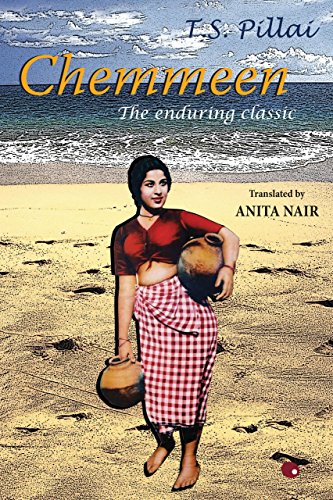
Chemmeen by Thakazhi Sivasankara Pillai
From Southeast Asia, my foray into the works of Asian writers next took me to the Indian subcontinent. It was actually during the pandemic years that I learned about the various languages that thrive in India; I am cognizant that India has a diverse culture but I have always thought that their only language was Hindi. Imagine my surprise when I learned about the Malayalam language through a random encounter with Thakazhi Sivasankara Pillai. His novel Chemmeen piqued my interest because of its unusual title; apparently, the title, ചെമ്മീൻ in Malayalam, translates to shrimp. Originally published in 1956, Chemmeen transports the readers to a tiny fishing community in Alappuzha in the southern state of Kerala and charts the fortunes of Karuthamma, the young daughter of Hindu fisherman Chembankunju. The crux of the story is her romance with Pareekutty, the son of a Muslim fish trader. However, social and religious differences nipped their love in the bud, prompting Karuthamma to marry Palani, an orphaned fisherman discovered by Chembankunju. Against her parent’s wishes, Karuthamma moved to her husband’s village where the couple thrived. Their newfound harmony, however, was threatened by whispers of Karuthamma’s forbidden love. Melodramatic overtones, layered with a fascinating portrait of community life on the Malabar coast, provided a riveting read. While on the surface it is a romance story, Chemmeen chronicles the story of some of the poorest people in India, the fisherfolk of the Malabar coast. Their daily survival has no certainty as it is anchored on the sea. Only one season, the Chagara, is rewarding for them. In his most renowned work, Thakazhi also subtly underscored how traditions dictate the community’s life. Cultural touchstones provide textures to the story. It is these elements that reeled me into the story.
Goodreads Rating:

Light and Darkness by Natsume Sōseki
While I have concluded my foray into the works of East Asian literature, this has not stopped me from traveling back to the region; after all, it is still part and parcel of Asian literature, particularly Japanese literature. There is just something about Japanese literature that makes me gravitate toward it. I was recently able to obtain a copy of Natsume Sōseki’s Light and Darkness. I can’t wait to read it, hence its inclusion in my ongoing Asian literature journey. The fourth Sōseki novel I read, Light and Darkness originally appeared in serialized form in Asahi Shimbun before it was collectively published in 1916 as 明暗 (Meian). It is the last major novel written by Sōseki although it is unfinished at the time of his death. Set in Tokyo in the years immediately before the First World War, the heart of the novel is the newlywed couple Yoshio Tsuda, a thirty-year-old company worker, and Nobiko, who was ten years her husband’s junior and is familiarly referred to as O-Nobu. Following a minor surgery, Tsuda stayed at an obscure doctor’s clinic to recover. During his stay at the clinic, Tsuda receives visits from his most intimate friends and family members: his coquettish young wife, O-Nobu; his unsparing younger sister, O-Hide; Tsuda’s self-deprecating and unemployed friend, Kobayashi; and Tsuda’s employer’s wife, Madam Yoshikawa. It is a kaleidoscopic set with each character providing layers to Tsuda’s story. There also existed palpable resentment between the characters; each had a different interest. Despite Sōseki not being able to complete the novel the story was nevertheless a cohesive one; it lacks a robust plot but relies on painting vivid psychological portraits of the characters. Further, the lack ofa clear conclusion also does not weigh heavily on the story. Overall, Light and Darkness is an engaging story about the intricacies of married life.
Goodreads Rating:
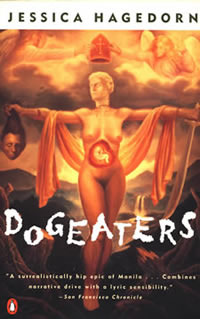
Dogeaters by Jessica Hagedorn
To make up for the lack of Filipino voice in my reading list, I have resolved to read at least two works by Filipino writers annually. After Banaag at Sikat, I next read Jessica Hagedorn’s Dogeaters, a book that I also included in my 2025 Beat the Backlist Challenge. The book has long been recommended to me by fellow book readers but, unfortunately, it was only now that I got to be able to read it. Originally published in 1990, Dogeaters is Hagedorn’s debut novel and is written from the point of view of various characters, starting with Rio Gonzaga who reminisced about her youth in Manila in 1956 with her cousin Pucha. The story primarily revolves around the Gonzaga family, an upper-middle-class family consisting of Rio; her older brother, Raul; her mother, Dolores; and her father, Freddie. Rio’s family is closely linked to the influential and affluent Alacran family; the Gonzagas worked for them. The Alacran patriarch, Severo, is a self-made man who runs a score of big businesses. But this just scratches the surface. With the story weaving in and out of various periods, one can easily get lost in the labyrinth. Nevertheless, I was eventually able to establish a rhythm. One of the references to dogeaters in the book is to an Igorot character; I am a member of the Igorot tribe. It is a derogatory term used to describe the natives like us Igorots but I don’t take offense because the term is a metaphor for bigger concerns that the novel is addressing. The novel is the convergence of satirical, roman à clef, and bildungsroman elements juxtaposed with historical and political contexts – most of which I am quite familiar with – that shaped the contemporary Philippine landscape. It is a lush and compelling read although the structure – while it is a nod to innovation – can be confusing at times. Nevertheless, Dogeaters is a thought-provoking novel about the Philippines, its history, its culture, and its people.
Goodreads Rating:
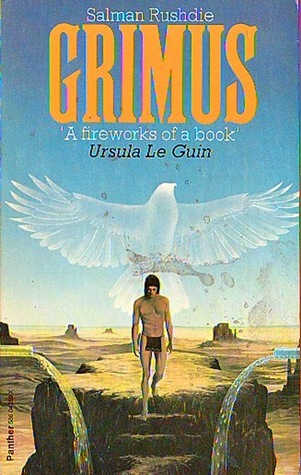
Grimus by Salman Rushdie
Without a doubt, Indian literature is one of the world’s most diverse and extensive. It is also one of its most influential. Because of its vastness, it is also a section of the literary world I have to explore further. One of the most prominent voices India produced is Salman Rushdie who I first encountered through must-read lists. He has since become a favorite of mine. Interestingly, I have always assumed that Midnight’s Children was Rushdie’s debut novel. Imagine my horror when I learned it was his sophomore novel and that he debuted with a more obscure novel, Grimus. Originally published in 1975, Grimus is the eleventh Rushdie novel I read. At the heart of the story is Flapping Eagle, an Axona Indian whose older sister Bird-dog disappeared after eloping with a mysterious man, leaving her younger brother with two vials. One elixir grants immortality while the other causes immediate death. Flapping-Bird took the elixir of immortality and commenced a journey to search for his immortal sister. After 777 years 7 months and 7 days, he fell through a hole in the Mediterranean Sea. Flapping Eagle found himself in a parallel dimension at the mystical Calf Island. In a community called K, immortals tired of the world but ambivalent about giving up their immortality lived, governed by a sinister authority. Flapping Eagle would get to know some of his fellow immortals, among them Virgil Jones, an exiled associate of the titular Grimus, the creator of the dimension. With Virgil Jones’ guidance, Flapping Eagle set out to challenge Grimus as he is the key to finding Bird-dog. Overall, Grimus is an interesting read from Rushdie. It has all the trademark of Rushdie’s oeuvre although these elements were palpably in their infancy in the novel. It also provides a different dimension to Rushdie’s body of work. Grimus is also often overlooked by critics and readers alike. Even Rushdie himself is known for disowning his first published work and considering Midnight’s Children as his debut work.
Goodreads Rating:

When I’m Gone, Look for me in the East by Quan Barry
I concluded my April reading journey with an unfamiliar name, at least unfamiliar to me. It was while I researching for books to include in my 2022 Books I Look Forward To List that I first encountered Quan Barry, a Vietnam-born American writer. Her latest work, When I’m Gone, Look for Me in the East, immediately piqued my interest, hence, its inclusion in my 2022 Top 10 Books I Look Forward To List. Unfortunately, I was not able to obtain a copy of the book until 2024. When presented with the opportunity, I included the book in my ongoing foray into Asian literature. Barry’s third novel When I’m Gone, Look For Me in the East is actually set in Mongolia; it is one of the reasons why I wanted to read it in the first place. Guiding the readers across the landscape of Central Asia is Chuluun, a novice monk. When he was eight, he and his identical twin, Mun, moved to a monastery after they were “discovered”; Mun had been recognized as the reincarnation of a deceased lama. Now in their twenties, Mun renounced the monastic life and settled in Ulan Bator. Chuluun remained loyal to his calling but managed to persuade his twin to chauffeur him on a road trip to search for a Buddhist teacher who had been reincarnated as a child. What leaves an impression is not the journey – it was vividly captured by Barry – but the details of Central Asian and Buddhist culture embedded into the story. Buddhist scripture, rites, and concepts were evocatively drawn. Barry regaled the readers with a ruminative and meditative journey across Mongolia and Tibet. The brothers also figured prominently in the story. Their telepathic gifts allow them to peek into each other’s thoughts but they are nevertheless the antithesis of each other. Their contrasts made for an interesting read. The long wait was worth it because When I’m Gone, Look For Me in the East is a riveting read.
Goodreads Rating:
Reading Challenge Recaps
- 2025 Top 25 Reading List: 7/25
- 2025 Beat The Backlist: 7/20; 40/60
- 2025 Books I Look Forward To List: 0/10
- Goodreads 2025 Reading Challenge: 40/100
- 1,001 Books You Must Read Before You Die: 1/20
- New Books Challenge: 0/15
- Translated Literature: 34/50
Book Reviews Published in April
- Book Review # 577: The Last Children of Tokyo
- Book Review # 578: Diary of a Mad Old Man
- Book Review # 579: Asleep
- Book Review # 580: Jacob’s Ladder
I was hoping to bounce back in April after a very sluggish opening quarter. I tried to complete as many book reviews as I could but I was unable to do so because the first half of April was unexpectedly, a very busy one; it was essentially an extension of March because I had to finish yet another document. I followed it up with a one-week vacation which I spent mainly to recover from the hectic quarter. Balancing work with personal life is no easy task. Despite this, I was able to publish four book reviews. It is below my average but hey, I can only look at the brighter side. Even though it is a meager number, I am glad that I am inching closer to finishing all my pending book reviews from May 2023; I have one book pending for review. This May, I am looking forward to completing my review of the last book from the period. I am also looking forward to making a dent in my June 2023 pending book reviews; I have quite a lot. Nevertheless, the goal is still to take it one step at a time. I will still try to complete as many book reviews as I can.
For May, I will be continuing my foray into the works of Asian writers. The world’s largest continent, there are sections of Asia that I have yet to explore, at least in literature. I hope that literature will also provide me glimpses into the continent’s diverse culture and people. I am currently reading Yeoh Jo-Ann’s Deplorable Conversations With Cats and Other Distractions, my first book by the Malaysian writer who I initially thought was Korean. Ironically, I haven’t come up with a reading list this month yet. The only books I am sure I will be reading, so far, are Ha Jin’s War Trash which is part of my 2025 Beat the Backlist Challenge; Japanese writer Kōbō Abe’s The Ruined Map; and Vietnamese writer Duong Thu Huong’s Novel Without A Name. As I navigate Asian literature, I am sure I will be coming across titles I will be adding to my ongoing reading journey.
How about you fellow reader? How is your own reading journey going? I hope you enjoyed the books you have read. For now, have a great day. As always, do keep safe, and happy reading everyone!
 The Pine-Scented Chronicles