
Hello, readers! It is Monday again! As it is Monday, welcome to another #5OnMyTBR update. The rule is relatively simple. I must pick five books from my to-be-read piles that fit the week’s theme.
This week’s theme: No Prompt
Because there is still no prompt this week, I decided to feature works of political fiction. Today is the Midterm elections here in the Philippines so to align with the elections, I opted to feature works of political fiction from across the world. Without ado, here are some works of political fiction I am looking forward to.

5OnMyTBR is a bookish meme hosted by E. @ Local Bee Hunter’s Nook where you chose five books from your to-be-read pile that fit that week’s theme. If you’d like more info, head over to the announcement post!

Title: Nostromo
Author: Joseph Conrad
Publisher: Wilco Publishing House
Publishing Date: 2006
No. of Pages: 505
Synopsis:
A gripping tale of capitalist exploitation and rebellion, set amid the mist-shrouded mountains of a fictional South American republic, employs flashbacks and glimpses of the future to depict the lure of silver and its effects on men. Conrad’s deep moral consciousness and masterful narrative technique are at their best in this, one of his greatest works. (Source: Goodreads.com)

Title: Fontamara
Author: Ignazio Silone
Translator (from Italian): Eric Mosbacher
Publisher: Everyman
Publishing Date: November 15, 1994
No. of Pages: 160
Synopsis:
It is Silone’s first novel and is among his most famous works. It received worldwide acclaim and sold more than a million and a half copies in twenty-seven languages. It was first published in German translation in Zurich, Switzerland in 1933, and was published in English by Penguin Books in September 1934. Fontamara is derived from the Italian ‘Fonte Amara’ (Bitter Stream.) Appearing on the eve of the Spanish Civil War, and published just a few months after Hitler came to power, when the world was beginning to take sides for or against fascism, the novel had a galvanising effect on public opinion. Fontamara ‘became the very symbol of resistance’ and ‘is widely agreed to have played a major role as a document of anti-Fascist propaganda outside Italy in the late 1930s,’ as it criticises the deceitful and immoral nature of the Fascist party and its followers.
Fontamara is a fictional small rural village in Marsica in the Abruzzo region. The people (the Fontamaresi) are poor and the village is very remote to the extent that the citizens are unaware of world events such as the rise of Fascism. There is a tremendous gap between the ‘’cafoni’’ (peasants) who populate ‘’Fontamara’’ and those who live in the city. The Fontamaresi work the Earth to survive, turn to emigration as a means of economic improvement and are ignorant to events happening outside of their town. They are cut off from the rest of Italy and thus unaffected by modernity and new technology. The Impresario is a stark contrast to the Fontamaresi, who have laboured for centuries to little avail, as he quickly became the richest man in the region and embodies the power, authority and immorality of the Fascists. The Fontamaresi are exploited due to their naïvety and ignorance, the women are raped by the squadristi (a group of Fascists), Berardo Viola makes the ultimate sacrifice to allow the continued distribution of clandestine texts to spread the word about socialism and encourage rebellion against Fascism and at the end the majority of the population are killed at the hands of the Government. (Source: Goodreads)
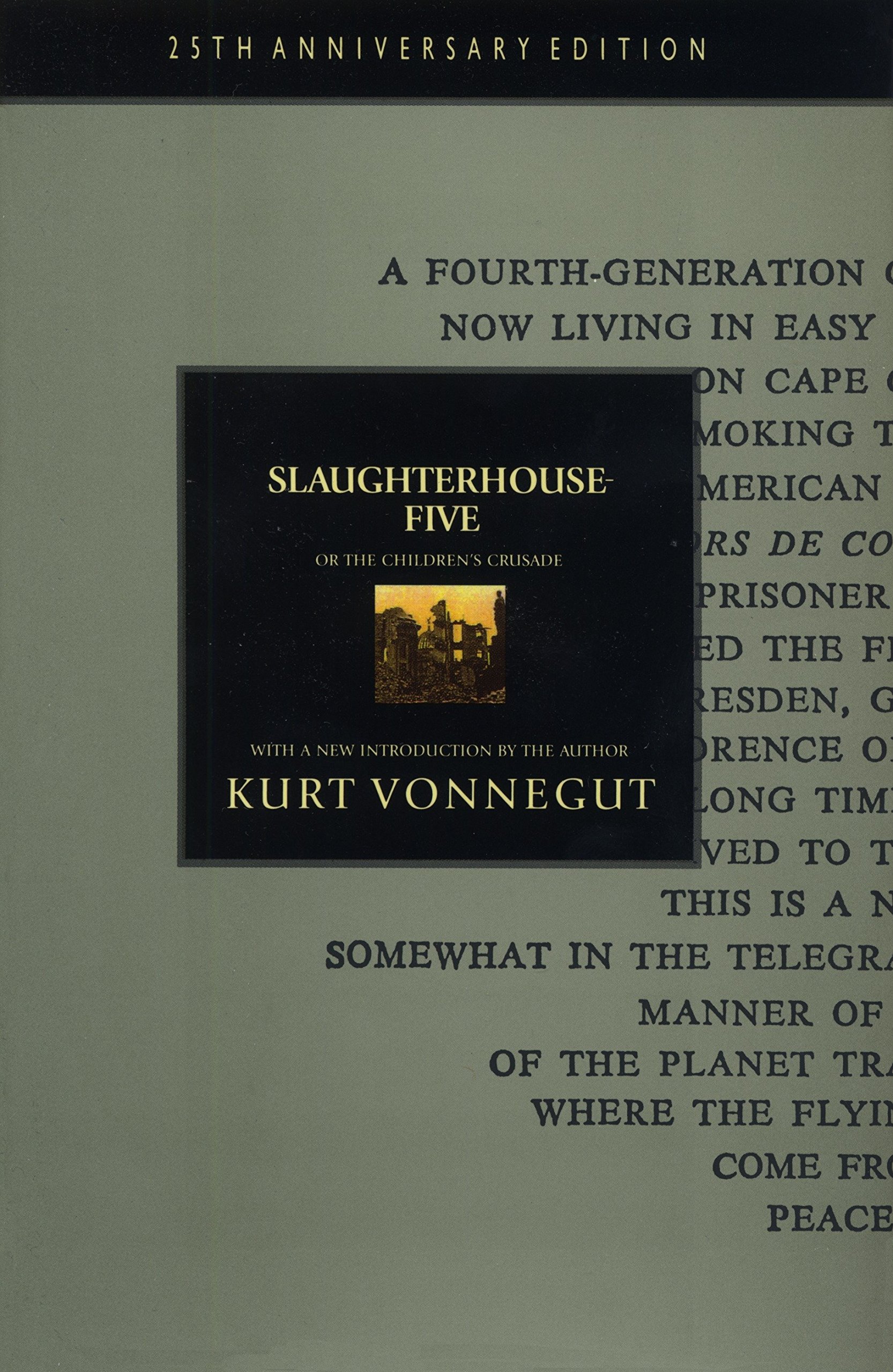
Title: Slaughterhouse-Five
Author: Kurt Vonnegut
Publisher: Delacorte Press/Seymour Lawrence
Publishing Date: March 1994
No. of Pages: 205
Synopsis:
A fourth-generation German-American now living in easy circumstances on Cape Cod (and smoking too much), who, as an American infantry scout hors de combat, as a prisoner of war, witnessed the fire-bombing of Dresden, Germany, “the Florence of the Elbe,” a long time ago, and survived to tell the tale. This is a novel somewhat in the telegraphic schizophrenic manner of tales of the Planet Tralfamadore, where the flying saucers come from. Peace.

Title: We
Author: Yevgeny Zamyatin
Translator (from Russian): Natasha Randall
Publisher: Vintage
Publishing Date: 2007 (1920)
No. of Pages: 532
Synopsis:
The citizens of the One State live in a condition of ‘mathematically infallible happiness’. D-503 decides to keep a diary of his days working for the collective good in this clean, blue city state where nature, privacy and individual liberty have been eradicated. But over the course of his journal D-503 suddenly finds himself caught up in unthinkable and illegal activities – love and rebellion.
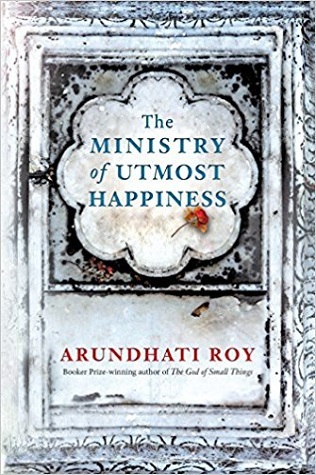
Title: The Ministry of Utmost Happiness
Author: Arundhati Roy
Publisher: Hamish Hamilton
Publishing Date: 2017
No. of Pages: 438
Synopsis:
The Ministry of Utmost Happiness takes us on a journey of many years – the story spooling outwards from the cramped neighbourhoods of Old Delhi into the burgeoning new metropolis and beyond, to the Valley of Kashmir and the forests of Central India, where war is peace and peace is war, and where, from time to time, ‘normalcy’ is declared.
Anjum, who used to be Aftab, unrolls a threadbare carpet in a city graveyard that she calls home. A baby appears quite suddenly on a pavement, a little after midnight, in a scribe of litter. The enigmatic S. Tilottama is as much of a presence as she is an absence in the lives of the three men who love her.
The Ministry of Utmost Happiness is at once an aching love story and a decisive demonstration. It is told in a whisper, in a shout, through tears and sometimes with a laugh. Its heroes are people who have been broken by the world they live in and then rescued, mended by love – and by hope. For this reason, they are as steely as they are fragile, and they never surrender. This ravishing, magnificent book reinvents what a novel can do and can be. And it demonstrates on every page the miracle of Arundhati Roy’s storytelling gifts.
 The Pine-Scented Chronicles