
Happy Wednesday, everyone! Wednesdays also mean WWW Wednesday updates. WWW Wednesday is a bookish meme hosted originally by SAM@TAKING ON A WORLD OF WORDS.
The mechanics for WWW Wednesday are quite simple: you just have to answer three questions:
- What are you currently reading?
- What have you finished reading?
- What will you read next?

What are you currently reading?

It is already the middle of the week. How has your week been? I hope it’s going well and going in your desired direction. Woah. Time flies! Today is the last Wednesday of the fifth month of the year. In a couple of days, we will be welcoming the sixth month of the year and before we know it, we will already be midway through the year. Speaking of, how has the year been so far? I hope it’s going well for everybody. I hope it is going your way, and that you are being showered with blessings and good news. I hope the rest of the year will be prosperous, brimming with wealth, but more importantly, good health. I hope everyone is making progress on their goals and is on the way to achieving them.
With Perumal Murugan’s One Part Woman, I am now already halfway through my goal of reading 100 books for the fourth year in a row; reading 100 books in a year used to be a dream but it has become a reality and to think that I am about to make it four years in a row is simply surreal. Anyway, I am continuing my literary journey with Santanu Bhattacharya’s The Deviants. It was while searching for books to include in my 2025 Top 10 Books I Look Forward To that I first came across the Indian novelist. With my interest piqued, I included it in my own most anticipated 2025 books list. This makes it the first book from the said list that I will read. As I have just started reading the book, I don’t have much impression of it. Nevertheless, I will be sharing my initial impressions of the book in this week’s First Impression Friday update.
What have you finished reading?

Although I am drawing closer to the inevitable conclusion of my foray into Asian literature, my reading journey is still in full swing. In the past week, I managed to pick up pace and was able to complete three books. I guess my being on holiday for the past eight days played a role in this higher-than-average reading output. Anyway, the first of these books was Saneh Sangsuk’s The Understory. It was only recently that I came across the Thai writer. It was all thanks to an online bookseller that I encountered the highly-regarded writer and his novel The Understory. Because of my lack of venture into the works of Southeast Asian writers, I immersed myself in my newly acquired book without ado.
Originally published in 2003 as เจ้าการะเกด (Cêā kāraked), The Understory transports the readers to the Thai countryside, to the village of Praeknamdang. From what I understand, this is also the setting of Venom. In the village, we meet Luang Paw Tien, the ninety-three-year-old abbot of the local temple. Despite his age, Luang Paw Tien enjoys regaling the locals, spending most of his evenings entertaining children with the stories of his youth although he also told stories of present-day Praeknamdang. Of the abbot’s stories, one stood out – and it would be the heft of the novel. Before entering the monastery, Luang Paw Tien had an adventurous youth. He spent most of it in the jungle, far from human interaction and close to wild animals. Of his mind’s catalog, one animal lingers: the tiger. Luang Paw Tien’s mother, Mae Duangbulan was killed by a tiger; the ten-year-old Luang Paw Tien would nearly be killed by the same tiger. He would spend most of his youth being a hunter. As he regals the children with these stories, what floats to the surface is the story of Thailand. Over the decades that transpired between Luang Paw Tien’s youth and the present day, the Thai landscape has drastically changed. The jungle that once enveloped Praeknamdang has receded. The same case is happening across the country as the land is claimed for farming and other human use. More importantly, The Understory highlights the beauty and the power of storytelling. Overall, it is a compelling read.

From Thailand, my foray into works of Asian literature did not take me that far as I traveled to its Southeast Asian neighbor, Vietnam. Like in the case of Thai literature, my venture into Vietnamese literature is also quite limited although, from what I surmise, it is one of the more prominent. Among the few Vietnamese writers I know is Dương Thu Hương, whom I first encountered during the 2018 Big Bad Wolf Sale in Manila. She is quite a prominent name in both Vietnamese literary and political circles. During the said book sale, I encountered her novel, The Zenith which would also eventually become her first work I read. This takes me to the second novel she wrote that I read, ‘Novel Without A Name’.
Originally published in 1991 as Tiểu thuyết vô đề, Novel Without a Name was translated into English in 1995. At the heart of the novel is Quan, a unit commander serving under the Viet Cong. He and his childhood friends Bien and Luong joined the military in the hopes of making a change for their country. At the start of the novel, we meet Quan with his military unit. They recently buried six dead girls they found a couple of weeks prior. This has set the tone for the horrors that permeated the novel. Meanwhile, Luong has since risen up the ranks and is now Quan’s superior officer. Through Luong, Quan learned that Bien has gone insane. Luong then issued a mission to Quan: Quan must go and find Bien and then take care of him. What ensues is an adventure across a fractured landscape irreversibly altered by the Vietnam War. On his way to Zone K to find Bien, Quan encountered a bevy of characters such as Vieng who provided him shelter but also tried to force herself into him. Quan would also find himself lost in the jungle but eventually arrived in Zone K where he was forced to confront various political ideologies; this reminded me of The Zenith. Also, during his journey, Quan was reminded of the traumas of the war that he was once part of. In a way, Novel Without A Name takes the readers to a familiar contemporary Vietnamese literary landscape. Shedding lights on the heritage of war, I prefer Novel Without A Name over The Zenith.
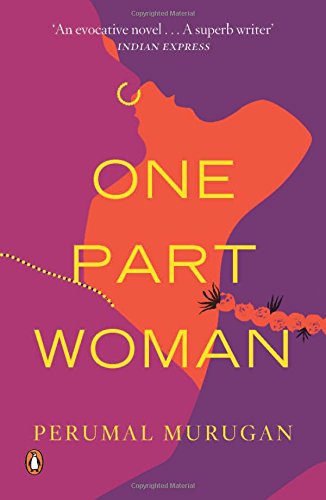
My three-book stretch concluded in a literary territory that is slowly becoming more familiar thanks to a diligent foray into Indian literature – beyond the great Salman Rushdie – in the past few years. Honestly, beyond Rushdie, the list of Indian writers I am quite familiar with is quite limited. Thanks to the Booker Prize, I got to know some of them, including Perumal Murugan who I first encountered in 2023 when his novel Pyre was announced as part of the International Booker Prize longlist; it was the first novel originally written in Tamil to be nominated for the Prize. I have acquired some of his works, with One Part Woman his second novel I read; I read The Story of a Goat last year.
Originally published in 2010 as மாதொருபாகன் (Mathorupagan), One Part Woman takes the readers to the Indian countryside town of Tiruchengode in Tamil Nadu, from which Murugan hails. At the heart of the novel are Kali and Ponna. They have been happily married for twelve years. However, one thing hovers above their marriage: their inability to conceive a child. Because of their childlessness, the couple has received harsh judgments from their families and even from members of the village. After all, Indian society – Asian society as a whole – is highly patriarchal, placing undue weight on a couple’s child-bearing potential. The villagers attributed the couple’s childlessness to various factors such as curses or penance for God’s wrath. The couple was cognizant of the village’s judgemental gazes and even tried to find remedies for their malady; they tried praying and making offerings to the gods. However, it was all for naught as their pleas fell on deaf ears. Kali is also encouraged to take a second wife. While he did consider it for a while, he ultimately rejected the idea. The story was, I learned, inspired by the realities faced by childless couples that Murugan witnessed. In his novel, he captures the weight that rituals and traditions place not only on couples but also on individuals. One Part Woman – the title was derived from the belief that men are one part women and vice versa – reminds me of The Story of a Goat in its evocative portrait of life in the countryside. Murugan is certainly growing on me.
What will you read next?


 The Pine-Scented Chronicles
Finished- Somewhere Beyond the Sea
Currently- Islands of the Blessed/ James
Next- could be either one of my currently read books
LikeLiked by 1 person