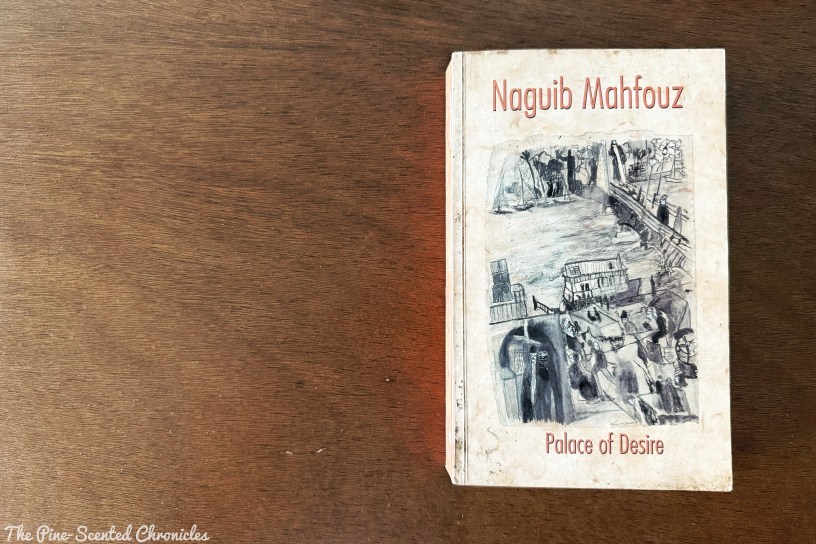
The Cairo Trilogy: Action Heats Up
With a rich history that spans several centuries, Arabic literature is certainly one of the most influential literatures of today. Tracing its provenance to the Arabian peninsula, Arabic literature has developed to be one of the world’s richest, gifting the world with some of the most renowned, memorable, and enduring stories. The earliest form of Arabic literature came in the form of poetry – and it remains one of its most prevalent – but pundits often anchor its growth and development with the Holy Qu’ran. From epic stories to tragic romances to adventure stories, Arabic literature has an entire spectrum of literary works, including full-length prose, epic poems, short stories, and satire, to offer to the rest of the world. Who has not heard of One Thousand and One Nights, also referred to as the Arabian Nights? It is easily one of the most recognizable literary works out there.
For sure, the name Scheherazade rings a bell for everyone. A prominent character in One Thousand and One Nights, she has since been an adjective for modern storytellers. Indeed, Arabic literature brims with various Scheherazade who never runs out of engaging and compelling stories. These storytellers also conveyed from one generation to another through various media the stories of antiquity. In effect, the continuity of Arabic literature is ensured. Stories of the past are being preserved but, at the same time, new voices are continuously being added into the extensive and lush tapestry of Arabic literature. This rich tradition has inspired succeeding generations of writers and storytellers. From this lush legacy, contemporary Arabic writers have produced several award-winning works that have become literary essentials not only within the realm of Arabic literature but also of world literature.
Among the most renowned contemporary Arabic writers is Naguib Mahfouz. Born Naguib Mahfouz Abdelaziz Ibrahim Ahmed Al-Basha (نجيب محفوظ عبد العزيز ابراهيم احمد الباشا), he began writing at the age of seventeen. His long-storied career started with the publication of his first novel in 1939. With a career that spanned decades, he produced several works that transcend time and physical boundaries. His works also earned him accolades from around the world. He reached the zenith of literature when he was awarded by the Swedish Academy the Nobel Prize in Literature in 1988, earning the distinction of being the first – and so far, the only – Arab writer to be awarded the most prestigious literary prize. In their citation, the Academy described him as a writer “who, through works rich in nuance – now clear-sightedly realistic, now evocatively ambiguous – has formed an Arabian narrative art that applies to all mankind.”
These people are talking about beauty. What do they know about its essence. They like certain colors: the whiteness of ivory and the gold of precious ingots. If you ask me about beauty I won’t speak of a pure bronze complexion, tranquil black eyes, a slim figure, and Parisian elegance. Certainly not all these are pretty, but they’re no thing but lines, shapes, and colors subject to investigation by the senses and open to comparison. Beauty itself is a painful convulsion in the heart, an abundance of vitality in the soul, and a made chase undertaken by the spirit until it encounters the heavens.
Naguib Mahfouz, Palace of Desire
In his chronicle of Arabian narrative art, Mahfouz produced several stellar works. However, one collective work has been recognized by many literary pundits as his magnum opus. The series الثلاثية (1956-1957, Al-Thulāthiyyah; trans., The Trilogy), known as The Cairo Trilogy, has been recognized as the hallmark of his career and the work that catapulted him to global recognition. It was also one of his works mentioned by the Swedish Academy. The first book in the trilogy, بين القصرين (Bayn al-qasrayn), was published in 1956 and was translated into English as Palace Walk. The book set the tone for the rest of the trilogy. Building on the first book’s immediate success, Mahfouz published its sequel, قصر الشوق, (Qasr al-Shawq) a year later. Literally translated as Palace of Longing, the book, like the other books in the trilogy, was only translated after Mahfouz’s Nobel Prize in Literature recognition.
Family Saga Continued
The second book picks up where the first book concludes, transporting the readers to the labyrinthine world of pre-World War One Cairo; all three books in the trilogy were named after alleys or streets where the stories transpired. At the heart of the trilogy is the al-Jawad family, helmed by the patriarch, Al-Sayyid Ahmad Abd al-Jawad. Five years have passed since the death of Fahmy, the most promising of al-Jawad’s children after he was shot during a demonstration against the British occupation of Egypt. In the intervening periods, the patriarch made a vow to turn his back on the acts of deviance – drinking, partying, and adultery – of his old ways. He has also loosened his tight, almost tyrannical grip on his family. Amina, his wife, was allowed more freedom. She can leave the house to visit family and the al-Husayn mosque. She assumed more authority in the household and could voice out her thoughts without fear of reprisal.
The remaining two sons, Yasin and Kamal, have also started to enjoy greater freedom. Changes have swept the al-Jawad household. However, just when it seemed that everything was about to get better for the family, the hypocrisy of Ahmad prompted him to return to his old nocturnal escapades despite his declining health. As the old adage goes, old habits die hard. He reconnected with friends he lost touch with and resumed his usual debauchery. He started drinking again and meeting the same prostitutes and even started falling in love with Zanuba, a lute player who, ironically, served as assistant to Zubayda, the prostitute Ahmad loved in the first book. Zanuba reignited his desire but Zanuba was quick to reject his advances. This did not dampen Ahmad’s spirit, persistently pursuing her by showering her with gifts. What he did not know was that Zanuba was once Yasin’s lover.
Yasin, Ahmad’s son from his first marriage, was very much like his father. The fruit, after all, does not fall far from the tree. He was a sexual deviant and a hedonist. However, unlike his father, he was incapable of living a double life. After a failed first marriage, he married Maryam, their neighbor., going against his family’s wishes. Maryam was previously married and divorced. Rumors also had it that she had an affair with an English soldier. Fahmy, at one point, considered marrying Maryam. Yasin and Maryam moved to Qasr al-Shawq where Yasin inherited a house from his deceased mother. His family reluctantly accepted his marriage. While Yasin’s new home is located in the alley from which the novel derived its title, the crux of the story is not Yasin. Rather, Palace of Desire’s focus is on Kamal, the youngest of Ahmad’s children.
My heart collided with the walls of my chest as the secrets of the enchantment revealed themselves. My intellect raced so fast it courted insanity. The pleasure was so intense that it verged on pain. The strings of existence and of my soul vibrated with a hidden melody. My blood screamed out for help without knowing where assistance could be found. The blind man could see, the cripple walked, and the dead man came back to life.
Naguib Mahfouz, Palace of Desire
Kamal was about to enter university. Much to his father’s chagrin, Kamal planned to pursue a degree in teaching at the Teachers Training College. His father was hoping he would pursue a more meaningful or promising career: It’s a miserable profession, which wins respect from no one. Kamal’s friends were also opposed to the idea because they didn’t see the value in gaining a degree in teaching. Despite his father’s remonstrance and his friends’ sighs of displeasure, Kamal was resolute in his decision to earn a degree in teaching. Kamal, however, had his own ideas. He saw it as a springboard for other intellectual pursuits. He wanted to learn about other cultures and philosophies. Finding solace in literature, Kamal is essentially the antithesis of Yasin. He even wrote an article on Darwin and evolution which his father, without scruples, dismissed.
Changing Tide
Indeed, change was once again at the heart of Palace of Desire. The tectonic shifts, however, were not only taking place within the Al Jawad household. Over the horizon, changes were sweeping Egypt; the 1920s was a decade of great but drastic change for the nation. The seeds of these changes were already planted in the first book where nationalism was slowly taking root. The weary Egyptians began calling for independence from British colonizers. This call for independence led to various uprisings, prominently the Egyptian Revolution of 1919. In response to these calls, Great Britain, in an unexpected move, unilaterally declared Egypt’s independence in 1922. They installed Sultan Fuad I as King. Ironically, the colonists’s influence remained. They retained control over key areas like the Suez Canal Zone, Sudan, and Egypt’s external and military affairs. The King was essentially a British puppet.
Mahfouz vividly captured the political and religious tensions that were simmering beneath the surface of Egyptian society. The Jawad family was once again the microcosm of these changes. The political changes that were sweeping Cairo and Egypt were points of discussion between the members of the family. The characters themselves examined the societal expectations placed upon them. Their personal struggles intertwine with the larger political and social changes shaping Egypt during the early twentieth century. Kamal was the focal point of this discourse as he, like his deceased brother, became involved in religious, political, and philosophical concerns. Not only was Kamal grappling with issues of national identity, he was also dealing with personal changes. At the end of Palace Walk, Kamal is a precocious twelve-year-old boy learning Qur’an but in Palace of Desire, we meet an internally tormented adolescent.
In many ways, Palace of Desire is Kamal’s coming-of-age story, as he is forced to confront the realities of the world around him. The source of his internal turmoil lies in the revelations he encounters as he grows older. For instance, the al-Husayn mosque—revered by his mother—is far less sacred than he was led to believe. As a child, he was taught that it housed the remains of a Muslim saint, only to later discover this was untrue. The mosque, like much of what he was taught in his youth, turned out to be largely symbolic. Attending an elite school further dismantled the traditional beliefs instilled in him by his family. Because of his early devotion to Islamic teachings, his mother had hoped he would become an Islamic scholar like his grandfather. However, the school introduced him to new ideas and friendships that challenged not only his beliefs but also the very traditions that shaped his upbringing.
But was he anywhere near that blisssful state? The long history of his love had embraced some moments of deceptive hope. These had illuminated the dark corners of his heart with an imaginary happiness afer a sweet smile granted by the beloved, a passing remark open to wishful interpretation, or a cheerful deream concluding a night of pensive insomnia.
Naguib Mahfouz, Palace of Desire
Kamal’s new friends embodied the advent of modernity. Western sciences, Charles Darwin, and Muslim skeptics lit a spark in him. These new ideas led Kamal to question his beliefs about religion and culture. While he still firmly believes in a god, he has become convinced that science is the true religion. This tension lies at the heart of the novel’s exploration of the clash between modernity and tradition. Kamal’s internal turmoil is further intensified by his unrequited love for Aïda, the sister of one of his new friends. But as fate would have it, their romance was not meant to be—the sea of differences between them was too vast. She was older and came from a wealthy family. Heartbroken, Kamal finds himself following the same path as his father and older brother, though in a more restrained manner. Familiar patterns begin to emerge. His experience of desire adds emotional depth to the story and serves as a segue from the extensive political discourse that permeates it.
Of Dysfunctional Families
As Kamal grapples with questions of existentialism—spanning religion, the purpose of life, and the meaning of love—the female characters confront their own struggles. While the male voice dominates the narrative, the novel subtly and astutely underscores the patriarchal nature of Egyptian society. Amina and her daughters must navigate a world in which they have very little agency. Although Amina is granted more freedom in the second book, her daughters, Khadija and Aisha, must wrestle with their own understandings of freedom. It is only toward the end of the story that their narratives begin to take shape. Aisha and Khadija represent opposite ends of the spectrum: Aisha yearns for independence, while her older sister chooses to conform to traditional expectations. Their experiences—and those of their mother—highlight how gender roles and expectations remain central to the broader process of societal transformation in Egypt.
Despite the swirl of germane themes and subjects, Palace of Desire is, at its core, a vivid portrait of a dysfunctional family steeped in tradition. Providing a contrast to the al-Jawad family is the Shaddad family; the son, Husayn Shaddad, is Kamal’s friend. After being exiled to Paris, the Shaddads have adopted a Westernized air. They are more liberal compared to the al-Jawads—an extension of the novel’s broader depiction of societal shifts taking place in Cairo, and Egypt as a whole. Mahfouz masterfully captures a society in flux, and at its center, a family caught in the whirlwind of change shaping contemporary Egypt. This dynamic is further enriched by a diverse cast of characters whose personalities slowly unfold as the story progresses. They are complex and flawed, yet deeply relatable, which makes for an engaging and emotionally resonant read.
Overall, Palace of Desire is a powerful sequel to Palace Walk. Mahfouz breathes life into Cairo and Egypt with his evocative prose. The city’s alleys and backstreets come alive through his richly descriptive language, populated by compelling characters caught in the midst of monumental changes transforming the modern Egyptian landscape. With Kamal at the forefront, Mahfouz captures not just the evolution of a single family, but of a society torn between holding on to tradition and embracing modernity. Western and Eastern ideas and philosophies are in constant tension throughout the narrative. While political overtones are fleeting, their impact on the characters is vividly portrayed. The novel focuses more on the personal—on individuals wrestling with questions of love, family, religion, and the meaning of life. In Palace of Desire, Mahfouz weaves a rich, textured tapestry that only he can, while skillfully setting the stage for the final act of the trilogy.
No matter where a person stood, he was always confronted by a curve, behind which an unknown world lay concealed. Narrowness gave the road an unassuming, familiar character, like that of a pet animal. A man sitting in a shop on the right could reach over and shake hands with his neighbor on the other side. Stretched between the tops of the stores, convas awnings protected the streets from the burning rays of the sun. Beneath them the humidity and diffused light created a dreamy atmosphere. Bunched together on shelves and benches wree racks of green henna, red cayenne, and black pepper – along with flasks of rose water and perfume, colored wrapping paper, and diminutive scales. Hanging from the rafters was a decorative fringe of candles of diverse size and colors. The fragrances of different perfume and colognes filled the air like the aroma of a distant dream.
Naguib Mahfouz, Palace of Desire
Book Specs
Author: Naguib Mahfouz
Translators (from Arabic): William Maynard Hutchina, Lorne M. Kenny, and Olive E. Kenny
Publisher: The American University in Cairo Press
Publishing Date: 2001 (1957)
Number of Pages: 422
Genre: Historical, Literary
Synopsis
In this second volume of The Cairo Trilogy, the master storyteller spins a sensual, provocative tale, following the al-Jawad family into the awakening world of the 1920s, where increased freedoms prove as troubling as domination and repression once did. Like Palace Walk, Palace of Desire affords a fascinating look at a period of modern Egyptian history by lovingly and painstakingly examining the day-to-day lives of a single family.
About the Author
To learn more about the Nobel Laureate in Literature, click here.
 The Pine-Scented Chronicles
I love ‘The Cairo Trilogy’, which I first read whilst living in Cairo back in the 80s. I re-read it a couple of years ago, along with ‘Children of the Alley’, which got the author into trouble and shortened his life for reasons similar to those which later affected Salman Rushdie. A powerhouse of an author. 🙂
LikeLike