
Happy Tuesday everyone! As it is Tuesday, it is time for a Top Ten Tuesday update. Top Ten Tuesday is an original blog meme created by The Broke and the Bookish and is currently being hosted by That Artsy Reader Girl.
This week’s given topic: Books on My Summer 2025 to-Read List


Title: Foucault’s Pendulum
Author: Umberto Eco
Translator (from Italian): William Weaver
Publisher: Guild Publishing
Publishing Date: 1989 (1988)
No. of Pages: 641
Synopsis:
Foucault’s Pendulum is a superb entertainment by the author of The Name of the Rose. An enthralling mystery, a sophisticated thriller, a breathtaking journey through the world of ideas and aberrations, the treasures and traps of knowledge, Umberto Eco’s new novel will delight, tease, provoke, and stimulate.
One Colonel Ardenti, who has unnaturally black brilliantined hair, an Adolphe Menjou mustache, wears maroon socks and fought in the Foreign Legion, starts it all. He tells three editors at a Milan publishing house that he has discovered a coded message about a Templar plan, centuries old and of diabolical complexity, to tap a mystic source of power greater than atomic energy.
The editors (who have spent altogether too much time rewriting crackpot manuscripts on the occult by self-subsidizing poetasters and dilettantes) decide to have a little fun. They’ll make a plan of their own. But how?
Randomly they throw in manuscript pages on hermetic thought. The Masters of the World, who live beneath the earth. The Comte de Saint-Germain, who lives forever. The secrets of the solar system contained in the measurements of the Great Pyramid. The Satanic initiation rites of the Knights of the Temple. Assassins, Rosicrucians, Brazilian voodoo. They feed this all into their computer, which is named Abulafia (Abu for short) after the medieval Jewish cabalist.
A terrific joke, they think – until people begin to disappear mysteriously, one by one, starting with Colonel Ardenti.

Title: Fontamara
Author: Ignazio Silone
Translator (from Italian): Eric Mosbacher
Publisher: Everyman
Publishing Date: November 15, 1994
No. of Pages: 160
Synopsis:
It is Silone’s first novel and is among his most famous works. It received worldwide acclaim and sold more than a million and a half copies in twenty-seven languages. It was first published in German translation in Zurich, Switzerland in 1933, and was published in English by Penguin Books in September 1934. Fontamara is derived from the Italian ‘Fonte Amara’ (Bitter Stream.) Appearing on the eve of the Spanish Civil War, and published just a few months after Hitler came to power, when the world was beginning to take sides for or against fascism, the novel had a galvanising effect on public opinion. Fontamara ‘became the very symbol of resistance’ and ‘is widely agreed to have played a major role as a document of anti-Fascist propaganda outside Italy in the late 1930s,’ as it criticises the deceitful and immoral nature of the Fascist party and its followers.
Fontamara is a fictional small rural village in Marsica in the Abruzzo region. The people (the Fontamaresi) are poor and the village is very remote to the extent that the citizens are unaware of world events such as the rise of Fascism. There is a tremendous gap between the ‘’cafoni’’ (peasants) who populate ‘’Fontamara’’ and those who live in the city. The Fontamaresi work the Earth to survive, turn to emigration as a means of economic improvement and are ignorant to events happening outside of their town. They are cut off from the rest of Italy and thus unaffected by modernity and new technology. The Impresario is a stark contrast to the Fontamaresi, who have laboured for centuries to little avail, as he quickly became the richest man in the region and embodies the power, authority and immorality of the Fascists. The Fontamaresi are exploited due to their naïvety and ignorance, the women are raped by the squadristi (a group of Fascists), Berardo Viola makes the ultimate sacrifice to allow the continued distribution of clandestine texts to spread the word about socialism and encourage rebellion against Fascism and at the end the majority of the population are killed at the hands of the Government. (Source: Goodreads)

Title: King, Queen, Knave
Author: Vladimir Nabokov
Translator (from Russian): Dmitri Nabokov
Publisher: Vintage International
Publishing Date: February 16, 2011
No. of Pages: 272
Synopsis:
This novel is the story of Freyer, a wealthy and boisterous proprietor of a men’s clothing emporium, Ruddy, self-satisfied, and thoroughly masculine, he is perfectly repugnant to his exquisite but cold middle-class wife, Martha. Attracted to his money but repelled by his oblivious passion, she longs for their nephew instead, the thin, awkward, myopic Franz. Newly arrived in Berlin, Franz soon repays his uncle’s condescension in his aunt’s bed.

Title: Panorama
Author: Dušan Šarotar
Translator (from Slovene): Rawley Grau
Publisher: Peter Owen Publishers
Publishing Date: 2016 (2014)
No. of Pages: 206
Synopsis:
Deftly blending fiction, history, and journalism, Dušan Šarotar takes the reader on a deeply reflective yet kaleidoscopic journey from northern to southern Europe. In a manner reminiscent of W.G. Sebald, he supplements his engrossing narrative with photographs , which help to blur the lines between fiction and journalism. The writer’s experience of landscape is bound up in a [ersona yet elusive search for self-discovery, as he and a diverse group of international fellow travellers relate in their distinctive and memorable voices their unique stories and common quest for somewhere they might call home.
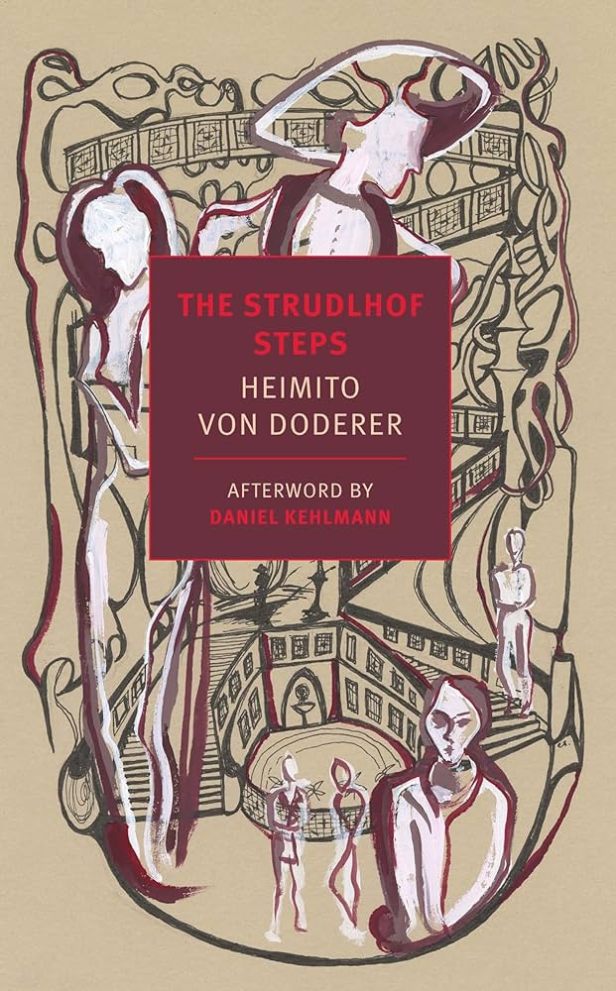
Title: The Strudlhof Steps
Author: Heimito Von Doderer
Translator (from German): Vincent Kling
Publisher: New York Review Books
Publishing Date: 2021 (1951)
No. of Pages: 839
Synopsis:
The Strudlhof Steps is an unsurpassed portrait of Vienna in the early twentieth century, a vast novel crowded with characters ranging from an elegant, alcoholic Prussian aristocrat to an innocent ingenue to “respectable” shopkeepers and tireless sexual adventures, bohemians, grifters, and honest working-class folk. The greatest character in the book, however, is Vienna, which Heimito von Doderer renders as distinctly as James Joyce does Dublin or Alfred Döblin does Berlin. Interweaving two time periods, 1908 to 1911 and 1923 to 1925, the novel takes the monumental eponymous outdoor double staircase as a governing metaphor for its characters’ intersecting and diverging fates. The Strudlhof Steps is an experimental tour de force with the suspense and surprise of a soap opera. Here Doderer illuminates the darkness of passing years with the dazzling extravagances that is uniquely his.

Title: Life and Fate
Author: Vasily Grossman
Translator (from German): Robert Chandler
Publisher: Perennial Library
Publishing Date: 1987
No. of Pages: 871
Synopsis:
Life and Fate is fiction on the epic scale: powerful, deeply moving, and devastating in its depiction of a world torn apart by war and ideological tyranny. At the center of the novel, overshadowing the lives of each of its huge cast of characters, stands the battle of Stalingrad. Vasily Grossman presents a startlingly vivid picture of this desperate struggle for a ruined city, and of how the ebb and flow of the fighting affect the lives and destinies of people far from the front line. With Tolstoyan grandeur that finds room for intimate detail, and deploying a multitude of superbly realized characters, Grossman delivers a message of terrifying simplicity: that Stalinism and Nazism are one and the same in their falsehood, cruelty, and inhumanity.

Title: Blindness
Author: José Saramago
Translator (from Portuguese): Giovanni Pontiero
Publisher: Mariner Books
Publishing Date: 1999 (1995)
No. of Pages: 326
Synopsis:
A city is hit by an epidemic of “white blindness” which spares no one. Authorities confine the blind to an empty mental hospital, but there the criminal element holds everyone captive, stealing food rations and assaulting women. There is one eyewitness to this nightmare who guides seven strangers – among them a boy with no mother, a girl with dark glasses, a dog of tears – through the barren streets, and the procession becomes as uncanny as the surroundings are harrowing. A magnificent parable of loss and disorientation and a vivid evocation of the horrors of the twentieth century, Blindness is a powerful portrayal of man’s worst appetites and weaknesses – and man’s ultimately exhilarating spirit.
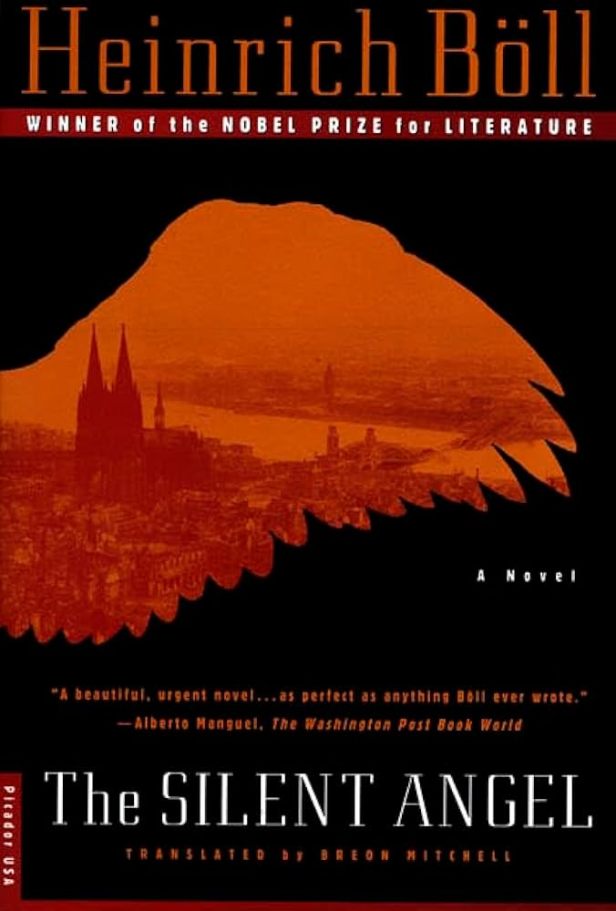
Title: The Silent Angel
Author: Heinrich Böll
Translator (from German): Breon Mitchell
Publisher: Picador
Publishing Date: August 1995 (1992)
No. of Pages: 182
Synopsis:
Rejected by German publishers in 1950, this recently discovered first novel by Nobel Prize winner Heinrich Böll is a treasure for scholars, students, and contemporary readers.
Just days after the end of World War II, German soldier Hans Schnitzler returns to a bombed German city, carrying a dead comrade’s coat to his widow – not knowing that the coat contains a will. Soon Hans is caught in a dangerous intrigue involving the will; he also begins a tentative romance with another grieving woman, as together they seek an identity and a future together in the ruined city.
Raw and masterful, The Silent Angel summons the full horror of war, while affirming the human heart’s enduring strength.

Title: A Heart So White
Author: Javier Marías
Translator (from Spanish): Margaret Jull Costa
Publisher: Vintage International
Publishing Date: 2012 (995)
No. of Pages: 279
Synopsis:
Juan knows almost nothing of his father Ranz’s interior life. But when Juan marries, he’s compelled to consider the past anew and to ponder what he doesn’t really want to know. As family secrets – their possible convenience, their ultimate price, and even their possible civility – hover, A Heart So White becomes a sort of anti-detective story of human nature. Intrigue; the sins of the father; the fraudulent and the genuine; marriage and strange repetitions of violence; Marías elegantly sends shafts of inquisitor light into shadows and onto the costs of ambivalence as it chronicles the relentless power of the past.

Title: Amsterdam
Author: Ian McEwan
Publisher: Jonathan Cape
Publishing Date: 1998
No. of Pages: 178
Synopsis:
On a chilly February day two old friends meet in the throng outside a crematorium to pay respects to Molly Lane. Both gave Clive Linley and Vernon Halliday had been Molly’s lovers in the days before they reached their current eminence, Clive as Britain’s most successful modern composer, Vernon as editor of the quality broadsheet, The Judge. Gorgeous, feisty Molly had other lovers too, notably Julian Garmony, Foreign Secretary, a notorious right-winger tipped to be the next prime minister.
In the days that follow Molly’s funeral Clive and Vernon will make a pact that will have consequences neither has foreseen. Each will make a disastrous moral decision, their friendship will be tested to its limits and Julian Garmony will be fighting for his political life.
A contemporary morality tale that is as profound as it is witty, this short novel is perhaps the most purely enjoyable fiction Ian McEwan has ever written. And why Amsterdam? What happens there to Clive and Vernon is the most delicious shock in a novel brimming with surprises.
 The Pine-Scented Chronicles
Back when I was at university, Summer was reserved for the classics- that was how the classic challenge started (to attempt to finish one each summer break and Christmas break)
But now, can depend- still currently on two books that were started in May- James (kindle) and Islands of the Blessed (physical and 3rd book of the Sea of Trolls trilogy)
LikeLike