
Hello, readers! It is Monday again! As it is Monday, welcome to another #5OnMyTBR update. The rule is relatively simple. I must pick five books from my to-be-read piles that fit the week’s theme.
This week’s theme: No Prompt
There is still no prompt this week. As such, I randomly selected from previous prompts I haven’t done yet. Without ado, here are books with titles starting with an H.

5OnMyTBR is a bookish meme hosted by E. @ Local Bee Hunter’s Nook where you choose five books from your to-be-read pile that fit that week’s theme. If you’d like more info, head over to the announcement post!

Title: Half a Life
Author: V.S. Naipaul
Publisher: Vintage International
Publishing Date: October 2002 (2001)
No. of Pages: 211
Synopsis:
Spanning three continents and an entire history of caste, class, exile, and dislocation, Half a Life is a beautifully resonant study of the fraudulent bargains that make up an identity. V.S. Naipaul’s protagonist is Willie Chandran, the son of a Brahmin ascetic and the lower-caste woman he married out of ideological spite. At an early age, Willie senses the hollowness at the core of his father’s self-denial and aspires something more genuine.
His search takes him to the immigrant and literary bohemias of 1950s London; to a facile, unsatisfying career as a writer; and, finally, to a decaying Portuguese colony in East Africa, where he finds a happiness he will then be compelled to betray. Masterfully orchestrated, at once elegiac and devastating in its portraits of colonial grandeur and pretension, Half a Life represents the pinnacle of Naipaul’s career.

Title: A Heart So White
Author: Javier Marías
Translator (from Spanish): Philip Gabriel
Publisher: Margaret Jull Costa
Publishing Date: 2012 (1995)
No. of Pages: 279
Synopsis:
Juan knows almost nothing of his father Ranz’s interior life. But when Juan marries, he’s compelled to consider the past anew and to ponder what he doesn’t really want to know. As family secrets – their possible convenience, their ultimate price, and even their possible civility – hover, A Heart So White becomes a sort of anti-detective story of human nature. Intrigue; the sins of the father; the fraudulent and the genuine; marriage and strange repetitions of violence; Marías elegantly sends shafts of inquisitor light into shadows and onto the costs of ambivalence as it chronicles the relentless power of the past.

Title: His Native Coast
Author: Edith L. Tiempo
Publisher: Univesity of the Philippines Press
Publishing Date: 2000 (1979)
No. of Pages: 235
Synopsis:
His Native Coast is a story of a search for identity. The rather inarticulate attempt of Michale Linder to shape for himself a personal identification with the world that would give ultimate meaning to his life is paralleled by Marina’s own search: for Marina is partly tribal, and although her life and training are steeped in Western (American) culture, she is haunted by the influence of her Ifugao mother, who had lived and died in her native hills without once coming down to the lowlands.
His Native Coast gives the reader a provocative and moving story of two “pilgrimages,” one ending outside of the seeker’s geographical context, and the other in a return to it: one resulting in a glimpse of self-recognition, the other in what turns out to be a refusal of it.
The novel attempts a definition of personal and national identity that transcends geographical origins, and suggests that whether one is in his home country or not, the belief in his own human usefulness in his context has much to do with forging a healthy sense of belonging.
In these days of heightened self-searching among the western-influenced-developing nations, this Philippine experience offers its own unique insight.
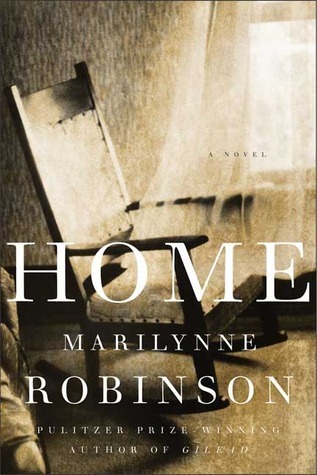
Title: Home
Author: Marilynne Robinson
Publisher: Farrar, Straus and Giroux
Publishing Date: 2008
No. of Pages: 325
Synopsis:
Hundreds of thousand of readers were enthralled and delighted by the luminous, tender voice of John Ames in Gilead, Marilynne Robinson’s Pulitzer Prize-winning novel. Home is an entirely independent, deeply affecting work that takes place concurrently in the same Iowa town, this time in the household of Reverend Robert Boughton, Ames’s closest friend.
Glory Boughton, age thirty-eight, has returned to Gilead to care for her dying father. Soon her brother Jack – the prodigal son of the family, gone twenty years – comes home, too, looking for refuge and trying to make peace with a past littered with trouble and pain. Jack is one of the great characters in recent literature. A bad boy from childhood, an alcoholic who cannot hold a job, he is perpetually at odds with his surroundings and with his traditionalist father, though he remains Boughton’s most beloved child. Brilliant, lovable, and wayward, Jack forges an intense bond with Glory and engages painfully with John Ames, his godfather and namesake.
Home is a moving and healing book about families, family secrets, and the passing of generation, about love and death and faith. It is Robinson’s greatest work, an unforgettable embodiment of the deepest and most universal emotions.

Title: The Hotel New Hampshire
Author: John Irving
Publisher: Henry Robbins Books
Publishing Date: 1981
No. of Pages: 401
Synopsis:
Rarely in recent times has a voice so captured the imagination of critics and readers everywhere as JOhn Irving in his internationally acclaimed novel The World According to Garp.
In Mr. Irving’s newest novel, The Hotel New Hampshire, the reader is again seduced by the unfolding of a singular world. As John Berry, the narrator and middle son in a family of five children (and one bear and a dog named Sorrow), explains: “We were a family whose favorite story was the story of my mother and father’s romance: how Father bought the bear, how Mother and Father fell in love, in rapid succession, Frank, Franny, and me (‘Bang, Bang, Bang!’ as Franny would say); and, after a brief rest, how they then had Lilly and Egg (‘Pop and Fizzle,’ Franny says).”
That voice – at once nostalgic and direct – describes the Berry family growing up in three different hotels and on two separate continents. “The first of my father’s illusions was that bears could survive the life lived by human beings, and the second was that human beings could survive a life led in hotels.” What happens to Father’s dreams (and to the children upon whom those dreams are visited) is the subject of John Irving’s fifth and finest novel.
 The Pine-Scented Chronicles