
Hello, readers! It is Monday again! As it is Monday, welcome to another #5OnMyTBR update. The rule is relatively simple. I must pick five books from my to-be-read piles that fit the week’s theme.
This week’s theme: No Prompt
Since there is still no prompt this week, I opted to feature works of Baltic literature, following my previous features of French, German, Spanish, Italian, Portuguese, Russian, Nordic, and Balkan literature. This aligns with my pivot toward European literature, following my initial focus on works of Asian literature for the first half of the year. Without ado, here are works of Baltic literature I am looking forward to.

5OnMyTBR is a bookish meme hosted by E. @ Local Bee Hunter’s Nook where you choose five books from your to-be-read pile that fit that week’s theme. If you’d like more info, head over to the announcement post!

Title: The White Shroud
Author: Antanas Škėma
Translator (from Lithuanian): Karla Gruodis
Synopsis:
The White Shroud (Balta drobulė, 1958) is considered by many as the most important work of modernist fiction in Lithuanian. Drawing heavily on the author’s own refugee and immigrant experience, this psychological, stream-of-consciousness work tells the story of an émigré poet working as an elevator operator in a large New York hotel during the mid-1950s. Using multiple narrative voices and streams, the novel moves through sharply contrasting settings and stages in the narrator’s life in Lithuania before and during World War II, returning always to New York and the recent immigrant’s struggle to adapt to a completely different, and indifferent, modern world. Strong characters and evocative utterances convey how historical context shapes language and consciousness, breaking down any stable sense of self.
As in other major modernist works, Škėma uses language and allusion to destabilise. Narrative, voice and language shift continuously, capturing the anti-hero’s psychological and cultural disorientation — the complexity of experience in a modern world where, in Yeats’ words, “the centre cannot hold.” Like the author’s, Garšva’s frame of reference is vast — quotes from French arias, Kafka and American culture collide with visceral memories of archaic Lithuanian folk song. Garšva’s use of poignant and comical émigré slang in his interactions captures the ironies and absurdities of the immigrant’s situation. By the end of the novel, further grammatical and linguistic disarray mirrors the final unravelling of Garšva’s mind as he descends into madness.
Like all powerful fiction, this novel draws the reader into an intimate, culturally and historically specific world to explore universal human themes of selfhood, alienation, creativity and cultural difference. This English translation promises to appeal to various audiences: readers of modernist and world literature, scholars of Baltic literature and refugee studies, and members of the Lithuanian diaspora unable to access this novel in Lithuanian. Written from the perspective of a newcomer to an Anglophone country, White Shroud encourages readers to better understand the complexities of immigrant life. (Source: Goodreads)
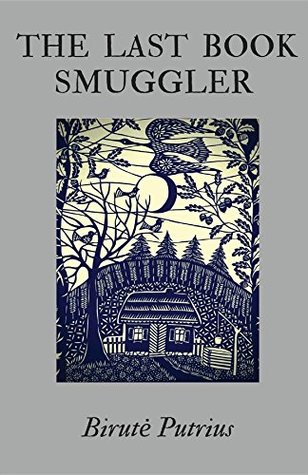
Title: The Last Book Smuggler
Author: Birute Putrius
Synopsis:
In 1902 Lithuania, a group of rebels armed with books triumphs against the mighty Russian Empire.
Part folktale, part thriller, THE LAST BOOK SMUGGLER tells the story of Ada and her grandfather Viktoras, an old book smuggler tired of his forty-year battle to keep his language alive despite the attempts of the Russian Empire to destroy it. Into their world steps Jonas, a young man in love with Ada and ready to join the underground book smugglers. But there is a traitor in their midst who must stop them or lose everything.
Based on the author’s grandfather, who was a book smuggler, the novel deftly captures the politics and dangers of the times while bringing to life an engaging and quirky family, with an element of the supernatural. (Source: Goodreads)

Title: Doom 94
Author: Jānis Joņevs
Translator (from Latvian): Kaija Straumanis
Synopsis:
Doom 94 is Jonevs’ debut novel, published first as Jelgava 94 in Latvia in 2013 and was quickly proved to be a big hit and bestseller. Translated into 11 languages already, it is here for the first time in English.
The story is set in the 1990s in the Latvian city of Jelgava and looks at the burgeoning craze during this decade for the alternative culture of heavy metal music. Jonevs takes the reader deep inside the world of music, combining the intimate diary of a youngster trying to find himself by joining a subculture, as well as a skilful, detailed, and almost documentary-like depiction of the beginnings of the second independence of Latvia–where Jonevs is the first writer to stir up memories of this period through a fully-fledged literary depiction.
Doom 94 is a portrait of a generation searching for their identity and up against the world, trying not to become ‘one of them’. But is it for real? Can any adult keep the promise made as a child? (Source: Goodreads)

Title: Vargamäe: Volume I of the Truth and Justice Pentalogy
Author: Anton Hansen Tammsaare
Translator (from Estonian):
Synopsis:
Andres, an Estonian peasant, purchases a smallholding in a marshy part of the country, which the novel is named after. He takes his young wife, and an incident with their cow sets the tone for a life of struggle in which the family grows and gradually lifts itself out of extreme poverty. They don’t only have to strive against the elements, but also against their neighbour Pearu, a wily and ruthless man. This Tolstoyan epic amongst the peasantry and the restless city (in volumes 2 – 4) tells the story of how Tsarist Estonia developed into the First Republic through the experiences of a family and in particular the partly autobiographical character of Indrek, who leaves the land to get an education at the end of this volume. This monumental work by Estonia’s greatest writer is a European classic which has for too long been neglected in the English-speaking world.(Source: Goodreads)

Title: The Czar’s Madman
Author: Jaan Kross
Translator (from Estonian): Anselm Hollo
Synopsis:
Timo von Bock’s release by the Czar from nine years’ incarceration does not spell the end of the Baron’s troubles: he is confined to his Livonian estate to live under the constant eye of police informers planted among his own household, and is subjected to endless humiliations. It is claimed that he is a madman and in need of ‘protection’: a man would need to be insane, after all, to have taken a Czar at his word when asked for a candid appraisal of the state’s infirmities.
From the year of his release from prison and return to his wife Eeva, a woman of peasant stock to whom, with her brother Jakob, he has given a solid education, the Baron’s life is recorded in a secret journal by this same Jakob, a shrewd and observant house-guest.
Reconstructing the events leading up to the Baron’s incarceration in 1818 and subsequent to his release in 1827, Jakob little by little brings to light mysteries surrounding the ‘Czar’s madman’. Was his madness genuine? What was the secret understanding between him and his boon companion Czar Alexander I, who committed him to prison?
In The Czar’s Madman Jaan Kross weaves together the elements of intrigue surrounding those historical characters who survived in post-Napoleonic Russia, and by a skillful shifting of chronology and viewpoints, creates a superbly rich and moving narrative. (Source: Goodreads)
 The Pine-Scented Chronicles