
Happy Tuesday everyone! As it is Tuesday, it is time for a Top Ten Tuesday update. Top Ten Tuesday is an original blog meme created by The Broke and the Bookish and is currently hosted by That Artsy Reader Girl.
This week’s given topic: Books With Occupations in the Title

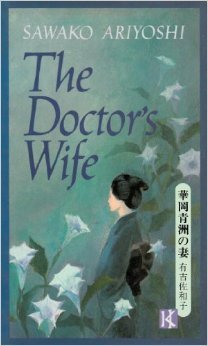
The Doctor’s Wife by Sawako Ariyoshi
Snippet from my review: The undermining of the women’s sacrifices, however, lasted beyond their lives. Upon their deaths, the two women and Seishū were all buried in a row. Owing to his achievement, Seishū’s tombstone was larger than either his wife or mother. Their fate was aptly encapsulated in the novel’s final sentence: If you stand directly in front of Seishū’s tomb, the two behind him, those of Kae and Otsugi, are completely obscured. This is a further reiteration of how men’s achievements and breakthroughs will always be valued, celebrated, and even entombed while the sacrifices made by those around them to make these breakthroughs possible, particularly the women, are often dismissed, muted, and written off. While this subject was probed in the context of Japanese society, it is a reality that persisted and continues to persist across the world.

The Good Solider by Ford Maddox Ford
Snippet from my review: What really stood out, rather, who really stood out in the narrative was John Dowell. His voice loomed above the narrative for the version of events we read are his. We must rely on his memories as he recalls them. However, his unreliability makes one question his true intentions and motivations. The novel then transforms into a character study as one scrutinizes his person. With the events surrounding him, Dowell was mostly passive, at least where emotions are concerned. It does come across that he only cares about himself for he barely exhibited any feelings to events that, to a normal person, would elicit strong reactions. Overall, he was a disengaged narrator, almost like an onlooker and not a character central to the story. Like the story he was relating, was Dowell who he really purported himself to be?

The Librarian of Auschwitz by Antonio Iturbe
Snippet from my review: Set during a dark phase of history, a bleak atmosphere permeated all throughout Dita’s story. It explored familiar but dark subjects. Despite this, it was also brimming with hope. Amidst the strife, humanity scored some victories; it was not always black and white. In the ranks of the enemies are individuals willing to help free the Jews. Dita’s story was also about finding courage and strength amidst the strife. Dita’s story was a beacon that shone throughout the darkness and her voice was audible amidst the pandemonium. We can find the inner strength to roar back against the odds life throws us. Iturbe did a commendable job of painting Dita’s story and her indomitable courage without romanticizing or idealizing her personal victory.
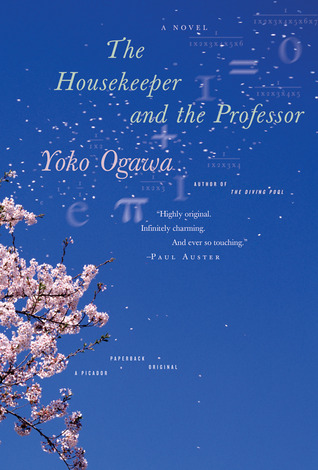
The Housekeeper and the Professor by Yōko Ogawa
Snippet from my review: At its heart, The Housekeeper and the Professor is a heartwarming tale about how our lives intersects with others. It is about the tiny but unexpected connections we make with our fellows. Our lives, after all, intersect. Ogawa, through an anonymous Housekeeper and an anonymous Professor, reminded us that our lives affect others in different ways that might be invisible to the eye. We encounter a lot of people but there will always be a select few who will influence us and change our perspective about various things and life in general.

Aunt Julia and the Scriptwriter by Mario Vargas Llosa
Snippet from my review: In crafting his seventh novel, Vargas Llosa did not look too far. The love story between Marito and Julia was molded from his own first love affair; the novel is a roman à clef. Aunt Julia is fleshed out of Julia Urquidi Illanes, his maternal uncle’s sister-in-law. At the age of nineteen, Vargas Llosa married Urquidi. Shortly after their marriage, Vargas Llosa commenced his literary career. Assuming the role of Marito, Vargas Llosa conveyed how, ten years into the future, Marito has become a successful writer living in Spain. However, the road to success is not always easy. He won some and lost some. Marito and Aunt Julia have divorced, like how Vargas Llosa and Urquidi divorced ten years into their marriage. The esteemed writer eventually married his first cousin, Patricia Llosa.
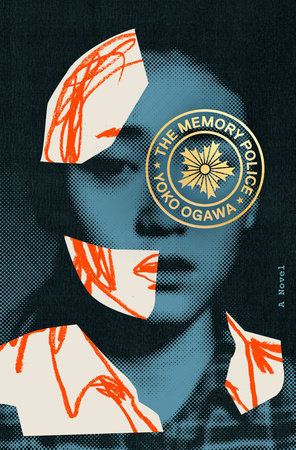
The Memory Police by Yōko Ogawa
Snippet from my review: One of the most seminal subjects explored in the novel was memory, a familiar subject in the landscape of Ogawa’s prose; it was the central theme in her equally popular novel, The Housekeeper and the Professor. While memory was poignant in The Housekeeper and the Professor, memory in The Memory Police was portrayed as one of the biggest forms of resistance. R, an editor, was the community’s crusader, the primary vessel for the preservation of community and individual memory, and by extension, critical information. In one instance, he stopped the novelist from burning a photograph of her mother: “They may be nothing more than scraps of paper, but they capture something profound. Light and wind and air, the tenderness or joy of the photographer, the bashfulness or pleasure of the subject. You have to guard these things forever in your heart. That’s why photographs are taken in the first place.”

The Fishermen by Chigozie Obioma
Snippet from my review: The coming-of-age story was juxtaposed with Nigeria’s tumultuous political landscape and contemporary history. The novel doubles as a political commentary with the broader events taking place in Nigeria in the 1990s forming a backdrop for the story. Obioma also captured how these events affected the brothers. Politics encroached on their world when they met Chief Moshood Kashimawo Olawale (MKO) Abiola, a popular millionaire politician. He ran during the 1993 presidential election and is believed to have won the election. However, he was robbed of victory when the results were annulled and General Sani Abacha seized power. Abiola eventually perished while in military detention. Campaigning with the slogan Hope ’93, Abiola found himself in Akure where he handed the brothers a calendar. The brothers cherished it as it symbolized hope.

The Architect’s Apprentice by Elif Shafak
Snippet from my review: Shafak’s novel encompasses a vast territory, producing a lush tapestry. Jahan’s adventures and journey of self-discovery were propped with rich historical contexts. Jahan not only witnessed the glory years of the Ottoman Empire but also the rise and fall of different sultans. The atrocities of wars and the scars left behind by the plague provided texture to the story. Shafak also referenced the harem system and slavery. The strength of her writing, however, was in how she brought Constantinople to life with her atmospheric writing. Her vivid descriptions transported readers to the Golden Age of the Ottoman Empire. It is a cosmopolitan city where various religions and nationalities converge. The multiculturalism that existed during the Ottoman Empire was underlined by the construction of the Church of the Assumption in Uzundzhovo.

The Night Watchman by Louise Erdrich
Snippet from my review: Whilst the novel had the tendency to meander, the beauty of Erdrich’s prose came across in The Night Watchman. She employed elements of magical realism in her narrative. Folklore and the magical are two important facets of Native American culture. As the lines between the supernatural and the real were blurred, the characters have encounters with the ethereal and the otherworldly. Thomas himself gets to witness some of these supernatural activities as he sees the spirit of a young boy during his nightly rounds.

The Savage Detectives by Roberto Bolaño
Snippet from my review: Amidst the maelstrom of their bohemian lifestyle, the story starts to settle. The lack of details on several seemingly seminal facets of the novel was made to underline one of its messages: the beauty and glory of youth. The visceral realists’ youth and their relative lack of experience in the realities of life made them fight for their convictions, willfully challenging norms. Youth emboldens. It is their fervent conviction that in order for them to make an impact on the literary scene, they have to dismantle the old institutions and establish new ones. At times, they think that they are on the verge of fame. It was also their youth that supplied them with the energy to live a vagabond existence across Europe. But with the passage of time, they grow and soon they realize how their ideals don’t apply in the general scheme of things. One’s youth quickly passes by and, in its stead, reality hits.

The Help by Kathryn Stockett
Snippet from my review: What kept the story together were the characters, who were diverse not just in colors but in personalities. Each was interesting and has her own depth that gave the story compelling textures. Aibileen was, by nature, timid, calm and observes social practices religiously. She was the antithesis of Minny’s sassy character and honest tongue which gave the story another personality. The cast of characters was dominated by females but it never ran out of personalities. There were bossy leaders like Hilly to blind followers like Mrs. Leefolt. There were visionaries and there were those who chose to stand back. There were also strong characters and weak characters.

Convenience Store Woman by Sayaka Murata
Snippet from my review: Eccentric. Quirky. Witty. Deadpan funny. There are just among the adjectives that can be used to describe Murata’s 10th novel Convenience Store Woman. These are also trademarks of her works. Through the story of Keiko Furukura, the novel explored an individual’s role in society and how it was molded by society as a whole. It also explored gender norms in contemporary Japan, which was also applicable on a global scale. Another layer subtly studied how capitalism has influenced our lives. Asexuality, another subject familiar in Murata’s oeuvre, was also underlined in the story. Deceptively slender, Convenience Store Woman is a lush story that covered a vast territory of modern concerns rendered through the voice of an eccentric but memorable character.
 The Pine-Scented Chronicles