
Happy Wednesday, everyone! Wednesdays also mean WWW Wednesday updates. WWW Wednesday is a bookish meme hosted originally by SAM@TAKING ON A WORLD OF WORDS.
The mechanics for WWW Wednesday are quite simple: you just have to answer three questions:
- What are you currently reading?
- What have you finished reading?
- What will you read next?

What are you currently reading?
It’s already the middle of the week – how time flies! We are already in the ninth month of the year, its last third. As time takes its natural course, I hope everything is going well for everyone. I hope blessings and good news are showering upon you. May the remaining months of the year be filled with answered prayers and healing. More importantly, I hope everyone is doing well, both physically and mentally. I also hope you’re making steady progress toward your goals. With the year approaching its inevitable close, I sincerely wish you’re making great strides toward those goals. I hope the remaining months of the year are kinder and gentler to you. Reading-wise, I’ve been lagging behind on my reading challenges. To catch up, I’ve shifted my focus to my reading lists, immersing myself in European literature – many of the books on my challenge are written by European authors.
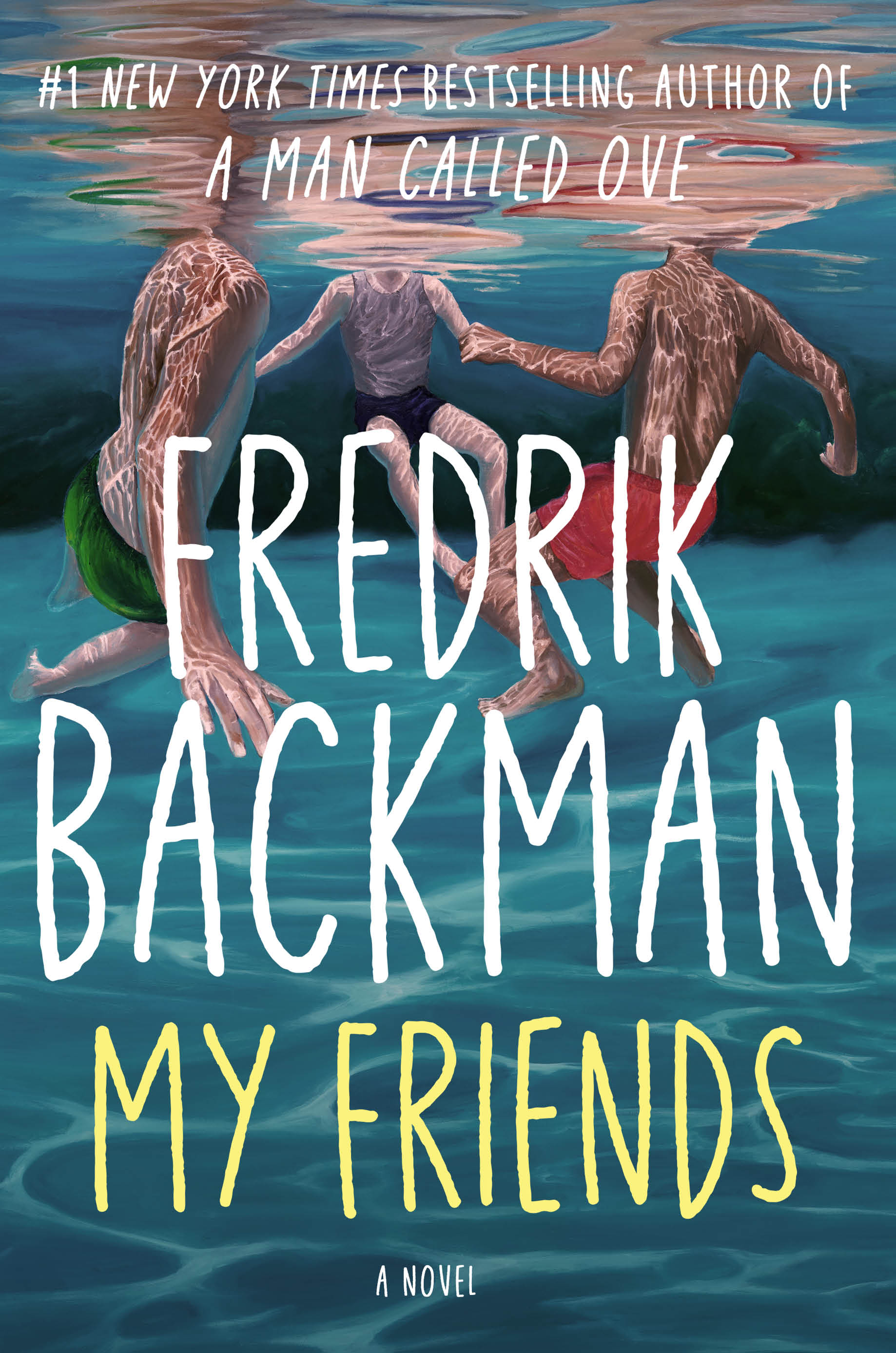
However, my current read does not belong to any of my ongoing reading challenges. Nevertheless, Fredrik Backman’s latest novel, My Friends, is a book I have been eagerly anticipating. I didn’t even know about its release until recently. When I learned about it, I just knew I had to read it even though it’s not part of my European literature journey. Thankfully, I was able to obtain a copy just as my venture into European literature is peaking, making it the seventh novel by the Swedish writer I’ve read. My Friends commences with seventeen-year-old Louisa running away from her foster home and breaking into a posh art auction with a backpack full of spray paint to protest the commodification of art. She also has another objective: to take a peek at the famous painting The One of the Sea by C. Jat. The painting features four friends sitting on a pier—details that often escape the notice of casual viewers, who simply see it as a seascape.
For Louisa, the painting is a symbol of friendship, longing, and the possibility of belonging. She has always dreamed of seeing it in person; she carries with her a postcard reproduction of the artwork in her backpack. As the story progresses, we learn more about Louisa. The plan she hatched was more than an act of rebellion. She was also reeling from the loss of her best friend, Fish. Her mother’s abandonment also left a bitter aftertaste. As an homage to her friend, she paints a small red fish on the wall next to the painting. After she gets thrown out of the auction, Louisa finds herself in an alley, where she collides with a sick, homeless man. Louisa then pours out her story to the dying man and his cat. Moved by her story, the man returns the favor and reveals his own pain. This is the novel’s present. Backman then takes the readers twenty-five years earlier, as a second storyline emerges.
The homeless man turns out to be Kimkim. He was about to be arrested by the police, but another man named Ted, who attended the auction to purchase the painting, advised against the arrest, stating that Kimkim is a famous artist. The second plotline chronicles how the friendship between Ted, Kimkim, Joar, and Ali developed. The quartet, it seems, is the titular Friends. Like Louisa, they each had their own crosses to bear. Ted’s father suffered from terminal cancer, while his brother bullied him. Joar’s father had a substance use disorder and was abusive. Kimkim’s parents, on the other hand, believed he wasn’t “normal,” prompting them to emotionally abandon him. Ali’s mother was dead, and her father was irresponsible. The group often hung out at Ted’s house because it was the safest and always had food. Their favorite spot, however, was an abandoned pier where they would swim, sit, talk, and watch the sea.
There seems to be a lot going on in the story, but so far, I’m glad with how it’s unfolding. Backman is working with elements he has mastered, particularly plucking the proverbial heartstrings. His unflinching gaze allows him to capture the beauty of the human condition and connection. He has an uncanny ability to map the landscape of human experience. This is certainly going to be another emotional journey, and I’m looking forward to it.
What have you finished reading?

The previous week was quite a busy reading week, at least compared to the preceding ones. Nevertheless, I managed to complete two novels, both written by Portuguese author and Nobel Laureate in Literature, José Saramago. The first of these two books was Blindness. Of all his works, Blindness is the one I had been looking forward to the most. I believe it was in 2015 or 2016 when I first encountered it on several must-read lists. There was just something about the book that immediately piqued my interest. Obtaining a copy, however, was another matter entirely. Still, nearly a decade after first coming across the book, I was finally able to read it. To ensure that I did, I included it in my 2025 Top 25 Reading List.
Originally published in 1995 in Portuguese as Ensaio sobre a cegueira (literally Essay on Blindness), it is the fourth novel by Saramago that I’ve read. The story opens with a traffic jam in an unnamed city, caused by a man who suddenly goes blind. A Good Samaritan steps in and drives the man home. When the blind man’s wife learns of his sudden and mysterious condition, she schedules an appointment with an ophthalmologist. However, the doctor finds nothing physically wrong with his eyes, saying that they appear biologically healthy. That should have been the end of it—but, of course, it isn’t. The Good Samaritan turns out to be a car thief who steals the blind man’s vehicle. However, shortly after his small act of “kindness,” he too goes blind. The same thing happens to the ophthalmologist. From one unsuspecting man, the condition spreads rapidly. Several of the doctor’s patients also go blind, prompting him to conclude that the blindness is highly contagious. He confides this to his wife and notifies the Ministry of Health. A quarantine zone is soon established in an abandoned psychiatric hospital. Everyone affected by the mysterious condition—including those merely showing symptoms—is taken to the asylum. To prevent further spread, the hospital is guarded by armed soldiers, and those assigned to care for the infected are ordered to enforce a draconian set of rules.
The story then captures the suffering of the blind individuals confined within the asylum. In a short time, hygiene, living conditions, and morale deteriorate. Food becomes scarce, and what little is available is distributed unfairly. But this is only the surface. As one wades deeper into the novel’s elements, it becomes clear that the blindness epidemic is symbolic of a deeper moral blindness that permeates modern society. Set in a dystopian future, the novel serves as Saramago’s grim prognosis of the human condition. The lack of names – for both characters and places – underscores the universality of the story’s message. In some ways, the swift government response and the rapid spread of infection are reminiscent of the recent global pandemic, adding to the novel’s relevance and timelessness. Overall, Blindness is a thought-provoking read.
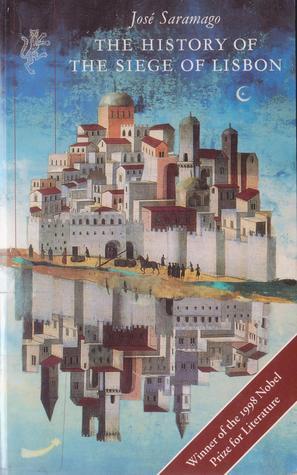
Technically, The History of the Siege of Lisbon is not part of any of my current reading challenges. In fact, I wasn’t planning to read the book anytime soon, especially since I had only recently acquired my copy. However, upon learning that it was listed as one of the 1,001 Books You Must Read Before You Die, I reconsidered my initial plan. After all, it is my goal to read at least 20 books from that list this year. That settled it—I would be reading my fifth Saramago novel. Interestingly, I rarely read works by the same author back-to-back, but The History of the Siege of Lisbon held a special significance: it became the 1,325th novel I’ve read in total.
Originally published in 1989 as História do Cerco de Lisboa, the novel structurally weaves together two plotlines set in different periods. In the twentieth century, we meet Raimundo Silva, a fifty-year-old unmarried proofreader working primarily for a small publisher. He is also regarded as something of an expert on the titular Siege of Lisbon. The siege itself began on July 1 and ended on October 25, 1147, when the modern Portuguese capital was seized from the Almoravid Muslims. It was a by-product of the Second Crusade and the only major Christian victory of that campaign. It also marked a pivotal turning point in Portuguese history: from being a vassal state under León, Portugal transformed into an independent Christian kingdom. In the novel’s present timeline, Silva is assigned to edit a manuscript entitled The History of the Siege of Lisbon, from which the novel takes its name. Finding the manuscript unoriginal and predictable, relying heavily on standard sources and orthodox interpretations, Silva deliberately alters the text. He inserts a single, but significant word: “not,” changing the meaning to suggest that the Crusaders did not assist the Portuguese during the siege. The alteration is only discovered after the book is printed and distributed. Rather than republishing the book, the publisher opts to insert an errata notice to address the issue.
The novel’s premise is a fascinating one. Running parallel to Silva’s modern-day storyline is Saramago’s reimagined version of the siege, essentially a work of alternate history. This narrative element was one of the main reasons I was drawn to the novel. After all, alternate versions of history have become increasingly relevant in today’s discourse. As the old adage goes: history is written by the victors. This calls into question the objectivity with which historical events are documented. The novel challenges how we view history, while also offering intriguing insight into the often-overlooked world of proofreading. Another narrative thread explores Silva’s evolving relationship with Dr. Maria Sara, who is brought in by the publisher to supervise the proofreaders. The History of the Siege of Lisbon reveals a different dimension of Saramago’s literary range. Like Blindness, it tackles themes that transcend both time and physical boundaries. It is a novel that not only examines the past but also interrogates the stories we tell—and the ones we choose to believe.
What will you read next?



 The Pine-Scented Chronicles