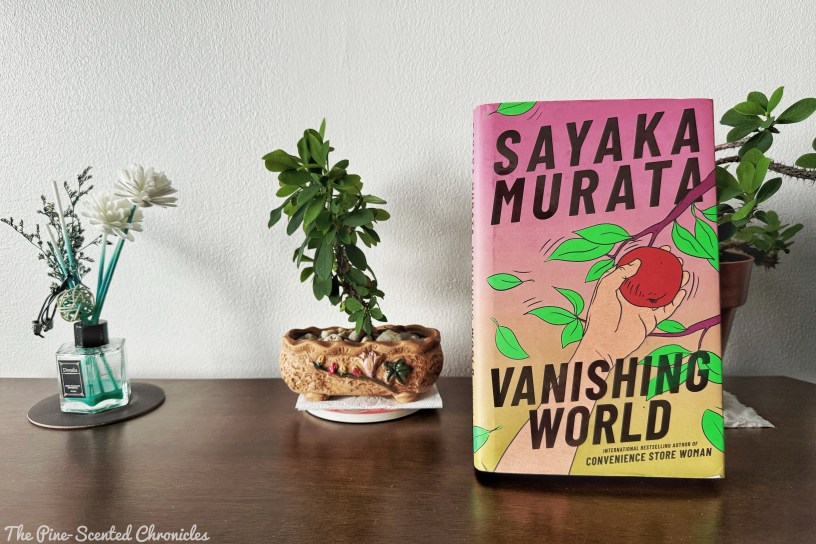
Going Beyond Taboos
In the landscape of contemporary Japanese literature, Sayaka Murata (村田沙耶香) is a prominent name. Her ascent to the zenith of literary stardom, however, was not straightforward. She described her childhood as unhappy and found reprieve in works of science fiction and mystery novels borrowed from her brother and mother. By the fourth grade, she attempted to write a novel by hand, which prompted her mother to buy her a word processor. Murata considered junior high particularly difficult after she was bullied. In high school, she discovered the concept of buntai (文体, literary style), a pivotal point in her journey as a writer—this was when she resolved to become one. However, her struggles continued after university. Unable to find stable employment, she settled for a part-time job at a convenience store while writing in her spare time.
In 2003, Murata made her literary début when the magazine Gunzo—one of the five major literary magazines in Japan, each associated with a book publisher—recognized her novella 授乳 (Jyunyū; trans. Breastfeeding). Her subsequent works were also critically well-received, earning her accolades. Despite this initial success, Murata kept her convenience store job, only retiring in 2017 after an obsessive fan’s unwanted attention made it unsafe to continue working there. Her experiences at the store would form the foundation for her 2016 novel コンビニ人間 (Konbini Ningen), a literary sensation that won the prestigious Akutagawa Prize. It was later published in English as Convenience Store Woman in 2018, catapulting her to global acclaim.
The success of Convenience Store Woman not only established Murata’s presence on the global literary scene, but also opened the door for the translation of her earlier works, including 消滅世界 (Shōmetsu Sekai). Originally published in 2015, it was translated into English in 2025 by Ginny Tapley Takemori as Vanishing World. Set in a near-future Japan, the novel follows Amane Sakaguchi, a spiritual guide raised by her mother in Chiba Prefecture, in a small house decorated entirely in red. Her mother repeatedly told her the story of how she and Amane’s father fell in love, had sex, and conceived her – a narrative that deeply influenced Amane’s idealized view of love.
Having been made to suffer by the religion of romantic love, we wanted to be saved by the religion of family. If we could succeed in truly brainwashing our entire bodies, I had the feeling we could finally forget romantic love.
Sayaka Murata, Vanishing World
However, Amane’s perception of the world was soon challenged at school, where she learns that her mother’s views were seen as archaic relics of a bygone era. One classmate even suggested that her method of conception bordered on incest. Though romantic love still existed, it was rare; sex had become increasingly taboo. In many parts of society, children were conceived solely through artificial means. Science and technology had stepped in to resolve the post–World War II population crisis, with almost all human reproduction occurring artificially. This made Amane an outcast. Stigmatized and alienated, she turned to books in an effort to understand sex and reproduction—and, ultimately, to comprehend the inconvenient truth about her own conception.
Because of the stigma, Amane resolved to align her desires with societal norms, resisting her mother’s indoctrination. She envisioned a future consistent with these conventions: entering a sexless marriage, procreating through artificial means, and raising a “family” in line with current expectations. Still, she experienced various forms of love, both for fictional characters and for real people. As a child, she became enamored with Lapis, a 7,000-year-old boy warrior from an animated TV show. As she reached adolescence, she explored her sexuality through physical relationships with classmates, including Mizuuchi, her childhood friend with whom she shared an affection for Lapis. Yet these experiences left her confused.
In her thirties, Amane found herself in a loveless marriage where sex was deemed “incestuous.” When her husband initiated a kiss, she vomited into his mouth and later reported him to the authorities. The eventual dissolution of their marriage came as no surprise. Amane later found compatibility – if not love – with her second husband, whom she likened to a “beloved pet.” They bonded over a shared fondness for stews, an important domestic detail in Murata’s eccentric world. Marriage, in this world, was no longer about yearning or romance but about convenience. Despite this, Amane maintained extramarital relationships, both with real people and fictional characters, even carrying pictures and merchandise of her fictional boyfriends in her purse.
In Convenience Store Woman and Earthlings, Sayaka Murata has shown her mettle in foraying into unconventional subjects and churning them into even more eccentric works. In Vanishing World, she stayed in the same lane. Like Murata’s previous characters, Amane is a woman out of sync with conventional Japanese society. Growing up, Amane found herself an unwilling participant to two starkly different worlds: the world she deemed as a fantasy conjured by her mother and the conventions imposed by society. Societal pressure to conform made Amane uncomfortable with the ideas espoused by her mother, particularly apropos intimacy and reproduction. Interestingly, compared to Murata’s other creations, Amane is more conformist, designing her future based on norms.
The thought that we were properly integrated within the system was a relief. We weren’t just using the family system because it was useful; it also gave rise to a kind of unshakeable bond. Love and sexual desire were like waste material, something to be disposed of outside the home. But on nights when we suffered spasms of loneliness, we could cuddle and enjoy talking together. Sometimes we would spew out what was festering in our minds, and other times we would just chat about nothing in particular.
Sayaka Murata, Vanishing World
Still, try as she might to fully integrate into her society, Amane was not able to fully purge the influences of mother instilled in her. Remnants of her mother’s fairy-tale concept of love manifest in her relationships. At one point, Amane taught one of her lovers how to have physical sex. Shell tells her him, “By trial and error, we stimulated our sexual organs, and eventually some liquid came out of Mizuto.” However, Mizuto never finds pleasure in the “ritual.” Viewed from a different lens, the novel is a nuanced exploration of love in its many forms. It traces how Amane’s understanding of love and how society influences this understanding. In a world where romantic love has become a rarity, one’s view of love is influenced by various factors such as upbringing, societal norms, and personal desires.
For Amane, her understanding of love was shaped by her mother’s indoctrination, creating an idealized perception of love, allowing her to fall in love even with fictional characters. This view, however, is a disconnect from the complexities of real human relationships. Growing up, her imagined understanding of love is dismantled by the emotional challenges of real relationships. As she matures, Amane tries to reconcile her emotional connections with fictional characters with her real-world relationships. This further underscores the complexity of love, how it is not limited to a singular form. Continuously evolving, our perception of love is shaped by our experiences, desires, and struggles. Amane’s changing perception of love is closely connected to her journey toward self-discovery and her confrontation of the underlying tensions between societal expectations and personal desire.
Another integral theme explored by Murata is the shifting concept of family in a technologically advanced society. With artificial reproduction becoming the norm, natural reproduction has become obsolete. The most striking symbol of this shift is Experiment City, a futuristic metropolis that replaces Amane’s hometown. In this city, both women and men – equipped with artificial wombs – are artificially inseminated and give birth to babies designed specifically for the community. These children, referred to as “Kodomo-chans,” do not have traditional parents. Instead, the city’s inhabitants, regardless of gender and collectively called “Mothers,” are tasked with raising and caring for all Kodomo-chans.
This system dismantles traditional familial ties and erodes individual emotional bonds. It raises essential questions: What does it mean to be a family in a world where intimacy, reproduction, and even desire are dictated by societal and technological needs? The story portrays a world where traditional family values have disintegrated, replaced by a model of willful submission to communal systems. It hints at conformity and steps toward a totalitarian society. While parity in reproduction appears to be a great equalizer, irony abounds – pregnant men receive special treatment and even become smug about their “male Mother” status. This highlights enduring gender role contradictions.
I was horrified. I’d never imagined that a member of my own family would have an erection because of me. I tried to scream, but he covered my mouth with his. I felt my tongue being licked all over, and nausea welled up within me. I vomited into his mouth, and as he recoiled I pushed him away and ran into the toilet, where I threw up again and again.
Sayaka Murata, Vanishing World
In many ways, Vanishing World is a satire – an ode to the slow erosion of family values and the disintegration of the world as we know it, hence the title. Beneath its eccentric elements lies a subtle but sharp critique of modern society’s obsession with efficiency and control. The pursuit of perfection, coupled with rapid technological advancement, has dehumanized society. Love and physical intimacy – now considered taboo – have been replaced by compartmentalized, mechanized relationships. Emotional labor is outsourced. While artificial reproduction solves infertility and flattens reproductive inequality, it also masks a dystopian loss of individuality and agency. Even Amane resists this system, instinctively rebelling against the pressures to surrender her sexuality and selfhood.
Vanishing World is a welcome addition to Murata’s increasingly distinctive worldview. But beyond this eccentricity lies a profound exploration of the boundaries of imagination. On the surface, it is the story of a woman straddling shifting norms. Amane is caught at the intersection of the present and the past, reconciling the fairy-tale image painted by her mother and the society that has been radically altered by rapid technological advancement. Previously generally accepted ideas about love and marriage have been eroded, replaced by utilitarian relationships governed by society and technology. It explores changing family dynamics and the horrors of a world governed by control. All the while, it is unintentionally an extension of modern society’s current plight vis-a-vis falling birthrates observed in many countries. Integrating elements of science, horror, and satire, Vanishing World is a multilayered and thought-provoking novel.
Book Specs
Author: Sayaka Murata
Translator (from Japanese): Ginny Tapley Takemori
Publisher: Bloomsbury Publishing
Publishing Date: 2025 (2015)
Number of Pages: 233
Genre: Speculative, Literary
Synopsis
Amane is ten years old when she discovers she’s not like everyone else. Her school friends were all conceived the normal way, by artificial insemination, and raised in the normal way, by parents in ‘clean’, sexless marriages. But Amane’s parents committed the ultimate taboo: they fell in love, had sex and procreated. As Amane grows up and enters adulthood, she does her best to fit in and live her life like the rest of society: cultivating intense relationships with anime characters, and limiting herself to extramarital sex. Still, she can’t help questioning what sex and marriage are for.
When Amane and her husband hear about Paradise – Eden, an experimental town where residents – women and men fitted with artificial wombs – are selected at random to be artificially inseminated en masse, the family unit does not exist and children are raised collectively and anonymously, they decide to try living there. But can this bold experiment create the brave new world Amane desires, or will it push her to breaking point.
About the Author
To know more about Sayaka Murata, click here.
 The Pine-Scented Chronicles