
Happy Wednesday, everyone! Wednesdays also mean WWW Wednesday updates. WWW Wednesday is a bookish meme hosted originally by SAM@TAKING ON A WORLD OF WORDS.
The mechanics for WWW Wednesday are quite simple: you just have to answer three questions:
- What are you currently reading?
- What have you finished reading?
- What will you read next?

What are you currently reading?
It’s already the middle of the week – how time flies! We are already in the ninth month of the year. As time takes its natural course, I hope everything is going well for everyone. I hope blessings and good news are showering upon you. May the remaining months of the year be filled with answered prayers and healing. More importantly, I hope everyone is doing well, both physically and mentally. I also hope you’re making steady progress toward your goals, may it be personal or career. With the year approaching its inevitable close, I sincerely wish you’re making great strides toward those goals. I hope the remaining months of the year are kinder and gentler to you. I hope that you get repaid for your hard work. Reading-wise, I’ve been lagging behind on my reading challenges. To catch up, I’ve shifted my focus to my reading lists, immersing myself in European literature – many of the books on my challenge are written by European authors.
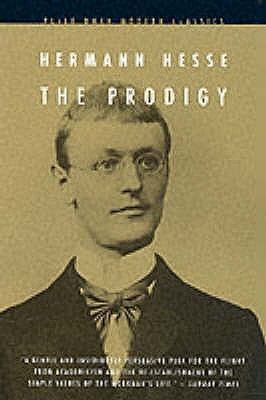
However, my current read does not belong to any of my ongoing reading challenges. Nevertheless, I am looking forward to reading The Prodigy by Hermann Hesse. I recently learned that this is the second novel written by the German Nobel Laureate in Literature, whom I first encountered through must-read lists. Before Peter Camenzind (his debut novel) and The Prodigy, Hesse published works of poetry. Originally published in 1906 as Unterm Rad, the novel is also known as Beneath the Wheel. At the heart of the story is Hans Giebenrath, a talented boy sent to a seminary in Maulbronn. Raised to prioritize academic excellence and intellectual achievement at the expense of personal growth, Hans was taught from a young age—particularly by his parents—that failure was not an option.
However, things begin to change when he attends Maulbronn—a school Hesse himself attended, hence its frequent appearance in his works. There, Hans meets Hermann Heilner, a more liberal and free-spirited fellow student. Though they are polar opposites, they seem to get along well, complementing each other. The novel’s focus on two central male characters is reminiscent of other works by Hesse, such as Demian, Siddhartha, and Narcissus and Goldmund. Because of this, I expect the novel to carry strong philosophical overtones. I’m currently halfway through and can’t wait to see how the rest of the story unfolds.
What have you finished reading?
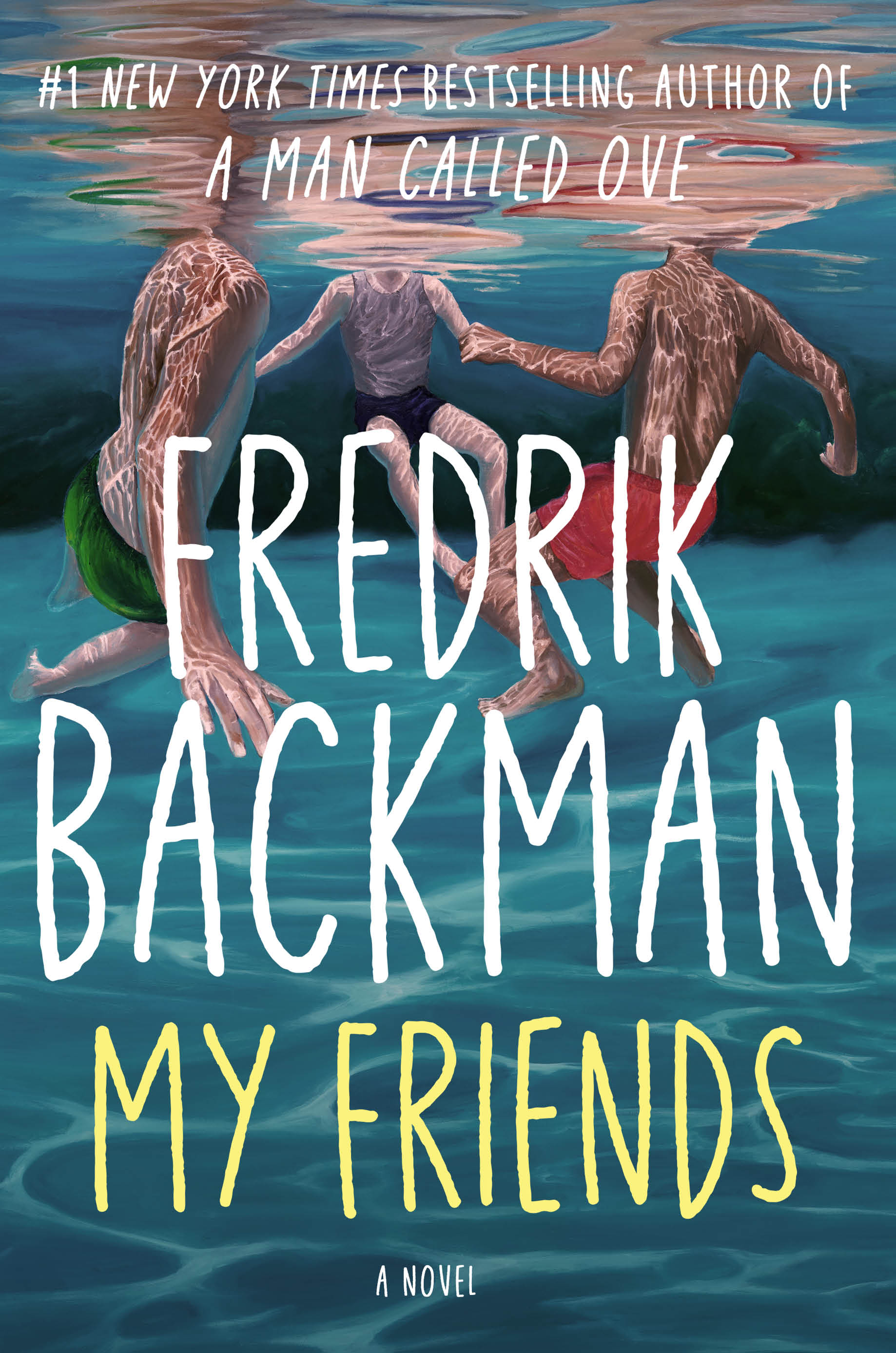
The previous week was not quite a busy reading week, at least compared to the preceding ones. Nevertheless, I managed to complete two novels. The first of these was My Friends by Fredrik Backman. I wasn’t even aware that the Swedish writer—whom I first encountered in 2017, when his debut novel A Man Called Ove was ubiquitous—was set to release a new work this year. However, when I learned about My Friends, it was a no-brainer for me to read it, even though it’s not part of my European literature journey. Thankfully, I was able to obtain a copy just as my venture into European literature is peaking, making it the seventh novel by the Swedish writer I’ve read.
My Friends begins with seventeen-year-old Louisa running away from her foster home. Highly independent and creative, she breaks into a posh art auction to protest the commodification of art. But she has another motive: to see the famous painting The One of the Sea by C. Jat. Louisa carries a postcard reproduction of the artwork in her backpack. The painting features four friends sitting on a pier—details that often escape the notice of casual viewers, who see it merely as a seascape. For Louisa, however, the painting symbolizes friendship, longing, and the hope of belonging. As the story unfolds, we learn that Louisa is reeling from the loss of her best friend, Fish, and her mother’s abandonment. After being thrown out of the auction, she ends up in an alley, where she collides with a sick, homeless man. She pours out her story to him, and, moved by her pain, he returns the favor by revealing his own. Backman then takes readers twenty-five years into the past, as a second storyline emerges: the homeless man turns out to be Kimkim, a once-famous painter known as C. Jat. When he is about to be arrested by the police, another man, Ted, intervenes.
It turns out that Ted and Kimkim knew each other. Louisa eventually comes to own the painting but is also eager to uncover its history. The second plotline takes us back to one summer, twenty-five years earlier, chronicling the friendship between Ted, Kimkim, Joar, and Ali. Like Louisa, each carried personal burdens and came from dysfunctional families. Instead, they found in each other the sense of family they had always yearned for. They often hung out at Ted’s house—the safest among them—but their favorite spot was an abandoned pier where they would swim, talk, and watch the sea. As in Backman’s previous works, My Friends plucks the proverbial heartstrings. His unflinching gaze allows him to capture the beauty of human connection and the complexity of the human condition. He has an uncanny ability to map the emotional landscape of lived experience.
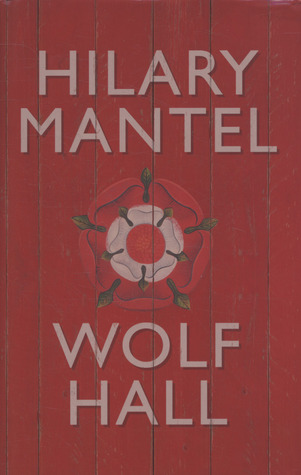
It has been a while since I last read a novel originally written in English. In fact, I didn’t even notice that over the past three months, I’ve only read one such book—David Szalay’s Flesh. I also realized that several works by British writers are included in my current reading challenges and goals. Among them is Hilary Mantel’s Wolf Hall, which forms part of my 2025 Beat the Backlist challenge. I can’t remember exactly when I first encountered the book, but I know it has been on my radar for quite some time. Initially, it didn’t pique my interest. However, I eventually relented in 2020 when The Mirror and the Light, the third book in the Wolf Hall trilogy, was longlisted for the Booker Prize. After Mantel’s passing in 2022, reading her work has felt even more imperative.
Winner of the 2009 Booker Prize, Wolf Hall transports readers to early 16th-century England, though the story officially begins in 1500. In the small town of Putney, we meet a young Thomas Cromwell, the novel’s central figure. As a boy, Cromwell was physically abused by his father, Walter, a violent drunk. After a particularly brutal beating that nearly kills him, Cromwell resolves to leave home and become a soldier. He flees to France, where he begins his journey as a soldier and eventually returns to England. There, he builds a life for himself—practicing law, marrying, and fathering three children. His intelligence and ambition eventually lead to employment under Cardinal Wolsey, the Cardinal of York and chief advisor to King Henry VIII. Cromwell and Wolsey develop a working relationship grounded in camaraderie and mutual respect. However, this is when the political tensions begin to mount. The King wants to annul his marriage to Queen Katherine of Aragon, who has failed to produce a male heir. The Queen’s only surviving child is Mary, the future queen. This crisis places both Wolsey and Cromwell in a precarious position. It’s worth noting that England at this time remained firmly Catholic.
Wolsey’s inability to secure the annulment causes a rift between him and the King, establishing the central conflict of the novel. Soon after, we meet Anne Boleyn and her ambitious family, who play a pivotal role in advancing her marriage to the King despite staunch opposition from the Church and the Court. Cromwell carefully cultivates his relationship with Anne, eventually becoming one of her advisers. Her rise promises not only religious and political upheaval but also Cromwell’s own ascent to power. Cromwell is a fascinating character. He is deeply ambitious yet intellectually curious, drawn to ideas considered heretical at the time. He manages to stay loyal to the disgraced Wolsey while simultaneously pursuing his own ambitions. Wolf Hall presents a layered and morally complex protagonist, while also offering readers vivid insights into Tudor England—its court politics, religious conflicts, and social dynamics.
What will you read next?


 The Pine-Scented Chronicles