The Indian Female Experience
Without a doubt, India has one of the richest and most diverse literary traditions in the world. With a history that spans millennia, it is among the oldest, fortified by India’s vibrant and colorful culture. One of the earliest forms of Indian literature is the Veda, a canon of sacred Hindu texts, including the Rigveda and the Upanishads. This highlights how Indian society is deeply rooted in its diverse religious traditions. The Sanskrit epic poems Mahabharata and Ramayana are also among the most enduring works of Indian literature. Over time, this tradition has expanded to encompass a wide array of genres, styles, and themes, further underscoring the subcontinent’s rich cultural, religious, and historical heritage. These epics continue to influence modern Indian art, culture, and values, demonstrating how literary excellence resonates into the contemporary era. Today, Indian writers continue to showcase their brilliance on the global stage.
Among the most distinguished writers are Salman Rushdie, Jhumpa Lahiri, Kiran Desai, Amitav Ghosh, and Rabindranath Tagore. Tagore was awarded the Nobel Prize in Literature in 1913, becoming the first non-European writer to receive the honor. These authors have produced some of the most acclaimed literary titles of the contemporary period, with several winning prestigious prizes internationally. Rushdie’s Midnight’s Children (1981), Arundhati Roy’s The God of Small Things (1997), Desai’s The Inheritance of Loss (2006), and Aravind Adiga’s The White Tiger (2008) have all won the Booker Prize. Midnight’s Children was even named the “Booker of Bookers,” solidifying its status as one of the world’s most enduring literary classics. These works further underline the profound impact of Indian literature on the modern literary landscape.
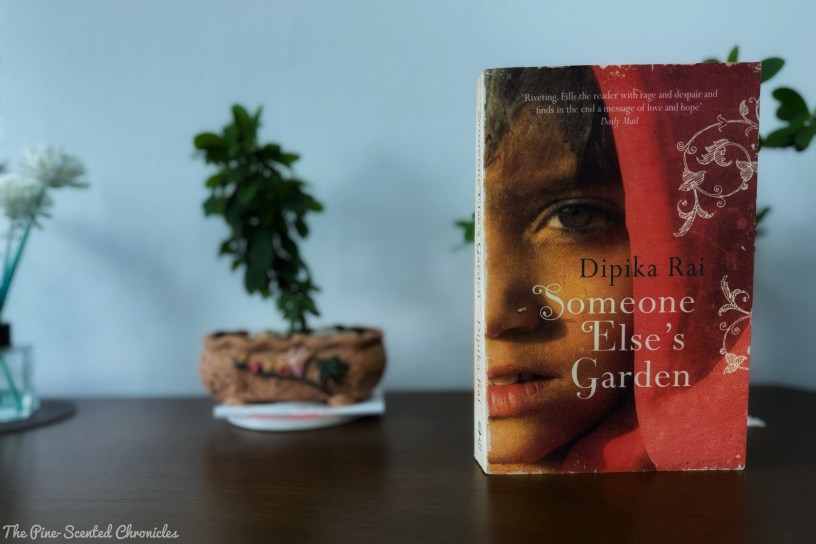
Another Indian writer who has gained recognition is Dipika Rai. Born and raised in New Delhi, she was educated in the foothills of the Himalayas. The towering mountains and rolling hills inspired her to become introspective, and it was from this introspection that her love of reading emerged. Her interest in books, nurtured at a young age, stemmed from her belief in the freedom and knowledge they offer. However, she initially pursued a different path. After university, she began a career in banking—one of the few professions considered stable and respectable by societal standards. Eventually, she moved to Bali, where she worked as a journalist. In 2011, she made her long-awaited literary debut with the publication of Someone Else’s Garden.
She too is starting to believe that she is an evil unclean thing, a thing to be despised. She tries to think of something soft, but she cannot recall the softness of her mother’s touch. She tries to think of something kind, but she cannot recall that unkown face. This time, the moment is too real to tolerate her dreams. At last, her battered eye releases a tear.
Dipika Rai, Someone Else’s Garden
At the heart of Rai’s debut novel is Mamta, the eldest daughter of seven children born to Lata Bai and Seeta Ram. Seeta Ram is an indentured servant tending a farm in rural India. The novel opens with Lata Bai giving birth to her seventh child, yet another daughter, named Sneha. The birth prompts a collective gasp of disappointment. But the greatest burden falls on Mamta, whose own birth was seen as a disgrace, especially as the firstborn. She grows up shunned and unloved by her father, who is simply waiting to marry her off. To make matters worse, her younger sister is already married before her. At just twenty, Mamta is considered old. Her mother was married at fifteen. In rural India, the older a woman becomes, the harder it is for her to find a husband.
Mamta’s father often complains about being stuck with “someone else’s garden”—a cruel metaphor for daughters who are considered burdens. Mamta is also a constant reminder of his failures. In stark contrast, Lata Bai loves her eldest daughter deeply. She reassures Mamta that the early months of marriage are the happiest and fondly recalls becoming pregnant with her as the best day of her married life. Eventually, Mamta’s marriage is arranged, and her father hopes it will bring positive change. Mamta embraces this new chapter with hope. But that hope is short-lived. She is forced to leave her family and village to live with her husband, a harsh reality of arranged marriages. Worse still, her husband is implicated in the death of his first wife.
Her new husband has no qualms about physically abusing Mamta. He even sells one of her kidneys and plans to sell the other. This horrifying act prompts Mamta to act before she meets the same fate as the first wife. She must escape her abusive husband; otherwise, she will die. But she has nowhere to go. Indian social norms prevent women from returning to their parents’ home after fleeing their husbands. Aware of the consequences, Mamta escapes anyway, risking condemnation from her family and community. Women are expected to be subservient, and disobedience is unforgivable. Fearing retaliation, she runs to the city—where she finally begins to reclaim control over her life.
As Mamta navigates her new world, a second plotline begins to unfold. Lokend is the younger son of the zamindar – a landowner – in Mamta’s birth village. Lokend was a gentle soul who only wanted to do good to others. Selfless and innately kind, he only sees the good in everyone; he overlooks their imperfections, even those clearly unworthy of trust. He advocates for peace, standing in contrast to his older brother, who seeks control of their father’s property and resents his own unloved upbringing. Meanwhile, Lokend’s selflessness unintentionally alienates other villagers. They see his kindness as a weakness and are determined to break his spirit. Eventually, the destinies of Mamta and Lokend intersect. But the journey is marked by cruelty, suffering, and resistance.
No, I mean to tell you that those who don’t want as much need a lot less to be happy. Ironically, having everything means you have a much higher level of personal strife to satisfy. The easiest way to staying happy is by borrowing someone else’s simple strife. If so much in life is axiomatic, and has been done by others before, why isn’t it all tried and tested to perfection?
Dipika Rai, Someone Else’s Garden
Someone Else’s Garden is a multilayered exploration of modern Indian society, particularly as it relates to rural women. For generations, sections of Indian society have viewed women as inferior and treated them accordingly. Domestic abuse is prevalent, but not often discussed, for fear of bringing shame to the household. Young girls like Mamta and her sisters are married off early in exchange for dowries. Women are valued only for what they can bring to the family. Their lives are often predetermined at birth. Fathers eagerly await the day they can marry off their daughters, the day they can finally rid themselves of “someone else’s garden.” The title itself is a metaphor for the burden daughters represent in a patriarchal system. Daughters are viewed as mere objects waiting to be discarded.
Mamta’s story is then a microcosm of the lived experiences of many rural Indian women. Her birth was met not with joy but with disappointment, highlighting the premium Indian society places on having male firstborns over female firstborns. This explains the disappointment and the feeling of resentment that Mamta’s father felt following her birth. She was then accorded the same treatment reserved for female children. She was essentially a second-class family member. Rejected. Unloved. In a society that treats women as background characters, their worth is defined solely by their service to husbands, children, and the home. Being born female is, in itself, a burden. They are gardens cultivated for someone else.
The novel underscores the rigid gender roles within the traditional Indian household. Wives are subservient to their husbands’ wishes and desires. In one scene, Seeta Ram demanded dinner, prompting his pregnant wife to rush to prepare it lest she face his wrath. He shows no concern for her condition—or the fact that she just gave birth to a girl. “Not another girl,” he laments, as though having a daughter is a curse. Lata Bai replies, “We must accept what God gave us.” Meanwhile, daughters are raised to assist their mother in the discharge of her duties while waiting they wait for the time they can be arranged for marriage. If no marriage proposals come despite her age, the father plans to sell her to a brothel. The author herself grew up in a society where she was expected to conform. It influenced her earlier choices, hence her venture into banking before pursuing a career in literature.
Meanwhile, domestic abuse is prevalent. However, women have taken a vow of silence, discussing it only in hushed tones. But the patriarchal structure also radicalized women. For the Indian women, tradition holds a heavy weight. Rather than fighting it, women often enforce the very traditions that oppress them. They support severe punishments for women who refuse to conform to the norms. They are effectively complicit in perpetuating outdated practices within a flawed system. Still, glimmers of hope break through. There are select few who are willing to grasp at the minute opportunities offered. Some are willing to shirk traditions when it did not serve the interests of the women. Dismantling deeply-entrenched pervasive traditions takes time but it has to start somewhere. Further, not everyone has access to these small opportunities.
You don’t understand, do you? You family folk never do. As an outcaste I have no reason to take bribes. Who would I take the bribes for? For myself? Money won’t buy me one true friend, money won’t make me belong. I will have to earn people’s respect, because I can never earn their love. People are afraid of hijras. They can’t understand someone who willingly gives up his balls to became a she.
Dipika Rai, Someone Else’s Garden
Despite the novel’s extensive socioeconomic commentary, the story remains anchored in Mamta. Mamta is the quintessence of a resilient woman; Rai’s most affectionate writing is reserved for her. Despite society and history pressing down on her, she fearlessly takes charge of her life, refusing to be defined by the expectations imposed upon her. She has romantic yearnings, even though she has never known paternal love. Her story is one of a search for identity in a world determined to silence it. It also explores the yearning for belonging and the quest for meaning in an interconnected world. Mamta’s journey of self-discovery and personal growth is among the novel’s greatest triumphs.
The novel’s strongest elements are skillfully woven together by Rai’s astute storytelling. Her descriptive prose creates a lush tapestry, filled with intriguing characters whose stories are juxtaposed against a vividly realized setting. These characters are complex and flawed, making them deeply relatable. Their experiences are captured through Rai’s unsparing lens. However, the story takes time to develop. The dual plotline and inherent complexity result in a slow-moving narrative, particularly in the first half. The novel is also bogged down by unnecessary details, which disrupt the reader’s rhythm. Some minor characters fail to propel the story forward. Nevertheless, the pacing improves in the middle, and the narrative begins to flow more smoothly.
For all its faults, Someone Else’s Garden is a searing debut from Dipika Rai. Through Mamta, Rai explores a plethora of themes, including identity and the search for meaning. On a broader scale, the novel captures the grim lived experience of rural Indian women, who are expected to conform to rigid societal norms. In retrospect, their story resonates on a universal scale. It is the story of people caught at the intersection of cultural, societal, and personal expectations. Mamta’s journey is also a tale of resilience and reclaiming agency, one that ultimately leads to self-discovery and self-expression. It is a vivid portrait of the human condition. By and large, Someone Else’s Garden is a homage to Indian women and the silent courage and strength that drive them to keep pushing forward, fighting for a better life despite the inequities they face daily.
What she doesn’t know is the tragic end to the movie. which turned out to be a tale of unrequited love and destroyed lives. She lives with the dream in her head and her heart in her mouth, and each day she takes little bites out of her heart. And as her heart becomes smaller, her dream starts to dissolve, flowing out of her like water through her fingers. It takes all her faculties to survive as a wife.
Dipika Rai, Someone Else’s Garden
Book Specs
Author: Dipika Rai
Publisher: Harper Press
Publishing Date: 2011
Number of Pages: 374
Genre: Historical, Literary
Synopsis
Will she recall that night? Or is it one of those too horrible times that her brain, taking pity on her soul, will choose to wipe out the memory? When she realizes what happened, she will recall it as the night she did her duty for her family, with no sense of shame or lingering fear. She will be matter-of-fact about it, resigned and, therefore, resilient.
Mamta, born low-caste and female in rural India against a backdrop of poverty and prejudice, is destined to be some man’s property. Her father says that bringing her up is only “tending someone else’s garden” until a husband is found for her. Eventually saved from becoming one of the nameless and faceless millions of rejected humanity, Mamta survives but at a terrible cost.
Lyrically told, this powerful story of a woman’ struggle to find acceptance compels us to question: Is life random? Or do we have a destiny?
About the Author
Dipika Rai was born and raised in New Delhi, one of four children. She was educated in the foothills of the Himalayas where her interest in reading was cultivated at a young age. She then entered university and secured her MBA before spending her time in the corporate world of banking. She was raised believing that it is one of five professions considered stable and respectable by societal standards.
After her foray into the corporate world, Rai returned to her subliminal love: writing. As a young girl, her interest in reading was cultivated. It was inspired by the mountains of the Himalayas. When Rai moved to Bali, she started working as a journalist. Her pieces appeared prestigious publications such as Vogue India and Marie Claire and numerous other international magazines. In 2011, she made her long-awaited literary debut with the publication of her first novel, Someone Else’s Garden.
She currently divides her time between India and Bali, Indonesia, with her husband and two children.
 The Pine-Scented Chronicles