
Happy Wednesday, everyone! Wednesdays also mean WWW Wednesday updates. WWW Wednesday is a bookish meme hosted originally by SAM@TAKING ON A WORLD OF WORDS.
The mechanics for WWW Wednesday are quite simple: you just have to answer three questions:
- What are you currently reading?
- What have you finished reading?
- What will you read next?

What are you currently reading?

It’s already the middle of the week – how time flies! We are already in the ninth month of the year. As time takes its natural course, I hope everything is going well for everyone. I hope blessings and good news are showering upon you. May the remaining months of the year be filled with answered prayers and healing. More importantly, I hope everyone is doing well, both physically and mentally. I also hope you’re making steady progress toward your goals, may it be personal or career-related. With the year approaching its inevitable close, I sincerely wish you’re making great strides toward those goals. I hope the remaining months of the year are kinder and will repay you for your hard work. Reading-wise, I’ve been lagging behind on my reading challenges. To catch up, I’ve shifted my focus to my reading lists, immersing myself in European literature – many of the books on my challenge are written by European authors.
At the start of the year, I put together a list of backlist titles I wanted to tackle as part of the Beat the Backlist Challenge. It’s quite a long list. Among the books I included in my 2025 challenge is William Golding’s Rites of Passage. I acquired the book back in early 2019. While I’ve been meaning to read it, newer acquisitions kept me occupied, hence its inclusion in this year’s challenge. Rites of Passage transports readers to the early 19th century. An assorted group of British migrants embarks on a voyage to Australia aboard a converted man-of-war. The novel is presented in the form of a journal written by Edmund Talbot, a young aristocrat. He finds himself aboard after his influential godfather arranges for him to be employed by the Governor of New South Wales. His godfather also gives him the journal to record significant events during the journey.
I’ve just started reading the novel and haven’t gotten very far yet. I’ve been preoccupied with other activities, which have kept me from focusing on my reading. Nevertheless, I’m looking forward to seeing what the 1983 Nobel Laureate in Literature has to offer. Yes, this is my first novel by Golding. Rites of Passage also happens to be part of a trilogy, To the Ends of the Earth. Additionally, the book won the Booker Prize and is listed among the 1,001 Books You Must Read Before You Die. There’s a lot of promise in this book.
What have you finished reading?
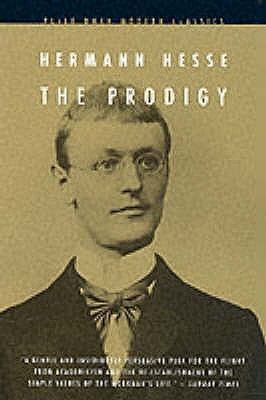
The past few weeks have not been as busy as the ones preceding them, at least in terms of reading. Still, I managed to complete two novels, which is not a bad thing, to say the least. The first of these was The Prodigy by Hermann Hesse. It is thanks to must-read lists that I came across the German writer and Nobel Laureate in Literature. His works, most prominently Siddhartha, are recurring entries in such lists. It was also Siddhartha that first introduced me to Hesse’s literary landscape. Nearly a decade since I read that novel, I have now completed my fourth Hesse novel.
Originally published in 1906 as Unterm Rad, it was first translated into English as The Prodigy, though a later translation carried the title Beneath the Wheel. It was Hesse’s sophomore novel. At the heart of the story is Hans Giebenrath, a gifted student from a quiet Black Forest village. He grew up surrounded by the mediocrity of his community. As such, his parents, particularly his father, pushed him relentlessly to pursue academic excellence. From a young age, he was taught to prioritize intellectual achievement, even at the expense of personal growth. In Hans’s world, failure was not an option. Things begin to change when he attends Maulbronn, a school Hesse himself attended, hence its frequent appearance in his works. There, Hans meets Hermann Heilner, a more liberal and free-spirited fellow student. Despite being polar opposites, they get along well and complement each other. The novel’s focus on two central male characters is reminiscent of other works by Hesse, such as Demian, Siddhartha, and Narcissus and Goldmund. Under Hermann’s influence, Hans begins to envision a life beyond the confines of scholarly achievement, a life that defies the rigid expectations imposed on him since childhood.
Eventually, Hermann is expelled, and Hans returns home after his academic performance declines and symptoms of mental illness begin to emerge. Back home, he is apprenticed to a mechanic. He finds satisfaction in this vocation, it is manual, yet more tangible and fulfilling than the abstract ideas of academia. Essentially, The Prodigy is a subtle but scathing commentary on the flawed ideal of academic excellence, especially when education neglects the student’s personal development. In many ways, The Prodigy echoes themes prevalent in Hesse’s later works. Overall, it is another thought-provoking read from the highly esteemed German writer.
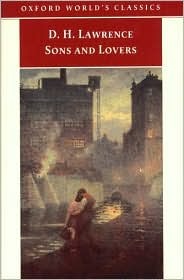
From Germany, my literary journey next took me to the United Kingdom. D.H. Lawrence’s Sons and Lovers is not technically part of any of my ongoing reading challenges, and yet, it is. After all, it’s listed among the 1,001 Books You Must Read Before You Die, and it’s my annual goal to read at least twenty books from that list. I believe Sons and Lovers is only the seventh title I’ve read from the list this year. Hopefully, I’ll get to read more as the year moves forward. Furthermore, Sons and Lovers is just my second novel by Lawrence, the first being his most renowned work, Lady Chatterley’s Lover.
Originally published in 1913, the novel is set primarily in the fictional English coal-mining village of Bestwood in Nottinghamshire. We are first introduced to Gertrude Coppard, the polished and intelligent daughter of a “good old burgher family.” During a country Christmas dance, she meets Walter Morel, a rough-hewn coal miner. The two are swept into a whirlwind romance. Despite Gertrude’s religious and ascetic temperament, she is drawn to Walter’s vitality. However, her life begins to unravel after their marriage. Moving to a rented house disillusions Gertrude, who initially believed Walter was wealthy. She struggles to manage the household on his meager salary, and other women in the mining community find her haughty and aloof. She soon gives birth to William, whom she adores, but her relationship with her husband starts to deteriorate, especially after discovering that he cut off all of William’s hair when he was still a toddler. Still, Gertrude bears three more children. As the couple grows increasingly distant, she channels all her emotional energy into her children, while Walter finds solace in the local pub. William is clearly Gertrude’s favorite, but after tragedy strikes, she shifts her devotion to her second son, Paul.
Unlike his older brother, Paul is sensitive and artistically inclined. He is both repulsed by and drawn to his mother’s suffocating love. He fears leaving her but also yearns for independence and the experience of romantic love. This is where the novel draws its title. William, who moved to London, had also been engaged. Paul eventually finds love with Miriam Leivers, a farmer’s daughter who attends his church. Later, he also becomes involved with Clara Dawes, a feminist-leaning woman separated from her husband, Baxter. Sons and Lovers initially reminded me of other literary works, such as Lawrence’s Lady Chatterley’s Lover, and even Douglas Stuart’s Shuggie Bain. Still, it stands as a distinct work that explores the complexities of mother-son relationships, the emotional costs of parental influence, and early feminist themes. Sons and Lovers is a complex but ultimately satisfying read from the English wordsmith.
What will you read next?


 The Pine-Scented Chronicles