
Happy Wednesday, everyone! Wednesdays also mean WWW Wednesday updates. WWW Wednesday is a bookish meme hosted originally by SAM@TAKING ON A WORLD OF WORDS.
The mechanics for WWW Wednesday are quite simple: you just have to answer three questions:
- What are you currently reading?
- What have you finished reading?
- What will you read next?

What are you currently reading?

It’s already the middle of the week — how time flies! Technically, it is already Thursday, but hey, I hope everyone’s week is going their way. Today is also the last Thursday of the ninth month of the year. How time flies! As time takes its natural course, I hope everything is going well for everyone. I hope blessings and good news are showering upon you. May the last quarter of the year be filled with answered prayers and healing. More importantly, I hope everyone is doing well, both physically and mentally. With the year approaching its inevitable close, I sincerely wish you’re making great strides toward your goals. I hope the remaining months of the year are kinder and will repay you for all your hard work. Reading-wise, I’ve been lagging behind on my reading challenges. To catch up, I’ve shifted my focus to my reading lists, immersing myself in European literature — many of the books on my challenge were written by European authors.
My current read, Neil Gaiman’s Coraline, however, is not part of any of my current reading challenges — although, technically, it falls under my 2025 Beat the Backlist challenge. I’ve already met my goal for that challenge, but there are still books on the list that I haven’t read yet. Anyway, I’ve been looking forward to reading Coraline, which I first heard of as a movie. I haven’t seen the movie, but I’m interested in reading the book — it’s the third book by the British writer I’ve read. The titular Coraline Jones is a young girl who, with her parents, has moved into a large, old house in a new town. The house has been structurally divided into individual units. Coraline’s parents, despite working from home, barely have time to play with her. Adventurous and perceptive, Coraline becomes acquainted with the other tenants, including former actresses April Spink and Miriam Forcible, and Mr. Bobo (commonly referred to as the “Crazy Old Man Upstairs”), who claims to be training a mouse circus. This eccentric cast of characters makes for an interesting read.
But, of course, as in many stories, the house itself becomes a major character — reminiscent of Rebecca’s Manderley. One day, Coraline discovers a locked door in the living room, which sets into motion an intriguing chain of events. Misses Spink and Forcible read her fortune in tea leaves, while Mr. Bobo warns her of a message from the mice telling her not to go through the door. Despite the warning, Coraline opens the door, which leads to a flat identical to her own. It’s inhabited by doppelgangers of her parents, whom she refers to as her Other Mother and Other Father. The book is a quick read, and I’m only a couple of pages away from completing it. Coraline is truly a Gaiman novel.
What have you finished reading?

After a couple of slow reading weeks — they were more hectic than expected — I finally gained some reading momentum over the past week. I managed to complete four books, all but one of which are part of my ongoing reading challenges. The first of these books was Rites of Passage by William Golding. I discovered the British writer and Nobel Laureate in Literature thanks to several must-read lists. Rites of Passage appears frequently on these lists and is even included in 1,001 Books You Must Read Before You Die. I acquired a copy back in 2019, but it had since gathered dust on my bookshelf. It eventually became imperative for me to read it — hence its inclusion in my 2025 Beat the Backlist Challenge.
Rites of Passage transports readers to the early 19th century, when a diverse group of British migrants embarks on a voyage to Australia. Aboard a converted man-of-war, repurposed following the conclusion of the Napoleonic Wars, they brave the sea. The novel unfolds through the journal entries of Edmund Talbot, a young aristocrat who finds himself on board after his influential godfather arranges for him to take up employment with the Governor of New South Wales. His godfather also gives him the journal to record the significant events of the journey. In his journal, Talbot details life aboard the ship, capturing its squalid conditions and vividly portraying the passengers and crew — a motley assortment representing various walks of life and all classes of 19th-century British society. Like Talbot, many of them are bound for government-arranged employment in Australia. Through his observations and interactions, Talbot offers a penetrating look into the social dynamics on board.
At the center of the story, however, is Reverend Robert Colley. Initially appearing socially competent, the Reverend quickly draws Talbot’s interest. Yet his deeper social ineptitude becomes apparent, making him an object of both mockery and pity. Colley also becomes the target of public humiliation at the hands of the ship’s captain, Captain Anderson. Talbot acts as a mediator between the two, but tensions escalate. Eventually, Colley dies after an incident in which he gets drunk and performs a sexual act on a member of the crew. Captain Anderson launches an investigation into the death, but it is abruptly shut down after a crew member suggests that other officers may have been involved. Winner of the 1980 Booker Prize, Rites of Passage is a compelling exploration of the duality of human nature and the very concept of justice. Overall, it served as a strong introduction to Golding’s oeuvre. I hope to continue with the rest of the To the Ends of the Earth trilogy, of which Rites of Passage is the first installment.
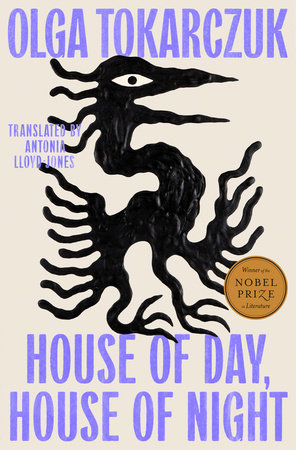
From one Nobel Laureate in Literature to another. My foray into the works of European writers next brought me to a familiar name. Before 2019, I had never heard of the Polish writer Olga Tokarczuk. It was only when she was announced as the recipient of the 2018 Nobel Prize in Literature that I began to learn more about her. Intrigued, I started exploring her works, beginning with Drive Your Plow Over the Bones of the Dead. I went on to read three more of her books, including her latest novel, The Empusium. Midway through this year, I learned about the re-release of one of her earlier translated novels, House of Day, House of Night. Fortunately, I was able to obtain a copy.
Originally published in 1998 as Dom dzienny, dom nocny, House of Day, House of Night was the first of Tokarczuk’s works to be translated into English. The novel transports readers to a small, remote village in southwestern Poland, near the border with Czechia, where an unnamed woman — who also serves as the narrator — and her partner R. have moved. Nowa Ruda, the town in which they settle, used to be part of the German Reich until 1945. The setting immediately evoked Drive Your Plow Over the Bones of the Dead for me. Structurally, however, it reminded me of Flights. As it turns out, both Flights and House of Day, House of Night are often described as “constellation novels.” Rather than presenting a straightforward narrative, Tokarczuk weaves a rich tapestry of loosely connected stories, sketches, and essays. Often referred to as Tokarczuk’s most challenging novel, House of Day, House of Night is indeed fragmented. But through these fragments, a portrait of the village slowly comes into view. Tokarczuk fuses folklore with local legends — among them the tale of Kummernis of Schönau, a bearded female folk saint crucified by her father, and Paschalis, a monk who longed to be a woman and chronicled her life.
As the story unfolds, I begin to understand why many readers — especially literary purists — find the novel difficult. The digressions and the meandering structure can be bewildering. Yet it is precisely this unorthodox form that makes the novel so compelling. In their new home, the narrator and her partner meet an eccentric cast of characters, including the elderly Marta, who can read mushrooms. Mushrooms — both edible and poisonous — are recurring symbols in the novel. As the pages turn, Tokarczuk masterfully builds a web of interconnected narratives that capture the vibrant, layered history of the town. Time becomes a fluid concept — a familiar theme in her work — but she navigates it with her usual grace. House of Day, House of Night is yet another memorable and thought-provoking read from the incomparable Polish storyteller.

A third Nobel Laureate in Literature in a row. It was over a decade ago when I first encountered the German writer Thomas Mann. Through a local book vendor, I came across his novel The Magic Mountain. The title immediately grabbed my attention — I even believed it was somehow connected to the Disney movie Race to Witch Mountain. Since then, the book has remained high on my list of most-anticipated reads. I finally read it in late 2023. It went above and beyond my expectations and has easily become one of my all-time favorite reads. This made me even more eager to explore Mann’s other works.
Death in Venice, meanwhile, was a book I had acquired back in 2019. I’d been putting off reading it because I wanted to read The Magic Mountain first — and it took me quite some time to find a copy. Anyway, the novella was originally published in 1912 as Der Tod in Venedig. Its success was a welcome one for Mann, who, as disclosed in the book’s introduction, had faced several creative setbacks following the publication and acclaim of his debut novel, Buddenbrooks. Death in Venice marked his return after a long literary slump. The novella follows Gustav von Aschenbach, a renowned Silesian author and literary critic in his early fifties. Recently honored for his artistic achievements (symbolized by the aristocratic “von” added to his name), Aschenbach has devoted himself entirely to his craft following the early death of his wife. One afternoon in Munich, during a stroll, he encounters a red-haired foreigner who stares back at him — a brief yet unsettling moment that stirs something strange within him. He suddenly feels an irresistible urge to travel.
He initially traveled to Pula on the Austro-Hungarian coast (in present-day Croatia) but he then realize he is drawn to Venice. He checks into a suite at the Grand Hôtel des Bains on the island of Lido. While waiting for dinner at the hotel, he notices a Polish family, and among them, a fourteen-year-old boy who immediately captivates him. Aschenbach deems the boy “perfectly beautiful,” admiring him with the gaze of an artist studying a masterpiece. He later overhears that the boy’s name is Tadzio. Disturbed by the intense feelings the boy evokes in him, Aschenbach decides to leave Venice. However, his luggage is mistakenly sent to Como. Frustrated, he comes to a deeper realization — that his true desire is to remain near Tadzio. Beyond its themes of desire, youth, and travel, Death in Venice also explores repression and artistic obsession. The novella is partly autobiographical, inspired by Mann’s own fascination with a boy named Władzio during a summer 1911 vacation in Venice. Death in Venice is a quick yet powerful read that offered me deeper insights into both Mann the writer and Mann the individual.

My four-book stretch concluded with yet another Booker Prize-winning novel. From Italy, my literary journey next took me to the United Kingdom. I just realized how my venture into European literature has been lacking in British voices. In a way, I’m making up for that disparity this month. Ian McEwan is a name I first encountered through various must-read lists. Several of his works appear on these lists, including 1001 Books You Must Read Before You Die. A few years ago, I read Atonement, undoubtedly his most recognized title. Now, a couple of years later, I’ve completed my fifth McEwan novel: Amsterdam.
Originally published in 1998, Amsterdam follows the story of two old friends — Clive Linley, a celebrated composer, and Vernon Halliday, the editor of a struggling newspaper. The novel begins with the two men meeting outside a London crematorium. They are both mourning the death of Molly Lane, a writer and photographer they had both been romantically involved with in the past. Molly has recently died of an unspecified, rapid-onset brain disease that left her entirely dependent on her husband, George Lane — a man both Clive and Vernon deeply dislike. Another of Molly’s former lovers, Julian Garmony, the right-wing Foreign Secretary, also attends the funeral. He is plotting to challenge his party’s leadership. In the wake of Molly’s death, Clive expresses a fear of one day suffering the same fate and extracts a mutual euthanasia pact from Vernon: if either of them should become incapacitated, the other must help end their suffering. Vernon reluctantly agrees, on the condition that Clive would do the same for him.
The plot thickens when Vernon comes into possession of a set of private photographs showing Julian cross-dressing — photos that Molly had taken during their relationship. Seeing an opportunity to revive his floundering newspaper and bring down a man he views as a hypocrite, Vernon decides to publish the photos. Clive vehemently objects, seeing the move as a betrayal of Molly’s memory and an unethical journalistic decision. Their disagreement over the photos marks the beginning of a serious rift in their friendship. The tension escalates further when Clive, while hiking in the Lake District, witnesses what appears to be a man attacking a woman. Instead of intervening or contacting the authorities, he leaves the scene to focus on composing a symphony commissioned for the upcoming millennium. Vernon later realizes that the man might have been the elusive Lake District rapist. He is appalled by Clive’s inaction, further straining their relationship.
The two friends, now driven by mutual resentment and moral outrage, eventually converge in Amsterdam — each with a plan in mind. What follows is a darkly ironic and twisted finale that’s quintessentially McEwan. Amsterdam bears the hallmarks of McEwan’s style, reminding me of On Chesil Beach in its dissection of human psychology and personal choices, and of Enduring Love in its suspenseful pacing and the integration of medically adjacent themes. The novel is a compelling meditation on friendship, ambition, ego, and the ethics of journalism in post-Thatcher Britain.
What will you read next?

 The Pine-Scented Chronicles