Caught in Between
On September 11, New York City found itself on the global center stage. Sure, it was already recognized as the Big Apple, a cosmopolitan city that never sleeps. But on this fateful day in 2001, the Big Apple found itself in the spotlight for all the wrong—and terrifying—reasons. Two hijacked airplanes rammed into the Twin Towers of the World Trade Center, an iconic architectural feature soaring above the Manhattan skyline and a long-standing cultural symbol of the city. Unfortunately, it took a long-planned and wicked act of violence to reduce these two towering structures into unrecognizable rubble—glass shards, twisted metal, and powdered concrete. And the attacks were not limited to New York City: the American capital also found itself under siege. The formidable Pentagon, a symbol of the intricate American defense system, was nearly leveled to the ground.
Everyone across the globe tuned in and witnessed, incredulous, one of the most senseless acts of violence in recent memory. The events of September 11, 2001, are forever embedded in the collective American consciousness. Beneath the rubble, nearly 3,000 people perished. World leaders—and even ordinary global citizens—were quick to sympathize with Americans and condemn the act. It didn’t take long before the mastermind behind these terrorist attacks was uncovered. Later that evening, then-President George W. Bush was informed by the Central Intelligence Agency that its Counterterrorism Center had identified the terrorist group al-Qaeda, led by Osama bin Laden, as responsible for the attacks. Bin Laden initially denied involvement, but taped conversations released in 2004 revealed otherwise. The United States was quick to retaliate, with the rest of the world watching with bated breath. The rest, as they say, is history.
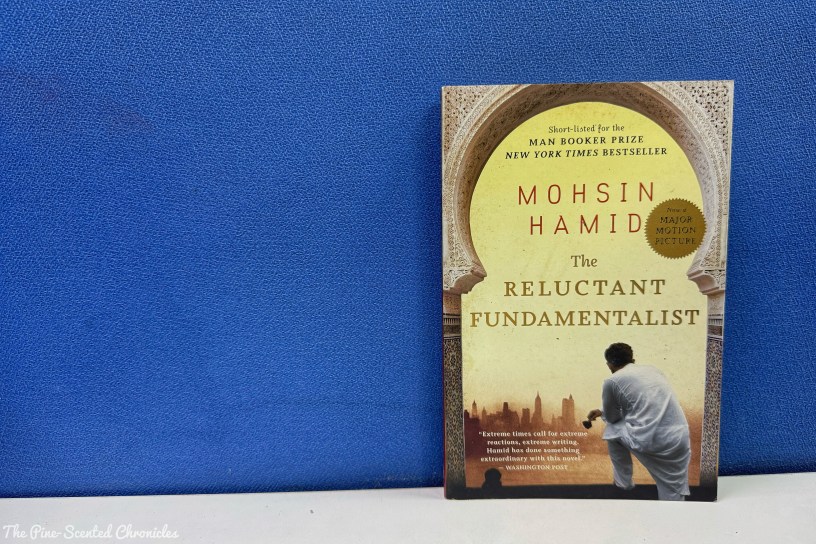
Given its magnitude, the September 11 attacks became historic and, like any historic event, have been the subject of documentaries and literary discourses. Prominent books inspired by the event include Jonathan Safran Foer’s Extremely Loud and Incredibly Close (2005) and Don DeLillo’s Falling Man (2007). Memoirs and biographical works of those who were at Ground Zero also provide more intimate glimpses into how the events unfolded. In 2007, award-winning Pakistani writer Mohsin Hamid contributed to the growing body of September 11 literature with his sophomore novel, The Reluctant Fundamentalist. The titular “reluctant fundamentalist” is Changez, a young Pakistani Muslim man. Structured as a frame story, the novel takes place over the course of a single evening.
As a society, you were unwilling to reflect upon the shared pain that united you with those who attacked you. You retreated into myths of your own difference, assumptions of your own superiority. And you acted out these beliefs on the stage of the world, so that the entire planet was rocked by the repercussions of your tantrums, not least my family, now facing war thousands of miles away.
Mohsin Hamid, The Reluctant Fundamentalist
While roaming the streets of the old Anarkali district in Lahore, Changez approaches a dubious-looking American stranger. “Excuse me, sir, but may I be of assistance?” he asks. The Stranger is shrouded in mystery, but Changez nevertheless notes that he appears to be on a “mission.” He offers to take the American to a nearby café for a good cup of tea. While they wait, Changez reluctantly begins to open up, regaling him with stories from his life—particularly his years living in the United States. Changez was born into an affluent and respected Pakistani family. However, a reversal of fortune left them struggling financially. Through his intelligence and hard work, Changez earned a full scholarship to Princeton University. Studying business, he worked harder than his American classmates to earn top marks.
As the afternoon turns to evening, the two men continue their conversation, with Changez gradually taking over the narrative, which unfolds as a monologue. The novel shifts between past and present. At Princeton, Changez acted the part expected of an “exotic” foreigner. Unbeknownst to his wealthy peers, he worked multiple jobs to support his studies and family back in Pakistan. Young, driven, and ambitious, Changez looked forward to entering the elite American business world after being accepted into Underwood Samson, a prestigious consultancy firm in New York. He was interviewed by Jim, an executive vice president, who noticed that Changez was on financial aid but concealed it from his classmates. Jim himself admitted he had also come from a poor background.
Before starting his job, Changez traveled to Greece with fellow Princeton graduates. There, he met Erica, a Princeton alumna, and fell in love with her. The attraction appeared mutual, but Changez had to settle for friendship, especially after learning she was still mourning the death of her boyfriend, Chris, who had died of cancer a year earlier. Back in New York, Changez quickly earned the respect of his colleagues. His financial skills were widely admired, catapulting him to the top of his class of trainees. At the same time, he grew closer to Erica, even meeting her parents and friends. Erica became his entry point into the elite and exclusive New York social scene.
At work, Jim took Changez under his wing and assigned him to assess a firm in the Philippines. While packing in his Manila hotel room, Changez watched the attacks on the Twin Towers unfold. Strangely, his initial reaction was not horror but a troubling sense of satisfaction. He later admitted to the Stranger, “Yes, despicable as it may sound, my initial reaction was to be remarkably pleased.” He felt a sense of delight at seeing mighty America brought to its knees. But that moment would radically alter the course of his life. Upon returning to New York, he was detained at the airport. It was just one of many seismic shifts that swept across the post-9/11 United States, as Changez would soon experience.
A common strand appeared to unite these conflicts, and that was the advancement of a small coterie’s concept of American interests in the guise of the fight against terrorism, which was defined to refer only to the organized and politically motivated killing of civilians by killers not wearing the uniforms of soldiers. I recognized that if this was to be the single most important priority of our species, then the lives of those of us who lived in lands in which such killers also lived had no meaning except as collateral damage.
Mohsin Hamid, The Reluctant Fundamentalist
The American response to the September 11 attacks was swift. Changez witnessed it firsthand. Systemic discrimination and racism toward foreigners—particularly South Asians—became increasingly palpable. He experienced both macro- and microaggressions, often being stereotyped as a terrorist. These encounters occurred in public spaces and within his supposedly professional workplace. Despite his proven capabilities, Underwood Samson became a microcosm of the larger racial biases sweeping the country, underscoring the ubiquity of racism. Changez grew increasingly uncomfortable living as a foreigner—especially as a Pakistani—in post-9/11 America. His experiences echoed those of his fellow countrymen and other Asians.
The Reluctant Fundamentalist provides a different perspective on the post-September 11 story. With most literature attached to the events primarily American-centric, Hamid breaks the homogeneity of the post-September 11 narrative. He vividly captures the voices muted after the dust has settled. American racism has always been persistent, albeit a murmur on the surface. The attack on the Twin Towers was the final straw that gave the Americans the motivation to be racist toward a group of people they deemed as dangerous. President Trump still echoes the same sentiments. History also has a funny way of repeating itself. In 2020, after the spread of COVID-19 and the extensive lockdowns across the world, the aggression towards Asians, particularly East Asians, also exponentially increased.
For Changez, resentment toward America began to percolate, especially after the 2001 Indian Parliament attack. Both India and Pakistan mobilized their armed forces, leading to a tense standoff. The United States sided with India, viewing Pakistan as sympathetic to the Taliban. Changez, once a believer in the American Dream, grew disillusioned. While on assignment in Valparaíso, Chile, he met Juan-Bautista, the president of a publishing house he was assessing. Juan-Bautista compared Changez to a janissary—Crusade-era warriors kidnapped from their own cultures and forced to fight against them. A visit to the preserved home of Pablo Neruda, a leftist poet and Nobel Laureate, triggered a moment of clarity for Changez.
This underscores the novel’s examination of identity. Changez experiences an identity crisis, the catalyst of which was the September 11 attacks. He used to believe in the American Dream, and he was on the way to fulfilling it. He realized that he was slowly losing his Pakistani identity. The trip to Neruda’s home forces him to confront his role as a cog in the American machine—serving the very empire that interfered with his homeland. As a form of silent protest and solidarity, he grows a beard. Yet, he remains conflicted. Despite advocating for his fellow Pakistanis, he does not fully feel like one. He is caught between two worlds, grappling with who he is and what he stands for.
It was only after so doing that I saw my house properly again, appreciating its enduring grandeur, its unmistakable personality and idiosyncratic charm. Mughal miniatures and ancient carpets graced its reception rooms; an excellent library abutted its veranda. It was far from impoverished; indeed, it was rich with history. I wondered how I could ever have been so ungenerous- and so blind- to have thought otherwise, and I was disturbed by what this implied about myself: that I was a man lacking in substance and hence easily influenced by even a short sojourn in the company of others.
Mohsin Hamid, The Reluctant Fundamentalist
Gravitating between his Pakistani identity and the pursuit of the proverbial American Dream, Changez becomes the embodiment of the reluctant fundamentalist. In the aftermath of the September 11 attacks, he witnessed firsthand the surge of American patriotism—even its most aggressive and exclusionary forms. The novel is notably set in a cosmopolitan city, which amplifies the tension between calls for solidarity and the reality of impunity and prejudice. Changez, however, harbored his own misgivings about patriotism, especially in its American form, placing him on a slippery moral and ideological slope. At the outset, he is portrayed as an uncertain and passive young man, deeply influenced by how others perceive him. His political ideologies were still in formation, shaped by his lived experiences, internal conflicts, and growing awareness of the contradictions between American ideals and American actions.
By the end of the story, Changez remains a cipher—and ironically, this ambiguity is one of the subtle pleasures of reading The Reluctant Fundamentalist. It underscores the blurred lines between perception and reality, highlighting how Mohsin Hamid has crafted a thought-provoking exploration of identity, belonging, and the impact of global politics on individual lives. Using one of the most horrific terrorist attacks in recent memory as a catalyst, Hamid examines the deeply entrenched racism that pervades contemporary American society, juxtaposed with its loudly proclaimed patriotism and the foreigner’s pursuit of the proverbial American Dream. Shortlisted for both the Booker Prize and the International Dublin Literary Award, The Reluctant Fundamentalist challenges readers to confront the inconvenient truths about prejudice, while unpacking the complexities of both personal and national identity.
Often, during my stay in your country, such comparisons troubled me. In fact, they did more than trouble me: they made me resentful. Four thousand years ago, we, the people of the Indus River basin, had cities that were laid out on grids and boasted underground sewers, while the ancestors of those who would invade and colonize America were illiterate barbarians. Now our cities were largely unplanned, unsanitary affairs, and America had universities with individual endowments greater than our national budget for education. To be reminded of this vast disparity was, for me, to be ashamed.
Mohsin Hamid, The Reluctant Fundamentalist
Book Specs
Author: Mohsin Hamid
Publisher: Mariner
Publishing Date: 2008
Number of Pages: 184
Genre: Historical, Literary
Synopsis
At a café table in Lahore, a bearded Pakistani man converses with an uneasy American stranger. As dusk deepens to night, he begins the tale that has brought them to this fateful encounter…
Changez is living an immigrant’s dream of America. At the top of his class at Princeton, he is snapped up by an elite valuation firm. He thrives on the energy of New York, and his budding romance with elegant, beautiful Erica promises entry into Manhattan society at the same exalted level once occupied by his own family back in Lahore.
But in the wake of September 11, Changez finds his position in his adopted city suddenly overturned and his relationship with Erica shifting. And Changez’s own identity is in seismic shift as well, unearthing allegiances more fundamental than money, power, and maybe even love.
About the Author
Mohsin Hamid (محسن حامد) was born on July 23, 1971, in Lahore, Pakistan, to a middle-class family of Punjabi and Kashmiri descent. Hamid stayed in the United States from the age of 3 to 9 while his father was enrolled in a PhD program at Stanford University. Upon his return to Lahore, Pakistan, he attended the Lahore American School. Hamid’s parents encouraged him to pursue a career in medicine, but he was more interested in writing. He studied at Princeton University, earning a degree in economics and a certificate in creative writing. While studying at Princeton, Hamid was mentored by the renowned writers Toni Morrison and Joyce Carol Oates. Morrison even encouraged him to pursue his passion for writing; Hamid wrote the first draft of his first novel for a fiction workshop taught by the Nobel Laureate in Literature.
Hamid also attended Harvard Law School, graduating in 1997. Post-university, Hamid worked as a management consultant at McKinsey & Company in New York City before returning to Pakistan to focus on his writing career. In 2000, Hamid published his debut novel, Moth Smoke. An immediate sensation in Pakistan and India, the novel was a finalist for the PEN/Hemingway Award. More global recognition came with The Reluctant Fundamentalist (2007). The book earned Hamid a shortlisting for the 2007 Booker Prize, 2008 James Tait Black Memorial Prize for Fiction, and 2009 International Dublin Literary Award. The book also won the Anisfield-Wolf Book Award and the Asian American Literary Award. His other novels are How to Get Filthy Rich in Rising Asia (2013), Exit West (2017), and The Last White Man (2022). Exit West was also shortlisted for the Booker Prize, the International Dublin Literary Award, and the Kirkus Prize.
Hamid moved to Lahore in 2009 with his wife Zahra and their daughter Dina. He now divides his time between Pakistan and abroad, living between Lahore, New York, and London. He is a dual British and Pakistani citizen. He also helped set up the Lahore Literary Festival, Lahore Biennale, and LUMS Young Writers Workshop.
 The Pine-Scented Chronicles