
Happy Wednesday, everyone! Wednesdays also mean WWW Wednesday updates. WWW Wednesday is a bookish meme hosted originally by SAM@TAKING ON A WORLD OF WORDS.
The mechanics for WWW Wednesday are quite simple: you just have to answer three questions:
- What are you currently reading?
- What have you finished reading?
- What will you read next?

What are you currently reading?

It’s already the middle of the week — how time flies! Technically, it is already Thursday, but hey, I hope everyone’s week is going well. Just one more day before the weekend. I can’t believe that the year is about to draw to a close. Before we know it, we’ll be welcoming a new year. As the year approaches its inevitable close, I hope everything is going well for everyone. I hope blessings and good news are showering upon you. May the remaining months of the year be filled with answered prayers and healing. More importantly, I hope everyone is doing well — both physically and mentally. I sincerely hope you’re making great strides toward your goals. I hope the rest of the year will be kinder to you and repay you for all your hard work. Reading-wise, I’ve been lagging behind on my reading challenges. As I’ve done in previous years, I’ll be spending the rest of the year catching up.
Interestingly, when I started reading Thomas Pynchon’s Inherent Vice, I thought it was part of my 2025 Beat the Backlist Challenge. I just realized that it was actually his other work, The Crying of Lot 49, that I had included in the challenge. Since I’ve already started reading Inherent Vice, I’ll just have to push through with it. Besides, I rarely stop reading a book, even after discovering an error. Regardless, Pynchon is a writer who has long fascinated me—especially after I learned about his reclusiveness. In 2021, I finally read my first Pynchon novel, Gravity’s Rainbow. It would, however, take a couple more years before I picked up another one of his works. Another catalyst for reading Pynchon now is the impending release of his latest novel this year, Shadow Ticket. It’s his first in 12 years, and I can’t wait for it.
Anyway, Inherent Vice is set in late 1960s Los Angeles and charts the fortunes of Larry “Doc” Sportello, a private investigator. The novel’s main action is set into motion by a visit from Doc’s former girlfriend, Shasta Fay Hepworth, who is now having an affair with real estate mogul Michael Z. “Mickey” Wolfmann. Shasta enlists Doc’s help in foiling a plot hatched by Mickey’s wife, Sloane, and her lover, Riggs Warbling. Sloane and Riggs—who also offer Shasta money for her help—plan to have Mickey committed to a psychiatric facility and then make off with his fortune. Meanwhile, Tariq Khalil hires Doc to mediate with fellow ex-con Glen Charlock, who owes him money. Glen is one of Mickey’s bodyguards and a member of the Aryan Brotherhood, a white supremacist group.
To kick off his investigation, Doc visits Channel View Estates, one of Mickey’s real estate developments, only to be knocked unconscious. When he wakes up, he finds himself at a grisly crime scene. He is interrogated by Detective Christian F. “Bigfoot” Bjornsen of the LAPD—one of Doc’s longtime nemeses. Doc is informed that Glen has been murdered while Mickey has vanished. It’s quite a way to start a story—but I expect nothing less from Pynchon. It’s also a labyrinthine novel that promises to take readers deep into the LA underground. The prevalence of drugs reminds me of T.C. Boyle’s Drop City and William S. Burroughs’ Naked Lunch. I’m also reminded of David Foster Wallace’s Infinite Jest. Still, Inherent Vice seems to stand on its own. I can’t wait to see how the story develops. I’ll be sharing more of my thoughts in tomorrow’s First Impression Friday update.
What have you finished reading?
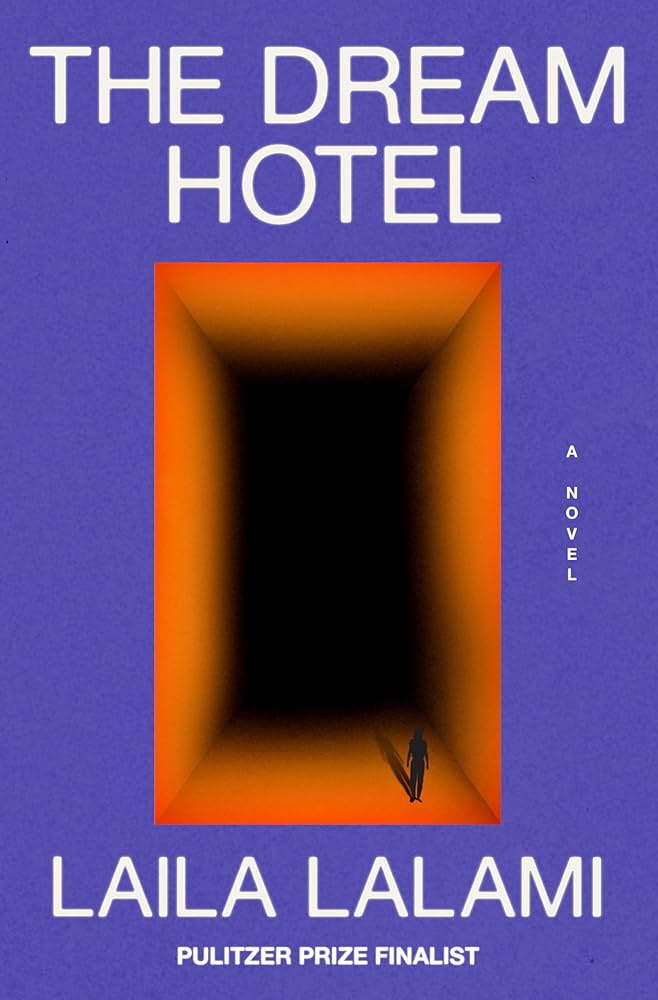
After concluding my venture into European literature, I have embarked on a new literary journey—this time across the entire American continent, from North to South. Interestingly, the book that opened this journey has a unique provenance. Laila Lalami was born in Morocco before moving to Los Angeles in 1992 to attend the University of Southern California, where she earned a PhD in Linguistics. She published her first book, Hope and Other Dangerous Pursuits, in 2005. Curiously, I only learned about the Moroccan-American writer this year. Her latest novel, The Dream Hotel, was listed among the most anticipated releases of the year. It was a no-brainer for me to include it in my 2025 Books I Look Forward To list.
The Dream Hotel is the fourth book from that list I’ve read. Set in the not-so-distant future, the novel follows Sara Hussein, a 38-year-old Moroccan-American woman working as a historical archivist. Wife to Elias and mother to Mohsin and Mona, we first meet Sara waking up on her birthday in detention at Madison—a former elementary school repurposed by Safe-X. She has been held for ten months—far exceeding the standard 21 days—despite asserting her innocence. The story then rewinds to the moment she was taken into custody. On a return flight to Los Angeles from an international conference, she was stopped by law enforcement, with no idea what she had done to warrant such action. The interrogation began with an innocuous question: What happened during the flight? During that flight, the passenger seated next to her experienced discomfort just as the plane was about to depart. Sara called the attention of the flight crew, which led to the passenger’s removal. Before being offboarded, the passenger accused Sara of harassment. But that was just scratching the surface.
Before the conference, Sara had been considered “Low Risk.” In this dystopian future, individuals are assigned risk scores based on their perceived threat level, determined by the Risk Assessment Administration (RAA). Assisting the RAA is the Dreamsaver, a wearable device that records and analyzes people’s dreams. Data from these devices is fed into an AI algorithm that assesses an individual’s risk. In this world, even dreams—alongside family history—contribute to one’s social risk score. The premise is both fascinating and chilling. Dreams are weaponized. More disturbingly, the government is granted access to our innermost thoughts, even those buried under layers of more dominant ones. And that’s terrifying. The novel serves as a dark exploration of our growing reliance on artificial intelligence. The Dream Hotel offers a futuristic echo of Yevgeny Zamyatin’s We and George Orwell’s 1984. All three novels depict societies where citizens are subservient to the state and personal autonomy is severely curtailed. What’s worse, in The Dream Hotel, even dreams—our last refuge of freedom—are used against us.
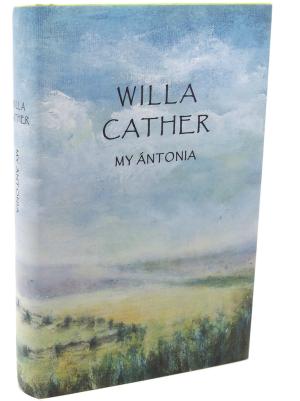
A slow reading week saw me completing just two books. Regardless, it was a productive one. From one unfamiliar writer to a more familiar one. I believe it was through a fellow book blogger that I first came across the American writer Willa Cather. Interestingly, the book he reviewed was My Ántonia, which he wrote a positive review about. I would later encounter Cather on several must-read lists. Naturally, this piqued my interest, and I have since acquired some of her works. My Ántonia is actually the third Cather novel I’ve read, after Death Comes for the Archbishop and O Pioneers!
Ironically, My Ántonia is not part of any of my ongoing reading challenges. Nevertheless, I had been looking forward to reading it. Originally published in 1918, My Ántonia is narrated by Jim Burden. Orphaned at the age of ten, he found himself on a train from Virginia to the fictional town of Black Hawk, Nebraska, where he was to live with his paternal grandparents. On the same train was the Shimerda family, immigrants from Bohemia. As fate would have it, both Jim and the Shimerdas were headed to the same destination. The Shimerdas settled on a homestead next to the Burdens’, and the two families soon became friends. Jim quickly adapted to his new life with Jake Marpole and Otto Fuchs, the farmhands, and his loving grandparents. He also grew close to the titular Ántonia, the thirteen-year-old daughter of the Shimerdas; Ántonia even began learning English under Jim’s guidance, despite her parents’ apprehensions about fully integrating into American life. Ántonia’s life unraveled, however, when tragedy struck her family, driving a wedge between her and Jim. When Jim turned thirteen, his grandparents moved to town so he could attend school. Shortly after, Ántonia was hired by the Burdens’ neighbors, the Harlings, as a housekeeper. Jim and Ántonia quickly renewed their friendship.
However, Ántonia developed a reputation with the local boys, prompting Mr. Harling to fire her. A series of adventures and misadventures—of fortunes gained and lost—saw Jim and Ántonia drifting apart once more. Their paths diverged again: Jim moved to Lincoln, while Ántonia sought opportunities elsewhere. It was palpable from the beginning that Jim was in love with Ántonia, and, in many ways, the novel serves not only as his confession but also as a homage to his enduring love for the girl he met on the prairie. But like the prairie to which he always returned, Ántonia remained unattainable. My Ántonia fascinates in its exploration of young love, innocence, and eventual maturity. Subtly, the novel also examines the immigrant experience and gender norms in the late 19th century. The prairie is once again a major character in the story, giving the novel its unique texture and depth. Despite the uncertainties always lurking beyond the horizon, the prairie becomes a home for both Jim and Ántonia. I must say, I liked My Ántonia the best among the three Cather novels I’ve read so far.
What will you read next?


 The Pine-Scented Chronicles
Interesting looking books. Enjoy your current and next books!
Have a great week!
Emily @ Budget Tales Book Blog
My post:
LikeLike