Against the Patriarchy
Nestled in the heart of South-Central Asia is the modern nation of Afghanistan. Strategically located at the convergence of critical trade routes connecting southern and eastern Asia to Europe and Central Asia, this landlocked country has long been a prize for empire builders, despite its formidable landscape of deserts and mountains. Even centuries after being passed between empires, Afghanistan remains riddled with violence. In the late 20th century, the country suffered from the effects of a civil war, exacerbated by the invasion and occupation by the Union of Soviet Socialist Republics (USSR) from 1979 to 1989. Yet, Afghanistan’s troubles did not end with the USSR’s dissolution. The surviving communist regime continued to battle Islamic insurgents from 1989 to 1992.
The single most pivotal event in more recent memory, however, was the rise of the Taliban—a terrorist network with global reach—and its ally, al-Qaeda. Al-Qaeda, led by Osama Bin Laden, orchestrated the horrific attacks on New York City’s World Trade Center Twin Towers on September 11, 2001. While conflict and strife have come to define Afghanistan’s modern image, there is more to the country than what is often portrayed in the media. For instance, it has a rich literary heritage that is frequently overlooked and underrepresented in global discourse. Ironically, modern Afghan literature began to receive international attention only after the events of September 11, led by the emergence of new literary voices such as Khaled Hosseini.
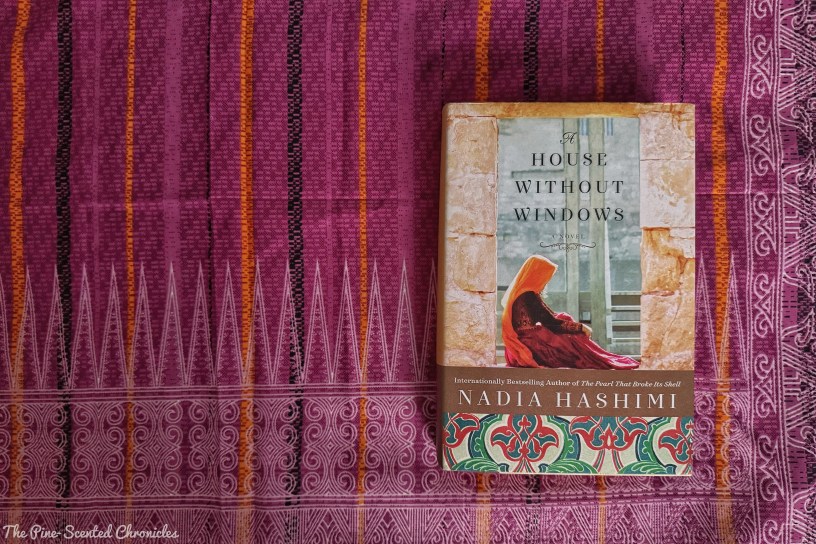
Another writer of Afghan origin who gained global recognition is Nadia Hashimi, who made her literary debut in 2014 with the publication of The Pearl That Broke Its Shell. It was a literary sensation, capturing the plights of Afghan women. Building on its success, Hashimi continued writing and, in 2016, published her third novel, A House Without Windows. Set in the Afghan countryside, it follows the story of Zeba, a devoted wife and mother—yet, in the eyes of society, a woman of no consequence. Like many Afghan women, she lived as expected: subservient to her husband Kamal, catering to his needs and whims. Her only solace was her four children, whom she was responsible for raising.
Do you not know, my daughter? Our world is the spaces between the rocks and meat. We see the face that should but doesn’t smile, the sliver of sun between dead tree branches. Time passes differently through a woman’s body. We are haunted by all the hours of yesterday and teased by a few moments of tomorrow. That is how we live—torn between what has already happened and what is yet to come.
Nadia Hashimi, A House Without Windows
All the while, in the discharge of her duties, she avoids drawing attention to herself, whether unwanted or otherwise. This then sets the stage for the story, which opens with a horrific sequence of events. Zeba found herself outside in the courtyard of her village home to investigate sounds no one wanted to hear. Moments later, her son found her slumped against the garden wall. Her hands and clothing were bathed in blood. She had a hatchet in her hand, equally bloody. But the blood was not her own. Nearby was her husband’s mutilated corpse; a hatchet wound on his head was the palpable cause of death. Her neighbors and three of her four children all bore witness to the crime scene. It did not help that Zeba was unable to remember any of the events leading up to her husband’s death. Everyone who was at the crime scene, and even Kamal’s parents, it was palpable who was guilty: Zeba.
Zeba’s silence only fuels suspicion. Her husband’s family was eager to see her punished, even though she had yet to be convicted of the crime. In their eyes, she was guilty as charged. Consequently, Zeba was carted off to Chil Mahtab, a women’s prison where she was to wait for her trial. Tasked to represent Zeba was a young attorney, Yusuf. Yusuf was born in Afghanistan, but his family moved to the United States before the events of September 11. While he was raised and educated in the United States, his homeland beckons. Driven by the desire to do good and make a change – to help his country and his people – Yusuf returned to his homeland. His passion for justice prompted him to delve deeper into Zeba’s case. Yusuf soon found himself drawn by Zeba’s case, determined to uncover the truth despite the accused’s reluctance to assist him.
Yusuf believes in Zeba’s innocence and works tirelessly to find a viable defense, but she refuses to speak on her own behalf. This compels Yusuf to investigate further. What he uncovers surprises him. Zeba, though seemingly unremarkable, was a kind and loving mother, well-liked by her neighbors. Behind closed doors, however, she endured abuse at the hands of her husband. When Yusuf visits her home, he finds it lifeless and haunted by secrets. Slowly, a different picture of Kamal emerges—one far removed from the innocent victim he is portrayed to be. Still, despite Zeba’s standing in the community, no one is willing to speak out for her. Faced with her silence and the community’s reluctance, can justice truly prevail?
A House Without Windows, however, is not exclusively Zeba’s story. As the story behind her “crime” unfolds, so do the stories of the other women in Chil Mahtab prison. Like Zeba, some of the incarcerated women were accused of horrible crimes. Several others were accused of far lesser crimes, like running away or zina, sex outside of marriage. The novel charts Zeba’s interactions with her fellow prisoners, at times opening her heart to them. She uses her own jadu—a kind of mystical power—to comfort them. With this, her reputation as a sorceress also started to take root. Inmates, believing in Zeba’s ability to change their fates, sought her help. Her reputation emanated from her mother, Gulnaz, a woman shrouded in enigma and mystic power whose reputation precedes her. A prominent visitor to her daughter, Gulnaz is renowned for her green eyes and rumored sorcery.
Sometimes it’s hard to figure out if you are crazy or if it is the world around you that’s insane. Sometimes if you don’t lose your mind a little bit, there’s no way to survive. You’re not broken, my daughter, that’s what you have to remember.
Nadia Hashimi, A House Without Windows
As Yusuf continues his investigation, the novel’s central theme emerges: an exploration of the lives of Afghan women in a deeply patriarchal society. This theme is a hallmark of Hashimi’s work. Despite global efforts to dismantle patriarchy, many societies, including Afghanistan, remain rigidly male-dominated. The rise of the Taliban further reinforced the nation’s patriarchal structures; this was exacerbated by orthodox religious norms. In such societies, women are stuck in a precarious situation with no recourse but to conform to these strict and rigid mandates. Muslim women like Zeba are expected to be confined within domestic spaces while wearing their veils. Their roles, like the rest of their lives, are predetermined. Subservience is expected from women.
Zeba’s life is a testament to these constraints. Like most marriages, hers has been arranged; in extreme cases, young women are married off to men significantly older than them. And not all husbands are kind. Kamal, it was revealed, was abusive and blasphemous. However, in marrying Kamal, Zeba impliedly made a vow of silence. Her voice has again been muted. Anything that happens within the household and the bounds of their marriage is not supposed to get out of the household, regardless of the circumstances. The village was a witness to the tumultuous relationship between Kamal and Zeba – his erratic behavior contrasted by her silent endurance. However, the unspoken vow of silence kept them from speaking out against the deceased lest they incur the fury of their husbands and the community as a whole.
Through Yusuf’s investigation, the novel exposes the fractures within Afghan households and the societal structures that sustain them. These revelations extend beyond Zeba. In a quandary of his own is Zeba’s oldest son, Basir. Following their father’s death, Zeba’s children were taken in by her husband’s family. Living with his aunt, Basir was caught between loyalty to his mother and the reality of his father’s death. Not only did he have to confront the possibility of his mother’s guilt, but he also had to endure the harsh judgment of his father’s family and the village. Still, he chose to protect his sisters and, over the course of the story, forge his own path and find his voice amidst the noise. In the same manner, Zeba, despite her imprisonment, yearns for her children. She was
Yusuf, too, comes to understand the complex interplay between cultural norms and the legal system. In Afghanistan, tradition often overshadows the rule of law. Even Gulnaz, Zeba’s mother, campaigns for her imprisonment—not out of cruelty, but to protect her from public persecution. In extreme cases, this can take the form of honor killings, such as public stoning, still practiced in some parts of the world. The challenges Yusuf faces highlight a central theme of the novel: the tension between justice and tradition. Superstition and mysticism—particularly through Gulnaz’s story—also underscore how belief can both empower and endanger women.
Time passes differently through a woman’s body. We are haunted by all the hours of yesterday and teased by a few moments of tomorrow. That is how we live—torn between what has already happened and what is yet to come.
Nadia Hashimi, A House Without Windows
Ironically, Zeba and her fellow inmates feel safe within the confines of Chil Mahtab, the titular house without windows. The prison shields them from societal judgment and domestic abuse. “For a house with no windows, Chil Mahtab is not that bad. Sometimes I breathe easier here than I ever did at home,” a character reflects. In her fellow inmates, Zeba also found vestiges of camaraderie. They each with a story to share. They formed an unlikely sisterhood who, despite coming from different walks of life, were united in their pursuit of justice. Eighteen-year-old Latifa was about to suffer an honor killing like Zeba. Latifa, on the other hand, is a runaway bride. Providing comic relief and humor is Mezghan, an unmarried but pregnant woman awaiting a court order to compel her lover’s commitment.
The women of Chil Mahtab shared the same fate. They are connected not only by society’s unjust principles but also by their shared suffering, isolation, and even guilt. Nevertheless, they found comfort in each other, underscoring the value of authentic connections, particularly in dark corners. The women’s friendship develops as the story moves forward. Their bond beacons through their bleak existence. The lofty prison walls are slowly dismantled by their laughter, shared stories, and the spirit of community that they foster within them. They provide solace to each other, and the connection they built transcended their male-centric realities. In the house without walls, they were able to carve out their identities, away from their muted existence outside of Chil Mahtab. All the while, they found strength in one another.
A House Without Windows is a powerful and deeply moving examination of the lives of women under oppressive systems. Beginning with a brutal event, the novel launches into a layered exploration of patriarchy’s insidious reach. Through Zeba and Yusuf’s intertwined journey, Hashimi confronts the societal forces that silence women. She exposes the enduring grip of culture, tradition, and superstition on justice and autonomy. Yet within this sobering reality, Hashimi also celebrates the resilience of women. In Zeba and her fellow prisoners, we witness the strength to endure, connect, and reclaim identity in a world that seeks to erase them.
No spell would change the fact that a woman’s worth was measured, with scientific diligence, in blood. A woman was only as good as the drops that fell on her wedding night, the ounces she bled with the turns of the moon, and the small river she shed giving her husband children. Some women were judged most ultimately, having their veins emptied to atone for their sins or for the sins of others.
Nadia Hashimi, A House Without Windows
Book Specs
Author: Nadia Hashimi
Publisher: William Morrow
Publishing Date: 2016
Number of Pages: 412
Genre: Literary
Synopsis
For most of her life, Zeba has lived quietly in an Afghan village, a loyal wife and loving mother. But on one horrific day, her family’s world is shattered when her husband, Kamal, is found brutally murdered with a hatchet in the courtyard of their home. Covered in blood and catatonic with shock, Zeba refuses to explain what happened. Barely escaping a vengeful mob, she is sent to Kabul’s Chil Mahtab, a women’s prison.
As Zeba awaits trial, she befriends other women whose own misfortunes have led them to these bleak cells: Nafisa, imprisoned to protect her from an honor killing; Latifa, a runaway who stays in the jail because it is a safe haven; and Mezhgan, pregnant and unmarried, jailed for zina, or “love crimes.” The women whisper among themselves: Is Zeba really a cold-blooded killer? Has she truly inherited her mother’s power of jadu – witchcraft – which can bend fate to her will? Can she save herself? Or them?
Into this closed world comes Yusuf, Zeba’s Afghan-born, American-raised lawyer, whose desire to help his homeland has brought him back. With the fate of this seemingly ordinary housewife in his hands, Yusuf discovers that, like Afghanistan itself, his client may not be at all what he imagines.
A moving and often surprising look at the lives of modern Afghan women, A House Without Windows is astonishing, unforgettable, and triumphant.
About the Author
To learn more about Afghan-American writer Nadia Hashimi, click here.
 The Pine-Scented Chronicles