
Happy Wednesday, everyone! Wednesdays also mean WWW Wednesday updates. WWW Wednesday is a bookish meme hosted originally by SAM@TAKING ON A WORLD OF WORDS.
The mechanics for WWW Wednesday are quite simple: you just have to answer three questions:
- What are you currently reading?
- What have you finished reading?
- What will you read next?

What are you currently reading?
It’s already the middle of the week — how time flies! I hope everyone’s week is going well. It also means we only have to make it through two more days before the weekend. I can’t believe the year is already drawing to a close. A new year is just over the horizon. As the year approaches its inevitable end, I hope everything is going well for everyone. May blessings and good news be showering upon you. I hope the remaining months of the year are filled with answered prayers and healing. I hope everyone is doing well — both physically and mentally. I sincerely hope you’re making great strides toward your goals. May the rest of the year be kinder to you and repay you for all your hard work. Reading-wise, I’ve been lagging behind on my reading challenges. As I’ve done in previous years, I’ll be spending the rest of the year catching up.
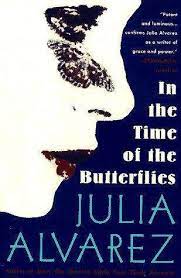
As part of my yearly reading tradition, I usually put together a list of at least 20 books I want to read during the year. This year, I came up with 25 — a nod to the last two digits of the year; I listed 24 in 2024 as well. One of the books on my 2025 Top 25 Reading List is In the Time of the Butterflies by Julia Alvarez, a book I first encountered through various must-read lists. It also came to my attention at a time when I was becoming more interested in the history of the Dominican Republic. In the Time of the Butterflies is the second book by Alvarez that I’ve read. To be fair, I already had some background knowledge of the story — or at least an inkling of what it was about. It’s a fictionalized account of the lives of the Mirabal sisters: Patria, Minerva, María Teresa, and Adela. The sisters were born to landowners Enrique Mirabal Fernández and Mercedes Reyes Camilo in the countryside village of Ojo de Agua, in the country’s central Cibao region.
They were born during a time of political upheaval. Rafael Leónidas Trujillo had established an authoritarian regime through malice and calculated moves. When we meet the sisters in the story, Patria is already married with children, while Minerva, María Teresa, and Adela are attending school. It’s in school that the sisters experience a political awakening. One of their classmates was taken as a mistress by El Jefe, who was notorious for housing young women. Political dissenters had also infiltrated the schools, eventually reaching Minerva, who would become the most politically active of the sisters. Their gradual political awakening and growing awareness of the atrocities happening across the nation is compelling. I already know what their fates will be, but I’m still deeply drawn to their story.
With Alvarez’s narrative choice of mixing first-person and third-person points of view, I’m given different perspectives — both intimate glimpses into the characters’ psychological states and more detached, reflective views. Interestingly, I didn’t find this technique as effective in How the García Girls Lost Their Accents, but it seems to work beautifully in this novel. If I’m not able to finish the book by Friday, I’ll be sharing more of my thoughts in this week’s First Impression Friday update.
What have you finished reading?

After concluding my venture into European literature, I’ve embarked on a new literary journey — this time across the entire American continent, from North to South. In the past week, I completed two works by American writers, beginning with Thomas Pynchon’s Inherent Vice. Interestingly, when I first picked up Inherent Vice, I thought it was part of my 2025 Beat the Backlist Challenge. It turns out that it was actually his other work, The Crying of Lot 49, that I had included in the challenge. But since I had already started Inherent Vice, I decided to see it through — besides, I rarely stop reading a book, even after discovering such an oversight. Regardless, Pynchon has long fascinated me, particularly because of his famous reclusiveness.
Inherent Vice is set in late 1960s Los Angeles. At the heart of the story is Larry “Doc” Sportello, a private investigator. The plot kicks off when Doc’s former girlfriend, Shasta Fay Hepworth, unexpectedly shows up at his place. Now involved with real estate mogul Michael Z. “Mickey” Wolfmann, Shasta seeks Doc’s help in thwarting a plot concocted by Mickey’s wife, Sloane, and her lover, Riggs Warbling. She’s been offered a large sum of money to help them commit Mickey to a psychiatric facility — and then make off with his fortune. Just as Doc begins his investigation, another unexpected visitor arrives: Tariq Khalil, a Black nationalist who hires Doc to track down Glen Charlock, one of Mickey’s bodyguards and a fellow ex-con who owes him money. When Doc visits one of Mickey’s real estate developments, he’s knocked unconscious. Upon waking, he finds himself at the center of a grisly crime scene — Glen has been murdered, and Mickey has mysteriously vanished. After a brief stint in jail, Doc is approached by yet another client: Hope Harlingen, the wife of a musician named Coy Harlingen, who was presumed dead. She hires Doc to follow up on leads suggesting her husband might still be alive.
Admittedly, the plot was not what I expected from Pynchon. Then again, he is as eccentric as he is enigmatic. Inherent Vice is a darkly comedic tale that plunges readers into a surreal version of Los Angeles — one riddled with drugs, violence, and crime. The novel features a cast of equally eccentric characters and paints a vivid portrait of the city’s descent from order into chaos. The setting is key: the late 1960s was a time of social, political, and economic upheaval. The revelations uncovered by Doc reflect a society resistant to change, one stuck in its own destructive cycles. The novel is also unmistakably Pynchonian — rife with conspiracy theories, paranoia, and fragmented truths woven into its rich narrative tapestry. While reading it, I was reminded of Raymond Chandler’s The Big Sleep, but also of T.C. Boyle’s Drop City, William S. Burroughs’ Naked Lunch, and even David Foster Wallace’s Infinite Jest. I suppose this is all to say that Inherent Vice feels like a quintessential work of American literature — chaotic, sprawling, and unapologetically strange. Yet, it manages to stand entirely on its own.
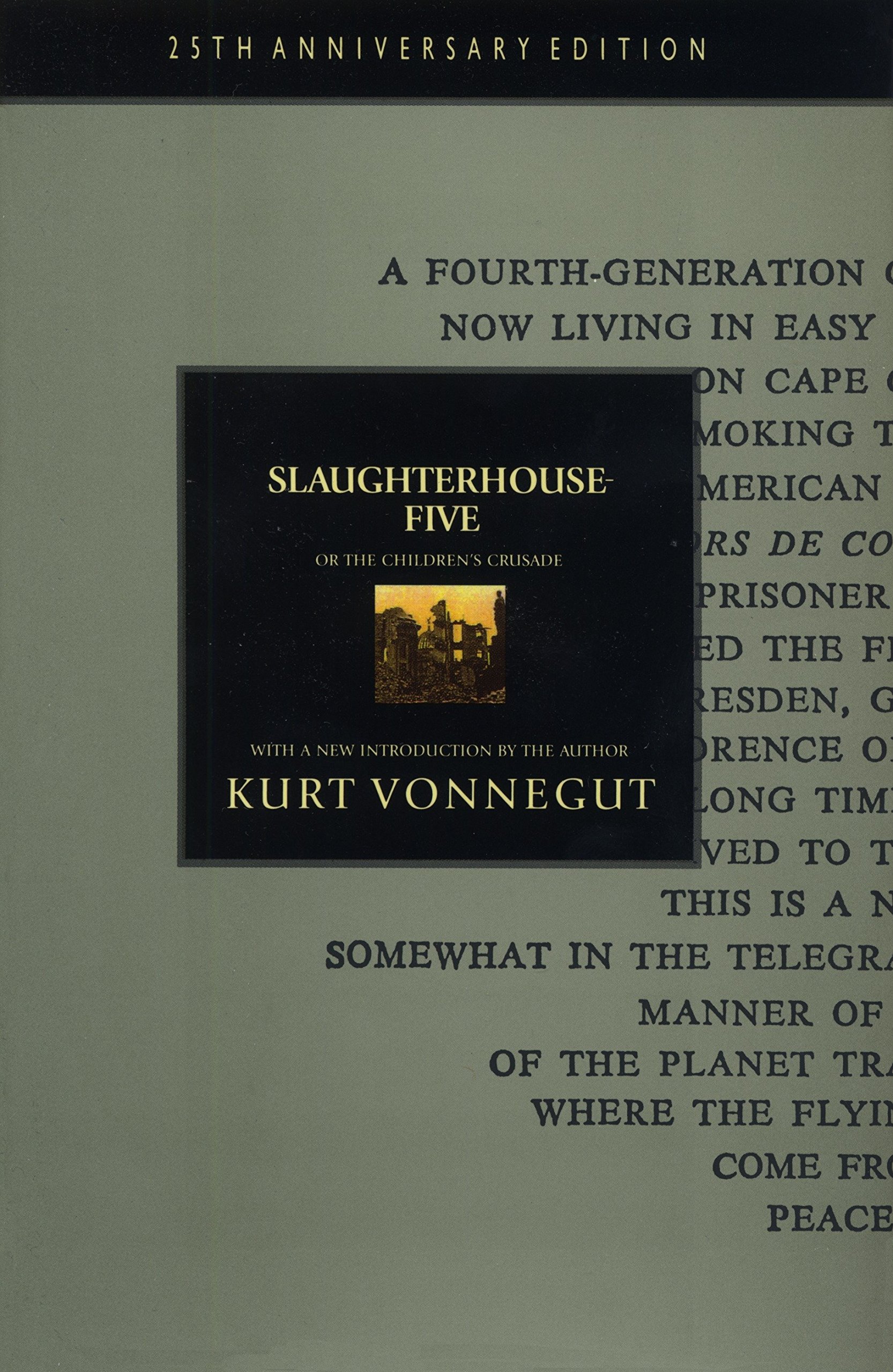
A slow reading week saw me completing just two books — but regardless, it was a productive one. From a familiar author to an unfamiliar one, I ventured into new literary territory. Although I had never read any of Kurt Vonnegut Jr.’s works before, I’ve long been interested in exploring his oeuvre. I first encountered the American writer through various must-read lists, where several of his works were highly recommended. Chief among them is Slaughterhouse-Five, a novel also featured in 1,001 Books You Must Read Before You Die. I had obtained a copy of Slaughterhouse-Five just before the pandemic, but like many other titles on my shelves, it was unfortunately left to gather dust — until now.
The novel opens with an unnamed, seemingly unreliable narrator reflecting on his attempt to write about the bombing of Dresden. He shares snippets of his past — as an anthropology student at the University of Chicago, his research into the Children’s Crusade, and his efforts to reconnect with his wartime friend Bernard O’Hare. The bombing of Dresden remains central to his concerns, yet he admits to remembering very little of the event. This framing device sets the stage for the heart of the novel: the story of Billy Pilgrim. Billy, born in the fictional Ilium, New York, is drafted into the U.S. Army during World War II. He’s sent to an infantry regiment in Luxembourg and is soon thrown into the chaos of the Battle of the Bulge in Belgium, where he’s quickly captured by German soldiers. But just before his capture, Billy experiences the first of many instances of time-shifting — a vision of his life from beginning to end. This nonlinear narrative structure sets the tempo and tone of the novel. It then becomes clear why Slaughterhouse-Five is often classified as speculative fiction. For the longest time, I had assumed it was purely a work of historical fiction. Nevertheless, I looked forward to the experience. Vonnegut doesn’t just take us through the horrors of war — he takes us on a journey through time, and even into outer space. At one point, Billy is abducted by Tralfamadorians — small, one-eyed, one-handed aliens with a unique philosophy of time, viewing all moments as existing simultaneously.
In the novel’s introduction, Vonnegut explains that Slaughterhouse-Five is his homage to Dresden — his way of coming to terms with its destruction. The firebombing of the city killed over 100,000 people, mostly civilians, and leveled one of Europe’s most beautiful cities. Billy becomes Vonnegut’s conduit — through him, the author recounts his own experience as a prisoner of war who personally witnessed Dresden’s devastation. Often described as an anti-war novel, Slaughterhouse-Five deftly portrays the psychological trauma that lingers long after the fighting ends. This is symbolized through Billy’s temporal dislocation — his inability to remain fixed in time. In this way, the novel serves not only as a critique of war but also as a vivid exploration of post-war disillusionment and mental fracture. War is a well-trodden subject in literature, but Vonnegut brings a distinct voice and vision to it, creating a novel that is equal parts absurd, poignant, and profound. Slaughterhouse-Five transcends both time and physical boundaries — a truly thought-provoking literary masterpiece.
What will you read next?


 The Pine-Scented Chronicles