
Happy Wednesday, everyone! Wednesdays also mean WWW Wednesday updates. WWW Wednesday is a bookish meme hosted originally by SAM@TAKING ON A WORLD OF WORDS.
The mechanics for WWW Wednesday are quite simple: you just have to answer three questions:
- What are you currently reading?
- What have you finished reading?
- What will you read next?

What are you currently reading?

It’s already the middle of the week — how time flies! I hope everyone’s week is going well. The good news is, we only have two more days to go before the weekend. I hope everyone makes it through the workweek. Also, we are already in the eleventh month of the year. In a couple of weeks, we will be welcoming a new year. With the year approaching its inevitable end, I hope everything is going well for everyone. May blessings and good news shower upon you. I hope the remaining months of the year are filled with answered prayers and healing. I hope everyone is doing well — both physically and mentally. I sincerely hope you’re making great strides toward your goals. May the rest of the year be kinder to you and reward you for all your hard work.
Like in previous years, I have been — and will be — spending the rest of the year ticking off books on my reading challenges. It has now become a tradition for me to spend the latter part of the year catching up on these goals. Among the books I listed on my 2025 Beat the Backlist Challenge is Mario Vargas Llosa’s Death in the Andes. It was through various must-read lists that I first came across the Peruvian writer. Back in 2018, I read my first novel by the Nobel Laureate in Literature, The War of the End of the World. Back then, I barely had any idea about the Nobel Prize in Literature. Nevertheless, the book won me over. Vargas Llosa instantly earned a fan in me. I would read two more of his works before my current read, Death in the Andes, my fourth novel written by Vargas Llosa. I actually planned to read it last year, but I couldn’t find my copy of the book.
As the title suggests, the book is set in the Andes region of Peru. Apparently, the region is rarely represented in his oeuvre. Anyway, the novel features Corporal Lituma, a Civil Guard policeman who has been transferred to the Andean community of Naccos. The village was occupied primarily by laborers for a highway construction project. The project, however, was on the verge of being shut down. Lituma, along with Tomás Carreño, was tasked to investigate the disappearance of three men from the village: Demetrio Chanca, a construction foreman and former mayor on the run from the Senderista terrucos; Casimiro Huarcaya, an itinerant merchant claiming to be a pishtaco when drunk; and Pedro Tinoco, a mentally disabled and mute man who lived with the two policemen and performed chores for them. Over the course of the investigation, the past of the three men was vividly captured by Vargas Llosa.
In digging through the missing men’s past, Lituma also guides the readers across the landscape of Andean life. The lush culture and tradition of the region, along with its diverse people, came alive with Vargas Llosa’s descriptive prose. Lituma himself was a blank canvas who barely had any inkling of Andean culture and tradition. This then makes him the perfect guide as he learns about the region at the same time the readers do. However, it is interesting to see how he solves the mystery. I am about to finish the book. I can’t wait to see how it all unravels in the end.
What have you finished reading?
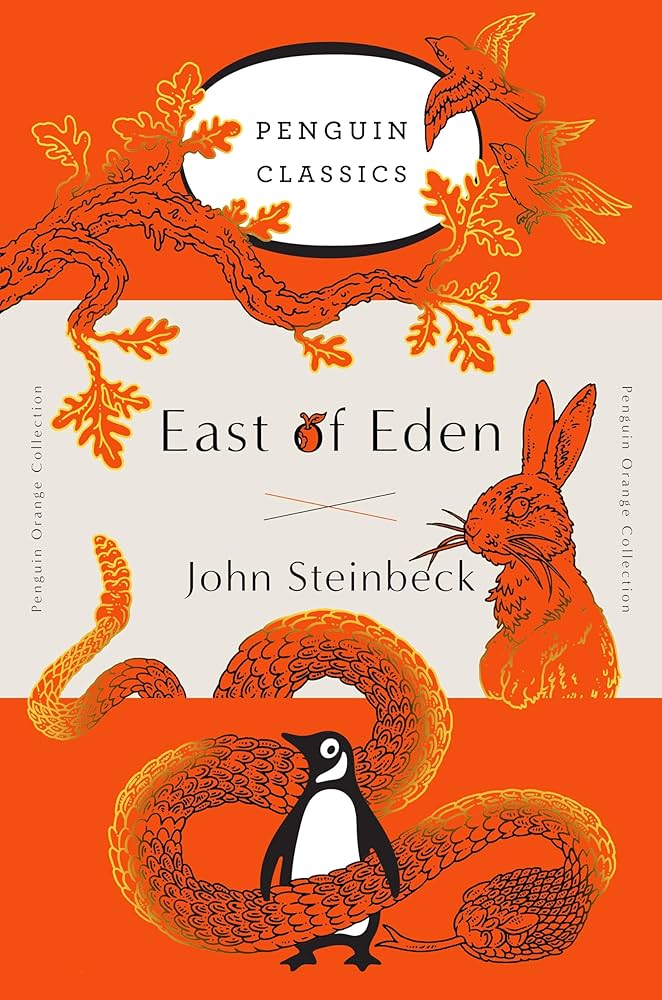
My venture into the vast world of American literature is in full swing. This will be the region – along with Africa – I will be spending the rest of the year. The remaining books on my reading challenges are from these regions. However, it is tempting to read another book by recently announced Nobel Prize in Literature awardee László Krasznahorkai. Speaking of the Nobel Prize, I am actually on a Nobel Laureate in Literature binge. In the past week, I was able to complete just one book. However, it is a book that I have been looking forward to: Nobel Laureate in Literature John Steinbeck’s East of Eden. I have included the book on my 2025 Top 25 Reading List.
A decade since my first foray into Steinbeck’s oeuvre—I started it with the slim The Pearl—I have read my fifth novel by the Nobel Laureate in Literature. Originally published in 1952, East of Eden charts the fortunes of two families. In the late nineteenth century, Samuel Hamilton settled in the Salinas Valley in northern California, along with his wife, Liza; they travelled from Ireland. The couple would have nine children. However, Samuel never became a wealthy man despite rising to prominence within the community. Because he and his wife settled on a dry, barren land, they remained destitute. Despite their industry and hard work, the Hamiltons never quite rose above the quagmires of poverty. Meanwhile, Adam Trask settles in the valley with his wife, Cathy Ames. The couple was from Connecticut, where Adam and his half-brother, Charles, lived on a farm. They were raised by their father, Cyrus, a Civil War veteran. However, because Adam was favored by their father, Charles resented his older brother. Upon their father’s death, Adam took his inheritance and immediately moved to California.
Because of his inheritance, the Trasks had the luxury that the Hamiltons did not have. They were able to obtain a fertile and rich piece of land, enriched by a large quantity of water available. However, the Trasks’ material wealth was undermined by their moral poverty. Cathy Trask was born without a conscience. Her husband—kind and sensitive—however, was blind to her evil tendencies. It was eventually revealed that she only married Adam because it was convenient for her at the time. When they moved to California, Cathy was unaware she was pregnant. When she learned about her pregnancy, she tried to abort it with a knitting needle; before moving to California, she warned her husband that she did not want to move. After giving birth to a set of twins, Cathy shoots her husband in the shoulder and flees. When Cathy fled, Adam fell into depression. His Chinese-American servant, Lee, and Samuel roused Adam out of his depression. He then named his sons Aron and Caleb, after biblical characters.
The story then shifts to the story of the twins, who were the antithesis of each other. They followed contradicting paths. This underscores one of the novel’s prevalent themes: the binary of good and evil. The characters experienced internal conflicts and moral choices. Morality is another prevalent theme. Through the characters’ stories, the novel explored the concept of free will. East of Eden captured how their choices influenced and shaped their lives and the people around them. But this being a Steinbeck novel, the intricacies of the proverbial American Dream were vividly captured. As always, Steinbeck delivers.
What will you read next?


 The Pine-Scented Chronicles