
Time truly flies fast. In the blink of an eye, the tenth month of the year has already passed. Just like that, we have only two months left before 2025 officially closes its curtain. Time continues to move at its natural pace, with no regard for anyone. As the year slowly approaches its inevitable close, I hope the remaining months usher in more blessings, progress, and fulfillment. May they be filled with joy, healing, achievements, and answered prayers. I hope your hard work is rewarded and that you’re making steady headway toward your goals. I wish you well on your individual journeys. For those whose goal is simply to move from one point to another, know that that’s perfectly fine, too. In times like these, with turmoil surrounding us, silencing the noise can be a challenge. As such, I hope everyone stays healthy—in mind, body, and spirit.
Reading-wise, my 2025 reading journey is going smoothly. For the fourth year in a row, I’m on track to finish the year having read at least 100 books. In fact, I ended October with my 99th book and am about to start my 100th. Imagine that—reading 100 books in a year was once a dream I never thought I’d achieve. While I’m on track to reach this milestone, I can’t say the same for my other reading goals. I have, however, been steadily ticking books off various lists and targets. As always, many of these works were written by American authors, hence my pivot toward American literature. When I say American literature, I refer to the entire continent—from North to South—and including the Caribbean. It’s a literary journey I’ve long anticipated; I’ve listed several works I’ve been meaning to read for the longest time. Before diving into November, here’s a glimpse of how my venture into American literature has shaped up.
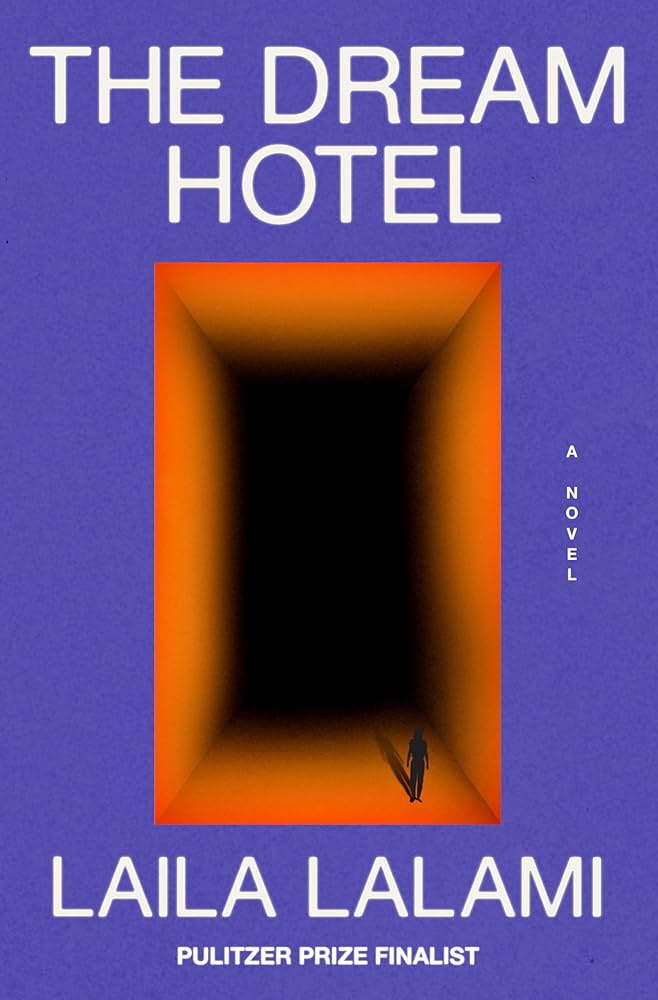
The Dream Hotel by Laila Lalami
Commencing my venture into American literature is Laila Lalami’s The Dream Hotel. Interestingly, Lalami has a unique background: she was born in Morocco but moved to Los Angeles in 1992 to attend the University of Southern California. Although she published her first book in 2005, it was only this year that I learned about the Moroccan American author. Her fourth novel, The Dream Hotel, was listed among the most anticipated releases of the year, and I included it in my 2025 Books I Look Forward To list. The Dream Hotel is set in the not-so-distant future and follows Sara Hussein, a 38-year-old Moroccan American historical archivist. The wife of Elias and the mother of Mohsin and Mona, she has been detained at Madison—a former elementary school repurposed by Safe-X—for ten months, far exceeding the standard 21 days. The story then rewinds to the moment she was taken into custody. On a return flight to Los Angeles from an international conference, she is abruptly stopped by law enforcement. The interrogation begins with an innocuous question: What happened during the flight? But this was just the surface. Before the conference, Sara had been considered “Low Risk.” Individuals in this society are assigned risk scores by the Risk Assessment Administration (RAA) based on their perceived threat level. They use the Dreamsaver, a wearable device, to record and analyze people’s dreams; the data are then fed into an AI algorithm that evaluates each individual’s risk level. The premise is both fascinating and terrifying. Not only are dreams weaponized, but the government is granted access to our innermost thoughts. The novel serves as a dark exploration of our growing reliance on artificial intelligence. The Dream Hotel depicts a society where citizens are subservient to the state and personal autonomy is severely curtailed. Worse still, even dreams—our last refuge of freedom—are used against us.
Goodreads Rating:

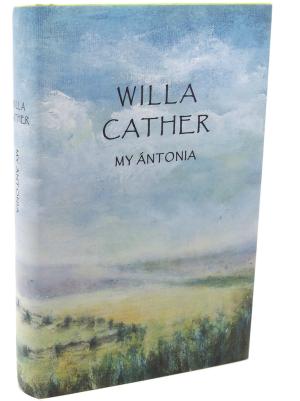
My Antonia by Willa Cather
I believe it was through a fellow book blogger that I first came across the American writer Willa Cather. Interestingly, the book he reviewed was My Ántonia. I would later encounter Cather on several must-read lists, which naturally piqued my interest. My Ántonia is the third Cather novel I’ve read. While it isn’t part of any of my ongoing reading challenges, it’s a book I had long been looking forward to. Originally published in 1918, My Ántonia is narrated by Jim Burden. Orphaned at the age of ten, he travels by train from Virginia to the fictional town of Black Hawk, Nebraska, where he is to live with his paternal grandparents. On the same train is the Shimerda family, immigrants from Bohemia, who also settle on a homestead next to the Burdens’. Jim quickly adapts to his new life with Jake Marpole, Otto Fuchs —the farmhands —and his loving grandparents. He also grows close to the titular Ántonia, the thirteen-year-old daughter of the Shimerdas. Ántonia’s life begins to unravel when tragedy strikes her family, driving a wedge between her and Jim. When Jim turns thirteen, his grandparents move to town so he can attend school. Shortly after, Ántonia is hired by the Burdens’ neighbors, the Harlings, as a housekeeper, allowing her and Jim to renew their friendship. However, Ántonia develops a reputation with the local boys. A series of adventures and misadventures eventually sees Jim and Ántonia drifting apart once more: Jim moves to Lincoln, while Ántonia seeks opportunities elsewhere. It is palpable from the beginning that Jim is in love with Ántonia. In many ways, the novel serves as both his confession and his homage to the girl he met on the prairie. Unlike the prairie to which he always returns, Ántonia remains unattainable. My Ántonia fascinates in its exploration of young love, innocence, and maturity. Subtly, it also examines the immigrant experience and gender norms in the late 19th century. I must say, I liked My Ántonia best among the three Cather novels I’ve read so far.
Goodreads Rating:

Inherent Vice by Thomas Pynchon
Must-read lists introduced me to Thomas Pynchon. He is a familiar presence in such lists. My interest was further piqued after I learned about his reclusiveness; he rarely appears in public. In 2021, I finally read one of his works, and after a long while, I am back with another, Inherent Vice. Set in late 1960s Los Angeles, Inherent Vice charts the fortunes of Larry “Doc” Sportello, a private investigator, who at the start of the novel, receives an unexpected visit from his former girlfriend, Shasta Fay Hepworth. Shasta enlisted his help in thwarting a plot to have Shasta’s boyfriend, real estate mogul Michael Z. “Mickey” Wolfmann, committed to an asylum; the plot was hatched by Mickey’s wife, Sloane, and her lover, Riggs Warbling. His investigation was muddled by more unexpected visitors, such as Tariq Khalil, a Black nationalist who hires Doc to track down Glen Charlock, one of Mickey’s bodyguards and a fellow ex-con who owes him money. When Doc visits one of Mickey’s real estate developments, he’s knocked unconscious. He woke up at the center of a grisly crime scene—Glen has been murdered, and Mickey has vanished. After a brief stint in jail, Doc was again approached by a new client who wanted him to follow up on leads suggesting her husband—presumed dead—might still be alive. Admittedly, the plot was not what I expected from Pynchon. Then again, he is as eccentric as he is enigmatic. Inherent Vice is a darkly comedic tale that plunges readers into a surreal version of Los Angeles—one riddled with drugs, violence, and crime. The late 1960s were also a time of social, political, and economic upheaval. Doc’s investigation uncovered a society stuck in its own destructive cycles. Despite the glaring dichotomy from Gravity’s Rainbow, Inherent Vice is unmistakably Pynchonian: riddled with conspiracy theories, paranoia, and fragmented truths woven into its rich narrative tapestry. Inherent Vice is also a representation of American literature—chaotic, sprawling, and unapologetically strange. Yet, it manages to stand entirely on its own.
Goodreads Rating:
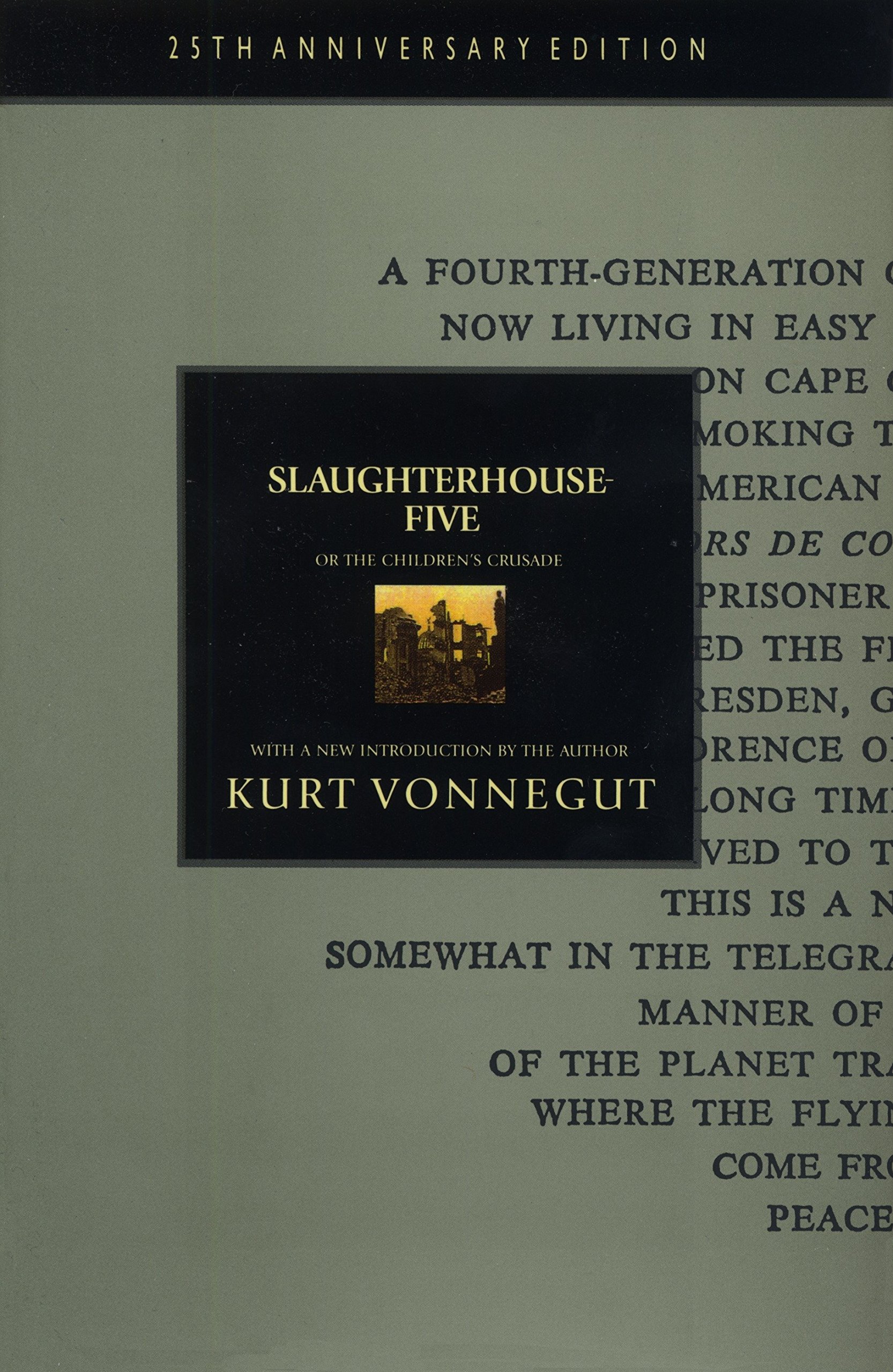
Slaughterhouse-Five by Kurt Vonnegut, Jr.
Although I had never read any of Kurt Vonnegut Jr.’s works before, I’ve long been interested in exploring his oeuvre. Like Pynchon, must-read lists were my first encounters with Vonnegut. Chief among his works is Slaughterhouse-Five, a novel also featured in 1,001 Books You Must Read Before You Die. It would also be my primer to his oeuvre. The novel opens with an unnamed, seemingly unreliable narrator reflecting on his attempt to write about the bombing of Dresden. Previously an anthropology student at the University of Chicago, he was also researching the Children’s Crusade. This framing device sets the stage for the heart of the novel: the story of Billy Pilgrim. Born in the fictional Ilium, New York, Billy was drafted into the U.S. Army during the Second World War. During the Battle of the Bulge in Belgium, he was captured by the Germans, but just before his capture, he experienced the first of many instances of time-shifting. Time shifts take the readers across various periods, setting the tempo and tone of the novel. Vonnegut guides the readers across the landscape of war. But this is no straightforward story. At one point, Billy was abducted by Tralfamadorians—small, one-eyed, one-handed aliens with a unique philosophy of time. In the introduction, Vonnegut explains that the novel is his homage to Dresden and his way of coming to terms with its destruction. The bombing killed 100,000 people and leveled one of Europe’s most beautiful cities. Billy was the author’s conduit, the vessel through which he recounted his own experience as a prisoner of war witnessing Dresden’s devastation. Often described as an anti-war novel, Slaughterhouse-Five deftly portrays the psychological trauma that lingers long after the fighting ends, as symbolized by Billy’s temporal dislocation. The novel vividly explores post-war disillusionment and mental fracture. In his masterfully crafted novel, Vonnegut brings a distinct voice and vision to war fiction, creating a novel that is equal parts absurd, poignant, and profound. Slaughterhouse-Five transcends both time and physical boundaries — a truly thought-provoking literary masterpiece.
Goodreads Rating:

Rites of Passage by William Golding
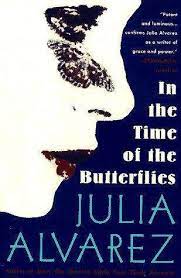
From the North, my literary journey next took me to the Caribbean. It was through must-read lists that I also first encountered Dominican American writer Julia Alvarez. While I was unimpressed by her debut novel, How the García Girls Lost Their Accents, the novel made me curious about her sophomore novel, In the Time of the Butterflies. Looking forward to what it has in store, I included Alvarez’s sophomore novel in my 2025 Top 25 Reading List. At the heart of the novel are the Mirabal sisters: Patria, Adela “Dedé,” Minerva, and María Teresa. Born to Enrique Mirabal Fernández and Mercedes Reyes Camilo, landowners in the central Cibao region, the sisters were born and raised during one of the most precarious periods in Dominican history. Rafael Leónidas Trujillo had been in power since August 1930, after orchestrating the overthrow of the president and eliminating opposition. The sisters’ political awakening took place at Inmaculada Concepción; ironically, Trujillo had demonized universities and schools, which he believed bred radical ideologies. The story of the Mirabal sisters captured the atrocities of Trujillo’s regime. Trujillo notoriously preyed on young women, censored the media, and suppressed insurgent groups. State-sponsored violence carried out by the SIM — the military intelligence unit — was widespread. Despite these, the sisters became increasingly involved in anti-dictatorship activities. Within the 14th of June Revolutionary Movement, they were known as Las Mariposas (The Butterflies). Minerva and María Teresa were frequently imprisoned and were subjected to torture. Nevertheless, they were steadfast in their resistance. Violence eventually silenced them, but their voices echoed across the world. The day of their assassination, November 25, is now commemorated globally as the International Day for the Elimination of Violence against Women. Overall, In the Time of the Butterflies is a compelling read — a testament to the indomitable strength of women and a sobering exploration of the evils of dictatorship.
Goodreads Rating:

Rules of Civility by Amor Towles
Another American writer who piqued my attention is Amor Towles. His sophomore novel, A Gentleman in Moscow, impressed me with its lush historical details. The book was also my window to Towles’ journey as a writer. He had to put his dream of becoming a writer on the back burner to earn a stable salary for himself and his family. After a decade of working in the corporate world, Towles realized that the desire to write still burned within him. In 2011, he finally published his debut novel, Rules of Civility. Set at the end of the 1930s during The Great Depression, the novel charts the fortunes of roommates Katey Kontent and Evelyn Ross. Born to a Russian immigrant, Katey, real name Katya, is the novel’s primary narrator. The primary action commenced when the two friends visited a jazz bar on New Year’s Eve in 1937. When their measly budget was spent on drinks, Tinker Grey entered the bar. Tinker is a wealthy and handsome bachelor. The three got acquainted and eventually became friends. It was, however, palpable that their friendship was not one to last. When Even was disfigured following a car accident caused by Tinker, the complexion of their friendship changed. For Eve, it was an opportunity for Tinker to woo her. While Tinker and Eve waltzed into the French Riviera, Katey attended parties, hoping for encounters that would help her move forward in both life and career. It eventually paid off when Nathaniel Parish, a senior editor at a publishing house, offered her a position at a new magazine, Gotham. It opened doors to a world of literature and intellectual engagement. Her new job also made her orbit vibrant and affluent social circles. Her adventures in high society were juxtaposed with stories of her humble beginnings. The novel takes place over a year and tackles a plethora of subjects and themes such as identity, class struggle, and friendship. It also has overtones of love, betrayal, and the follies of our wants and needs. Rules of Civility is an atmospheric read and a propulsive book that marked the ascent of a new and excitable voice.
Goodreads Rating:

Shadow Ticket by Thomas Pynchon
I was not aware that Thomas Pynchon was releasing a new work this year. Once I learned that the reclusive writer was about to release his first novel in over a decade, I was seated. When I heard about Shadow Ticket, it was a no-brainer to include it in my reading list and make it part of my ongoing literary journey. Thankfully, the book was not as elusive as its author. Pynchon’s ninth novel transports readers to the 1930s. At its heart is Hicks McTaggart, a private detective working for Unamalgamated Ops in Milwaukee. The premise reminded me of Inherent Vice; apparently, his last three novels, including Bleeding Edge (2013), share similar elements and are noir detective thrillers. Shadow Ticket’s main action began when Hicks was assigned to track down Daphne Airmont, the daughter of Bruno Airmont and known as the “Cheese Princess.” Bruno built his fortune on cheese, earning him the moniker “the Al Capone of Cheese.” Unfortunately, Hicks has very little to go on. Before she disappeared, Daphne was to marry Hop Wingdale, a jazz clarinetist. When Federal agent T.P. O’Grizbee’s pressure on Hicks intensified, Hicks was forced to flee Milwaukee for New York. In New York, he was drugged and shipped aboard the Stupendica, a vessel bound for Europe. Thus commenced an adventure, perhaps misadventure, across the Eastern European landscape where the novel’s complexion also started to transform. From a typical caper, the story transformed into a deep rumination on history. Historical context and politics were gradually woven into the narrative as it progresses; Nazis and Soviet agents enter the scene, heightening the risks Hicks faces. Beyond history, the novel also embraces humor — particularly through the International Cheese Syndicate and the outlandish characters and bizarre situations that riddled the story. Shadow Ticket is quintessential Pynchon. It is a compelling read, but I wasn’t as impressed by it as I had initially hoped.
Goodreads Rating:

The Rabbit Hutch by Tess Gunty
Tess Gunty’s The Rabbit Hutch first piqued my interest back in 2022 when it won the National Book Award for Fiction. Three years after its victory, I finally had the chance to read the book, although I was a bit apprehensive about picking it up. Still, I wanted to broaden my venture into contemporary literature. Gunty’s debut novel transports the readers to the “Rabbit Hutch,” a housing complex in the fictional city of Vacca Vale, Indiana. The story opens with an intriguing premise: on a sweltering night in Apartment C4, Blandine Watkins exits her body, immediately creating intrigue. Born Tiffany Watkins, Blandine once attended St. Philomena’s, the city’s only private school, but now resides in Apartment C4 with three young men—Malik, Jack, and Todd. They were all just out of their teens and recently released from the foster care system. They barely know each other, but they were all shaped by the events unfolding around them. Blandine, intellectually gifted, gave up on her college aspirations and her hopes for a future outside the city. Instead, she channeled her energy into sabotaging the planned Vacca Vale development project, a redevelopment plan that includes the demolition of the Rabbit Hutch. In capturing the stories of these four protagonists, Gunty employs a variety of literary devices that reflect each character’s personality, including drawings to convey Todd’s perspective. Gunty’s writing shines in its psychological depth and its vivid, descriptive portrayal of both people and place; Rabbit Hutch was in itself a major character. The city, meanwhile, radiated hopelessness—unemployment and crime are rampant, and it was even ranked first on Newsweek’s “Top Ten Dying American Cities.” Yet it retains its own distinct cultural identity. The Rabbit Hutch is a complex novel that takes time to develop. Nevertheless, I found myself engrossed in Blandine’s story, particularly her interactions with her co-residents. The novel functions both as a coming-of-age story and as a social commentary, fully deserving of the accolades it has received.
Goodreads Rating:
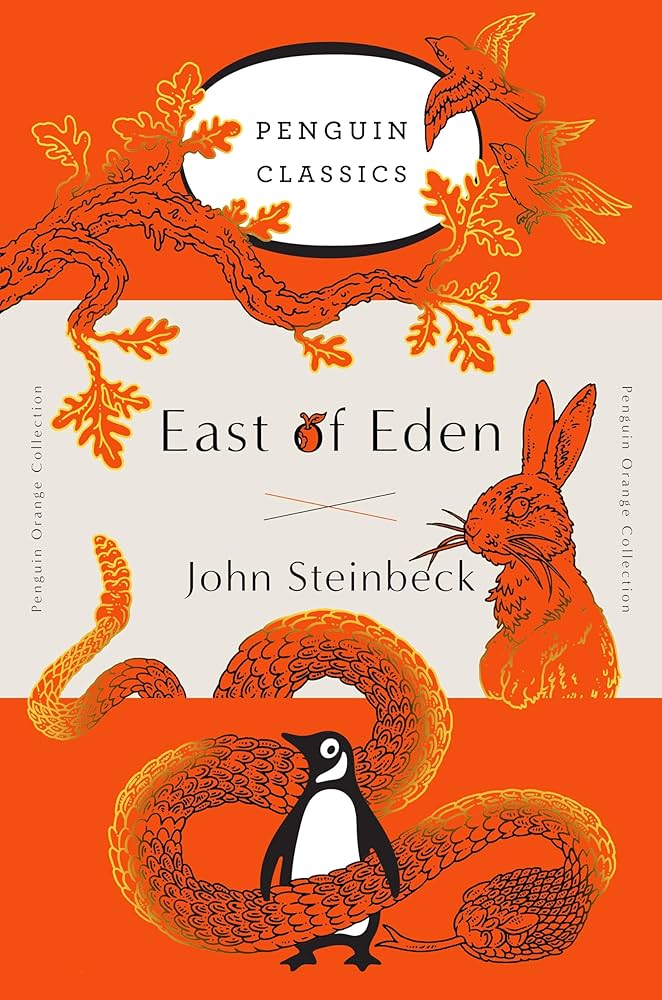
East of Eden by John Steinbeck
My October reading journey concluded with another book in my 2025 Top 25 Reading List. A decade since my first foray into Steinbeck’s oeuvre—I started it with The Pearl—I have read my fifth novel by the Nobel Laureate in Literature. Originally published in 1952, East of Eden charts the fortunes of two families. The story starts in the late nineteenth century when Samuel Hamilton and his wife Liza settled in the Salinas Valley in northern California; they travelled from Ireland. In the valley, they had nine children, and Samuel became a prominent resident. However, wealth was elusive because the family settled on a dry, barren land. Meanwhile, Adam Trask settled in the valley with his wife, Cathy Ames. They traveled from Connecticut, where Adam and his half-brother, Charles, were raised by their father, Cyrus, on a farm. However, Charles resented his older brother because of their father’s preferential treatment. Upon their father’s death, Adam took his inheritance and moved to California. His inheritance allowed them the luxury of obtaining a fertile and rich piece of land. However, the Trasks’ material wealth was undermined by their moral poverty. Cathy was manipulative. Her husband, kind and sensitive, was blind to her evil tendencies. She only married Adam out of convenience and was against moving to California. Fortunately, her planned abortion of her pregnancy failed. After giving birth to a set of twins, Cathy shot her husband and fled. Adam then fell into depression but was nursed by his Chinese-American servant, Lee, and Samuel. He then named his sons Aron and Caleb, after biblical characters. The story’s perspective then shifts to the twins, who were the antithesis of each other, underscoring one of the novel’s prevalent themes: the binary of good and evil. The characters experienced internal conflicts and moral choices. Through the characters’ stories, the novel explored the concept of free will and morality. The novel captured how our lives are influenced and shaped by our choices. But this being a Steinbeck novel, the intricacies of the proverbial American Dream were vividly captured. As always, Steinbeck delivers in East of Eden.
Goodreads Rating:
Reading Challenge Recaps
- 2025 Top 25 Reading List: 20/25
- 2025 Beat The Backlist: 16/20; 93/60
- 2025 Books I Look Forward To List: 3/10
- Goodreads 2025 Reading Challenge: 100/100
- 1,001 Books You Must Read Before You Die: 14/20
- New Books Challenge: 7/15
- Translated Literature: 71/50
Book Reviews Published in October
- Book Review # 612: The Aunt Who Wouldn’t Die
- Book Review # 613: Disoriental
- Book Review # 614: A House Without Windows
- Book Review # 615: Baron Wenckheim’s Homecoming
- Book Review # 616: House of Day, House of Night
- Book Review # 617: Blindness
After a writing rut that lasted for a couple of months, I was finally able to build momentum in the past two months. I am glad I finally was able to find my way out of the slump I experienced in the middle of the year. October, however, was not as prolific as September. Still, I was able to complete six book reviews, which is still a good number, considering how, for most of the year, I completed less than five book reviews in a month. I guess what is working now is patience. I was finally able to allot time to writing. This also allowed me to finally make a dent in my pending book reviews from June 2023; I managed to tick off three more from this list. Yay to that. I still have about ten , and I am going to further reduce this number this November. I just had a brief interlude as I reviewed works of Nobel Laureates in Literature.
I’m still swamped with pending book reviews from 2023 to the present, but I am making some decent progress. It doesn’t help that I am reading more than I am reviewing. This Noevnver, I’m aiming to carry over the momentum I built in the past two months. My primary focus will be on those pending June and July 2023 reviews while trying to work on some from 2024 and 2025. Occasionally, I might also publish reviews of books I read before I began publishing reviews—such as Haruki Murakami’s Norwegian Wood and Kafka on the Shore, Kazuo Ishiguro’s An Artist of the Floating World, Salman Rushdie’s The Ground Beneath Her Feet, Ian McEwan’s Atonement, and Naguib Mahfouz’s Miramar. These books hold special significance for me as they were the first works I read by these authors.
In November, I will still be focusing on works of American writers – not just the country, but the entire continent, from North to South. The focus is on the books that are part of my reading challenges, among them Jonathan Franzen’s The Corrections, Margaret Atwood’s Alias Grace, Thomas Pynchon’s The Crying of Lot-49, and George Saunder’s Lincoln in the Bardo. I will also be interjecting works of African writers because some of the remaining books from my reading challenges are by African writers. As always, I might pick up a book or two outside my challenges as the month progresses. How about you, fellow reader? How is your own reading journey going? I hope you enjoyed the books you have read. For now, have a great day. As always, do keep safe, and happy reading, everyone!
 The Pine-Scented Chronicles