
Happy Wednesday, everyone! Wednesdays also mean WWW Wednesday updates. WWW Wednesday is a bookish meme hosted originally by SAM@TAKING ON A WORLD OF WORDS.
The mechanics for WWW Wednesday are quite simple: you just have to answer three questions:
- What are you currently reading?
- What have you finished reading?
- What will you read next?

What are you currently reading?

It’s already the middle of the week — how time flies! I hope everyone’s week is going well. The good news is that we only have two more days to go before the weekend. I hope everyone makes it through the workweek. Also, we’re already in the eleventh month of the year and nearly midway through it. In a couple of weeks, we’ll be welcoming the last month of the year — the new year is literally just over the horizon. With the year approaching its inevitable end, I hope everything is going well for everyone. May blessings and good news shower upon you. I hope the remaining weeks of the year are filled with answered prayers and healing. I hope everyone is doing well — both physically and mentally — and that you’re making great strides toward your goals. May the rest of the year be kinder to you and reward you for all your hard work.
Like in previous years, I have been — and will be — spending the rest of the year ticking off books on my reading challenges. It has now become a tradition for me to spend the latter part of the year catching up on these goals. My current read, however, doesn’t belong to any of these challenges. I decided to read László Krasznahorkai’s The World Goes On because I am in the middle of a Nobel Prize in Literature reading binge. The Hungarian writer was recently recognized by the Swedish Academy for his compelling and visionary oeuvre that, in the midst of apocalyptic terror, reaffirms the power of art. I wasn’t planning on reading any of his works this year until I came across a copy of The World Goes On during one of my random forays into the local bookstore. Believing it to be a novel, I picked up a copy and made it part of my ongoing reading journey.
Anyway, The World Goes On is a collection of stories originally published in 2013 as Megy a világ. It was made available to Anglophone readers in 2017. The book is my first short-story collection in nearly two years and my first by a Nobel Laureate in Literature; it’s also the third book by Krasznahorkai I’ve read. I just started reading it, so I have very little to share for now. Nevertheless, familiar elements of his prose are already manifesting — for instance, intellect and genius are prevalent in the opening pages. I expect digressions as the stories move forward; after all, Krasznahorkai’s narratives are rarely straightforward. Chaos is bound to ensue. I can’t wait to complete the twenty short stories comprising the book. Should I fail to finish it on or before Friday, I’ll be sharing more of my impressions in this week’s First Impression Friday update.
What have you finished reading?

As mentioned, I am in the middle of a mini–Nobel Laureate in Literature reading binge. After reading John Steinbeck’s East of Eden, I traveled to South America to explore the work of one of the pillars of contemporary Latin American literature — the 2010 Nobel Prize in Literature awardee Mario Vargas Llosa, whom I first encountered through various must-read lists. Seven years after my first venture into the Peruvian writer’s oeuvre — I started with The War of the End of the World, which won me over despite its complexity — I have now read my fourth novel by Vargas Llosa, Death in the Andes. I had actually planned to read the book last year; however, I couldn’t locate my copy until early this year, hence its inclusion in my 2025 Beat the Backlist Challenge.
As the title suggests, Death in the Andes is set in the Andes region of Peru — a region interestingly underrepresented in Vargas Llosa’s body of work. The novel features Corporal Lituma, a Civil Guard policeman who has been transferred to the Andean community of Naccos, a village occupied primarily by laborers working on a highway construction project. The project, however, is on the verge of being shut down. Lituma, along with Tomás Carreño, is tasked with investigating the disappearance of three men from the village: Demetrio Chanca, a construction foreman with a mysterious past; Casimiro Huarcaya, an itinerant merchant who claims to be a pishtaco when drunk; and Pedro Tinoco, a mentally disabled and mute man who lives with the two policemen and performs chores for them. The tension in the region is heightened by the violent activities of Sendero Luminoso, a terrorist group. Over the course of the investigation, Vargas Llosa vividly captures the pasts of the three missing men. In unearthing their histories, Lituma also guides readers across the landscape of Andean life. Originally from the coastal city of Piura, Lituma anticipates a stark cultural shift. His first confirmation comes when he realizes that the majority of the native Indian locals speak only Quechua rather than his native Spanish, forcing him to rely heavily on his deputy.
The lush culture and traditions of the region, along with its diverse people, come alive through Vargas Llosa’s evocative prose. Lituma himself is a blank canvas — someone with little understanding of Andean culture and tradition — which makes him the perfect guide as he learns about the region alongside the reader. In Death in the Andes, various elements of Andean society converge: the police, the road construction workers, the native locals, and the guerrillas. On the surface, there seems to be very little connecting them, yet Vargas Llosa skillfully intertwines their narratives. Death in the Andes is a vivid portrait of life in the Andean countryside, capturing the struggles of the locals and how their lives are shaped by external forces. The novel reveals a different dimension of Vargas Llosa’s rich and multifaceted body of work.

Like The World Goes On, I originally had no plans to read William Faulkner’s Light in August. The book is not part of any of my reading challenges, but I picked it up when I realized I could begin a venture into the works of Nobel Laureates in Literature. As the main motif of the last quarter of the year is American literature, it was a no-brainer to consider Faulkner, whom the Swedish Academy awarded the Nobel Prize in Literature in 1949 “for his powerful and artistically unique contribution to the modern American novel.” Interestingly, I was not a fan of the first Faulkner novel I read — The Sound and the Fury — which I found challenging. However, this did not deter me from wanting to explore his oeuvre further.
Light in August is the third Faulkner novel I’ve read. Originally published in 1932, the novel is set in the American South during the 1930s and begins with the journey of Lena Grove, a young woman from Doane’s Mill, Alabama. She becomes pregnant by Lucas Burch, who, after being fired from his job in Doane’s Mill, moves to Mississippi. Before leaving, Lucas promises Lena that he will send word once he finds new employment. However, she does not hear from him for a long time. Her situation worsens when she begins receiving harassment from her older brother because of her illegitimate pregnancy. This prompts her to seek out Lucas. By hitchhiking and walking, she makes her way to Jefferson, Mississippi — a town familiar in Faulkner’s literary landscape. Located in the fictional Yoknapatawpha County, Jefferson is the place Lena hears Lucas was last seen. Believing she will find him there, working at another planing mill, she expects he will ask her to marry him once she arrives. Life, however, has its own plans. Upon her arrival, an old plantation house owned by Joanna Burden burns to the ground. Byron Bunch, a worker, recalls a stranger who had appeared out of nowhere and started working at the mill — Joe Christmas — who later moved into the “Negro cabin.” Christmas’s arrival is soon followed by another newcomer who introduces himself as Joe Brown.
The story then shifts to the lives of the other characters Lena encounters in Jefferson, including Byron and Reverend Gail Hightower. Their backstories form the fabric of the narrative, and the intersection of their lives constitutes the backbone of the novel. Each is, in one way or another, a social outcast living within a dismissive community, their individual pasts weighing heavily upon them. As their lives intertwine, themes prevalent throughout Faulkner’s oeuvre begin to emerge. Light in August also grapples with issues of racism, identity, sex, class, and religion. Admittedly, Light in August is a complex read, and it took time to find my footing in the story. Nevertheless, it is an engrossing work — one that captivates through its timely themes and the cast of fascinating characters Faulkner conjures.
What will you read next?
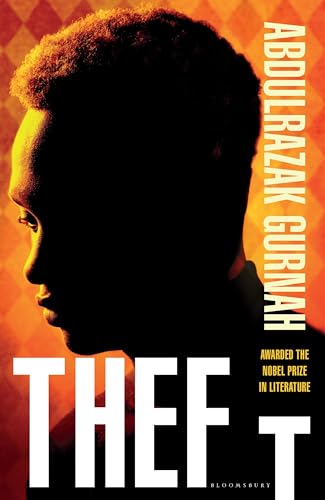
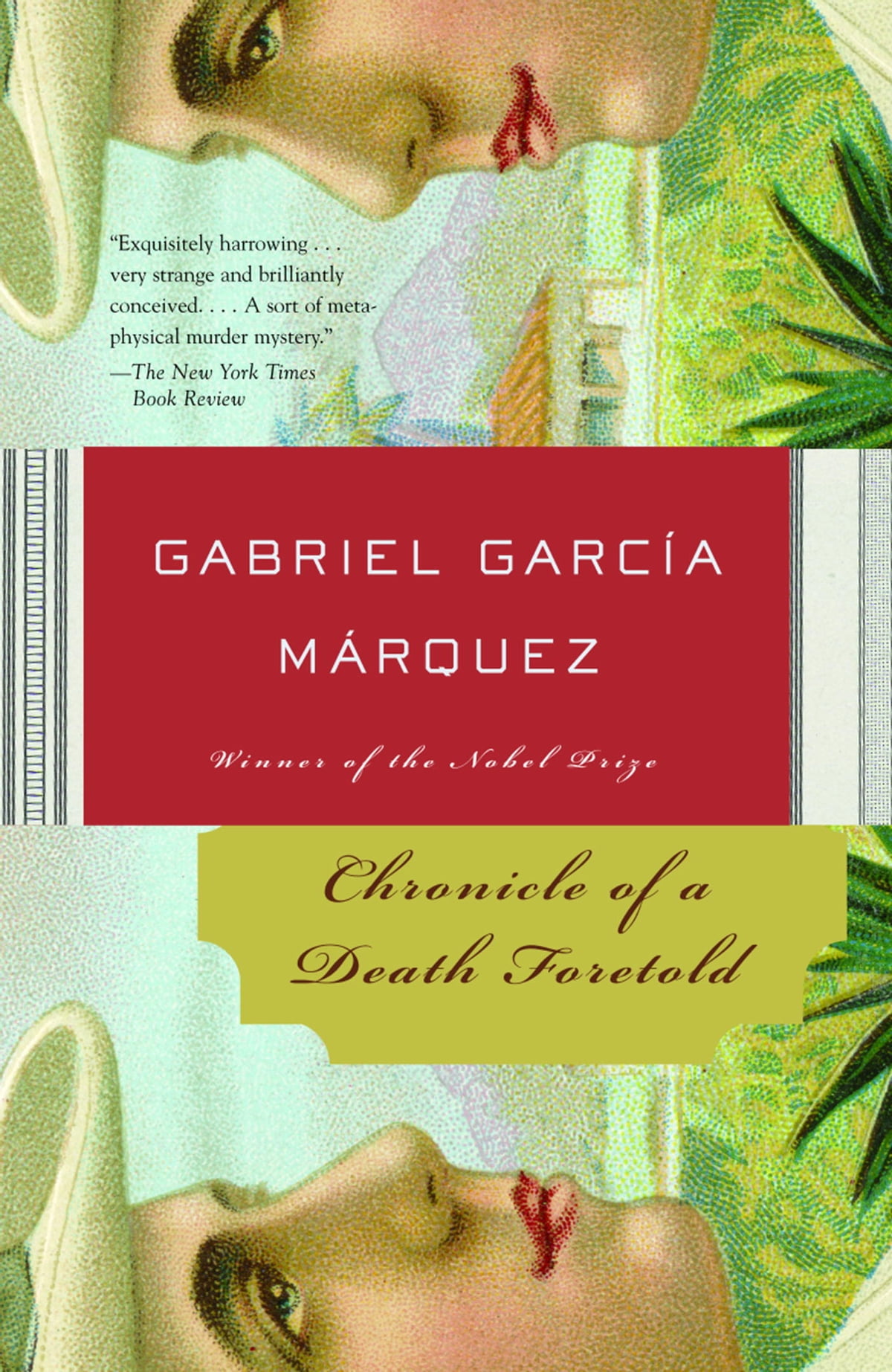

 The Pine-Scented Chronicles