
Happy Wednesday, everyone! Wednesdays also mean WWW Wednesday updates. WWW Wednesday is a bookish meme hosted originally by SAM@TAKING ON A WORLD OF WORDS.
The mechanics for WWW Wednesday are quite simple: you just have to answer three questions:
- What are you currently reading?
- What have you finished reading?
- What will you read next?

What are you currently reading?

It’s already the middle of the week — how time flies! I hope everyone’s week is going well. The good news is that we only have two more days to go before the weekend. I hope everyone makes it through the workweek. Also, we are nearly done with the eleventh month of the year. In a couple of weeks, we’ll be welcoming the last month of the year — the new year is just over the horizon. With the year approaching its inevitable end, I hope everything is going well for everyone. May blessings and good news shower upon you. I hope the remaining weeks of the year are filled with answered prayers and healing. I hope everyone is doing well — both physically and mentally — and that you’re making great strides toward your goals. May the rest of the year be kinder to you and reward you for all your hard work.
Like in previous years, I have been — and will continue — spending the rest of the year ticking off books on my reading challenges. It has now become a tradition for me to spend the latter part of the year catching up on these goals. My current read, however, doesn’t belong to any of these challenges. It was through must-read lists that I first encountered American writer Paul Auster. His book The New York Trilogy is a prominent presence in such lists. It was also the first of his works I read, and it instantly earned Auster a fan in me. However, this isn’t his only title on similar must-read lists; he has several other notable works. Among those highly recommended is The Book of Illusions. This was the reason I acquired a copy. Since it is also listed as one of the 1,001 Books You Must Read Before You Die, I decided to include it in my ongoing venture into the vast American literary landscape.
Originally published in 2002, The Book of Illusions is set in the late 1980s. It is narrated by David Zimmer, a university professor whose wife and children perished in a recent plane crash. He subsequently fell into a pit of depression and alcoholism. This haze was broken one afternoon when a silent comedy clip on television elicited an unexpected burst of laughter. That moment provided a glimmer of hope, drawing him into the intrigue of the comedian who managed to break through his grief. He learned that the comedian’s name is Hector Mann, an enigmatic figure from Latin America whose career blossomed in the early 1900s, during the twilight of the silent film era. In December 1928, he mysteriously vanished. Before disappearing, he created a dozen short films that fortuitously found homes in various film archives across America and Europe. This prompted Zimmer to embark on a mission to watch each movie. The result was a comprehensive critical analysis of Mann’s work. Things grew even more interesting when Zimmer received a mysterious letter from Mann’s wife, informing him that Mann is still alive. It seems that there is more than meets the eye, and I can’t wait to see how these events unfold. Should I fail to finish the book on or before Friday, I’ll be sharing more of my impressions in this week’s First Impression Friday update.
What have you finished reading?

After a couple of slow reading weeks, I managed to pick up the pace this past week. I was able to ease up my schedule as I halted some of the activities that had been occupying my time over the past two months. Before I started reading The Book of Illusions, I was on a mini–Nobel Laureate in Literature reading binge. This journey brought me to recent Nobel Prize in Literature awardee László Krasznahorkai’s The World Goes On. In a way, it was a deviation from my plan to exclusively read works by American and African writers. However, The World Goes On piqued my interest when I first encountered it during a recent foray into a local bookstore. I also believed it was a novel, only to learn it was a collection of short stories once I started reading it.
The World Goes On was originally published in 2013 as Megy a világ and was made available to Anglophone readers in 2017, with the literal translation of its Hungarian title. The book is my first short-story collection in nearly two years and my first by a Nobel Laureate in Literature; it is also the third book by Krasznahorkai that I’ve read. It is divided into twenty stories grouped into three parts: Speaks, Narrates, and Bids Farewell. Speaks begins with a series of first-person accounts, many consisting of a single, captivating sentence, such as “Wandering-Standing.” In the opening story, the anonymous narrator describes needing to get away from where he is, only to discover that he never really left. Rather than offering straightforward narratives—this is Krasznahorkai’s universe, after all—each story morphs into essayistic commentary examining an eclectic array of subjects. “He Wants to Forget,” for instance, is a pessimistic lament on the modern era. Meanwhile, “The World Goes On”—yes, the book carries a short story of the same title—is a brief ramble inspired by the attack on the World Trade Center’s Twin Towers. “Universal Theseus,” which occupies much of the first part, is a series of three lectures delivered by a man who clearly does not want to be there. His lectures explore themes such as melancholy—a familiar motif in Krasznahorkai’s oeuvre—revolt, and possession. As the story unfolds, it becomes increasingly clear that the man is being held against his will.
Reading the collection provides a new dimension to Krasznahorkai’s oeuvre, yet the stories still employ literary devices familiar in his body of work. Some are composed of a single sentence spanning several pages, including the titular “The World Goes On.” Others follow more conventional structures. The variations in form do not diminish the potency of Krasznahorkai’s writing. However, reading his work requires flexibility; the stories often digress while transporting readers across the world. One, for instance, takes us to the banks of the Ganges River in Varanasi, India. Another leads us to Shanghai, China. Though fragmented, the stories appear interconnected—albeit by thin threads. They grapple with grand philosophical questions, and a suffocating sense emerges as they explore existential concerns and even the end of the world. The World Goes On offers a distinct dimension of Krasznahorkai’s lush body of work, with each story pushing the boundaries of my imagination—or perhaps more accurately, my critical faculties.
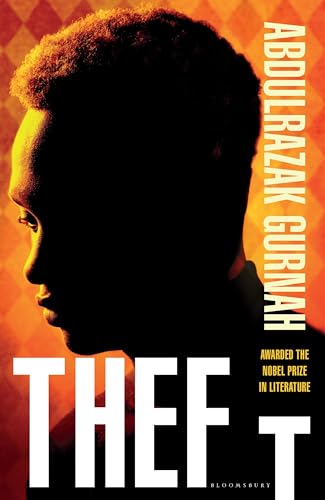
As mentioned above, the final stretch of the year is dedicated to the works of American and African writers. My journey now takes me to Africa, with Abdulrazak Gurnah’s latest novel, Theft. It was early this year that I learned about the Tanzanian-born British novelist’s newest release—his first since being awarded the Nobel Prize in Literature in 2021. It was actually through the Swedish Academy that I first heard of Gurnah. Theft is one of the titles I looked forward to; interestingly, it is also the first work by an African writer I’m reading this year. It is the third novel by Gurnah that I have read.
Compared to the first two Gurnah novels I read, Theft is set in more recent years, particularly from the late 1980s to the 2000s. The novel chronicles the fortunes and intersecting lives of Karim, Fauzia, and Badar in Tanzania. Raya, Karim’s mother—forced into an unhappy marriage at a young age—leaves her son in the care of her parents; his life is largely defined by his absent parents. Karim grows up to be an intelligent student who earns a scholarship to study in the city. He later secures a government job overseeing environmental initiatives in Zanzibar. He also marries Fauzia, a once-aspiring student who dreamed of becoming a teacher. Meanwhile, at thirteen, Badar moves from his village to Dar es Salaam, where he serves as a domestic servant. He grew up never having known his parents: his mother died during a cholera outbreak, and, like Karim, he never knew his father’s identity. Still, his father looms large in his story, for Badar’s removal from his home and his subsequent position as a live-in servant stem from his father’s actions. Due to his youth, he arrives in the city unaware of his station in life. He eventually finds himself in Raya and Haji’s household, where he serves for years.
Badar is treated well, but his life is disrupted when he is wrongly accused of theft. At this juncture, the story begins to unravel as the past comes to light. During his time in the household, Badar develops an unlikely friendship with Karim. Through Karim’s help, he later finds work at a hotel. Meanwhile, Karim and Fauzia’s marriage deteriorates when an English volunteer enters their lives. The novel’s multiple points of view and characters broaden the narrative focus. It explores a variety of themes and subjects. For one, the book tackles a familiar topic: the feminine struggle within a patriarchal African culture. Gurnah’s female characters are fully developed and nuanced. The novel also subtly examines colonialism and its imprint on the nation’s generational identity. In addition, it engages with a recurring Gurnah motif: a young man sold by family members into a form of pseudo-domestic slavery. Overall, Theft is a compelling read about finding one’s place in the world.
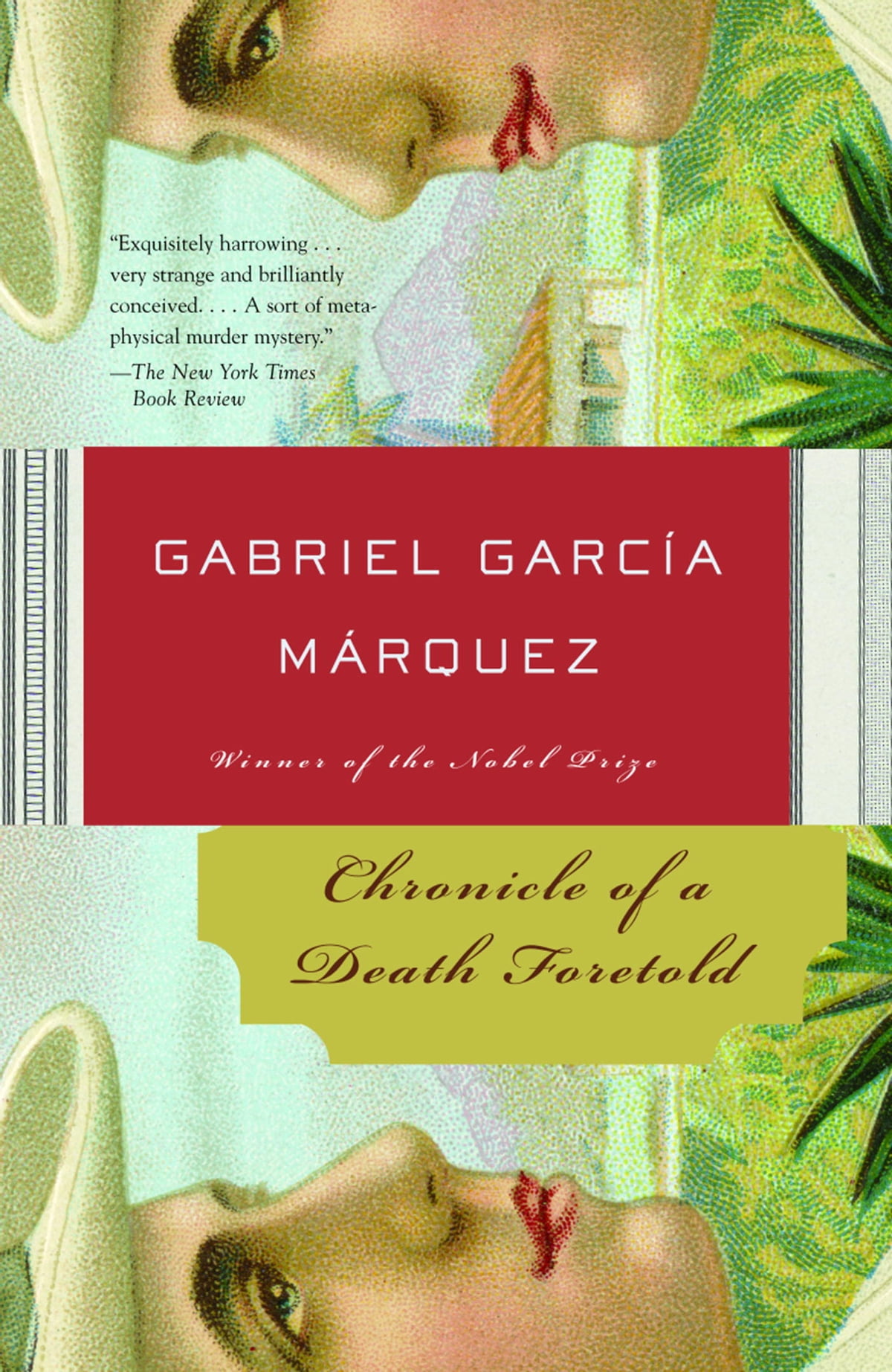
My three-book stretch concluded with another familiar name. It has been nearly a decade since I first came across Colombian writer Gabriel García Márquez. Several of his works were listed in must-read lists. One of his most defining works, One Hundred Years of Solitude, was one of my primers to the interesting world of magical realism. It was also my gateway to the Nobel Laureate in Literature’s expansive oeuvre. A decade since I read my first García Márquez novel, I read my eighth, Chronicles of a Death Foretold. With my eighth García Márquez book, he joins Kazuo Ishiguro as my most-read Nobel Laureate in Literature.
Originally published in 1981 as Crónica de una muerte anunciada, the novella is set in an unnamed town on the northern coast of Colombia. The story commences with the brutal murder of Santiago Nasar on the morning immediately following the biggest wedding the town has ever seen. Narrated by an anonymous and omnipresent narrator, the novel follows a nonlinear narrative, reconstructing the circumstances surrounding and leading up to his murder. As the story weaves across time, we learn that Santiago lives with his mother, Plácida Linero. Ibrahim Nasar, his father, passed away three years ago. After his father’s death, Santiago took over the family ranch, from which the family derived their wealth and prestige. An important detail in the story is the day of his murder. The bishop arrived in town to bless the marriage of Bayardo San Román and Ángela Vicario. Bayardo hails from a wealthy, well-connected family in a different part of the country but moved to the town to look for a wife. Angela, on the other hand, was a long-term resident born to a poor family. Shortly after their marriage, Bayardo dragged Angela back to her mother’s home. The reason: she was no longer a virgin.
Through Angela’s twin brother’s threats, she was forced to reveal the name of the man who defiled her purity and honor. To avenge their family’s honor, Pablo and Pedro Vicario set out to kill the man, even announcing their plan to the owner of the meat market and the butcher. Still, no one believed them because of their good community standing. Interestingly, there is a lot to unpack in this deceptively thin book. The overarching theme is the foreshadowing of a murder. This then underscores the theme of fate. Beyond it, the book explores the theme of fact, fiction, and memory. The story, after all, was a tapestry woven from years of research, recollection, and representation of the murder. This is the reason for the narrator’s journalistic narrative style. Gender, class, and social mobility were also underscored in the individual stories of the characters. Overall, Chronicle of a Death Foretold is a propulsive and memorable read from one of the world’s literary masters. I expect nothing less from THE Gabriel García Márquez.
What will you read next?


 The Pine-Scented Chronicles