
Hello, readers! It is Monday again! As it is Monday, welcome to another #5OnMyTBR update. The rule is relatively simple. I must pick five books from my to-be-read piles that fit the week’s theme.
This week’s theme: No Prompt
Because there is no prompt this week, I decided to feature works of Argentine writers. This is in line with my current literary journey: reading works of writers from the American continent. Further, Argentina celebrates their National Sovereignty Day today. Here are some works of Argentine writers I am looking forward to.

5OnMyTBR is a bookish meme hosted by E. @ Local Bee Hunter’s Nook where you chose five books from your to-be-read pile that fit that week’s theme. If you’d like more info, head over to the announcement post!
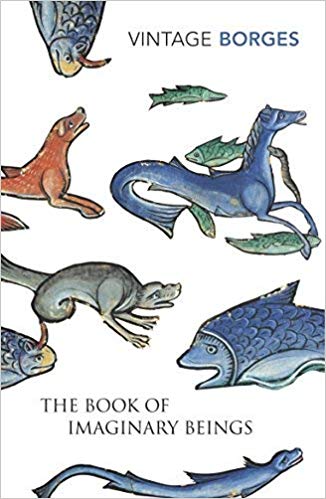
Title: The Book of Imaginary Beings
Author: Jorge Luis Borges
Translator (from Spanish): Norman Thomas di Giovanni
Publisher: Vintage
Publishing Date: 2002
No. of Pages: 157
Synopsis:
Few readers will want, or be able, to resist this modern bestiary. Here you will find the familiar – Gryphons, Minotaurs and Unicorns – as well as the Monkey of the Inkpot and other undeniably curious beasts. Borges’ cunning and humorous commentary is sheer delight.
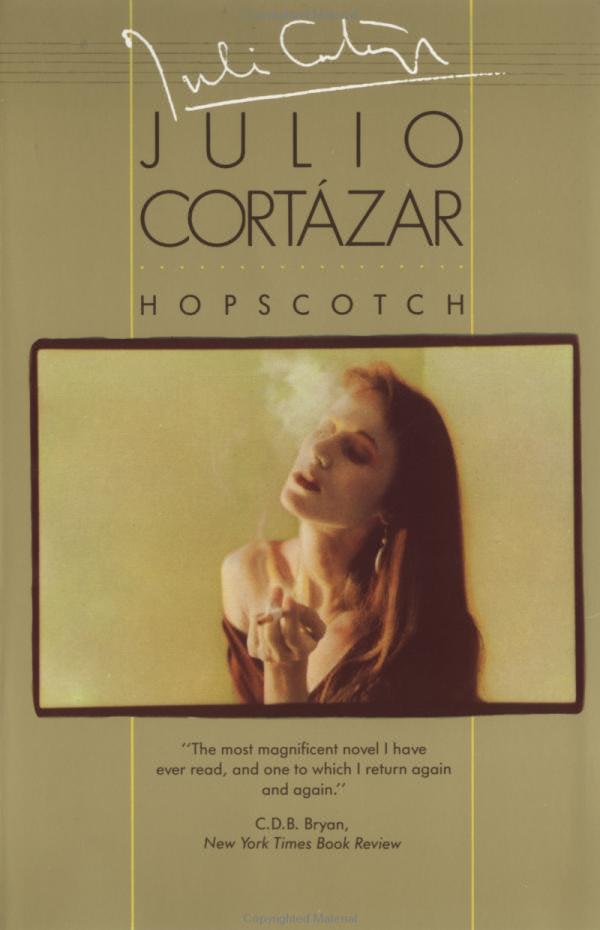
Title: Hopscotch
Author: Julio Cortázar
Synopsis:
Horacio Oliveira is an Argentinian writer who lives in Paris with his mistress, La Maga, surrounded by a loose-knit circle of bohemian friends who call themselves “the Club.” A child’s death and La Maga’s disappearance put an end to his life of empty pleasures and intellectual acrobatics, and prompt Oliveira to return to Buenos Aires, where he works by turns as a salesman, a keeper of a circus cat which can truly count, and an attendant in an insane asylum. Hopscotch is the dazzling, freewheeling account of Oliveira’s astonishing adventures.
The book is highly influenced by Henry Miller’s reckless and relentless search for truth in post-decadent Paris and Daisetz Teitaro Suzuki’s modal teachings on Zen Buddhism.
Cortázar’s employment of interior monologue, punning, slang, and his use of different languages is reminiscent of Modernist writers like Joyce, although his main influences were Surrealism and the French New Novel, as well as the “riffing” aesthetic of jazz and New Wave Cinema.
In 1966, Gregory Rabassa won the first National Book Award to recognize the work of a translator, for his English-language edition of Hopscotch. Julio Cortázar was so pleased with Rabassa’s translation of Hopscotch that he recommended the translator to Gabriel García Márquez when García Márquez was looking for someone to translate his novel One Hundred Years of Solitude into English. “Rabassa’s One Hundred Years of Solitude improved the original,” according to García Márquez. (Source: Goodreads)

Title: Talking to Ourselves
Author: Andrés Neuman
Translator(s) (from Spanish): Nick Caistor, Lorenza Garcia
Publisher: Farrar, Straus, and Giroux
Publishing Date: 2015
No. of Pages: 148
Synopsis:
Lito is ten years old and is almost sure he can change the weather when he concentrates very hard. His father, Mario is gravely ill and eager to create a memory that will last for his son’s lifetime. They embark on a road trip in a truck called Pedro, but Mario cannot bring himself to reveal that this journey may be their last together. While father and son travel through strange geographies that seem to meld the different parts of the Spanish-speaking world, Lito’s mother, Elena restlessly seeks support in books, and soon undertakes a morally ambiguous adventure of her own.
Each narrative – of father, son and mother – embodies one of the ways that we talk to ourselves: through speech, thought and writing. While no on e in the family dares to tell the complete truth to the other two, the combination of their strikingly different voices evokes an affecting portrait of loss. With bittersweet humor and a wide-ranging intellect, Andrés Neuman uses these three textured monologues to describe the ways a family can be transformed, and how reading, sex, driving, and silence can become powerful modes of resistance. A tender yet unsentimental portrait of love, despair, and devotion, Talking to Ourselves is a profound reflection on grief and consolation of language.
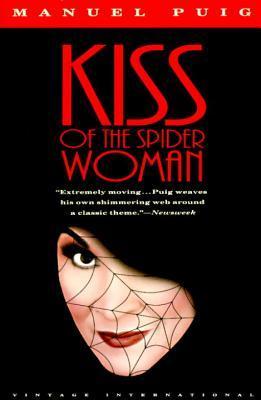
Title: Kiss of the Spider Woman
Author: Manuel Puig
Synopsis:
Sometimes they talk all night long. In the still darkness of their cell, Molina re-weaves the glittering and fragile stories of the film he loves, and the cynical Valentin listens. Valentin believes in the just cause which makes all suffering bearable; Molina believes in the magic of love which makes all else endurable. Each has always been alone, and always – especially now – in danger of betrayal. But in cell 7 each surrenders to the other something of himself that he has never surrendered before. (Source: Goodreads)
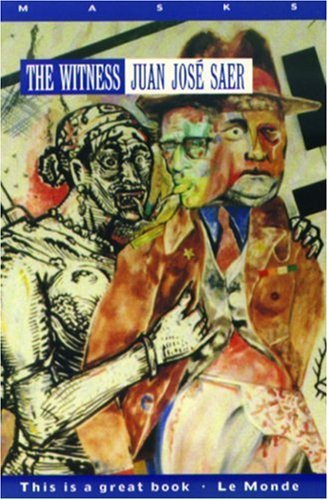
Title: The Witness
Author: Juan José Saer
Synopsis:
In sixteenth-century Spain, a cabin boy sets sail on a ship bound for the New World. An inland expedition ends in disaster when the group is attacked by Indians. The Witness explores the relationship between existence and description, foreignness and cultural identity. Source: Goodreads)
 The Pine-Scented Chronicles