
Time truly flies fast. In the blink of an eye, the eleventh month of the year has already passed. Just like that, we are down to the final month of the year. In a couple of days, 2025 will officially draw its curtain. As the adage goes, with every ending is a new beginning. 2026 is just over the horizon, a testament to how time continues to move at its natural pace. As the year slowly approaches its inevitable close, I hope the remaining days of 2025 usher in more blessings, progress, and fulfillment. May they be filled with joy, healing, achievements, and answered prayers. I hope your hard work is rewarded and that you’re making steady headway toward your goals. I wish you well on your individual journeys. For those whose goal is simply to move from one point to another, know that that’s perfectly fine, too. In times like these, with turmoil surrounding us, silencing the noise can be a challenge. As such, I hope everyone stays healthy—in mind, body, and spirit.
Reading-wise, my 2025 reading journey has gone smoothly. For the fourth year in a row, I was able to complete at least 100 books. Imagine, for years, I struggled completing at 100 books. I nearly lost hope. But even when my consciousness has virtually given up, my subconsciousness kept me pushing forward. I thought that 2022 was a fluke, but lo and behold, I was able to replicate the feat, four years running. While I was able to tick off one of my reading goals this year, I am lagging behind in my other reading goals. Like how it has been in the previous years, I am scrambling to complete these goals, although I have been steadily ticking books off various lists and targets. The remaining books, as always were written by American authors, hence my pivot toward American literature. When I say American literature, I refer to the entire continent—from North to South—and including the Caribbean. Before diving into the year’s final lap, here’s a glimpse of how my November venture into American literature – and a little of African literature – has shaped up.

Death in the Andes by Mario Vargas Llosa
My venture into American literature resumed with 2010 Nobel Prize in Literature awardee Mario Vargas Llosa’s Death in the Andes. Like most of the writers I have been reading in the past decade, it was must-read lists that introduced me to the Peruvian writer. Seven years after my first venture into his oeuvre — I started with The War of the End of the World — I have now read my fourth novel by Vargas Llosa. Also a part of my 2025 Beat the Backlist Challenge, Death in the Andes is set in Peru’s Andes region— a region underrepresented in Vargas Llosa’s body of work. At the heart of the novel is Corporal Lituma, a Civil Guard policeman recently transferred to Naccos, a village on the Andes occupied primarily by laborers working on a highway project. The project, however, is on the verge of being shut down. Lituma, along with Tomás Carreño, was tasked to investigate the disappearance of three villagers: Demetrio Chanca, a construction foreman with a mysterious past; Casimiro Huarcaya, an itinerant merchant; and Pedro Tinoco, a mentally disabled and mute man living with the two policemen as their helper. This was exacerbated by the tension permeating the region, driven by the violent activities of Sendero Luminoso, a terrorist group. Vargas Llosa vividly captures the pasts of the three missing men while guiding readers across the landscape of Andean life. The lush culture and traditions of the region, along with its diverse people, come alive through Vargas Llosa’s evocative prose. Lituma, originally from the coast, was the perfect guide, learning about the region alongside the reader. On the surface, there seems to be very little connecting the characters, yet Vargas Llosa skillfully intertwines their narratives. Death in the Andes is a vivid portrait of life in the Andean countryside, capturing the struggles of the locals and how their lives are shaped by external forces. The novel reveals a different dimension of Vargas Llosa’s rich and multifaceted body of work.
Goodreads Rating:


Light in August by William Faulkner
I originally had no plans to read William Faulkner’s Light in August. While it was not part of any of my reading challenges, I picked it up when I realized I had commenced a venture into the works of Nobel Laureates in Literature. It was also through must-read lists that I first came across the 1949 Nobel Laureate in Literature. I found the first Faulkner novel I read, The Sound and the Fury, challenging, but this did not deter me from wanting to explore his oeuvre further. Light in August is the third Faulkner novel I’ve read. Originally published in 1932, the novel is set in the 1930s American South. It commences with the journey of Lena Grove, a young woman from Doane’s Mill, Alabama, who was impregnated by Lucas Burch. After being fired from his job, Lucas moved to Mississippi, promising Lena that he would send word once he found new employment. However, a long time passed, and she had not heard from him, prompting her to seek out Lucas. She made her way to Jefferson, Mississippi, the place Lena heard Lucas was last seen. She expected he would ask her to marry him once she found him. Life, however, has its own plans. Upon her arrival, an old plantation house owned by Joanna Burden burned to the ground. Byron Bunch, a worker at the plantation, recalled the arrival of Joe Christmas, who moved into the “Negro cabin.” Christmas’s arrival was soon followed by the arrival of another stranger, Joe Brown. The story then shifted to the lives of the characters Lena encountered in Jefferson, including Byron and Reverend Gail Hightower. Their backstories form the fabric of the narrative. They were social outcasts living within a dismissive community. As their lives intertwine in Light in August, Faulkner grapples with issues of racism, identity, sex, class, and religion. Light in August is a complex read but it is an engrossing work — one that captivates through its timely themes and the cast of fascinating characters Faulkner conjures.
Goodreads Rating:

The World Goes On by László Krasznahorkai
It was a welcome surprise when the Swedish Academy awarded Hungarian writer László Krasznahorkai the Nobel Prize in Literature this year. It was a long time coming for him. While I was not originally planning on reading any of his works, my encounter with The World Goes On during a random foray at the bookstore convinced me otherwise. Interestingly, I believed it was a novel, only to learn it was a collection of short stories once I started reading it. Originally published in 2013 as Megy a világ, The World Goes On is divided into twenty stories grouped into three parts: Speaks, Narrates, and Bids Farewell. Speaks begins with a series of first-person accounts, many of which consist of a single, captivating sentence. As is the case in Krasznahorkai’s other works, he does not offer straightforward narratives. Each story morphs into essayistic commentaries examining an eclectic array of subjects. “He Wants to Forget,” for instance, is a pessimistic lament on the modern era. Meanwhile, “The World Goes On”—yes, the book carries a short story of the same title—is a brief ramble inspired by the attack on the World Trade Center’s Twin Towers. “Universal Theseus,” which occupies much of the first part, is a series of three lectures exploring themes such as melancholy, revolt, and possession. The book provides a new dimension to Krasznahorkai’s oeuvre, while the stories employ literary devices familiar in his body of work. Some are composed of a single sentence spanning several pages, while others follow more conventional structures. This adds complexity to the book, which also requires flexibility; digressions were prevalent. Though fragmented, the stories appear interconnected—albeit by thin threads. They grapple with grand philosophical questions, and a suffocating sense emerges as they explore existential concerns and even the end of the world. The World Goes On offers a distinct dimension of Krasznahorkai’s lush body of work.
Goodreads Rating:
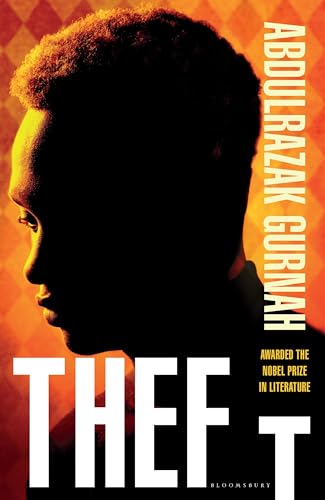
Theft by Abdulrazak Gurnah
My journey now takes me to Africa, with Abdulrazak Gurnah’s latest novel, Theft. It was while searching for 2025 releases that I learned about the release of Gurnah’s latest novel, his first since being awarded the Nobel Prize in Literature. It was through the Swedish Academy that I first heard of Gurnah. Theft is the first work by an African writer I’m reading this year. Unlike the first two Gurnah novels I read, Theft is set in more recent years, particularly from the late 1980s to the 2000s. The novel chronicles the intersecting lives of Karim, Fauzia, and Badar in Tanzania. Karim was left by his mother, Raya, in the care of her parents; his life is largely defined by his absent parents. He grows up to be academically inclined, earning a scholarship to study in the city. He later secures a government job overseeing environmental initiatives in Zanzibar. He married Fauzia, a once-aspiring student who dreamed of becoming a teacher. When he was thirteen, Badar moved from his village to Dar es Salaam to serve as a domestic servant. He never knew his parents: his mother died during a cholera outbreak, and he never knew his father’s identity. Still, his father looms large in his story, for Badar’s move to the city stems from his father’s actions. He finds himself in Raya and Haji’s household, where he was treated well until he was wrongly accused of theft. Having developed an unlikely friendship with Karim, Badar found work at a hotel through Karim’s help. Meanwhile, Karim and Fauzia’s marriage deteriorates. The multiple points of view broaden the narrative focus. It explores a familiar topic: the feminine struggle within a patriarchal African culture. The novel also subtly examines colonialism — a Gurnah staple — and its imprint on the nation’s generational identity. In addition, it engages with a recurring Gurnah motif: a young man sold by family members into a form of pseudo-domestic slavery. Overall, Theft is a compelling read about finding one’s place in the world.
Goodreads Rating:
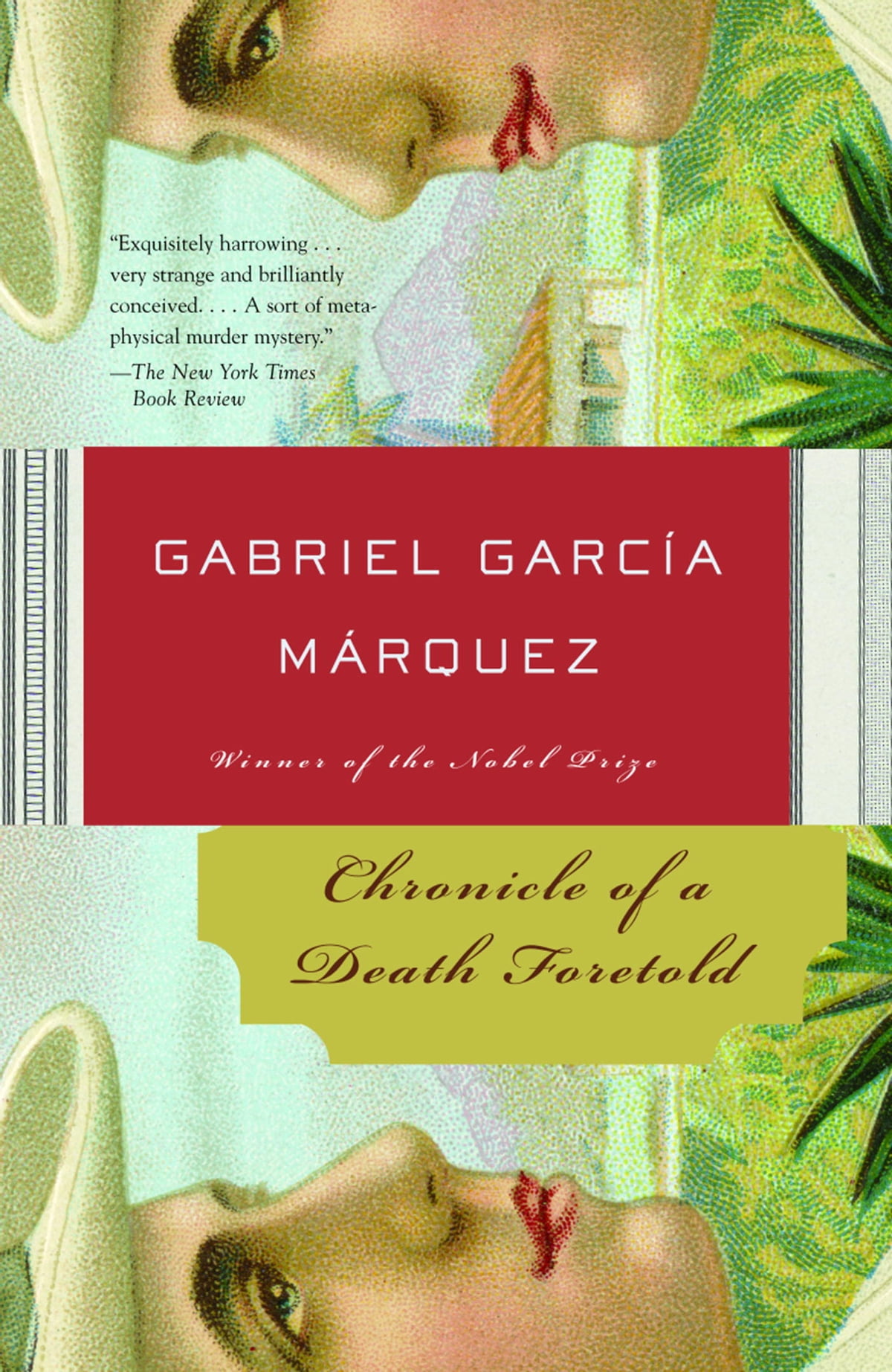
Chronicle of a Death Foretold by Gabriel García Márquez
In the literary realm, one cannot miss Colombian writer Gabriel García Márquez. Several of his works were listed in must-read lists. Perhaps his most defining work, One Hundred Years of Solitude was one of my primers to the world of magical realism and the Nobel Laureate in Literature’s expansive oeuvre. A decade since I first encountered him, I read Chronicle of a Death Foretold, my eighth García Márquez book. Originally published in 1981 as Crónica de una muerte anunciada, the novella is set in an unnamed town on the northern coast of Colombia. The story commences with the brutal murder of Santiago Nasar. The story unfolds through a nonlinear narrative that reconstructs the circumstances leading up to his murder. Santiago lives with his mother, Plácida Linero. After his father’s death, Santiago took over the family ranch. Before his murder, the bishop arrived in town to bless the marriage of Bayardo San Román and Ángela Vicario; it was the biggest wedding the town had witnessed. Bayardo hails from a wealthy, well-connected family in a different part of the country but moved to the town to look for a wife. Angela, on the other hand, was a long-term resident born to a poor family. Shortly after their marriage, Bayardo dragged Angela back to her mother’s home because she was no longer a virgin. Through her twin brother’s threats, she was forced to reveal the name of the man who defiled her purity and honor. To avenge their family’s honor, Pablo and Pedro Vicario set out to kill the man, announcing their plan to the owner of the meat market and the butcher. Yet, no one was able to stop the crime. The foreshadowing of a murder underscores the theme of fate. Beyond it, the book explores fact, fiction, and memory. The story was a tapestry woven from years of research, recollection, and representation of the murder. Gender, class, and social mobility were also explored. Overall, Chronicle of a Death Foretold is a propulsive and memorable read from one of the world’s literary masters.
Goodreads Rating:

The Book of Illusions by Paul Auster
After concluding my mini-Nobel Prize in Literature reading binge, I returned to North America with Paul Auster’s The Book of Illusions. It is technically part of my reading goals, as it is listed among the 1,001 Books You Must Read Before You Die; it is my goal to complete at least twenty books from the list this year. Originally published in 2002, The Book of Illusions begins in the 1980s. University professor David Zimmer recently lost his wife and two sons in an airplane crash. Following this tragedy, he fell into a state of depression, alcoholism, and isolation. This haze was broken by a silent comedy clip on television, which elicited an unexpected burst of laughter. The act drew him into the intrigue of the comedian who managed to pierce his grief: Hector Mann, an enigmatic figure whose career blossomed in the early 1900s, during the twilight of the silent film era. His rise to stardom was abruptly cut short by his mysterious disappearance. Before disappearing, he created a dozen short films that found homes in various film archives. After watching all the movies, Zimmer wrote the first comprehensive critical analysis of Mann’s work. Shortly after the book’s publication, Zimmer received a mysterious letter from Frieda, who claimed to be Mann’s wife and claimed that Mann was still alive. She also extended an invitation to Zimmer. He initially dismissed it as a hoax until the sudden appearance of a young woman named Alma at his remote cabin. What ensued was an adventure that took Zimmer to New Mexico, allowing the novel to explore a plethora of themes and subjects. Grief and loss were prevalent. More vividly, the novel was a meditation on the act of storytelling and the inspirations behind the art we create and, at times, decide to destroy. This adds a layer of illusion while presenting an alternate reality. As these subjects collide, the novel also delves into the complexities of identity and transformation. The Book of Illusions is a compelling and intriguing read.
Goodreads Rating:

The Cartographer of Absences by Mia Couto
From one award-winning writer to another. I can’t remember how I first came across Mia Couto. Nevertheless, the Mozambican writer has piqued my interest. Imagine my surprise when I learned he is quite a prominent figure in the ambit of Portuguese literature. Last year, I finally read my first Couto novel, Woman of the Ashes. During a random escapade into a bookstore, I came across his latest translated novel, The Cartographer of Absences. I had no plans of reading it this year, but my curiosity got the better of me. Originally published in 2020 as O Mapeador de Ausências, The Cartographer of Absences charts the fortunes of Diogo Santiago, a renowned poet and intellectual, and a professor at the University of Maputo. On the eve of a cyclone that threatens the coast, Diogo travels to his hometown, Beira, for the first time in years to receive a tribute. Liana, the host, shared with him a cache of files that belonged to her grandfather, Óscar, a former agent of the colonial state police. The files detailed the life of Diogo’s father, Adriano, and his role in the anticolonial movement. This then transported the readers to the 1970s. One event was forever embedded in Diogo’s mind: witnessing the 1973 massacre of Blacks in the town of Inhaminga by security forces. His father attempted to help the wounded and dignify the dead but was stopped by the state forces. While exploring the violence-laden twilight years of Mozambique’s colonial past, the novel also captures Diogo confronting his own memory of his father. Unfolding through documents — letters, stories, and entries in the journal kept by Óscar — The Cartographer of Absences becomes a vivid exploration of memory and its impermanence while grappling with the legacy of colonialism. Adding an interesting texture to the story is the budding romance between Diogo and Liana, a counterpoint to Diogo’s confrontation with his conflicted feelings about state power. While the unorthodox structure comes with its own set of challenges, The Cartographer of Absences finds its strength in Couto’s lush and compelling storytelling.
Goodreads Rating:

Sister Europe by Nell Zink
Before this year, I had never heard of Zink. It was while searching for books to include in my 2025 Top 10 Books I Look Forward To list that I first came across her. Zink is an American writer who was a long-term pen pal of Avner Shats, an Israeli postmodernist. In 2014, she stepped out of the shadows and finally made her literary debut with The Wallcreeper. Her seventh novel, Sister Europe, is unsurprisingly set in Berlin. At the InterContinental, an eclectic cast of characters — primarily Berlin’s exclusive and elusive cultural elite — converges to honor Masud, an illustrious Arab novelist who has been awarded a career achievement prize by an aging royal benefactress, Naema. Over the course of the evening, Zink introduces a vivid array of characters: Demian, a German art critic and Masud’s friend; Radi, Naema’s grandson, whom she sends to the ceremony on her behalf; Nicole, Demian’s trans teenage daughter; Toto, Demian’s well-loved publisher friend; and Klaus, an undercover police officer riddled with misunderstandings. As their paths cross, their interactions expose their fears, desires, and even their prejudices. They were all searching for an escape from their mundane existence. Perhaps it was serendipitous that the characters all found themselves gathered together. As they provide glimpses into their psyches, they also discuss a broad spectrum of subjects. Questions about race, gender, sexuality, class, and even dating apps, the war in Ukraine, and Nazism rise to the surface. With the multitude of subjects and themes the novel tackles, each character is imbued with both moral high ground and blind spots, making them relatable. Further, the lack of delineation between the oppressed and the oppressors allows for a free-flowing exchange of ideas. However, the novel tends to meander, undermining the story at times, and creating an underwhelming reading experience. Still, Sister Europe is an open-minded book of ideas that examines global concerns.
Goodreads Rating:

Songs of Enchantment by Ben Okri
From Europe, my literary journey next brought me to Nigeria — to a more familiar name and terrain. It was my effort to diversify and expand my reading base that first led me to Ben Okri. In particular, his novel The Famished Road piqued my interest about a decade ago. Admittedly, I found The Famished Road underwhelming, but this did not deter me from wanting to explore more of his works. Eight years thence, I finally got around to its sequel, Songs of Enchantment. Originally published in 1993, the book is set in post-colonial rural Nigeria and reintroduces Azaro, an abiku, or spirit child — a being whose life is impermanent, destined to die young repeatedly and return to life. However, Azaro is not like his fellow abikus; he chose to remain in the world of the living. His desire is to live a normal life. But post-colonial Nigeria is anything but normal. While Azaro is plagued by constant pressures from his spirit companions to join them in the world of the dead, the people surrounding him — his family and fellow villagers — were also grappling with societal concerns. His idealistic father wanted to uplift his impoverished community. He dreams of building a nation where everyone lives equally. Azaro’s father was passionate about building a school for his fellow beggars, but his idealism creates tension within the family; he expects them to be as politically conscious as he is. Matters worsen when Azaro’s mother falls under the influence of Madame Koto, a powerful village figure who has no qualms exploiting her fellow villagers. The villagers, led by Azaro’s father, begin to grow more enlightened, yet they remain weighed down by a corrupt system in which the powerful and wealthy keep the poor firmly subjugated. The story of the village becomes a microcosm of contemporary Nigerian history. Songs of Enchantment bridges Nigeria’s past and present. As Azaro confronts the spirits tugging at him from the other dimension, a rapidly changing Nigeria pulls him in the opposite direction.
Goodreads Rating:

Death Takes Me by Cristina Rivera Garza
My November reading journey concluded with a new-to-me writer. I had not heard of Cristina Rivera Garza until her name was floated as a possible Nobel Prize in Literature candidate. This was the first time I had encountered her name. Naturally, this piqued my interest, although I did not expect to stumble upon Death Takes Me. I guess curiosity proved too difficult to resist, so I decided to immerse myself in the book. Originally published in 2008 as La muerte me da, the book opens with a passage about castration, foreshadowing the darkness and unusual violence permeating the story. Set in an anonymous Mexican city, the novel begins with a dead body. A woman out running discovers a male corpse that has been castrated. The woman, Cristina Rivera Garza, is an academic who found the crime scene resembling a macabre piece of art. Lines from the Argentine poet Alejandra Pizarnik also appeared at every crime scene. Having witnessed the first crime, Rivera Garza was interrogated by the Detective and her assistant, Valerio. The narrative seemed to resemble an archetypal detective story, particularly as more mutilated male corpses are discovered — all castrated. Yet truth and the search for justice remain elusive. The male victims were among the novel’s most compelling dimensions. Women are often the victims of such gruesome crimes, and these cases are often unresolved. They have become so commonplace that they are treated as unremarkable. In a way, Rivera Garza upends societal expectations by examining this social malignancy from the opposite angle. The novel also deconstructs writing and literature. The novel’s structure resists conventional literary forms. Pizarnik’s writing was used to echo the characters’ inner landscapes. The novel’s greatest deviation from convention, however, is its lack of a conclusive ending. Overall, Death Takes Me is an intriguing and thought-provoking work.
Goodreads Rating:
Reading Challenge Recaps
- 2025 Top 25 Reading List: 21/25
- 2025 Beat The Backlist: 17/20; 101/60
- 2025 Books I Look Forward To List: 5/10
- Goodreads 2025 Reading Challenge: 109/100
- 1,001 Books You Must Read Before You Die:15/20
- New Books Challenge: 8/15
- Translated Literature: 75/50
Book Reviews Published in November
- Book Review # 618: Narcissus and Goldmund
- Book Review # 619: World Light
- Book Review # 620: The History of the Siege of Lisbon
- Book Review # 621: Death in Venice
Unfortunately, the writing rut that previously held me back is back. After building momentum in the past three months, I unexpectedly found myself in a quandary. November is not as prolific as October and September, probably my most active book reviewing months this year. Still, I was able to complete four book reviews, which, considering how underperformed for most of the year, is still a good number. I tried to understand where I failed. I guess I was simply not able to find the motivation to pick up the pen and continue writing. I was hoping to finish all my pending 2023 book reviews before the year ends, but this is now just a pipe dream; I still have about 29 more books to review. Regardless, I am still glad I was able to make a dent in my pending book reviews from 2023. I will try to reduce the ten book reviews pending from June 2023 by this December. I am just focusing on some works of Nobel Laureates in Literature.
But while I am having a writing slump, my pending list continues to grow. It is not helping that I am reading more than I am reviewing. This December, I’m aiming to recalibrate and rebuild the writing momentum I lost in November. I am hoping that this will set me up for a better January. For now, my primary focus will be on those pending June and July 2023 reviews while trying to work on some from 2024 and 2025. Occasionally, I might also publish reviews of books I read before I began publishing reviews—such as Haruki Murakami’s Norwegian Wood and Kafka on the Shore, Kazuo Ishiguro’s An Artist of the Floating World, Salman Rushdie’s The Ground Beneath Her Feet, Ian McEwan’s Atonement, and Naguib Mahfouz’s Miramar. These books hold special significance for me as they were the first works I read by these authors.
With the year drawing to a close, I will still be focusing on works of American writers – not just the country, but the entire continent, from North to South. The focus is on the books that are part of my reading challenges, among them Jonathan Franzen’s The Corrections, Margaret Atwood’s Alias Grace, Thomas Pynchon’s The Crying of Lot-49, and George Saunders’s Lincoln in the Bardo. I will also be interjecting works of African writers because some of the remaining books from my reading challenges are by African writers. As always, I might pick up a book or two outside my challenges as the month progresses. How about you, fellow reader? How is your own reading journey going? I hope you enjoyed the books you have read. For now, have a great day. As always, do keep safe, and happy reading, everyone!
 The Pine-Scented Chronicles