
Happy Wednesday, everyone! Wednesdays also mean WWW Wednesday updates. WWW Wednesday is a bookish meme hosted originally by SAM@TAKING ON A WORLD OF WORDS.
The mechanics for WWW Wednesday are quite simple: you just have to answer three questions:
- What are you currently reading?
- What have you finished reading?
- What will you read next?

What are you currently reading?

It’s already the middle of the week — how time flies! I hope everyone’s week is going well. The good news is that we only have two more days to go before the weekend. I hope everyone makes it through the workweek. Also, we are already in the final month of the year. In just a couple of days, we’ll be welcoming the new year. How time flies! With the year approaching its inevitable end, I hope everything is going well for everyone. May blessings and good news shower upon you. I hope the remaining weeks of the year are filled with answered prayers and healing. I also hope everyone is doing well — both physically and mentally — and that you’re making great strides toward your goals. May the rest of the year be kinder to you and reward you for all your hard work.
Like in previous years, I will be spending the rest of the year ticking off books on my reading challenges. It has now become a tradition for me to spend the latter part of the year catching up on these goals. At the start of the year, I put together a list of 2025 releases that I am looking forward to. It was then that I learned about Nigerian writer Chimamanda Ngozi Adichie’s latest release, Dream Count. I did not include it on my list — I only include books by new-to-me writers, and I have already read two of Adichie’s works — but I took note of the book’s subsequent release. Thankfully, I was able to acquire a copy of the book and made the book a part of my ongoing reading journey. It is the third book by the Nigerian writer I have read. Divided into five sections, Dream Count first introduces Chiamaka, or Chiaka for short. We first meet her as she tries to adjust to the COVID-19 pandemic. She is living in Maryland by herself while her parents and twin brothers are still living in Nigeria.
Chia is, apparently, the first of four women whose stories are charted by the novel. She is a travel writer who opens the narrative. Her story lays out the foundation for the rest of the novel, establishing its melancholic tone. Her ruminations take her to the past as she reflects on her past relationships. Already in her late thirties, she has wanted to fall in love and get married for the longest time. However, she yearns not only for a simple husband or family. She wanted an all-encompassing romance with someone who sees and understands her for who she is. The second part introduces Chia’s friend, Zikora, a lawyer. I just started reading her section, but I can’t wait to learn more about her. Should I not be able to complete the book before Friday, I will be sharing more of my impressions of the book in this week’s First Impression Friday. Nevertheless, I am looking forward to being embraced by Adichie’s prose once again despite some apprehensions due to her controversial stance vis-à-vis feminism.
What have you finished reading?
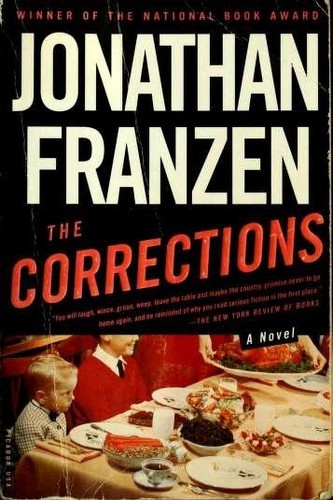
I am kicking into gear, switching my focus on the remaining books on my reading challenges. In the past week, I did slow down a bit, but I managed to tick off two books from these reading challenges. Among these books is Jonathan Franzen’s The Corrections. Interestingly, it was the first work by the American writer I acquired; I acquired it nearly a decade ago. However, it was left to gather dust on my bookshelf. My primer to the highly heralded writer’s oeuvre was Freedom, followed by his latest novel, Crossroads. While I was underwhelmed by the former, the latter did redeem Franzen’s storytelling. Because The Corrections has been sitting on my bookshelf for quite some time, I included it on my 2025 Top 25 Reading List and 2025 Beat the Backlist Challenge.
Originally published in 2001, The Corrections charts the fortunes of the Lamberts. Typical of Franzen, the Lamberts are a dysfunctional family living in St. Jude, Missouri. The patriarch, Alfred Lambert, is a retired engineer who has developed Parkinson’s and dementia. He is married to Enid, a homemaker, with whom he has three children: Gary, Chip, and Denise. In their own ways, Alfred and Enid’s children have rejected their Midwestern upbringing, moving away from their birthplace and leading lives starkly different from their roots. With their children moving away, the couple has been spending their days in each other’s company in their family home. They spent their energies mainly bickering. Weary from the growing recognition that she will spend the rest of her days looking after her husband, Enid then planned for them to go on a cruise. The cruise would then be a catalyst for the rest of the novel’s action. The couple traveled to New York City, where they were met by Chip. Flashbacks paint a vivid portrait of the family, including their children. We are provided with details of their courtship and early marriage. Alfred is painted as a distant husband and father. Yet the couple managed to survive the rigors of living in the Midwest. Chip, meanwhile, was a failed academic who was fired for having a sexual relationship with a student. Gary, on the other hand, was married to Caroline. The couple lives in Philadelphia with their three sons.
The only daughter, Denise, has also moved to Philadelphia, where she opened her own restaurant. She was having an illicit affair with Robin Passafaro, the wife of her financial backer. She was also having an affair with her boss. The crux of the story, however, was Enid’s desire to gather her children together in the family home for the Holidays. Their mother was fixated on the idea of a family reunion before Alfred’s health further deteriorated. Getting from point A to point B, however, takes navigating a path with several curves, such as the children’s reluctance to return home. The Corrections is the typical Franzen novel. The intricacies of politics, dysfunctional families, and family dynamics converge in this timeless examination of American life; the Lambert family is a microcosm of contemporary America. Overall, The Corrections is a compelling story, a vivid portrayal of the American family.

From North America, my literary journey next brought me to Nigeria, to a more familiar name and terrain. It was my effort to diversify and expand my reading base that first led me to different Nigerian writers. I have since read the works of several renowned Nigerian writers such as Chinua Achebe, Ben Okri, and Chigozie Obioma. Then there is, of course, the female writers such as Chimamanda Ngozi Adichie, Oyinkan Braithwaite, Buchi Emecheta, and Bernardine Evaristo. My foray into the works of female Nigerian writers also introduced me to names I wouldn’t have encountered otherwise. Among them is Flora Nwapa. Actually, I kept on encountering her whenever I researched prominent female African writers. She is a prominent figure, which piques my interest.
Last year, I was finally able to acquire a book by Nwapa, which I then included in my 2025 Top 25 Reading List. Originally published in 1970, the novel is set in a remote African village. It charts the fortunes of the titular Idu. Idu is married to Adiewere. The couple was devoted to each other. However, an ugly reality looms above their marriage. Despite having tried for years, they were not able to conceive a child. This childless state of their marriage earned the disapproval of their village. Motherhood, after all, is fundamental in African culture. It is considered to be more important than being a good wife. While they were trying to conceive, the couple was able to establish their business. The business flourished, but an emergency prompted the couple to forfeit their wealth. Despite their successes, the couple was unsafe from the prying glances of the villagers, who kept on pressuring them to have a child. They were even asking Adiewere to take a second wife; it was normal for Nigerian men to enter polygamous relationships. Adiewere was, however, adamant about staying in a monogamous marriage. Still, the pressure of childlessness weighed heavily on Idu, who then asked her husband to take a second wife. Adiewere, however, treated his second wife like a child rather than like a wife.
Just when they were about to lose hope, Idu fell pregnant. The news excited the villagers, who even bestowed the couple with gifts. Meanwhile, the news of Idu’s pregnancy prompted the second wife to leave. While it seemed that fate finally smiled on the couple, life has its pleasant surprises. Palpably, the novel reverberates with feminist overtones; it does remind me of Buchi Emecheta’s works. I believe it was through Emecheta that I learned about Nwapa. Through Idu, Nwapa examines the role of African women. Like in most societies, their worth is defined by their ability to produce children. Women’s inability to conceive is automatically blamed on them, notwithstanding other factors such as men’s impotence. African women are subservient to the expectations of society. And it is disheartening. On the other side, Idu is a woman of strength and resilience. Overall, Idu is a compelling read that provides deep insights into marriage, African culture, and even village life.
What will you read next?


 The Pine-Scented Chronicles