
Happy Tuesday everyone! As it is Tuesday, it is time for a Top Ten Tuesday update. Top Ten Tuesday is an original blog meme created by The Broke and the Bookish and is currently being hosted by That Artsy Reader Girl.
This week’s given topic: Books On My Winter 2025-2026 to-Read List


TTitle: The Crying of Lot 49
Author: Thomas Pynchon
Publisher: Vintage Books
Publishing Date: 2000
No. of Pages: 142
Synopsis:
Suffused with rich satire, chaotic brilliance, verbal turbulence and wild humour, The Crying of Lot 49 opens as Oedipa Maas discovers that she has been made executrix of a former lover’s estate. The performance of her duties sets her on a strange trail of detection, in which bizarre characters crowd in to help or confuse her. But gradually,, death, drugs, madness and marriage combine to leave Oedipa in isolation on the threshold of revelation, awaiting The Crying of Lot 49.
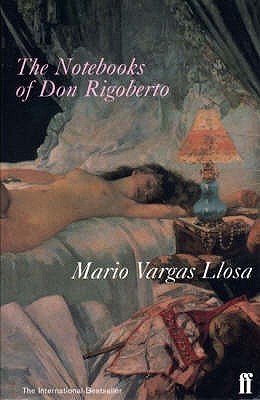
Title: The Notebooks of Don Rigoberto
Author: Mario Vargas Llosa
Translator (from Spanish): Edith Grossman
Publisher: Faber and Faber
Publishing Date: 1999 (1997)
No. of Pages: 304
Synopsis:
Don Rigoberto – by day a grey insurance executive, by night a pornographer and sexual enthusiast – misses Lucrecia, his estranged second wife. The pair separated following a sexual encounter between Lucrecia and Alfonso, Rigoberto’s son. To compensate for her absence, Rigoberto fills his notebooks with memories, fantasies and unsent letters. Meanwhile, Alfonso visits Lucrecia, determined to win her love.
In The Notebooks of Don Rigoberto, Mario Vargas Llosa keeps the reader guessing which episodes are real and which issue from Rigoberto’s imagination. The novel, a wonderful mix of reality and fantasy, is sexy, funny, disquieting, and unfailingly compelling. (Source: Goodreads)

Title: Lovesick
Author: Ángeles Mastretta
Translator (from Spanish): Margaret Sayers Peden
Publisher: Jonathan Cape
Publishing Date: 1998
No. of Pages: 292
Synopsis:
A bestseller throughout Latin America, Lovesick is the story of a passion interwoven with the history of a nation, a war, and a family. Emilia Sauri is torn between her love for her childhood playmate, Daniel Cuenca, who runs off to join the Mexican Revolution, and her desire to become a doctor. Her professional calling leads her to Antonio Zavalza, a physician whose only audacity is to desire peace in the midst of a civil war.
With an assured hand and a crystalline touch, reminiscent of the writings of Gabriel Garcia Marquez, and Isabel Allende, Ángeles Mastretta presents the vivid portrait of a woman both fragile and bold, who enters the new century shedding the bonds and the prejudices of previous generations. As Emilia must sort through the affairs of her heart, so too must she confront the fate history presents – a nation wracked by years of war and society awakening to the tumult of the twentieth century, and the place for a woman of many passions.

Title: Home is the Sailor
Author: Jorge Amado
Translator (from Portuguese): Harriet De Onis
Publisher: Collins Harvill
Publishing Date: 1990 (1961)
No. of Pages: 298
Synopsis:
The sleepy Brazilian beach resort of Periperi needs a hero. As if in answer to their call, Captain Vasco Moscosco de Aragão (newly retired) arrives and soon has the townspeople enthralled with his tales of ocean-going daring and romance. Only his rival, Chico Pacheco, delves into the captain’s past and discovers that he has never in his life sailed beyond the harbour bar. But just as Vasco is about to be unmasked, the Ita limps into port with her flag at half mast and her captain dead at the wheel. Pressed into service, Vasco goes to meet his destiny and so begins an adventure in love and seamanship that surpasses even his wildest fantasies.

Title: Where the Air is Clear
Author: Carlos Fuentes
Translator (from Spanish): Sam Hileman
Publisher: Farrar, Straus, and Giroux
Publishing Date: 1985
No. of Pages: 376
Synopsis:
My name is Ixca Cienfuegos. I was born and I live in Mexico City. Which is not so grave: in Mexico City there is never tragedy but only outrage. Thus begins Carlos Fuentes’s first novel, unfolding a panorama in which many people’s lives depend on the fact that they live in today’s Mexico City, where the air is clear and yet filled with the old gods and devils still struggling to overcome the new, where a long and bloody revolution is still being fought and paid for in flesh. The vividness of Fuentes’s characters and the country that is theirs has made critics claim this as his best novel. It is unquestionably among the finest works of literature to be produced in the Western Hemisphere.

Title: The Skating Rink
Author: Roberto Bolaño
Translator (from Spanish): Chris Andrews
Publisher: New Directions
Publishing Date: 2009 (1993)
No. of Pages: 182
Synopsis:
Rife with political corruption, sex, jealousy and frustrated passion, The Skating Rink is a darkly atmospheric chronicle of one summer season in a seaside town on the Costa Brava, north of Barcelona.
The story revolves around the beautiful figure-skating champion Nuria Marti. When she is suddenly dropped from the Olympic team, a besotted admirer builds a secret ice rink for her in the ruins of an old mansion outside of town. What he doesn’t tell her is that he paid for it using embezzled public funds, but such a betrayal is only the beginning, and the skating rink soon becomes a crime scene.
Told in short, suspenseful chapters by three alternating male narrators – a corrupt and pompous civil servant, a beleaguered yet still romantic itinerant poet, and a duplicitous local entrepreneur – The Skating Rink is a wholly engrossing tale of murder and its motives.

Title: The Mambo Kings Play Songs of Love
Author: Oscar Hijuelos
Publisher: Perennial Classics
Publishing Date: 2000
No. of Pages: 448
Synopsis:
It’s 1949. It’s the era of the mambo, and two young Cuban musicians make their way up from Havana to the grand stage of New York. The Castillo brothers, workers by day, become by night stars of the dance halls, where their orchestra plays the lush, sensuous, pulsing music that earns them the title of the Mambo Kings. This is their moment of young – a golden time that thirty years later will be remembered with nostalgia and deep affection. In The Mambo Kings Play Songs of Love, Oscar Hijuelos has created a rich and enthralling novel about passion and loss, memory and desire.

Title: Alias Grace
Author: Margaret Atwood
Publisher: Virago
Publishing Date: 1998
No. of Pages: 542
Synopsis:
Sometimes I whisper it over to myself: Murderess. Murderess. It rustles, like a taffeta skirt along the floor” Grace Marks. Female fiend? Femme fatale? Or weak and unwilling victim?
Around the true story of one of the most enigmatic and notorious women of the 1840s, Margaret Atwood has created an extraordinarily potent tale of sexuality, cruelty and mystery.

Title: The Japanese Lover
Author: Isabel Allende“
Translators (from Spanish): Nick Caistor and Amanda Hopkinson
Publisher: Atria Books
Publishing Date: November 2015
No. of Pages: 322
Synopsis:
In 1939, as Poland falls under the shadow of the Nazis and the world goes to war, young Alma Belasco’s parents send her overseas to live in safety with an aunt and uncle in their opulent mansion in San Francisco. There she encounters Ichimei Fukuda, the son of the family’s Japanese gardener, and between them a tender love blossoms. Following the Japanese attacks on Pearl Harbor, the two are cruelly pulled apart as Ichimei and his family – like thousands of other Japanese-Americans – are declared enemies and forcibly relocated to internment camps run by the United States government. Throughout their lifetimes, Alma and Ichemei reunite again and again, but theirs is a love that they are forever forced to hide from the world.
Decades later, Alma is nearing the end of her long and eventful life. Irina Bazili, a care worker struggling to come to terms with her own troubled past, meets the elderly woman and her grandson, Seth, at San Francisco’s charmingly eccentric Lark House nursing home. As Irina and Seth forge a friendship, they become intrigued by a series of mysterious gifts and letters sent to Alma, and learn about Ichimei and his extraordinary secret passion that has endured nearly seventy years.
Sweeping through time and spanning generations and continents, The Japanese Lover explores questions of identity, abandonment, redemption, and the unknowable impact of fate on our lives. Written with the same attention to historical detail and keen understanding of her characters that Isabel Allende has been known for since her landmark first novel, The House of the Spirits, The Japanese Lover is a profoundly moving tribute to the constancy of the human heart in a world of unceasing change.

Title: The Kingdom of this World
Author: Alejo Carpenter
Translator (from Spanish): Harriet de Onis
Publisher: The Noonday Press
Publishing Date: 1989
No. of Pages: 186
Synopsis:
A few after its liberation from French colonialist rule, Haiti experienced a period of unsurpassed brutality, horror, and superstition under the reign of the black King Henri-Christophe. Through the eyes of the ancient slave Ti-Noel, The Kingdom of This World records the destruction of the black regime – built on the same corruption and contempt for human life that brought down the French – in an orgy of voodoo, race, hatred, erotomania, and fantastic grandeurs of false elegance.
‘Carpentier’s writing has the power and range of a cathedral organ on the eve of the Resurrection.’ ~ The New Yorker
 The Pine-Scented Chronicles