Happy Tuesday everyone! As it is Tuesday, it is time for a Top Ten Tuesday update. Top Ten Tuesday is an original blog meme created by The Broke and the Bookish and is currently being hosted by That Artsy Reader Girl.
This week’s given topic: Books I Hope Santa Brings/Bookish Wishes

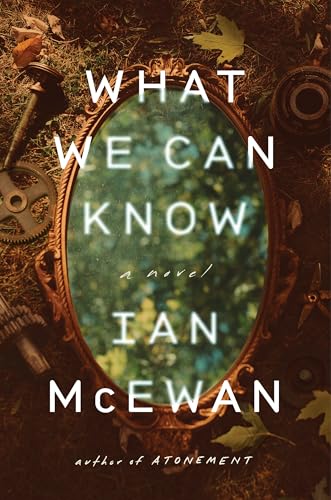
Title: What We Can Know
Author: Ian McEwan
Synopsis:
2014 : At a dinner for close friends and colleagues, renowned poet Francis Blundy honors his wife’s birthday by reading aloud a new poem dedicated to her, ‘A Corona for Vivien’. Much wine is drunk as the guests listen, and a delicious meal consumed. Little does anyone gathered around the candlelit table know that for generations to come people will speculate about the message of this poem, a copy of which has never been found, and which remains an enduring mystery. 2119 : Just over one hundred years in the future, much of the western world has been submerged by rising seas following a catastrophic nuclear accident. Those who survive are haunted by the richness of the world that has been lost. In the water-logged south of what used to be England, Thomas Metcalfe, a lonely scholar and researcher, longs for the early twenty-first century as he chases the ghost of one poem, ‘A Corona for Vivian’. How wild and full of risk their lives were, thinks Thomas, as he pores over the archives of that distant era, captivated by the freedoms and possibilities of human life at its zenith. When he stumbles across a clue that may lead to the elusive poem’s discovery, a story is revealed of entangled loves and a brutal crime that destroy his assumptions about people he thought he knew intimately well. What We Can Know is a masterpiece, a fictional tour de force, a love story about both people and the words they leave behind, a literary detective story which reclaims the present from our sense of looming catastrophe and imagines a future world where all is not quite lost. (Source: Goodreads)

Title: Necessary Fiction
Author: Eloghosa Osunde
Synopsis:
What makes a family? How is it defined and by whom? Is freedom for everyone?
In Necessary Fiction, Eloghosa Osunde poses these provocative questions and many more while exploring the paths and dreams, hopes and fears of more than two dozen characters who are staking out lives for themselves in contemporary Nigeria.
Across Lagos, one of Africa’s largest urban areas and one of the world’s most dynamic cities, Osunde’s characters seek out love for self and their chosen partners, even as they risk ruining relationships with parents, spouses, family, and friends. As the novel unfolds, a rolling cast emerges: vibrantly active, stubbornly alive, brazenly flawed. These characters grapple with desire, fear, time, death, and God, forming and breaking unexpected connections; in the process unveiling how they know each other, have loved each other, and had their hearts broken in that pursuit.
As they work to establish themselves in the city’s lively worlds of art, music, entertainment, and creative commerce, we meet their collective and individual attempts to reckon with the necessary fiction they carry for survival. (Source: Goodreads)
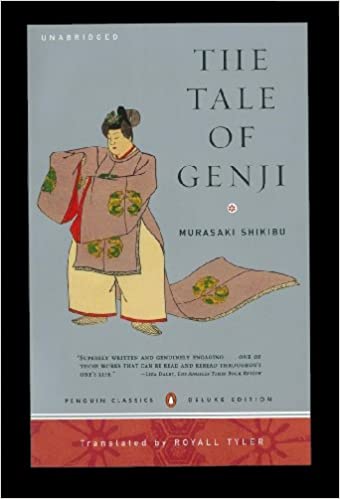
Title: The Tale of Genji
Author: Murasaki Shikibu
Translator: Royall Tyler
Synopsis:
Written in the eleventh century, this exquisite portrait of courtly life in medieval Japan is widely celebrated as the world’s first novel. Genji, the Shining Prince, is the son of an emperor. He is a passionate character whose tempestuous nature, family circumstances, love affairs, alliances, and shifting political fortunes form the core of this magnificent epic. Royall Tyler’s superior translation is detailed, poetic, and superbly true to the Japanese original while allowing the modern reader to appreciate it as a contemporary treasure. Supplemented with detailed notes, glossaries, character lists, and chronologies to help the reader navigate the multigenerational narrative, this comprehensive edition presents this ancient tale in the grand style that it deserves. (Source: Goodreads)

Title: The Loneliness of Sonia and Sunny
Author: Kiran Desai
Synopsis:
The spellbinding story of two young people whose fates will intersect and diverge across continents and years—an epic of love and family, India and America, tradition and modernity by the Booker Prize-winning author of The Inheritance of Loss
Behind every love story are the myriad stories of two families.
In the snowy mountains of Vermont, Sonia is lonely. A college student and aspiring writer homesick for India, she turns to an older artist for inspiration and intimacy, a man who will cast a dark spell on the next many years of her life. In Brooklyn, Sunny is lonely, too. A struggling journalist originally from Delhi, he is both beguiled and perplexed by his American girlfriend and the country in which he plans to find his future. As Sonia and Sunny each becomes more and more alienated, they begin to question their understanding of happiness, human connection, and where they belong.
Back in India, Sonia and Sunny’s extended families cannot fathom how anyone could be lonely in this great, bustling world. They arrange a meeting between the two—a clumsy meddling that only drives Sonia and Sunny apart before they have a chance to fall in love.
The Loneliness of Sonia and Sunny is the sweeping tale of two young people navigating the many forces that shape their country, class, race, history, and the complicated bonds that link one generation to the next. A love story, a family saga, and a rich novel of ideas, it is the most ambitious and accomplished work yet by one of our greatest novelists. (Source: Goodreads)
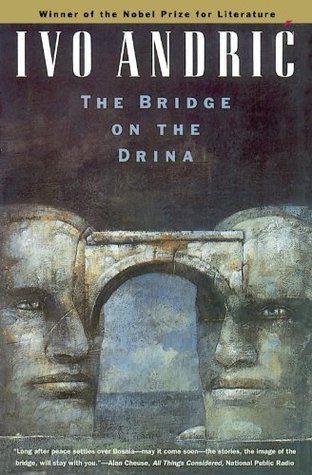
Title: The Bridge on the Drina
Author: Ivo Andrić
Synopsis:
A vivid depiction of the suffering history has imposed upon the people of Bosnia from the late sixteenth century to the beginning of World War I, The Bridge on the Drina earned Ivo Andric the Nobel Prize for Literature in 1961.
A great stone bridge built three centuries ago in the heart of the Balkans by a Grand Vezir of the Ottoman Empire dominates the setting of Andric’s stunning novel. Spanning generations, nationalities, and creeds, the bridge stands witness to the countless lives played out upon it: Radisav, the workman, who tries to hinder its construction and is impaled on its highest point; to the lovely Fata, who throws herself from its parapet to escape a loveless marriage; to Milan, the gambler, who risks everything in one last game on the bridge with the devil his opponent; to Fedun, the young soldier, who pays for a moment of spring forgetfulness with his life. War finally destroys the span, and with it the last descendant of that family to which the Grand Vezir confided the care of his pious bequest – the bridge. (Source: Goodreads)
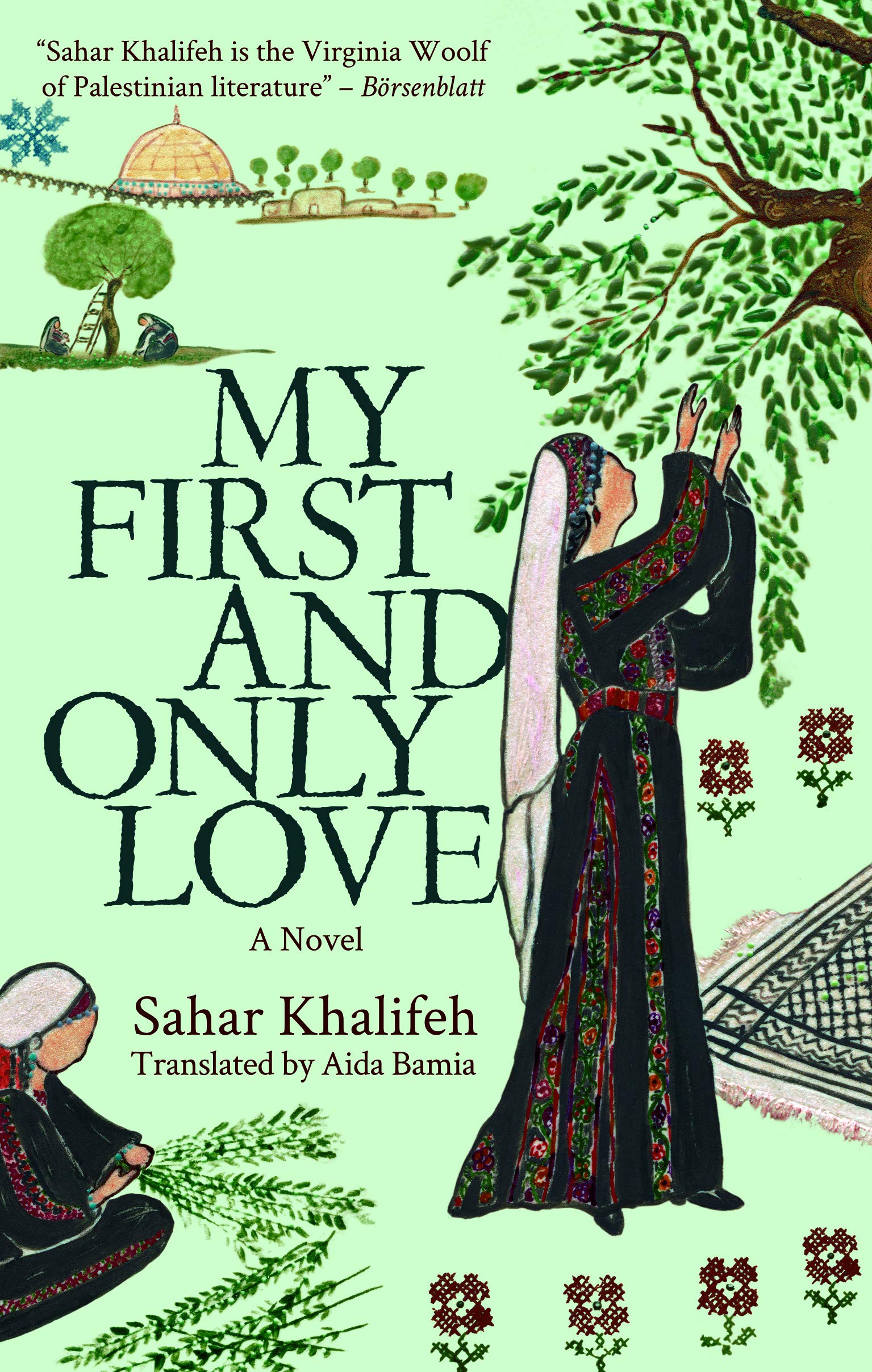
Title: My First and Only Love
Author: Sahar Khalifeh
Synopsis:
A deeply poetic account of love and resistance through a young girl’s eyes by Sahar Khalifeh.
After many decades of restless exile, Nadal returns to her family home in Nablus, where she had lived with her grandmother before the 1948 Nakba that scattered her family across the globe. She was a young girl when the popular resistance began and, through the bloodshed and bitter struggle, Nidal fell in love with Rabie, a freedom fighter. He was her first and only real love―him and all that he represented: Palestine in its youth and spring, the resistance fighters in the hills, the nation as embodied in her family home and in the land.
Years later, Nidal and Rabie meet, and he encourages her to read her uncle Amin’s memoirs. She immerses herself in the details of her family and national past and discovers that her absent mother had been nurse and lover to Palestinian leader Abdel-Qader al-Husseini.
Set in the final days of the British Mandate, Sahar Khalifeh spins an epic tale filled with emotional urgency and political immediacy. (Source: Goodreads)

Title: Three Kingodms
Author: Luo Guanzhong
Translator: Moss Robert
Synopsis:
Three Kingdoms tells the story of the fateful last reign of the Han dynasty (206 B.C.-A.D. 220), when the Chinese empire was divided into three warring kingdoms. This decisive period in Chinese history became a subject of intense and continuing interest to historians, poets, and dramatists. Writing some 1,200 years later, the Ming author Luo Guanzhong drew on this rich literary heritage to fashion a sophisticated, compelling narrative that has become the Chinese national epic. Luo’s novel offers a startling and unsparing view of how power is wielded, how diplomacy is conducted, and how wars are planned and fought; it has influenced the ways the Chinese think about power, diplomacy, and war even to this day. As important for Chinese culture as the Homeric epics have been for the West, this Ming dynasty masterpiece continues to be widely influential in China, Japan, Korea, and Vietnam, and remains a great work of world literature. The University of California Press is pleased to make the complete and unabridged translation available again. (Source: Goodreads)

Title: Fortress Besieged
Author: Qian Zhongshu
Synopsis:
The greatest Chinese novel of the twentieth century, Fortress Besieged is a classic of world literature, a masterpiece of parodic fiction that plays with Western literary traditions, philosophy, and middle-class Chinese society in the Republican era. Set on the eve of the Sino-Japanese War, our hapless hero Fang Hung-chien (á la Emma Bovary), with no particular goal in life and with a bogus degree from a fake American university in hand, returns home to Shanghai. On the French liner home, he meets two Chinese beauties, Miss Su and Miss Pao. Qian writes, “With Miss Pao it wasn’t a matter of heart or soul. She hadn’t any change of heart, since she didn’t have a heart.” In a sort of painful comedy, Fang obtains a teaching post at a newly established university where the effete pseudo-intellectuals he encounters in academia become the butt of Qian’s merciless satire. Soon Fang is trapped into a marriage of Nabokovian proportions of distress and absurdity. Recalling Fielding’s Tom Jones in its farcical litany of misadventures and Flaubert’s “style indirect libre,” Fortress Besieged is its own unique feast of delights. (Source: Goodreads)
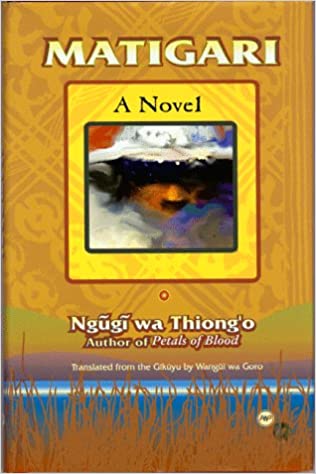
Title: Matigari
Author: Ngũgĩ wa Thiong’o
Synopsis:
Who is Matigari? Is he young or old; a man or fate; dead or living…or even a resurrection of Jesus Christ? These are the questions asked by the people of this unnamed country, when a man who has survived the war for independence emerges from the mountains and starts making strange claims and demands. Matigari is in search of his family to rebuild his home and start a new and peaceful future. But his search becomes a quest for truth and justice as he finds the people still dispossessed and the land he loves ruled by corruption, fear, and misery. Rumors spring up that a man with superhuman qualities has risen to renew the freedom struggle. The novel races toward its climax as Matigari realizes that words alone cannot defeat the enemy. He vows to use the force of arms to achieve his true liberation. Matigari is a satire on the betrayal of human ideals and on the bitter experience of post-independence African society. (Source: Goodreads)
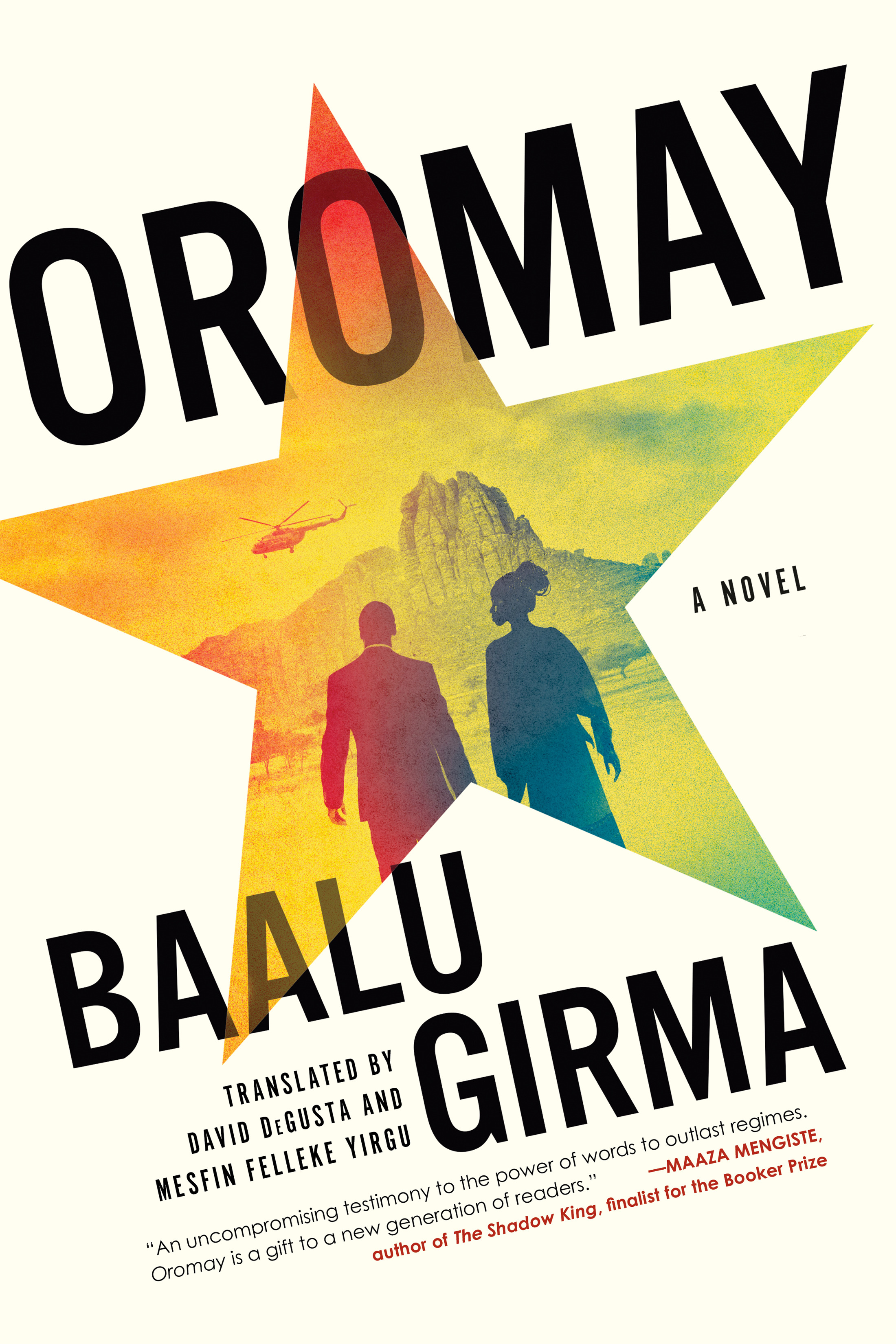
Title: Oromay
Author: Baalu Girma
Synopsis:
A journalist finds himself embroiled in a disastrous government campaign as well as a sweeping romance in this landmark English translation of Ethiopia’s most famous novel.
An engrossing political thriller and a tale of love and war for readers of John Le Carré and Philip Kerr.
December 1981, Ethiopia. Tsegaye Hailemaryam, a well-known journalist for the state-run media, has just landed in Asmara. He is on assignment as the head of propaganda for the Red Star campaign, a massive effort by the Ethiopian government to end the Eritrean insurgency. There, amid the city’s bars and coffeehouses buzzing with spies and government agents, he juggles the demands of his superiors while trying to reassure his fiancée back home that he’s not straying with Asmara’s famed beauties.
As Tsegaye falls in love with Asmara—and, in spite of his promises, with dazzling, enigmatic local woman Fiammetta—his misgivings about the campaign grow. Tsegaye confronts the horror of war when he is sent with an elite army unit to attack the insurgents’ mountain stronghold. In the aftermath, he encounters betrayals that shake his faith in both the regime and human nature.
Oromay became an instant sensation when first published in 1983 and was swiftly banned for its frank depiction of the regime. The author vanished soon thereafter; the consensus is that he was murdered in retaliation for Oromay. A sweeping and timeless story about power and betrayal in love and war, the novel remains Girma’s masterpiece. (Source: Goodreads)
 The Pine-Scented Chronicles