And that is a wrap! 2025 is in the books. Thank you, 2025, for all the memories and the lessons you’ve taught me. We’ve successfully completed a 365-day revolution around the sun. But as the old adage goes, with every end comes a new beginning. 2025’s conclusion comes with the opening of a new door. We are provided with 12 new chapters, each accompanied by 365 blank canvases, upon which to paint new memories. I hope that we will paint these pages with memories that we will cherish for a lifetime, may it be with the people we love or all by ourselves.
As has been the tradition in the past few years, I will be kicking off the new year by looking back to the previous year, its hits, and of course, its mishits. It is also an opportunity to take a glimpse of how the coming year is going to shape up. This book wrap-up is a part of a mini-series that will feature the following:
- 2025 Top 20 Favorite Books
- 2025 Book Wrap Up
- 2025 Reading Journey by the Numbers
- 2025 Most Memorable Book Quotes (Part I)
- 2025 Most Memorable Book Quotes (Part II)
- 2025 New Favorite Authors
- 2025 Beat the Backlist Challenge Wrap-up
- 2026 Books I Look Forward To List
- 2026 Top 26 Reading List
- 2026 Beat the Backlist Challenge
Who would have thought that after dreaming for years to be able to complete at least 100 books in a year, I would finally pull it off, not only once, but four times, consecutively? It still feels surreal. After 2022 – the first year I managed to cross the three-digit mark – I thought I would never be able to replicate the feat. Lo and behold, I would better myself a year later when I completed 130 books. In 2025, I finished the year with 119 books, lower than my 2023 and 2024 tallies, but it is still a good number. Never in my imagination did I think that I would ever achieve this goal. But I did, driven by my insatiable appetite to explore worlds beyond. I hope I get to sustain or build on this momentum in the coming years.
Of the 119 books I read in 2025, several stood out. The sheer volume of books I read last year made it a challenge to pick out which ones to feature in this 2025 reading wrap-up. Normally, I would feature ten books. However, 2025 is a deviation, hence I will also deviate from my tradition. Instead of ten, I am sharing the twenty books – I also shared twenty for 2024 – that were so stellar that they stood out for me in 2025. Without ado, here are my twenty favorite reads of 2025.
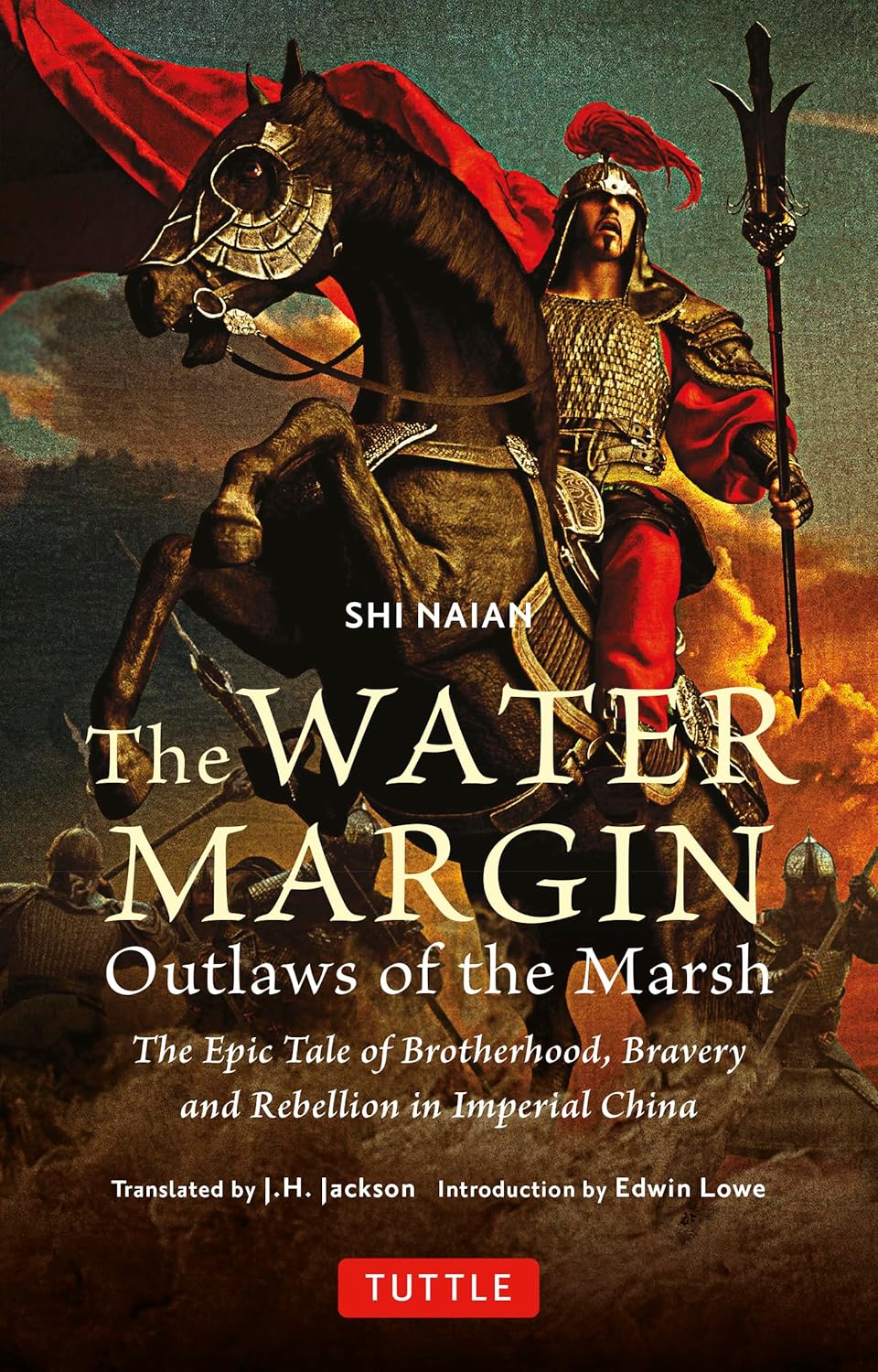
Title: The Water Margin: Outlaws of the Marsh
Author: Shi Naian
Kicking off this list is one of the Four (or Six) Classics of Chinese Literature. My venture into East Asian literature has certainly taken me places I would not have been in otherwise. Well, it is my goal to finish all of the Classics of Chinese literature, especially as it is a part of the literary world I have rarely ventured into. Originally titled 水滸傳 (Shuihu Zhuan), The Water Margin – or in some versions Outlaws of the Marsh or All Men Are Brothers – is one of the earliest novels originally written in vernacular Mandarin. Admittedly, I had very little inkling of what the book was about; I am thankful for the introduction that provided me with an overview. At the heart of the story were 108 outlaws-cum-demons released by Marshal Hong Xin during a visit to a Taoist monastery to seek a cure for a plague that afflicted Kaifeng, the Eastern Capital of the Song Dynasty. Slowly, the novel painted a vivid portrait of a dynasty in decline, where cities were governed by abusive and corrupt prefects supported by equally corrupt generals. The vast cast of characters can be daunting, but the novel focuses on a limited cast whose lives were altered by the corruption, both moral, social, and political, that pervaded Chinese society. They then converged in the fictional Liangshan Marsh (梁山泊) area, where they established their stronghold. Eventful, the novel guides readers across the landscape of Song Dynasty China. Rebellion and general discontent were ubiquitous. The outlaws-cum-demons are then either heretics or heroes who could cause the collapse of institutions or usher in change. Overall, The Water Margin, despite some sloppy translations and graphic details of violence, was a memorable read.

Title: The Heike Story
Author: Eiji Yoshikawa
From one work of historical fiction to another. Another standout during my venture into East Asian literature is Eiji Yoshikawa’s The Heike Story: A Modern Translation of the Classic Tale of Love and War, a book I was not originally planning to read this year. However, when I realized that I was about to read my 1,300th novel, I reconsidered the idea of reading it. At the heart of The Heike Story is the titular Heike clan, a warrior clan that thrived in twelfth-century Kyōtō, back then Japan’s Imperial capital. This was a tumultuous period in Japanese history, when emperor after emperor was abdicating or being deposed – or plotting the overthrow of their successors – pushing Japanese society to the brink of pandemonium. Two houses emerge as the loci of power and influence: the Imperial Palace and the Cloistered Palace, which housed the abdicated Emperors. The latter was emerging as the de facto source of power. The courtiers were also seizing the opportunity to obtain power. Suffering the consequences of these actions are the warrior clans. The head of the Heike clan was Heita Kiyomori, whose provenance was a source of intrigue. Nevertheless, he rebuilt the lost glory of his clan, starting as a lowly warrior, before climbing up the ranks. Not only is he a fierce warrior, but he is also a wise leader. The Heike Story is very eventful, with layers of romance, betrayal, forgiveness, and violence permeating it. Apparently, the novel is the modern prose rendering of a classic Japanese epic. The details of warrior and clan life, juxtaposed with the lack of political will of the emperors, provide glimpses of the Japan of old. It is an epic and compelling historical account.

Title: Alias Grace
Author: Margaret Atwood
One of the books I listed in my 2025 Top 25 Reading List was Margaret Atwood’s Alias Grace. Interestingly, it is the last book from the said list I read. Regardless, this underscores how the Canadian writer has, over the past few years, become one of my favorites. Almost a decade since my first Atwood novel, I have read my sixth Atwood novel. As always, the story centers on a woman, with Atwood borrowing inspiration from a real-life person, Grace Marks, a poor Irish immigrant and servant in Canada. When the story commenced in 1859, Grace was serving a life sentence. In 1843, she was convicted of the brutal murders of her employer, Thomas Kinnear, and his housekeeper, Nancy Montgomery. Still, mysteries abound the murders, prompting a group of gentlemen and ladies from the Methodist church to advocate for Grace’s pardon. Unfortunately, their efforts have been futile, prompting them to enlist Dr. Simon Jordan, a psychiatrist, to assist in proving Grace’s innocence. Grace claims she cannot remember the events of the day of the murders and exhibits symptoms of hysteria. To understand the circumstances surrounding the case, Atwood transports readers into Grace’s past. Grace’s narrative alternates with Dr. Jordan’s notes, written in the third-person point of view. This dual perspective allows the readers to appreciate the story from different angles. Alias Grace surprised me with its interesting conclusion. I am in awe of how Atwood weaves the tale. Throughout the novel, she probes familiar themes of female sexuality, memory, and gender dynamics, while also exploring power, class, justice, and, of course, the intricacies of storytelling itself.

Title: The Secret of Secrets
Author: Dan Brown
Dan Brown is certainly one of the most controversial writers. He delves into themes that offend many quarters of society, including the Catholic Church. This adds a layer of interest to his oeuvre. In 2025, he made a literary comeback for the first time in nearly eight years. I was surprised at the news of the release of The Secret of Secrets, a book I hoped would redeem Brown for me. The sixth Robert Langdon novel, The Secret of Secrets transports readers to Prague, the capital of the Czech Republic. The novel opens with a mysterious figure, caked in mud and known as the Golem, torturing Dr. Brigita Gessner, a renowned neurologist, in her underground laboratory. The neurologist’s murder and confession then sets into motion a pulsating adventure across the city. The story started with Professor Langdon’s girlfriend, Katherine Solomon’s, lecture on her new book about noetic science. Afterward, Solomon had a nightmare of a woman wearing a spiked crown, warning of a bomb explosion. The following morning, the panicked Langdon pulled the alarm. It was initially a false alarm, but Langdon soon learned that police had defused a bomb at the hotel earlier that morning. When Langdon mentioned Katherine’s dream to Captain Oldřich Janáček, he and Solomon were soon accused of staging the bombing. But time ticks, and Langdon had to locate Solomon and solve the mysteries related to Gessner’s death. The Secret of Secrets explores complex subjects, with neuroscience and the potential of the human brain lying at its core. Brown also offers pointed commentary on the dangers of technology and our growing dependence on artificial intelligence and social media.

Title: Marshland
Author: Otohiko Kaga
Despite having no iota of what the book was about, I listed Otohiko Kaga’s Marshland on my 2025 Top 25 Reading List. It was during a random foray into the bookstore that I came across the book. The book immediately piqued my interest, hence its inclusion in the said list. Originally published in 1985, the novel is set in 1960s Japan. At the heart of the novel is Atsuo Yukimori, a former soldier and convict now working as an auto mechanic. Despite his troubled past, he found peace living alone in Tokyo. This harmony was disrupted by his acquaintance with Wakako Ikéhata, a university student he met while taking classes at the local skating rink. Wakako, beautiful and brilliant, was the daughter of a university professor. As Atsuo travels between Tokyo and Nemuro, his hometown, memories permeate the story. The crux of the story, however, was the social upheaval sweeping Japan in the late 1960s. This led to the rise of activism. Despite her mental frailties, Wakako got herself involved in one of these student protests, along with some members of the Q-Sect, a radical student organization. When a Shinkansen bombing incident on February 11, 1969, resulted in casualties, authorities were quick to accuse Atsuo. With an outraged nation, it was imperative to name a culprit, any culprit, immediately. Unfortunately, Atsuo, with his criminal record, fits the bill perfectly. Wakako and several members of the Q Sect were also indicted on the charges. Atsuo was sentenced to death. Marshland is an intricate and absorbing police procedural. It exposes the corruption that permeates major institutions in the Japanese political structure. Overall, Marshland was a rewarding read that kept me on the edge of my seat.

Title: Radiance and Sunrise (Banaag at Sikat)
Author: Lope K. Santos
Over the past few years, I have been consciously integrating works of Philippine literature into my reading journeys. It has paid off, as I was able to read some of the classics of Philippine literature, the most recent of which was Lope K. Santos’s Radiance and Sunrise, which I first encountered in high school history classes under the title Banaag at Sikat. Originally published in Tagalog in 1906, the novel is widely considered the first Asian proletarian novel. Banaag at Sikat charts the fortunes of friends Delfin and Felipe, who were the antithesis of each other. Born to a rich family of landowners, Felipe is an anarchist who opposes wealthy landowners. This made him loathe his father, a local leader in fictional Silangan, whom he left behind to move to Manila and live with his ninong, Don Ramon. Meanwhile, his friend Delfin was born into a poor family. Delfin was working for a newspaper and was studying law. He advocated for socialist reforms, fervently believing in the importance of education in freeing a nation from the shackles of poverty and ignorance. Felipe, on the other hand, believes that change will be ushered in by the breaking down of social barriers. While their views are polar opposites, both challenge the Philippine norms and standards of the period. Sharp social and political commentaries captured the condition of the country, including the maladies that hold it back. Despite the setting, the passage of time reveals that these social and political maladies persist in the present-day Philippines. Adding nuance and texture to the story are the characters’ romantic attachment, particularly that of Delfin and Meni, the daughter of a capitalist. Overall, Banaag at Sikat is an intriguing but lush story that examines the Philippine condition.

Title: Foucault’s Pendulum
Author: Umberto Eco
Italian writer Umberto Eco has certainly won me over with his debut novel, The Name of the Rose; this is despite a less-than-favorable experience with Baudolino. In 2025, I listed his sophomore novel, Foucault’s Pendulum, as part of my 2025 Top 25 Reading List. It is my fifth novel by the renowned semiotician. Originally published in 1988 as Il pendolo di Foucault, Foucault’s Pendulum commences with Casaubon, the narrator, hiding in Paris’ Musée des Arts et Métiers after it closed; the museum is home to the famous pendulum of Léon Foucault. His friend, Jacopo Belbo, the senior editor at a publishing house in Milan, Italy, has gone missing. Casaubon believes Belbo was kidnapped by a shadowy group of occultists. As the pendulum swings, the novel flashes back to 1970s Italy when Casaubon was working on his thesis about the Knights Templar. His study made him encounter Belbo and his colleague Diotallevi; Belbo invited him to review a manuscript about the Templars written by Colonel Ardenti. However, Colonel Ardenti mysteriously disappeared after meeting with Belbo and Casaubon. The trio then found themselves immersed in occult manuscripts and conspiracy theories, essentially the novel’s heart and soul. Foucault’s Pendulum takes the readers on a literary roller coaster. With its several layers and confounding turns, the novel explores the dangers of conspiracy theories and humanity’s compulsion to keep finding connections and meanings where none exist. We have this need to rationalize everything. Riddled with symbols and images — hallmarks of Eco’s oeuvre — that tickle the imagination, Eco weaves a lush tapestry. While Foucault’s Pendulum is no easy read, it is a worthwhile one.

Title: We Do Not Part
Author: Han Kang
Interestingly, I was not a fan of Han Kang’s The Vegetarian. My subsequent immersion into Korean culture made me understand the novel and even appreciate it. In 2024, Kang was announced as the awardee of the Nobel Prize in Literature, the first female Asian writer to earn the highest distinction. With this recognition came the news of one of her older works being translated into English. I made sure I got to read We Do Not Part. The novel was originally published in 2021 and is narrated by Kyungha, a woman living alone in Seoul. On the brink of depression, Kyungha’s torpor was disrupted by a call from her friend Inseon, who was recuperating in a hospital following a work accident. Because of her injury, Inseon asked her friend to travel to Jeju and feed her pet bird, Ama. Upon Kyungha’s arrival in Jeju, the island was carpeted in snow as a snowstorm swept through it. Nevertheless, she was able to make her way to her friend’s house, where Kyungha learned about her friend’s family’s troubled history. Inseon’s family history is intertwined with the island’s tragic contemporary history, particularly the Jeju Massacre. Starting in 1948, state-sponsored killings rocked the island to purge it of communists. It was estimated that at least 30,000 people, including 1,500 children, were killed by authorities and by extreme-right militant groups. Kang’s latest novel reminds me of two of Kang’s previous works: Human Acts in its exploration of Korea’s ruptured history and White Book in the novel’s pensive tone. While it is not as intense as Human Acts, the novel is a compelling read about the frailties of humanity. The novel further underlines Han’s status as a premier chronicler of ruptured histories.
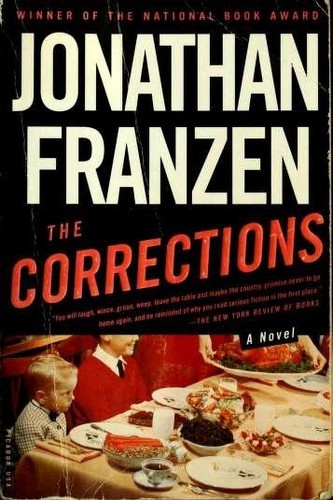
Title: The Corrections
Author: Jonathan Franzen
If my memory serves me right, I acquired a copy of Jonathan Franzen’s The Corrections even before I started writing book reviews in 2017. Unfortunately, the book was left to gather dust on my bookshelf, a fate it shares with several of my books. This prompted me to include it on my 2025 Beat the Backlist Challenge and 2025 Top 25 Reading List. Originally published in 2001, The Corrections charts the fortunes of the Lamberts, a dysfunctional family living in St. Jude, Missouri. The patriarch, Alfred Lambert, is a retired engineer suffering from Parkinson’s and dementia. His wife, Enid, is a homemaker. Their three children – Gary, Chip, and Denise – have rejected their Midwestern upbringing, moving away from their birthplace and leading lives starkly different from their roots. Through flashbacks, Franzen paints a vivid portrait of the family. Alfred is a distant husband and father. Yet the couple managed to survive the rigors of living in the Midwest. Chip, meanwhile, was a failed academic living in New York City. Gary was married to Caroline and is living in Philadelphia with their three sons. Denise has also moved to Philadelphia, where she opened her own restaurant. The crux of the story was Enid’s desire to gather the family together for the Holidays before Alfred’s health further declines. However, it is easier said than done. The typical Franzen novel, The Corrections examines the intricacies of politics, dysfunctional families, and family dynamics. These subjects converge in this timeless examination of American life; the Lambert family is a microcosm of contemporary America. The Corrections is a compelling story from Franzen, a vivid portrayal of the modern American family.
Title: In the Time of the Butterflies
Author: Julia Alvarez
For the longest time, Dominican writer Julia Alvarez piqued my interest. Her works were regular presences in must-read lists, particularly In the Time of the Butterflies. While I have been wanting to read the book for the longest time, it took a while before I was able to acquire a copy of it. Once I was able to do so, I included it on my 2025 Top 25 Reading List. At the heart of the novel are the Mirabal sisters: Patria, Adela “Dedé,” Minerva, and María Teresa. Born to landowners Enrique Mirabal Fernández and Mercedes Reyes Camilo, the sisters were born and raised during one of the most precarious periods in Dominican history. Rafael Leónidas Trujillo had been in power since August 1930. At Inmaculada Concepción, the sisters had their political awakening; ironically, Trujillo had demonized schools, which he believed bred radical ideologies. Trujillo notoriously preyed on young women, censored the media, and suppressed insurgent groups. State-sponsored violence carried out by the SIM — the military intelligence unit — was widespread. Despite the threats, the sisters became increasingly involved in anti-dictatorship activities. Within the Revolutionary Movement, they were known as Las Mariposas (The Butterflies). Despite state forces encroaching, the sisters were steadfast in their resistance. Violence eventually silenced them, but their voices echoed across the world. The day of their assassination, November 25, is now commemorated globally as the International Day for the Elimination of Violence against Women. Overall, In the Time of the Butterflies is a compelling read — a testament to the indomitable strength of women and a sobering exploration of the evils of dictatorship.

Title: Life and Fate
Author: Vasily Grossman
It was through an online bookseller that I first came across Vasily Grossman and his novel Life and Fate. I was surprised to learn that he was Russian—I had assumed he was German. Nevertheless, Life and Fate is one of the books on my 2025 Top 25 Reading List. Originally published in 1980 as Жизнь и судьба (Zhizn’ i sud’ba), Life and Fate takes readers across the vast landscape of the Battle of Stalingrad during the Second World War. As the German army’s offensive advances across the Soviet border, the Soviet Union’s defenses are pushed to their limits. Witness to the chaos was the Shaposhnikov family. In Stalingrad, we meet Yevgenia (Zhenya) Nikolaevna Shaposhnikova, a dedicated Communist Party member who reconnected with her lover, Colonel Pyotr Pavlovich Novikov. Meanwhile, Zhenya’s older sister, Lyudmila (Lyuda) Nikolaevna Shaposhnikova, is married to Viktor Pavlovich Shtrum, a renowned nuclear physicist. As the German army approached Kazan, the Shtrum family was forced to relocate to Moscow. Much of Viktor’s storyline centers on his scientific work. Despite making a significant mathematical breakthrough, he faced harsh criticism from Party authorities. This underscored the oppressive political climate that often stifled intellectual and scientific progress. Beyond the family, the novel vividly captured the brutal realities of life on the battlefield. Politics is also a prevalent theme. Often compared to Leo Tolstoy’s War and Peace, Life and Fate is widely regarded as the literary classic’s 20th-century counterpart. With its expansive scope, immersive historical detail, and complex interweaving narratives, Life and Fate is a challenging but ultimately rewarding read.

Title: The Idiot
Author: Fyodor Dostoyevsky
Like Japanese literature, Russian literature has become one of my favorite literary quarters. One of the reasons for this is Fyodor Dostoyevsky (also spelled Dostoevsky). I began exploring his oeuvre with The Brothers Karamazov, which I read back in 2016. Nearly a decade later, I’ve now completed my fifth Dostoyevsky novel, The Idiot. Originally published serially in The Russian Messenger between 1868 and 1869, The Idiot is considered one of Dostoyevsky’s four most defining works. The titular “idiot” is Prince Lev Nikolayevich Myshkin, a man in his mid-twenties. After spending four years in a Swiss asylum for severe epilepsy, the Prince travels to St. Petersburg on a cold November morning. His first stop is the household of General Yepanchin, who was married to Lizaveta Prokofyevna Yepanchin, the Prince’s distant relative. During his journey, the Prince meets Parfyon Semyonovich Rogozhin, whose devotion to Nastasya Filippovna Barashkova captures the Prince’s interest. At the General’s household, the Prince meets Gavril Ardalyonovich Ivolgin (Ganya), the general’s assistant, who is betrothed to Nastasya. Interestingly, Nastasya is the former mistress of the aristocrat Afanásy Ivánovich Tótsky, while Ganya yearns for Aglaya, the General’s youngest daughter. The Prince would also find himself drawn to Nastasya, creating a love triangle with Rogozhin. This entanglement adds dramatic tension, but the novel’s focus is still the Prince, who stands out due to his naivete and honesty. The Prince was the depiction of a truly beautiful and innocent soul in a world steeped in materialism, cynicism, and spiritual emptiness. The Idiot is yet another thought-provoking work from one of the true masters of Russian literature.
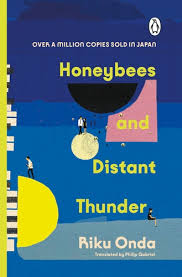
Title: Honeybees and Distant Thunder
Author: Riku Onda
My journey across East Asian literature introduced me to unfamiliar names. Recently, a remarkable number of Japanese literary works have been made available to Anglophone readers. Among them is Riku Onda’s Honeybees and Distant Thunder, which I first encountered through an online bookseller. With my foray into East Asian literature, I included the book on my 2025 Top 25 Reading List. Originally published in 2016 as 蜜蜂と遠雷 (Mitsubachi to enrai), Honeybees and Distant Thunder is centered around the Yoshigae International Piano Competition, a fictional contest set in a rural seaside town. Due to its prestige, the competition attracted some of the world’s young piano enthusiasts, from prodigies to veteran musicians. The story, however, focuses on the stories of four characters: sixteen-year-old Jin Kazama, a relatively unknown prodigy born to a beekeeper; Aya Eiden, a former child prodigy who took a break after getting burned out; Masaru Carlos Levi Anatole, a renowned pianist dubbed as The Prince of Juilliard; and Akashi Takashima who, in his twenties, is among the older entrants but his dream of breaking through has not dimmed. Onda takes the readers through each round of competition. With competitors eliminated, tension and drama converge. Despite the steep competition, the competitors built rapport and authentic connections. Light and tender moments allowed new relationships to blossom. Honeybees and Distant Thunder is a poignant story about friendship and rivalry amidst the pursuit of artistic excellence. It is also about the riveting beauty of music, a substitute for language and a means to capture the beauty that words cannot seem to describe.

Title: My Name is Red
Author: Orhan Pamuk
My reading horizon, in the past few years, has grown leaps and bounds. One major factor is the Nobel Prize, which introduced me to writers whose oeuvres I would not normally explore. Among them is Turkish writer Orhan Pamuk. From my first Pamuk novel, Snow, I have now read six of his works, the latest being My Name is Red, which is also a part of my 2025 Top 25 Reading List. Originally published in 1998 as Benim Adım Kırmızı, My Name is Red was among Pamuk’s works cited by the Swedish Academy when they awarded him the Nobel Prize in Literature in 2006. The winner of the International Dublin Literary Award, the novel is set in late sixteenth-century Constantinople and commences with the voice of a recently departed man, Elegant Effendi, an illuminator working for a workshop of miniaturists in Murad III’s Ottoman Empire. The ghost of Elegant speculated about the reasons for his murder, but never mentioned the perpetrator. From a dead body, the narrative voice was taken over by objects and even paintings. However, two characters loom above the story: Black, who returned to Istanbul shortly after Elegant’s murder, and his lover, Shekure, the daughter of his uncle Enishte. Black has been banished to the outskirts of the Empire, where he stayed for over a decade. While the rekindling of their romance seems like a deflection, the story still corresponds to the mystery surrounding Elegant’s death; Black was commissioned to get to the bottom of it. As Black solves the case, the real story unfolds. Growing Western influences have made Ottoman artists fear the disintegration of their art. These changes were also reflected in the transformation of the city. Death, art, and life converge in My Name is Red, a textured and multilayered tale from a master storyteller.
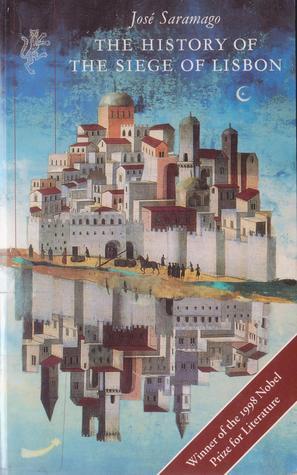
Title: The History of the Siege of Lisbon
Author: José Saramago
As I have mentioned, the Nobel Prize in Literature introduced me to names I would have ignored. Another name it introduced me to is Portuguese writer José Saramago. In 2019, I read my first Saramago novel. In six years, I was able to expand my venture into his oeuvre, with The History of the Siege of Lisbon, his fifth novel that I read. Originally published in 1989 as História do Cerco de Lisboa, the novel weaves together two plotlines set in different periods. The heart of the story is fifty-year-old Raimundo Silva, an unmarried proofreader working primarily for a small publishing house. He is regarded as an expert on the titular Siege of Lisbon, a historical siege that began on July 1 and ended on October 25, 1147, when Lisbon was seized from the Almoravid Muslims by the Second Crusade. It was a pivotal period in transforming Portugal from a vassal state into an independent Christian kingdom. Silva, assigned to edit a manuscript entitled The History of the Siege of Lisbon, deliberately alters the text by inserting a single word, “not,” that alters the text, suggesting that the Crusaders did not assist the Portuguese during the siege. Saramago’s reimagined version of the siege runs parallel to Silva’s story. The novel finds its significance in its exploration of alternate histories; alternate versions of history have become increasingly relevant in today’s discourse. Since history is often written by the victors, the objectivity of historical documentation is often questioned. The novel then challenges our understanding of history while offering intriguing insight into the world of proofreading. The History of the Siege of Lisbon reveals a different dimension of Saramago’s literary range.

Title: Playground
Author: Richard Powers
Honestly, I used to be apprehensive about reading Richard Powers’ works, especially when I encountered The Overstory. However, I succumbed to the temptation of exploring a new world. Lo and behold, he has become one of my favorite writers, particularly in his exploration of nontraditional subjects and themes. In 2024, he made a literary comeback with Playground, which was the first book I read in 2025. Longlisted for the 2024 Booker Prize, Playground charts the fortunes of four characters who came from diverse backgrounds. Their contrasting personalities added nuance to the story. Rafi Young and Todd Keane developed an unlikely friendship. They were both smart but were born on opposite ends of the social ladder: Rafi’s family was poor, while Todd’s family was affluent. When Rafi was awarded a scholarship sponsored by Todd’s father, their paths crossed. Over games of chess, their friendship flourished. However, their paths soon diverged when they entered university. While Rafi pursued literature, Todd pursued computer science. The third of the quartet was Tahitian woman Ina Aroita, whom Rafi fell in love with. Meanwhile, Evelyne Beaulieu is a French Canadian oceanologist. The quartet’s paths converged on the Pacific island of Makatea. The locals have gathered around to hold a referendum on whether to allow the building of floating cities in their vicinity. Playground is an ambitious novel, with a plot twist toward the end that ties all of the different threads together. The story was innovative and altogether riveting, with Powers once again examining the follies of technology. Powers consolidated his stranglehold as a masterful chronicler of contemporary conditions.

Title: My Name is Adam
Author: Elias Khoury
Admittedly, my foray into Middle Eastern and Arab literature is quite sparse. Thankfully, online booksellers introduced me to some of the renowned writers of the region, including Elias Khoury. He is the first Lebanese writer whose oeuvre I have explored. My Name is Adam immediately piqued my interest when I came across it. I even made it part of my ongoing reading journey and I am glad I did. Originally published in 2016 as أولاد الغيتو- اسمي آدم, My Name is Adam introduces Adam Dannoun, a melancholic self-exiled man working in a Middle Eastern restaurant in New York City. Through Sarang Lee, one of Khoury’s students, he was introduced to the writer; this is how the novel was framed, with Khoury being part of the story. Their friendship was cut short when a film based on Khoury’s book Gate of the Sun was shown. The next time Khoury heard of Adam, he had passed away from an accidental fire. However, some of Adam’s notebooks survived the fire, and Sarang gave these notebooks to her mentor, who decided to publish them. Essentially, the notebooks contain Adam’s notes for two books he planned to write: one is a novel, and the other is an autobiography. Both books provide glimpses into Adam’s family history and the history of the Palestinian cause, starting with the Nakba. The novel reminded me how I know very little about the Nakba. Palestinians were abused, forcibly removed from their homeland, placed in ghettos, and even tortured. These details are the reasons why I appreciate this book, as heartbreaking as it can be at times. The recent events in Palestine make the book a timely and relevant read. My Name is Adam, the first volume in Children of the Ghetto, makes me look forward to the rest of the series.
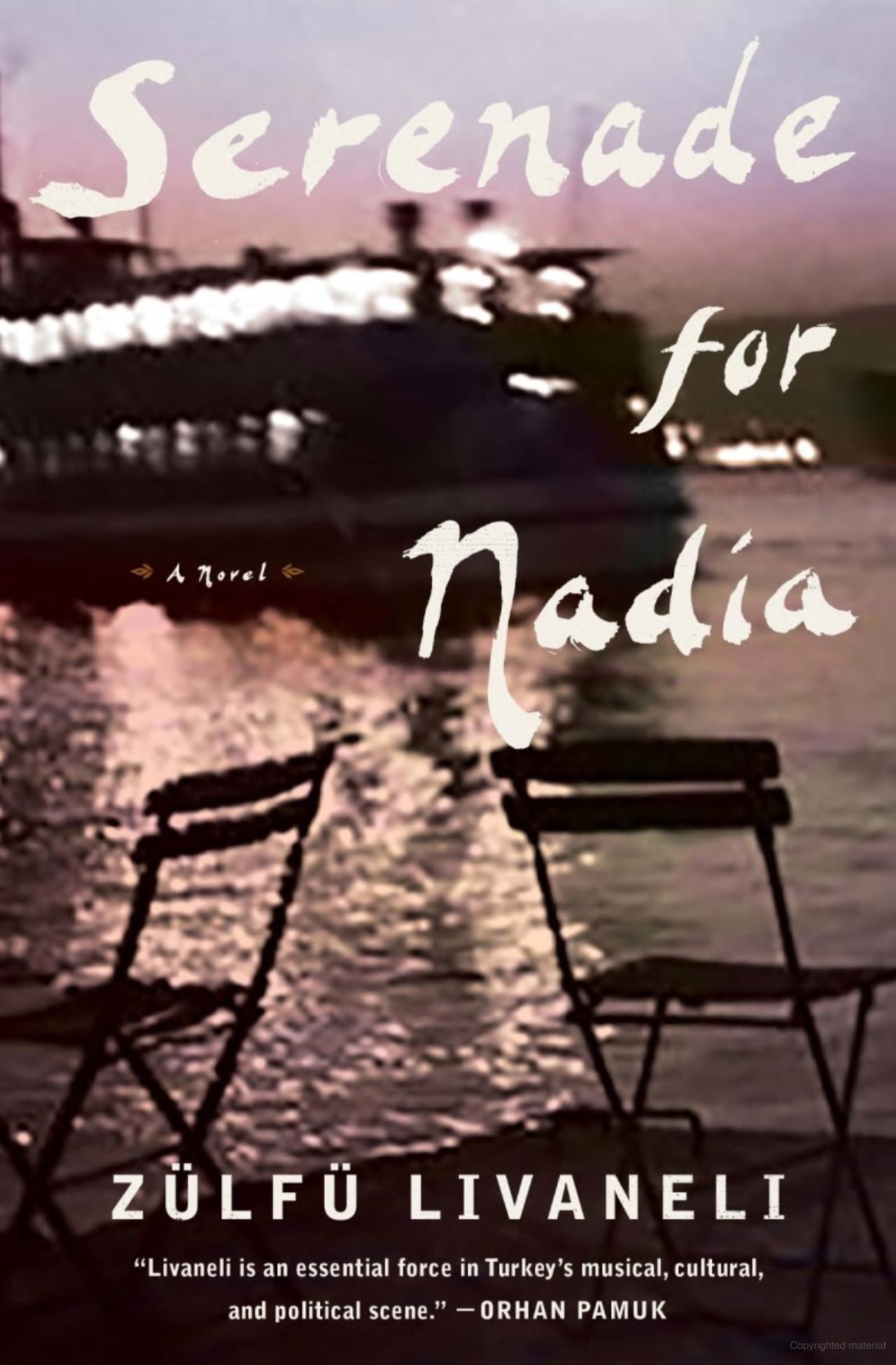
Title: Serenade for Nadia
Author: Zülfü Livaneli
My 2025 reading journey is, so far, my most prolific Turkish literature reading year. I was allowed to venture beyond the works of Turkish literary mainstays Orhan Pamuk and Elif Shafak. I got to encounter Zülfü Livaneli through an online bookseller. Not only is he an accomplished writer, but he is also a film director and a politician. However, he is more renowned for his literary works, most prominently Serenade for Nadia. Originally published in 2011 in Turkish as Serenad, the novel commences in 2001 Istanbul. The novel’s narrator, Maya Duran, is an assistant at Istanbul University. Divorced from her husband, Ahmet, she was raising her troubled teenage son. The crux of the story was when she was asked to look after a visiting Harvard Professor, Maximilian Wagner. It was a homecoming for the professor; something deeper connects him with the city. The answer lies in the past. This takes the readers to Hitler’s Germany. Wagner was married to the titular Nadia, who was a Jew. Cognizant of the atrocities of the regime, Nadia boarded the Struma, an old boat retooled to be a ship to ferry escaping Jews. Yes, the Struma is an actual ship, and the tragedy that befell it is an infamous one, although it was only through the novel that I first heard of it. Their story is captured in a book nestled within the book. Meanwhile, Maya learns to navigate a world that has, historically, prejudices toward her sex. Both threads are compelling, but the historical context is the heart of the novel. With the fusion of history, music, and romance, Serenade for Nadia is a memorable and thought-provoking read that provides me with glimpses into a part of history I had not heard of before.

Title: A Heart So White
Author: Javier Marías
Another writer who was introduced to me by must-read lists is the Spanish writer Javier Marías. While some of his works are featured in such lists, A Heart So White has long held my interest after it was recommended to me by a fellow book reader. However, it took time before I acquired a copy of the book. Once I did, I made it part of my 2025 Top 25 Reading List. Originally published in 1992 as Corazón tan blanco, A Heart So White is narrated by an initially anonymous voice; he was eventually revealed as Juan. Juan works as a translator for various international organizations, and through one of his engagements, he met Luisa, his wife. When Juan was away for work, Luisa formed connections with people from his life, particularly Ranz, Juan’s father, and Custardoy, the son of Ranz’s best friend. While he is an aging art dealer, Ranz’s charm remains magnetic. Through his wife, Juan begins to uncover details about his father’s complex marital history; Juan was not fond of his father. Interestingly, the novel opens with Juan recounting the dramatic death of Ranz’s second wife, Teresa, and the older sister of Juan’s mother, Juana. Ranz’s first marriage had been concealed from Juan since childhood. However, the past was a catalyst for Juan to confront the realities of his own marital life. He is plagued with doubts, particularly about the lack of passion between him and Luisa. Making the novel more intimate was Marías’s stream-of-consciousness, which allowed thoughts and ideas to flow into one another, sometimes blending together. This can be disorienting, but it also allows the novel to explore deep philosophical questions. A Heart So White is a complex yet compelling and thought-provoking read.
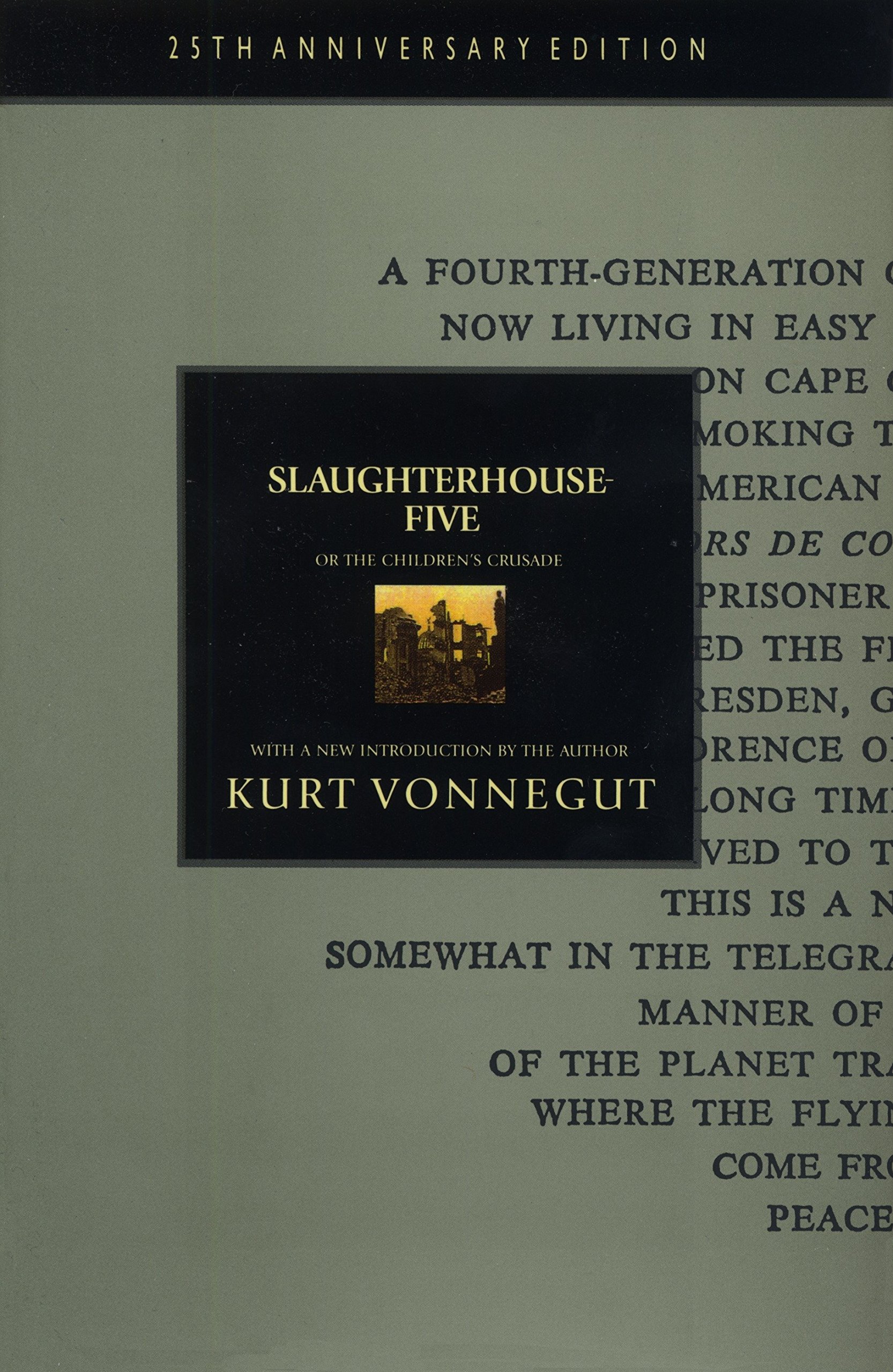
Title: Slaughterhouse-Five
Author: Kurt Vonnegut Jr.
Rounding out this list is a book I have long been looking forward to. Although I had never read any of Kurt Vonnegut Jr.’s works before, I’ve long been interested in exploring his oeuvre. Must-read lists were my first encounters with Vonnegut. The most prominent of his works is Slaughterhouse-Five, which, unfortunately, was left to gather dust on my bookshelf. The story opens with an unnamed narrator reflecting on his attempt to write about the bombing of Dresden. He was previously an anthropology student at the University of Chicago researching the Children’s Crusade. This sets the stage for the story of Billy Pilgrim. Born in the fictional Ilium, New York, Billy was drafted into the U.S. Army during the Second World War. He was captured by the Germans during the Battle of the Bulge in Belgium. However, before his capture, he experienced the first of many instances of time-shifting. These time slips made Billy encounter the Tralfamadorians—small, one-eyed, one-handed aliens with a unique philosophy of time. Still, Vonnegut guides us across the landscape of war. The novel, after all, is Vonnegut’s homage to Dresden; it was his way of coming to terms with the city’s destruction, which killed 100,000 people and leveled one of Europe’s most beautiful cities. Billy was the vessel through which Vonnegut recounted his own experience as a prisoner of war who witnessed Dresden’s devastation. Often described as an anti-war novel, Slaughterhouse-Five deftly portrays the psychological trauma that lingers long after the conclusion of the war. The post-war disillusionment and mental fracture were vividly captured by the story. Vonnegut brings a distinct voice and vision to war fiction, creating a novel that is equal parts absurd, poignant, and profound. Slaughterhouse-Five transcends both time and physical boundaries — a truly thought-provoking literary masterpiece.
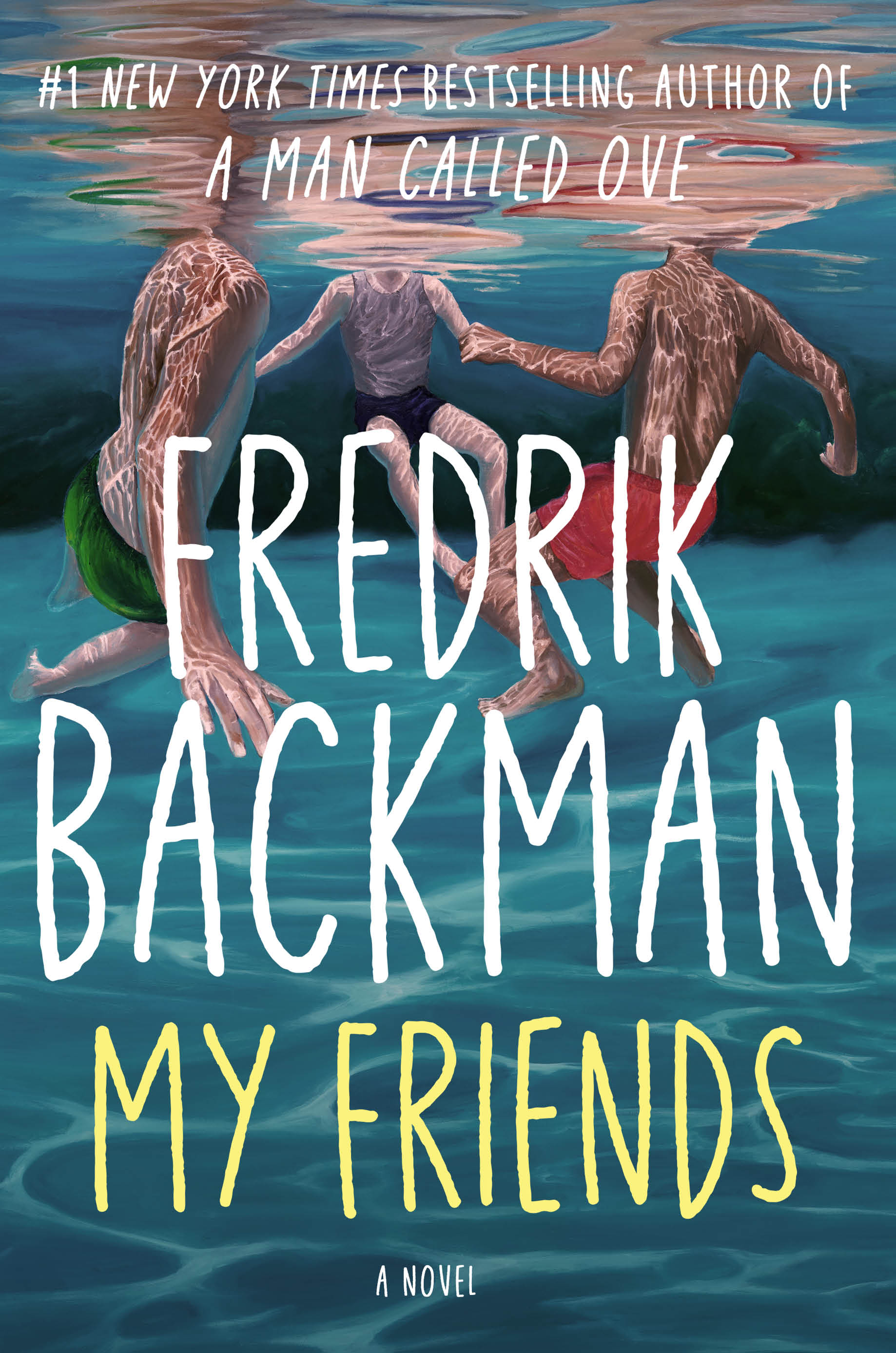
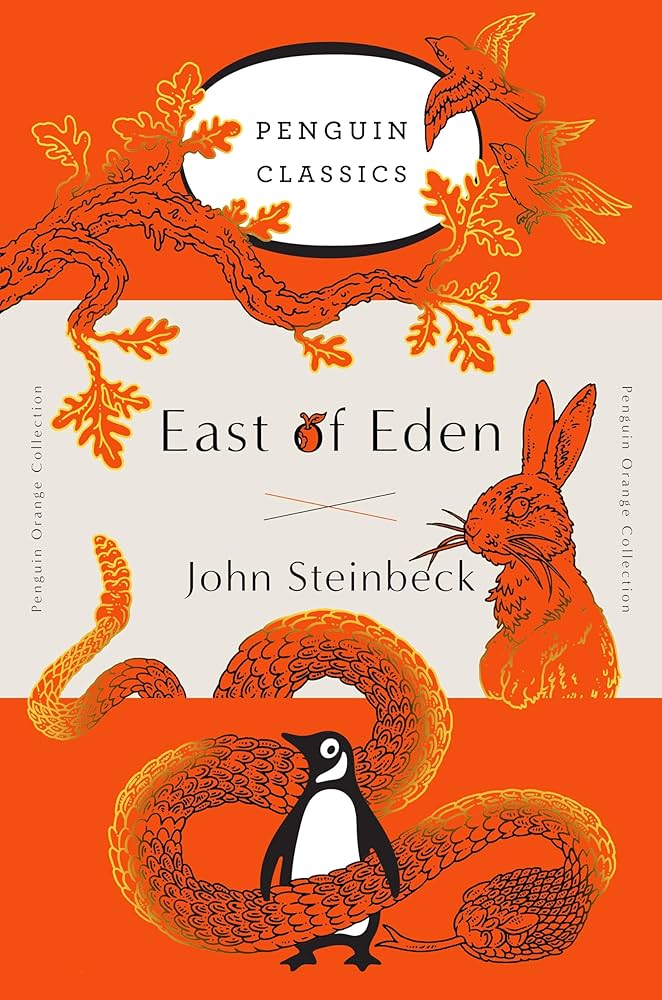
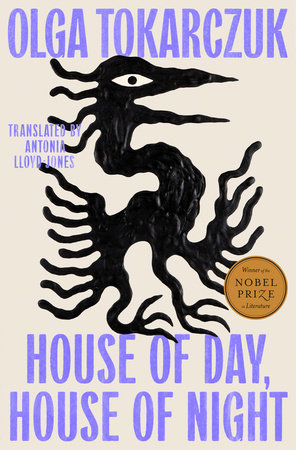
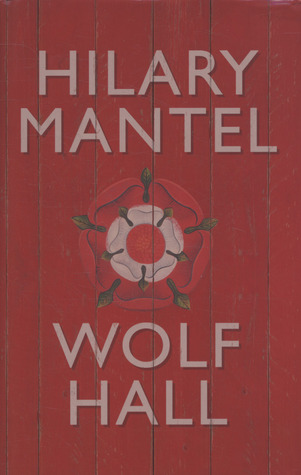
Here are the runners-up who nearly made the cut; there were just too many amazing reads in 2025.







 The Pine-Scented Chronicles