
Happy Wednesday, everyone! Woah! Today is the first Wednesday of 2026. This also means that we are already a week into the new year. How has the year been so far? I know it is too early for a checkpoint, but I hope that the year is going well for everyone. I know that most of you are probably still recovering from the Holiday break. It is unfortunate, but we must go back to our realities. Regardless, I hope the rest of the work week will go smoothly.
With this said, the middle of the week also means a fresh WWW Wednesday update. WWW Wednesday is a bookish meme hosted originally by SAM@TAKING ON A WORLD OF WORDS.
The mechanics for WWW Wednesday are quite simple: you just have to answer three questions:
- What are you currently reading?
- What have you finished reading?
- What will you read next?

What are you currently reading?

It’s already the middle of the week. This also means we have only two more days to go before the weekend. I hope everyone makes it through the workweek. Reading-wise, my 2026 reading journey is going as planned. I have so many things to look forward to. For now, I have commenced a journey across Latin American literature because it has been some time since I dedicated a month purely to works from this region; I believe the last time was in 2023. The time is now ripe for a return to the region. My current read takes me to Brazil, to a familiar writer in Jorge Amado. Home is the Sailor is my fourth novel by the renowned Brazilian writer. Interestingly, it was must-read lists that first introduced me to Amado. In the early years of the pandemic, I read Show Down. He has since grown on me with every work I read.
Originally published in 1961 as Os velhos marinheiros ou o capitão de longo curso, Home is the Sailor introduces Captain Vasco Moscoso de Aragão, a Master Mariner who arrived in Periperi in suburban Bahia; Bahia is a familiar setting in Amado’s works. His arrival caused quite a stir, piquing the interest of the locals. Who is this newly arrived resident? He soon introduced himself as a retired naval captain. He endeared himself to the locals with his stories of distant and exotic ports and exotic and sensual women. Daring sea journeys made him the object of the locals’ envy. However, one man was unimpressed. Chico Pacheco was apprehensive about the Sailor’s claims; Chico was supplanted as the town’s primary storyteller. He believes that the Sailor is merely a braggart, prompting him to undertake his own investigation into the Captain’s life. The premise, as always, is fascinating, a hallmark of Amado. I just started reading the book today, but I am already invested. I surmise the story will get more interesting the more I delve into it.
What have you finished reading?

While I resolved to open the new reading year with works of Latin American writers, my year opener is not actually by a Latin American writer. This is the same as last year, when I opened the year with Richard Powers’ Playground before embarking on a half-year journey across the vast landscape of Asian literature. Anyway, the first book I completed this year is László Krasznahorkai’s The Melancholy of Resistance. This decision was primarily driven by the Hungarian writer’s recent recognition by the Swedish Academy. It was a long time coming, honesty; it was through the lead-up to the announcement of the 2018 Nobel Prize in Literature that I first came across Krasznahorkai. I was ecstatic when he was finally awarded the prestigious Prize last year.
In December, I was able to acquire three of his works, hoping to read at least one of them before the year ended. My wish was granted, as I finally got to read The Melancholy of Resistance. Aside from Sátántangó, it is often cited as Krasznahorkai’s magnum opus. Originally published in 1989 as Az ellenállás melankóliája, The Melancholy of Resistance transports readers to a run-down Hungarian provincial town with a noticeably apocalyptic air. There lingers a palpable sense of hopelessness and despair—akin to the atmosphere that permeated his debut novel and Baron Wenckheim’s Homecoming. The novel opens with Mrs. Plauf enduring a stressful return home from a visit. A canceled train service forced her to share a carriage with the unwashed masses. She had a foreboding sense of an ominous disaster striking at any time. Upon her arrival in the desolate town, lawlessness was ubiquitous. She also encountered the arrival of a mysterious circus truck. The circus advertises the showing of the body of an enormous whale—having nothing else to exhibit. Mrs. Plauf sought solace in her orderly apartment. In a way, Mrs. Plauf is the embodiment of the bourgeoisie. However, her sense of harmony was disrupted by the arrival of the formidable Mrs. Tünde Eszter. She confides in Mrs. Plauf about her plan to manipulate her estranged husband, György Eszter, through Valuska, Mrs. Plauf’s son.
Valuska is the village idiot and was already disowned by his own mother. To the locals, his presence was tolerated. Interestingly, the only person who appreciated him is Eszter, a world-weary musician and his former mentor. Eszter’s weariness has become so overwhelming that he has opted not to leave his house; he rises from his bed only occasionally. However, his wife, a master of propaganda, wants him to participate in her new project to bring order to the decaying town. Still, the circus looms above the story. It was the representation of chaos. It is a hyperbole, a form of resistance from the seemingly mundane. In the case of the town, it is an escape from the despair that permeates it. Powerful symbols riddle the story. It captures the illusion of harmony in a world that is descending into chaos. The Melancholy of Resistance is a familiar Krasznahorkai territory, from its themes to its structure. However, it is no easy read, yet it is a worthwhile one, a testament to Krasznahorkai’s brilliance.
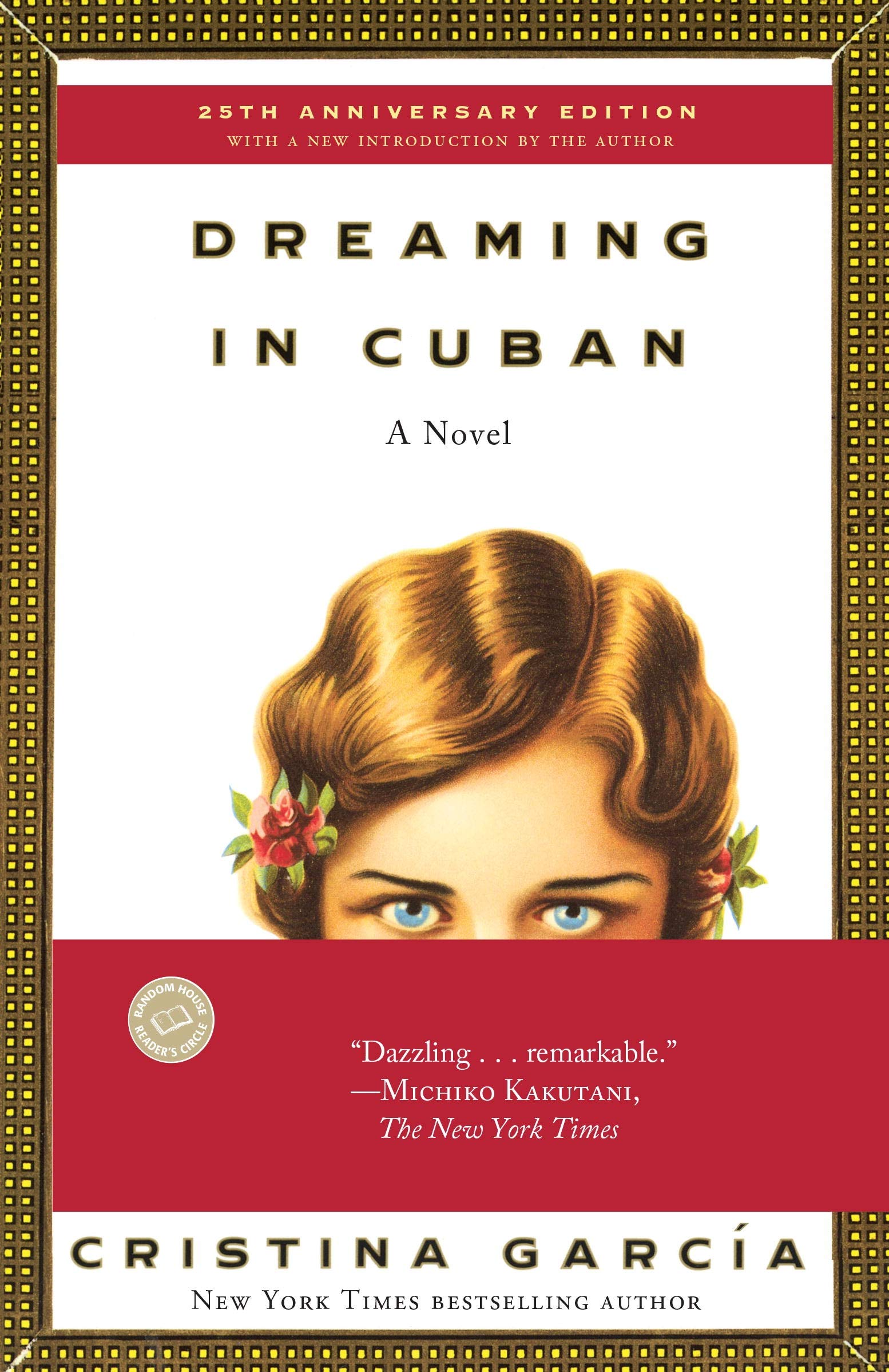
My foray into Latin American literature officially commenced with an unfamiliar name, at last a writer whose oeuvre I had not explored before. It was only through an online seller that I came across Cristina Garcia. I just learned that she is quite a prominent name in American literary circles. Born in Cuba, her family moved to New York City when she was just two. Her family was among the first wave of people to flee Cuba after Fidel Castro came to power. Like most writers, she started working as a journalist before eventually pursuing a literary career. Still, it seems that she cannot seem to resist the allure of her homeland as she paid homage to it with her debut novel, Dreaming in Cuban.
A finalist for the National Book Award, Dreaming in Cuban was originally published in 1992. It charts the fortunes of three generations of women from a single family. The matriarch was Celia Almeida, who, as a young woman in Havana, fell in love with a Spaniard named Gustavo. With Gustavo’s departure, Celia lost her will to live. As she was wallowing in her lost love, Jorge del Pino courted her. They eventually got married. Still, Celia yearned for Gustavo, whom she occasionally wrote to; her letters to him alternated with chapters of narration. Following their marriage, Jorge left his bride at home with his mother and sister; he went on long and extended business trips. This was his punishment for Celia due to her past with Gustavo. His mother and sister were also cruel to Celia, especially after she gave birth to Lourdes. Mentally on the brink, Celia spent months in a mental institution. The couple would have two more children: Felicia and Jorge. Their children’s paths, however, would diverge as they grow up. Lourdes would marry Rufino, and they would go into exile in the United States, where she became an entrepreneur, owning her own bakery. Their daughter, Pilar Puente, would represent the third generation of del Pino women.
Pilar is an artist, a point of contention between her and her mother. Yes, the novel explores the intricacies of mother-daughter relationships; friction exists between Lourdes and Pilar. Further, Pilar longs to return to Cuba to visit her grandmother. Meanwhile, her aunt Felicia has embraced santeria and eventually became a priestess; interestingly, she was married three times. The fate of the del Pino women was inevitably intertwined with Cuba. Political discourses abound in the novel. Celia was supportive of the revolution and of El Lider and his brand of socialism. Lourdes, however, favored capitalism and spurned Castro. Pilar, on the other hand, had a more ambivalent political stance; Felicia was politically apathetic. Beyond politics, the novel explores the Cuban diaspora and the struggles of families in exile. Overall, Dreaming in Cuban was an insightful read about politics, immigrant life, and history.
What will you read next?


 The Pine-Scented Chronicles