
Happy Wednesday, everyone! Woah! Just like that, we are nearly halfway through the first month of the year. How has the year been so far? I know it is too early for a checkpoint, but I hope that the year is going well for everyone. I know that most of you are probably still recovering from the Holiday break. It is unfortunate, but we must go back to our realities. Regardless, I hope the rest of the work week will go smoothly.
With this said, the middle of the week also means a fresh WWW Wednesday update. WWW Wednesday is a bookish meme hosted originally by SAM@TAKING ON A WORLD OF WORDS.
The mechanics for WWW Wednesday are quite simple: you just have to answer three questions:
- What are you currently reading?
- What have you finished reading?
- What will you read next?

What are you currently reading?
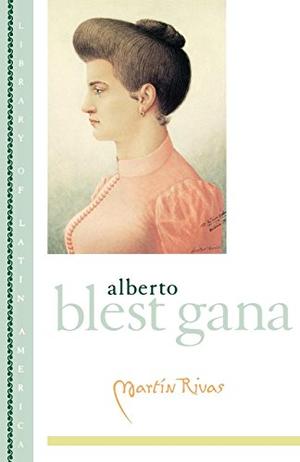
It’s already the middle of the week. This also means we have only two more days to go before the weekend. I hope everyone makes it through the workweek. Reading-wise, my 2026 reading journey is going as planned. I have so many things to look forward to. For now, I have embarked on a journey across Latin American literature. It has been quite some time since I dedicated a month or two to reading works by writers from the region—if my memory serves me right, the last time was in 2023. The time is now ripe for a return. My current read takes me to Chile, to a literary landscape that has gradually been gaining my interest. Beginning with the works of Isabel Allende, I have since explored those of other Chilean writers such as José Donoso, Luis Sepúlveda, and Alejandro Zambra. Currently, I am reading Martín Rivas by Alberto Blest Gana, my first novel by this esteemed Chilean writer.
Originally published in 1862, Martín Rivas is widely acknowledged as the first Chilean novel. This further deepens my exploration of Chilean literature. The titular Martín Rivas was born into a poor family in the northern mining region of Chile. Following the death of his father, a gold-rush speculator, the adolescent Martín travels to the country’s capital to pursue university studies. The intelligent and honest young man was entrusted by his father to the care of a well-off friend, Dámaso Encina. At the Encina household, Martín falls in love with Leonor, the haughty daughter of the house. The early chapters of the novel portray a push-and-pull dynamic between them, alongside the personal concerns of Matilde, Leonor’s cousin, and Rafael, Martín’s friend. The two main characters, however, are reluctant to reveal their true intentions; it seems that Leonor, too, yearns for Martín.
I only started reading the book yesterday, but from the introduction, I understand that there is more to the story than romance alone. The novel is set during Chile’s infancy as a nation—a period of great change, when the country was taking control of its own destiny. As such, I expect layers of social and even political commentary as the story unfolds. I am looking forward to seeing how these strands untangle as the narrative moves forward.
What have you finished reading?

So far, the year has been slow in terms of reading—or perhaps it only feels that way because the books I’ve been reading are thicker than usual and move at a slower pace. Regardless, over the past week I was able to complete two books. Still, all things considered, that is a decent number. The first book I completed brought me back to a familiar name: Brazilian writer Jorge Amado. I first encountered Amado through must-read lists, and during the first year of the pandemic, I read Show Down. The book left me somewhat confused; still, this did not prevent me from wanting to explore Amado’s body of work further. A couple of years later, I read my fourth Amado novel, Home Is the Sailor, which made me feel better about my decision to continue reading his other works.
Originally published in 1961 as Os Velhos Marinheiros ou O Capitão de Longo Curso, Home Is the Sailor introduces Captain Vasco Moscoso de Aragão, a master mariner who arrives in Periperi, a suburb of Bahia. Bahia is a familiar setting in Amado’s works, as he was born there. The arrival of the titular sailor causes quite a stir in the town, immediately piquing the interest of the locals—as is often the case in small communities. Who is this newly arrived resident? Vasco befriends the townspeople, introducing himself as a retired naval captain, and soon endears himself to them. His stories of distant and exotic ports, sensual women, and daring sea journeys capture their imagination, making him the object of both fascination and envy. As in every town, however, there is always someone who remains unimpressed and skeptical. In Periperi, that person is Chico Pacheco. The town gossip, Chico, finds the Sailor’s claims implausible—especially as he has been supplanted as the community’s primary storyteller. Convinced that Vasco is merely a braggart, Chico undertakes his own investigation into the Captain’s life, traveling to Salvador to dig into his past. When Chico reveals the results of his investigation to the townspeople, the community becomes divided. Whose version of the truth should they believe?
Flashbacks to the past soon recount the Captain’s story, aligning with the findings of Chico’s inquiry. Amid this division, fate leads Vasco Moscoso to command a ship sailing from Salvador to Belém—an opportunity to prove to his friends in Periperi that he is, indeed, a real captain. What follows is a tale of tragedy laced with farce. Still, in classic Shakespearean fashion, all is well that ends well. Humor and satire define the novel, yet beneath the surface lie subtle social critiques. The story captures the social and economic conditions of Brazil, with Amado scrutinizing the attitudes and behaviors of Bahian society. Romantic undertones add further nuance, as is often the case in odysseys. And speaking of The Odyssey, the Captain’s journey is ultimately one of self-discovery. Often cited as a minor work in Amado’s oeuvre, Home Is the Sailor is nonetheless a refreshing read from the Brazilian storyteller, offering a different dimension through which to appreciate his body of work.

From one familiar writer to an unfamiliar one—at least unfamiliar to me, as I had not explored his oeuvre before—my venture into the depths of Latin American literature next took me to Mexico. I believe it was online booksellers that first introduced me to the Mexican writer Carlos Fuentes. Apparently, Fuentes is regarded as one of the pillars of contemporary Latin American literature, spoken of with reverence alongside Gabriel García Márquez, Mario Vargas Llosa, and Julio Cortázar. Together, they are considered leading figures of the Latin American Boom of the 1960s and 1970s. I kept encountering Fuentes’s works while browsing these online booksellers, and during the pandemic, I finally acquired one of his novels. Excited by what the book might offer, I included Where the Air Is Clear in my 2026 Top 26 Reading List.
Originally published in 1958 as La región más transparente, Where the Air Is Clear is Fuentes’s debut novel. It was an immediate sensation, catapulting him to national fame. The novel transports readers to 1950s Mexico City, where we are introduced to Ixca Cienfuegos, a seemingly enigmatic character who, from the outset, appears to tie the novel’s many threads together. Deeply rooted in Aztec mythology, Ixca serves as a spiritual guide who leads us through the vast expanse of the city. Rejecting both the present and the future, he seeks to reclaim Mexico’s ancient past by exacting revenge on the Spanish conquerors. To achieve this—and in keeping with Aztec mythology—he requires a blood sacrifice, which would allow him to overthrow the modern-day gods: the affluent and the powerful.On the other end of the social spectrum is Gladys García, a prostitute and a direct descendant of the Aztecs. Ironically, their paths never cross. Still, Ixca navigates both the worlds of the elite and the impoverished in search of the ideal sacrifice. This quest leads him into the realm of the wealthy, where we encounter Federico Robles, a self-made millionaire. Rising from the depths of poverty, Robles establishes himself as a formidable banker in the aftermath of the Mexican Revolution. He marries Norma Laragoiti, a green-eyed, self-absorbed materialist, while also taking Hortensia Chacón—a blind mestiza woman—as his mistress. Hortensia herself is married to a petty bureaucrat.
Another key character is Rodrigo Pola, a lawyer who contemplates suicide amid the moral and social decay of the de Ovandos family. The main characters first converge at a lively party hosted by Bobo, depicted in a section titled “Navel of the Moon.” Bobo gathers the city’s jet set, blending intellectuals, artists, and social climbers into one dazzling social scene. Ixca remains a spectator, watching these events unfold with disdain as he observes the transactional nature of the interactions around him. It is interesting to note the parallels between my current read and Where the Air Is Clear. While the former is firmly realist, the latter is infused with elements of magical realism. This stylistic choice, however, does not hinder Fuentes from exploring weighty themes. The 1950s were a pivotal period of social and political transformation in Mexico, as modernization began to reshape the country’s landscape. Through Ixca, Fuentes offers a perspective rooted in tradition, counterbalancing the forces of change. Brimming with incisive social observation and critique, Where the Air Is Clear stands as a triumph of both writing and storytelling.
What will you read next?


 The Pine-Scented Chronicles