In early 2024, I came across The Alphabet of Authors Challenge through One Book More. I didn’t sign up for the 2025 challenge, but I am still interested to see how I fared.
Basically, for the Alphabet of Authors Challenge, you have to read a book by an author whose last name begins with each letter of the alphabet. It also has a book title equivalent, The Alphabet Book Titles Challenge. For this post, however, I will only be checking on how I fared with the former. Here goes!

A: Tash Aw
Tash Aw’s The South was included in my 2025 Top 10 Books I Look Forward To List, making it the second book from the said list I read. The South introduces the Lim family. The patriarch, Jack Lim, is a professor who married Sui Ching, one of his students, who is fifteen years his junior. They were living in the capital and had three adolescent children: Lina, Yin, and Jay. The crux of the story was when Sui Ching inherited the Lim ancestral home from her father-in-law; she was not close with her in-laws, but she managed to connect with her father-in-law. Due to her inheritance, the family travels to the countryside to assess the farm currently run by Fong, Jack’s illegitimate half-brother. The farm, however, has seen better days. A persistent drought had ruined harvests, driving them into debt. Amenities were scarce. The rigors of rural life posed a challenge to the family. The same, however, cannot be said for Jay, who was about to turn seventeen. Jay relished the change in pace and the atmosphere. He also found interest in helping the laborers. However, one person piqued his interest: Chuan, Fong’s nineteen-year-old son. The attraction was expected because the novel opens with Jay and Chuan having sex for the first time. Their blossoming relationship was juxtaposed with the changes sweeping Malaysia in the 1990s. This historical backdrop adds depth and nuance. Unmitigated development is the elephant in the room as Malaysian rainforests – considered the oldest in the world – are being transformed. The world does not bat an eye because it is not the Amazon, as one character noted. Further, the other family members also had their moments of introspection. Overall, The South is a compelling read which makes me look forward to the succeeding books in the quartet.

B: Heinrich Böll
Had it not been for the Nobel Prize in Literature, I likely wouldn’t have encountered Heinrich Böll. Curious about his work and eager to expand my literary horizons, I added The Silent Angel to my 2025 Top 25 Reading List. Interestingly, Böll wrote The Silent Angel in 1950, intending it to be his debut novel. However, he couldn’t find a publisher at the time. It was only published posthumously in 1992 under the title Der Engel schwieg. Set during the final days of the Second World War, the novel follows Hans Schnitzler, a German soldier attempting to desert his unit. Before he can follow through, however, he is mistaken for a deserter. In a twist of fate, Willy Gompertz, a stenographer, switches jackets with him and is executed in his place. Assuming Gompertz’s identity, Schnitzler travels to Cologne to deliver the coat to Elisabeth Gompertz, Willy’s widow. Things take an unexpected turn when he discovers a will hidden in the coat lining—one that reveals corruption and greed. This quietly shifts the novel’s trajectory, turning the will into the center of a subtle yet significant mystery. Herr Doktor Professor Fischer, a relative of the deceased, seeks to retrieve the will and keep its contents buried. Meanwhile, Hans meets Regina, a grieving woman whose child was killed by a German machine gun. They are surrounded by a city both physically and spiritually devastated by war. Böll vividly captures the despair, numbness, and emotional inertia that pervade the ruins of Cologne. Yet The Silent Angel is not merely about despair. Beneath the rubble and trauma, the novel explores resilience—the quiet courage to go on living, to search for meaning, and to rediscover human connection in a fractured world. It is a haunting and poignant reflection on post-war life.

C: Eileen Chang
A quick search of contemporary Chinese literature yields Eileen Chang’s name. She is a prominent figure in Chinese literary circles. However, I have yet to explore her oeuvre and Half A Lifelong Romance presented this opportunity. I initially featured the book in one of my Goodreads Monday updates because it piqued my interest. It took time but I was finally able to read the book. Originally serialized in a Shanghai newspaper Yi Bao (亦報) in 1948, under the title Eighteen Springs (十八春), it was collectively published as a single volume in 1950. The novel initially introduces Shijun, a man reflecting on his past, particularly his brief love affair with Manzhen. The duo were introduced to each other by their common friend, Shuhui; the trio converged in pre-war Shanghai where they worked to fulfill their dreams. When they were first introduced, Manzhen immediately captured the interest of Shijun. As they got to know each other, their attraction became stronger. The development of their romance, vividly and sweetly captured by Chang, was one of the novel’s strongest facets. But as fate would have it, their budding love affair was nipped in the bud. Family duties and traditions rise to the fore; they were duty-bound. Further, their relationship was undone by selfishness and conceit. The story then diverges into two main plotlines chronicling the families of Shijun and Manzhen. Their contrasting family stories highlight the traditions that permeate Chinese families. The novel highlights how these traditions and the responsibility to adhere to them adversely impact the family members. Drama and intrigue permeate the latter half of the story. However, a tender romance makes Half a Lifelong Romance a worthy read.

D: Fyodor Dostoyevsky
One of the reasons I fell in love with Russian literature is Fyodor Dostoyevsky (also spelled Dostoevsky). In 2016, I read The Brothers Karamazov. Nearly a decade later, I’ve completed my fifth Dostoyevsky novel. Originally published serially in The Russian Messenger between 1868 and 1869, The Idiot is considered one of Dostoyevsky’s four most defining works. The titular “idiot” is Prince Lev Nikolayevich Myshkin, a young man in his mid-twenties. After spending four years in a Swiss asylum for severe epilepsy, the Prince travels to St. Petersburg on a cold November morning. His first stop is the household of General Yepanchin, whose wife, Lizaveta Prokofyevna Yepanchin, is a distant relative he wishes to become acquainted with. During his journey, the Prince meets Parfyon Semyonovich Rogozhin, whose obsessive devotion to Nastasya Filippovna Barashkova captures the Prince’s interest. At the General’s household, he also meets Gavril Ardalyonovich Ivolgin (Ganya), the general’s assistant, who is set to marry Nastasya. As if things couldn’t be more complicated, Nastasya is the former mistress of the aristocrat Afanásy Ivánovich Tótsky, while Ganya secretly yearns for Aglaya, the General’s youngest and most beautiful daughter. After saving Nastasya from a potentially humiliating situation, the Prince finds himself drawn to her, creating a love triangle with Rogozhin. While this entanglement adds dramatic tension, the novel remains centered on the Prince himself. Against the sophistication of the Yepanchins and the moral decay of the society surrounding him, the Prince stands out. His naiveté and honesty make him an object of both admiration and bewilderment. Dostoyevsky uses the Prince to portray a truly beautiful and innocent soul in a world steeped in materialism, cynicism, and spiritual emptiness—a world where people have no qualms about exploiting such innocence. The Idiot is yet another compelling and thought-provoking work from one of the true masters of Russian literature.

E: Umberto Eco
It has been almost a decade since I first came across Umberto Eco, who was a familiar presence in must-read lists. I loved his debut novel, The Name of the Rose, which I read in 2017. Fast forward to 2025, I have completed yet another Eco novel, my fifth. Originally published in 1988 as Il pendolo di Foucault, Foucault’s Pendulum commences with Casaubon, the narrator, hiding in Paris’ Musée des Arts et Métiers after it closed; the museum is home to the famous pendulum of Léon Foucault, hence the book’s title. His friend, Jacopo Belbo, the senior editor at a publishing house in Milan, Italy, has gone missing. Casaubon believes his friend was kidnapped by a shadowy group of occultists who he believes are now after him. As time ticks and the pendulum swings, the novel flashes back to 1970s Italy when Casaubon was working on his thesis about the Knights Templar. His study made him encounter Belbo and his colleague Diotallevi; Belbo invited him to review a manuscript about the Templars written by Colonel Ardenti. Ardenti also claims to have discovered a secret plan by the Templars to take over the world, but he mysteriously disappeared after meeting with Belbo and Casaubon. The trio then found themselves immersed in occult manuscripts and conspiracy theories. Foucault’s Pendulum takes the readers on a literary roller coaster. Compared to Eco’s debut novel, it is way more complicated, with its several layers and confounding turns. Nevertheless, it reminded me of his other books. The references to the Knights Templar and the Holy Grail reminded me of Baudolino, while the characters’ vocation reminded me of Numero Zero. Eco, a semiotician, riddled the book with symbols and images that tickle the imagination. History and conspiracies were also woven into the lush tapestry. Foucault’s Pendulum is certainly no easy read, but it is a worthwhile one.
F: Jonathan Franzen
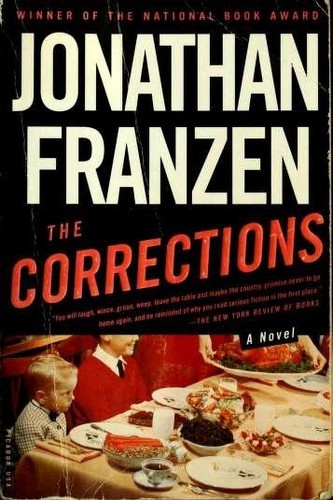
Must-read lists introduced me to Jonathan Franzen. Some of his works came in highly recommended, including The Corrections. While I acquired it nearly a decade ago, it was left to gather dust on my bookshelf. Because of this, I included it on my 2025 Top 25 Reading List and 2025 Beat the Backlist Challenge. Originally published in 2001, The Corrections charts the fortunes of the Lamberts, a dysfunctional family living in St. Jude, Missouri. The patriarch, Alfred Lambert, is a retired engineer who has developed Parkinson’s and dementia. His wife, Enid, is a homemaker. Together, they had three children: Gary, Chip, and Denise. In their own ways, their children have rejected their Midwestern upbringing, moving away from their birthplace and leading lives starkly different from their roots. This left the couple to spend their days in each other’s company in their family home, mainly bickering. Flashbacks paint a vivid portrait of the family, including their children. Alfred is a distant husband and father. Yet the couple managed to survive the rigors of living in the Midwest. Chip, meanwhile, was a failed academic who was fired for having a sexual relationship with a student. Gary was married to Caroline and is living in Philadelphia with their three sons. Denise has also moved to Philadelphia, where she opened her own restaurant. The crux of the story was Enid’s desire to gather her children together in the family home for the Holidays. Cognizant that Alfred’s health would further deteriorate, the matrarch became fixated with the idea of a family reunion. Getting from point A to point B, however, takes navigating a path with several curves, such as the children’s reluctance to return home. The Corrections is the typical Franzen novel. It examines the intricacies of politics, dysfunctional families, and family dynamics. These subjects converge in this timeless examination of American life; the Lambert family is a microcosm of contemporary America. Overall, The Corrections is a compelling story, a vivid portrayal of the American family.

G: Vasily Grossman
During the pandemic I came across Vasily Grossman and his novel Life and Fate. Life and Fate is one of the books on my 2025 Top 25 Reading List. Originally published in 1980 as Жизнь и судьба (Zhizn’ i sud’ba), Life and Fate is the third and final book in Grossman’s Stalingrad Trilogy. The novel takes readers across the vast landscape of the Battle of Stalingrad during the Second World War. As the German army advances, the Soviet Union’s defenses are pushed to their limits. Amidst the chaos, we are introduced to the Shaposhnikov family. In the Stalingrad section of the novel, we meet Yevgenia (Zhenya) Nikolaevna Shaposhnikova, a dedicated Communist Party member who reconnects with her lover, Colonel Pyotr Pavlovich Novikov. As the war escalates, they retreat to Kuibyshev, but Zhenya struggles to obtain a residence permit due to bureaucratic red tape. Meanwhile, Zhenya’s older sister, Lyudmila (Lyuda) Nikolaevna Shaposhnikova, is married to Viktor Pavlovich Shtrum, a renowned nuclear physicist. The couple has a daughter, Nadya, while Lyuda also has a son, Tolya, from a previous marriage. As the German army approaches Kazan, the Shtrum family is relocated to Moscow. Much of Viktor’s storyline centers on his scientific work. After making a significant mathematical breakthrough, he faces harsh criticism from Party authorities—an illustration of the oppressive political climate that often stifled intellectual and scientific progress. A third major storyline captures the brutal realities of life on the battlefield. Politics is a dominant theme in Life and Fate, a novel often compared to Leo Tolstoy’s War and Peace, and widely regarded as its 20th-century counterpart. With its sweeping scope, immersive historical detail, and complex interweaving narratives, the novel is a challenging but ultimately rewarding read.
H: Jessica Hagedorn
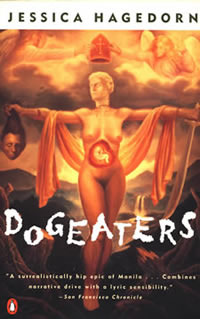
To make up for the lack of Filipino voice in my reading list, I have resolved to read at least two works by Filipino writers annually. I included Jessica Hagedorn’s Dogeaters in my 2025 Beat the Backlist Challenge. The book has long been recommended to me by fellow book readers but, unfortunately, it was only now that I got to be able to read it. Originally published in 1990, Dogeaters is Hagedorn’s debut novel and is written from the point of view of various characters, starting with Rio Gonzaga who reminisced about her youth in Manila in 1956 with her cousin Pucha. The story primarily revolves around the Gonzaga family, an upper-middle-class family consisting of Rio; her older brother, Raul; her mother, Dolores; and her father, Freddie. Rio’s family is closely linked to the influential and affluent Alacran family; the Gonzagas worked for them. The Alacran patriarch, Severo, is a self-made man who runs a score of big businesses. But this just scratches the surface. With the story weaving in and out of various periods, one can easily get lost in the labyrinth. Nevertheless, I was eventually able to establish a rhythm. One of the references to dogeaters in the book is to an Igorot character; I am a member of the Igorot tribe. It is a derogatory term used to describe the natives like us Igorots but I don’t take offense because the term is a metaphor for bigger concerns that the novel is addressing. The novel is the convergence of satirical, roman à clef, and bildungsroman elements juxtaposed with historical and political contexts – most of which I am quite familiar with – that shaped the contemporary Philippine landscape. It is a lush and compelling read although the structure – while it is a nod to innovation – can be confusing at times. Nevertheless, Dogeaters is a thought-provoking novel about the Philippines, its history, its culture, and its people.

I: Syou Ishida
Over the past few years, I have noted a remarkable increase in the number of Japanese novels made available to Anglophone readers. Among my latest discoveries is Syou Ishida’s We’ll Prescribe You a Cat. What piqued my interest is that it involved cats; Japanese literary works integrating cats have become ubiquitous. In the past two years, I have read several cat books as more works of Japanese literature is being made available to Anglophone readers. Joining this growing list of cat books is Syou Ishida’s We’ll Prescribe You a Cat which was originally published in 2023 as 猫を処方いたします。In a way, the novel shares parallels with other recent Japanese titles. Instead of straightforward prose, thematically interconnected stories comprise the novel. These stories converged at Nakagyō Kokoro Clinic for the Soul, a clinic catering to individuals in need of healing. Like the popular Before the Coffee Gets Cold series’ Funiculi Funicula, the clinic is located in a quaint and obscure location. While the café is accessible to everyone, the Kokoro Clinic only opens its doors to those who are in dire need of help or are at a crossroads. The in-house doctor then prescribes a cat to the “patients”. On the surface, it is quite an unusual prescription. However, these cats were catalysts for the changes that would take over the characters’ lives. The diversity of the characters’ concerns – they suffered from the stresses of quotidian existence – make for a smorgasbord of relatable heartwarming stories. One character had trouble at work while another one was grappling with change. Overall, We’ll Prescribe a Cat is a lighthearted story that reminds us to brace for the uncertainties of life.
J: Mai Jia
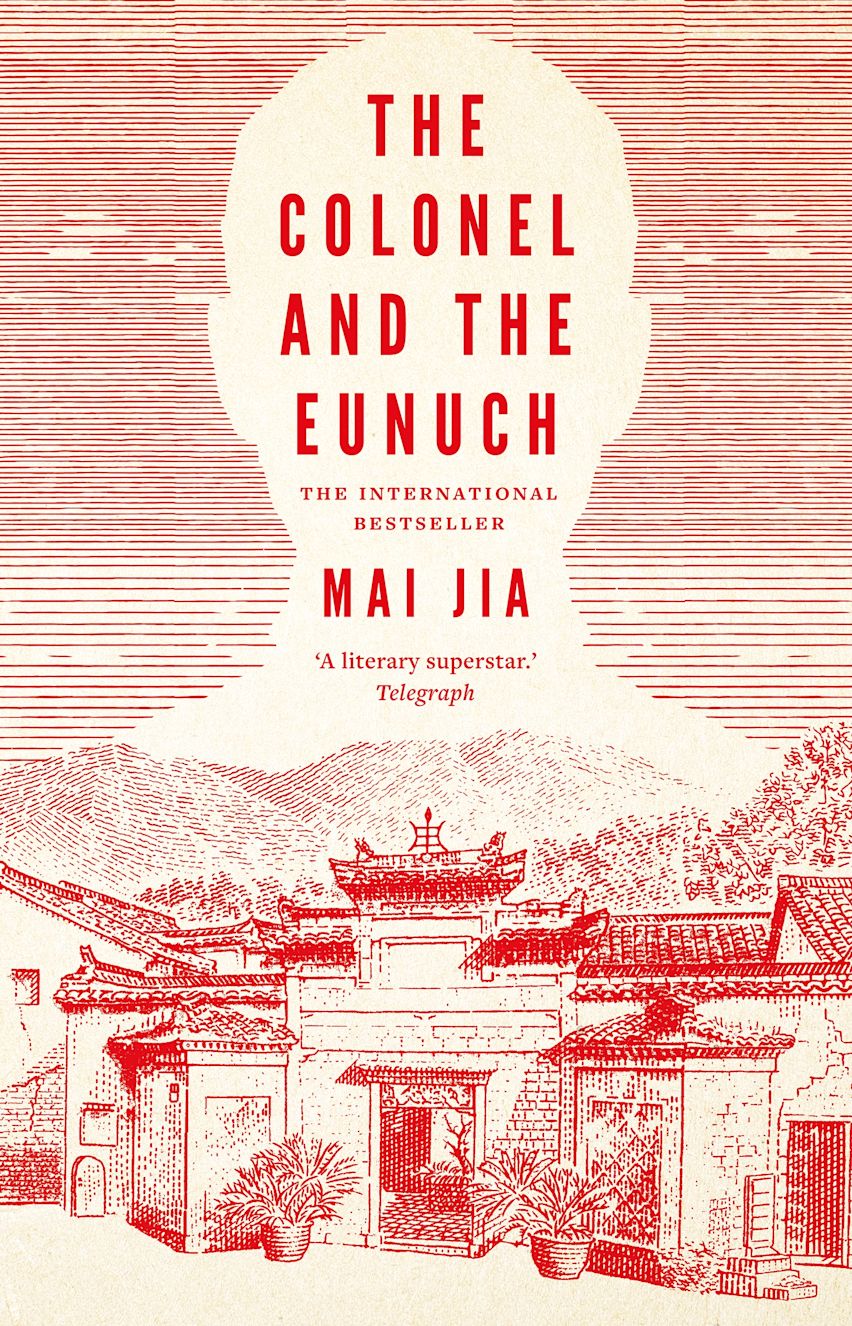
It is no secret – and also unfortunate – that my knowledge and exploration of Chinese literature is sparse to say the least. Had it not been for a random excursion to the local bookstore, I might have not encountered Mai Jia, a well-respected figure in Chinese literary circles. When I encountered The Colonel and the Eunuch, it immediately piqued my curiosity. I even included it to my 2025 Top 25 Reading List. Originally published in 2019 as 人生海海, The Colonel and the Eunuch transports the readers to the 1960s rural China. Narrating the story is a boy who is fascinated by the novel’s central figure, the Colonel; the locals also refer to him as the Eunuch behind his back. The boy’s father and the Colonel were childhood friends and remained to be so. The boy’s father gladly let his friend overshadow him in every aspect. Their path diverged when the Colonel left for the army. Upon his return, he gained repute as a senior officer in both the Nationalist and Communist armies in China’s various wars and an eminent surgeon. However, he was also shrouded in mystery, with gossip abound due to the secrecy of what he had done during the war. His refusal to conform to norms made locals resent him. The teenage boy was nevertheless fascinated by the Colonel and his mysterious persona. As the story moves forward, the boy gets to hear and witness how the Colonel’s personal story gets told and retold, how the Colonel was maligned. Personally, I find the writing pedestrian; this may be due to the function of translation. Nevertheless, The Colonel and the Eunuch is a riveting read.

K: Elias Khoury
Elias Khoury’s My Name is Adam is the first book by a Lebanese writer I read. Had it not been for a casual encounter through an online bookseller, I would not have acquired the book; I bought it because it immediately piqued my interest, and I wanted it to be part of my venture into Asian literature. Originally published in 2016 as أولاد الغيتو- اسمي آدم, My Name is Adam introduces Adam Dannoun, a melancholic self-exiled man working in a Middle Eastern restaurant in New York City. Through Sarang Lee, one of Khoury’s students, he got acquainted with the writer; this is how the novel was framed. Their friendship was cut short when a film based on Khoury’s book Gate of the Sun was shown. They lose touch, but Khoury soon learns about Adam’s demise from an accidental fire. Some of Adam’s notebooks survived the fire, and Sarang gave these notebooks to her mentor, who decided to publish them. The notebooks contain Adam’s notes for two books he planned to write. One was an attempt at writing his own novel, while the other was an attempt to write about his life. Nevertheless, both books provide glimpses not only into Adam’s family history but also into the history of the Palestinian cause, starting with the Nakba. The horror of the Nakba, as captured in the novel, reminded me how I know very little about this event. Palestinians were abused, forcibly removed from their homeland, placed in ghettos, and even tortured. These details are the reasons why I appreciate this book, as heartbreaking as it can be at times. With the recent events in Palestine, this book is a timely and relevant read. My Name is Adam, the first volume in Children of the Ghetto, makes me look forward to the rest of the series.
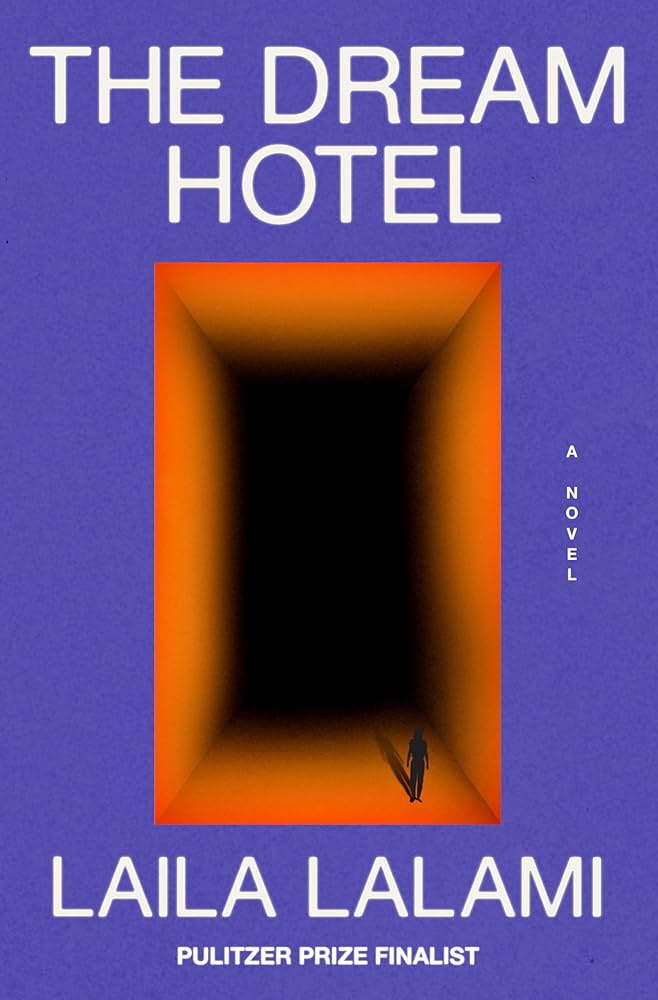
L: Laila Lalami
Lelia Lalami has a unique background: she was born in Morocco but moved to Los Angeles in 1992 to attend the University of Southern California. Although she published her first book in 2005, it was only this year that I learned about the Moroccan American author. Her fourth novel, The Dream Hotel, was listed among the most anticipated releases of the year, and I included it in my 2025 Books I Look Forward To list. The Dream Hotel is set in the not-so-distant future and follows Sara Hussein, a 38-year-old Moroccan American historical archivist. The wife of Elias and the mother of Mohsin and Mona, she has been detained at Madison—a former elementary school repurposed by Safe-X—for ten months, far exceeding the standard 21 days. The story then rewinds to the moment she was taken into custody. On a return flight to Los Angeles from an international conference, she is abruptly stopped by law enforcement. The interrogation begins with an innocuous question: What happened during the flight? But this was just the surface. Before the conference, Sara had been considered “Low Risk.” Individuals in this society are assigned risk scores by the Risk Assessment Administration (RAA) based on their perceived threat level. They use the Dreamsaver, a wearable device, to record and analyze people’s dreams; the data are then fed into an AI algorithm that evaluates each individual’s risk level. The premise is both fascinating and terrifying. Not only are dreams weaponized, but the government is granted access to our innermost thoughts. The novel serves as a dark exploration of our growing reliance on artificial intelligence. The Dream Hotel depicts a society where citizens are subservient to the state and personal autonomy is severely curtailed. Worse still, even dreams—our last refuge of freedom—are used against us.
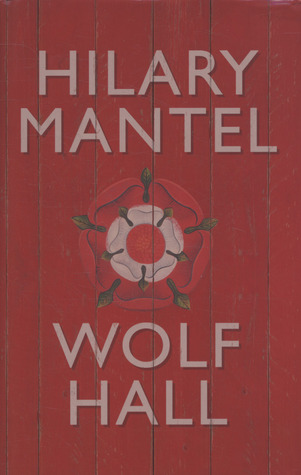
M: Hilary Mantel
Several works by British writers are included in my current reading challenges and goals, including Hilary Mantel’s Wolf Hall, which is part of my 2025 Beat the Backlist challenge. The book initially did not pique my interest, but I eventually relented. After Mantel’s passing in 2022, reading her work has felt even more imperative. Winner of the 2009 Booker Prize, Wolf Hall transports readers to early 16th-century England. At the heart of the story is Thomas Cromwell, who, as a young boy, was physically abused by his father, Walter. He eventually left home and became a soldier in France. When he returned to England, he built a life for himself—practicing law, marrying, and fathering three children. His intelligence and ambition eventually led to employment under Cardinal Wolsey, the Cardinal of York and chief advisor to King Henry VIII. It was a period when political tensions began to mount. The King wanted to annul his marriage to Queen Katherine of Aragon, who failed to produce a male heir. Both Wolsey and Cromwell found themselves in a precarious position; during this period, England was firmly Catholic. Wolsey’s inability to secure the annulment from the Vatican drove a wedge between him and the King. Enter Anne Boleyn and her ambitious family. Cromwell cultivates his relationship with Anne and becomes one of her advisers. Her rise promises not only religious and political upheaval but also Cromwell’s own ascent to power. Cromwell is deeply ambitious yet intellectually curious. Wolf Hall presents a layered and morally complex protagonist, while also offering readers vivid insights into Tudor England—its court politics, religious conflicts, and social dynamics.

N: Flora Nwapa
It has become my goal to explore more works of female Nigerian writers. Among those whom I recently encountered is Flora Nwapa, who is a prominent figure in African literary circles. Last year, I was finally able to acquire a book by Nwapa, which I then included in my 2025 Top 25 Reading List. Originally published in 1970, Idu is set in a remote African village and charts the fortunes of the titular Idu. Idu is married to Adiewere. The couple was devoted to each other. However, their marriage was haunted by their inability to conceive a child despite years of trying. With motherhood fundamental in African culture, their childless state earned the disapproval of their village. While trying to conceive, the couple was able to establish their business. The business flourished, but an emergency prompted the couple to forfeit their wealth. Their successes, however, did not pacify the villagers, who kept on pressuring them to have a child. They even asked Adiewere to take a second wife; polygamous relationships are a norm in Nigeria. Adiewere was, however, adamant about staying in a monogamous marriage, despite Idu’s approval. When he did take a second wife, Adiewere treated her like a child rather than like a wife. Suddenly, Idu fell pregnant, exciting the villagers. The news prompted the second wife to leave. While it seemed that fate finally smiled on the couple, life has its pleasant surprises. The novel reverberates with feminist overtones, vividly examining the role of African women whose worth was defined by their ability to produce children. Women’s inability to conceive is automatically blamed on them. African women are subservient to the expectations of society. Still, Idu is a woman of strength and resilience. Overall, Idu is a compelling read that provides deep insights into the intricacies of marriage, African culture, and even village life.
O: Riku Onda
Another recent discovery from Japan is Riku Onda’s Honeybees and Distant Thunder, which I first encountered through an online bookseller. My interest was piqued, prompting me to include the book in my 2025 Top 25 Reading List, making it just the fourth book from the list I read. Originally published in 2016 as 蜜蜂と遠雷 (Mitsubachi to enrai), Honeybees and Distant Thunder is the third novel by Onda to be translated into English. The novel is centered around the Yoshigae International Piano Competition, a fictional contest set in a rural seaside town. Due to its prestige, the competition attracted some of the world’s young piano prodigies and even some veteran musicians. The story, however, focuses on the stories of four characters: sixteen-year-old Jin Kazama, a relatively unknown prodigy and the son of a beekeeper; Aya Eiden, a former child prodigy who took a hiatus from the concert scene after getting burned out; Masaru Carlos Levi Anatole who is an equally renowned pianist who was even dubbed as The Prince of Juilliard; and Akashi Takashima who, in his twenties, is among the older entrants but his dream of making it into the music scene so that his son would eventually be proud of him for what he achieved as a musician drove him. Onda takes the readers through each round of competition as more competitors are eliminated. Tension and drama converge with light and tender moments as new relationships flourish. Honeybees and Distant Thunder is also a riveting read about the beauty of music. It is a substitute for language and a means to capture the beauty that words cannot seem to describe.
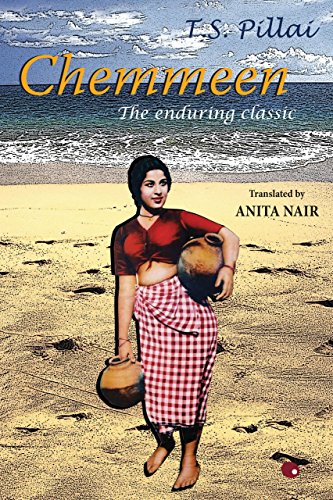
P: Thakazhi Sivasankara Pillai
It was during the pandemic years that I learned about the various languages that thrive in India; I am cognizant that India has a diverse culture but I have always thought that their only language was Hindi. Imagine my surprise when I learned about the Malayalam language through a random encounter with Thakazhi Sivasankara Pillai. His novel Chemmeen piqued my interest because of its unusual title; apparently, the title, ചെമ്മീൻ in Malayalam, translates to shrimp. Originally published in 1956, Chemmeen transports the readers to a tiny fishing community in Alappuzha in the southern state of Kerala and charts the fortunes of Karuthamma, the young daughter of Hindu fisherman Chembankunju. The crux of the story is her romance with Pareekutty, the son of a Muslim fish trader. However, social and religious differences nipped their love in the bud, prompting Karuthamma to marry Palani, an orphaned fisherman discovered by Chembankunju. Against her parent’s wishes, Karuthamma moved to her husband’s village where the couple thrived. Their newfound harmony, however, was threatened by whispers of Karuthamma’s forbidden love. Melodramatic overtones, layered with a fascinating portrait of community life on the Malabar coast, provided a riveting read. While on the surface it is a romance story, Chemmeen chronicles the story of some of the poorest people in India, the fisherfolk of the Malabar coast. Their daily survival has no certainty as it is anchored on the sea. Only one season, the Chagara, is rewarding for them. In his most renowned work, Thakazhi also subtly underscored how traditions dictate the community’s life. Cultural touchstones provide textures to the story. It is these elements that reeled me into the story.
Q: None
R: Salman Rushdie
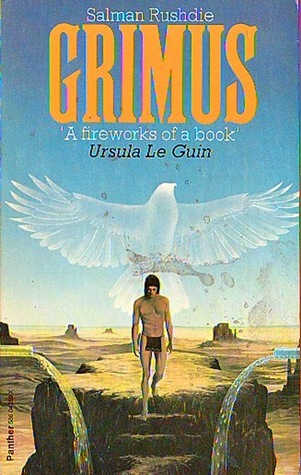
One of the most prominent voices India produced is Salman Rushdie who I first encountered through must-read lists. He has since become a favorite of mine. Interestingly, I have always assumed that Midnight’s Children was Rushdie’s debut novel. Imagine my horror when I learned it was his sophomore novel and that he debuted with a more obscure novel, Grimus. Originally published in 1975, Grimus is the eleventh Rushdie novel I read. At the heart of the story is Flapping Eagle, an Axona Indian whose older sister Bird-dog disappeared after eloping with a mysterious man, leaving her younger brother with two vials. One elixir grants immortality while the other causes immediate death. Flapping-Bird took the elixir of immortality and commenced a journey to search for his immortal sister. After 777 years 7 months and 7 days, he fell through a hole in the Mediterranean Sea. Flapping Eagle found himself in a parallel dimension at the mystical Calf Island. In a community called K, immortals tired of the world but ambivalent about giving up their immortality lived, governed by a sinister authority. Flapping Eagle would get to know some of his fellow immortals, among them Virgil Jones, an exiled associate of the titular Grimus, the creator of the dimension. With Virgil Jones’ guidance, Flapping Eagle set out to challenge Grimus as he is the key to finding Bird-dog. Overall, Grimus is an interesting read from Rushdie. It has all the trademark of Rushdie’s oeuvre although these elements were palpably in their infancy in the novel. It also provides a different dimension to Rushdie’s body of work. Grimus is also often overlooked by critics and readers alike. Even Rushdie himself is known for disowning his first published work and considering Midnight’s Children as his debut work.
S: George Saunders
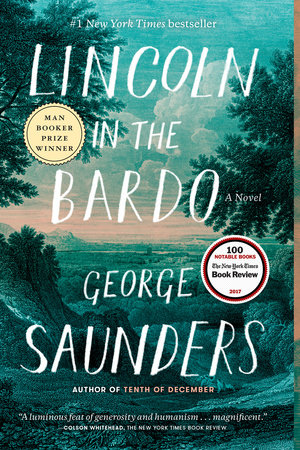
The Booker Prize introduced me to George Saunders, whose earlier works were mainly novellas, short story collections, and essays. In 2017, he stepped out of his comfort zone and published his first full-length novel, Lincoln in the Bardo. The story unfolds through a series of monologues, beginning with the voice of Hans Vollman, a former printer who now exists in the Bardo. Bardo pertains to the space between death and rebirth, where ghosts who refuse—or are too frightened—to move on are trapped. The year is 1862, when Abraham Lincoln was the president of the United States. Along with Vollman is his friend, Roger Bevins III; they are among many souls who retain attachments to the real world. Meanwhile, Willie Lincoln, a young boy, has just arrived in the Bardo. Believing that children should not remain there, the two men encourage Willie to move on. The boy, however, meekly responds that he feels he is “to wait.” Typhoid fever resulted in Willie’s untimely death in the White House. Out of the blue, President Lincoln—Willie’s father—arrived in the cemetery a few hours after Willie’s burial. He cradled his son’s body and mourned. Willie, frightened and lonely, was unable to comprehend his situation; he was unaware of his own death. This realization forms the crux of the story, risking Willie of becoming permanently trapped in the Bardo. This prompts Vollman, Bevins, and the Reverend to act, lest he remain a ghost bound to this in-between realm. The winner of the 2017 Booker Prize, Lincoln in the Bardo, is a compelling and unusual novel. The historical backdrop provides further depth. Lincoln must endure not only the public’s resentment due to the Civil War but also the private grief of losing his son. The novel underscores themes of impermanence, grief, and empathy, while also exploring the tension between public and private lives and the beauty of forming authentic connections. Overall, Lincoln in the Bardo is a tender and affecting story about death and the afterlife.
T: Yōko Tawada
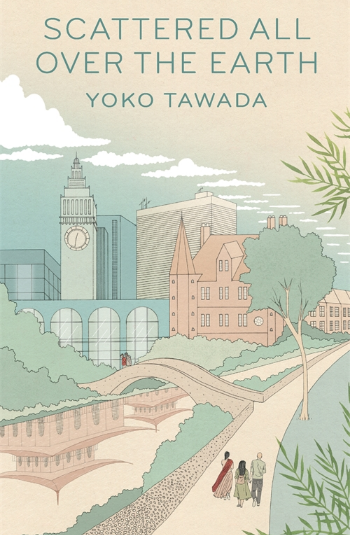
It was during the lead-up to the announcement of the 2018/2019 Nobel Laureates in Literature that I first encountered Yōko Tawada. A couple of years later, I am reading my third novel by the highly-heralded Japanese writer; interestingly, she has moved and taken residence in Germany and is even writing in German. Scattered All Over the Earth was technically a random purchase but a promising one. Originally published in 2018 as 地球にちりばめられて (Chikyū ni chiribame rarete), a work of dystopian fiction, very much like the first two Tawada novels I read. The story commences in the Danish capital where Knut, a linguistics student, finds himself captivated by a woman – Hiruko – he saw while randomly scrolling through TV shows. Born in a country that no longer exists, Hiruko wants to find other native speakers of her language so that she can speak it again. She speaks Panska, a homemade language that combines Scandinavian languages. Knut contacted the station and connected with Hiruko and together they embarked on a journey to find another person speaking the language of her homeland. The story alternates between the perspectives of different characters such as Akash, Nora, and Tenzo. Scattered All Over the Earth is a depiction of Japan slowly disappearing although the story starts in medias res. The details of what happened before, however, are left to the reader’s imagination. Nevertheless, Scattered All Over the Earth tackles the disintegration of language but it is also a microcosm of a world descending into chaos due to discord and the inability to understand each other. While Japan was never directly mentioned, details of Japanese pop culture – such as sushi – remind the readers of this. Overall, Scattered All Over the Earth is an interesting take on an interesting subject.

U: Azucena Grajo Uranza
Before 2024, I had not heard of Azucena Grajo Uranza, nor had I encountered any of her works. A random encounter with her book during an escapade at the local bookstore led me to this interesting title. Bamboo in the Wood transports the readers to the year the Martial Law (Presidential Decree Number 1081) was declared; it is one of the most germane events in contemporary Philippine history. The story charts the fortunes of three families who have converged in the fictional town of Laguardia. In the story’s present, Larry Esteva (Lorenzo Esteva Jr.) returned home to the Philippines after studying abroad. At the airport, he witnesses a violent dispersal of demonstrators by the Philippine Constabulary. Meanwhile, he breezed past Immigration because he belongs to Manila’s alta de sociedad. His father, Don Lorenzo was a haciendero in Laguardia. As a young boy, Don Lorenzo became friends with Arsenio de Chavez, the son of another landowner. Eventually, they met Celestino Limzon while studying in University. Post-university, they rose above their ranks. Don Esteva was a wealthy landowner. Arsenio de Chavez became a senator and a close ally of the sitting president. Limzon became a judge. But the 1970s was a time of social and political upheaval. Their children have increasingly become involved in political activist movements which ran parallel with the growing insurgency. The growing radicalism resulted in the declaration of the Martial Law. Bamboo in the Wind is a harrowing portrait of this important section of contemporary Philippine history, vividly painting scenes that have become synonymous with the Martial Law and have become ubiquitous in documentaries. Overall, it was an insightful read.
V: Kurt Vonnegut, Jr.
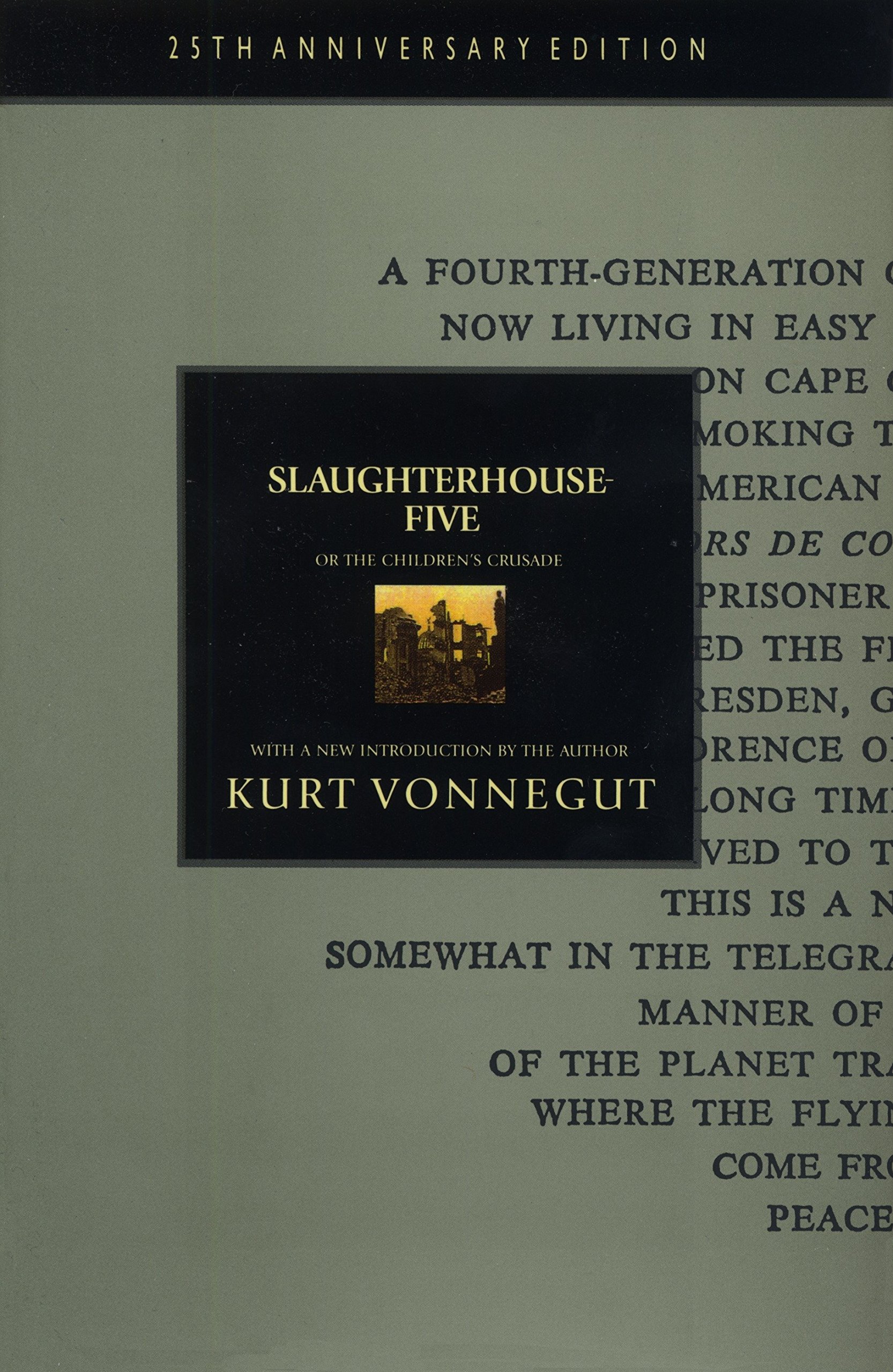
Although I had never read any of Kurt Vonnegut Jr.’s works before, I’ve long been interested in exploring his oeuvre. Like Pynchon, must-read lists were my first encounters with Vonnegut. Chief among his works is Slaughterhouse-Five, a novel also featured in 1,001 Books You Must Read Before You Die. It would also be my primer to his oeuvre. The novel opens with an unnamed, seemingly unreliable narrator reflecting on his attempt to write about the bombing of Dresden. Previously an anthropology student at the University of Chicago, he was also researching the Children’s Crusade. This framing device sets the stage for the heart of the novel: the story of Billy Pilgrim. Born in the fictional Ilium, New York, Billy was drafted into the U.S. Army during the Second World War. During the Battle of the Bulge in Belgium, he was captured by the Germans, but just before his capture, he experienced the first of many instances of time-shifting. Time shifts take the readers across various periods, setting the tempo and tone of the novel. Vonnegut guides the readers across the landscape of war. But this is no straightforward story. At one point, Billy was abducted by Tralfamadorians—small, one-eyed, one-handed aliens with a unique philosophy of time. In the introduction, Vonnegut explains that the novel is his homage to Dresden and his way of coming to terms with its destruction. The bombing killed 100,000 people and leveled one of Europe’s most beautiful cities. Billy was the author’s conduit, the vessel through which he recounted his own experience as a prisoner of war witnessing Dresden’s devastation. Often described as an anti-war novel, Slaughterhouse-Five deftly portrays the psychological trauma that lingers long after the fighting ends, as symbolized by Billy’s temporal dislocation. The novel vividly explores post-war disillusionment and mental fracture. In his masterfully crafted novel, Vonnegut brings a distinct voice and vision to war fiction, creating a novel that is equal parts absurd, poignant, and profound. Slaughterhouse-Five transcends both time and physical boundaries — a truly thought-provoking literary masterpiece.
W: None
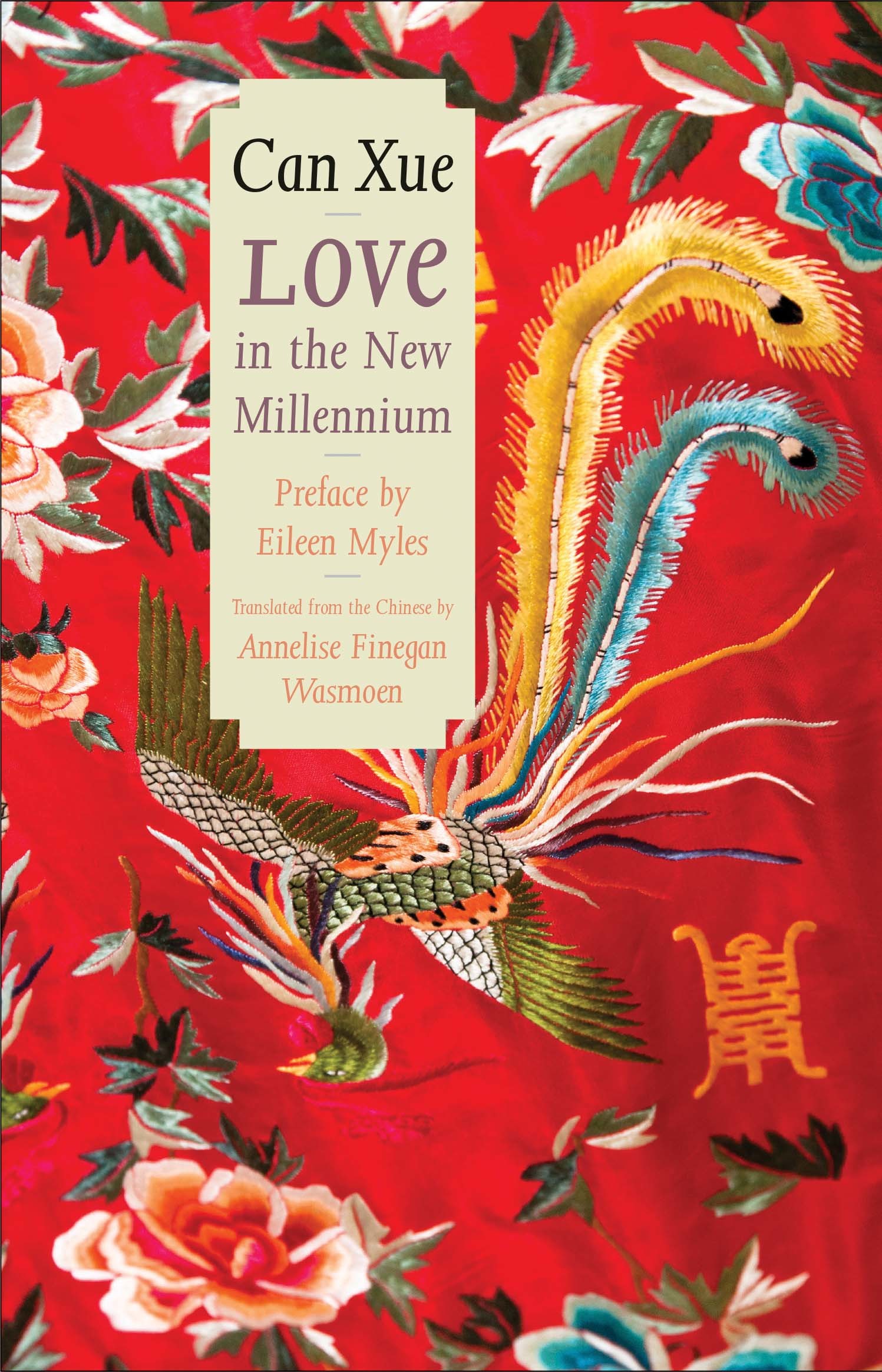
X: Can Xue
I have encountered Chinese writer Can Xue before the pandemic. However, my unfamiliarity with her kept me from acquiring her works. A couple of years later, I encountered her again as she has become a part of Nobel Prize in Literature discourses, even topping some betting sites in 2023 and 2024. This further piqued my interest and in her oeuvre. Serving as my primer to one of the most prominent contemporary Chinese writers is Love in the New Millennium which was originally published in 2013 as 新世纪爱情故事 (Xīn shìjì àiqíng gùshì). Longlisted for the International Booker Prize, Love in the New Millennium introduces a vast cast of characters who were mainly connected to China’s underground sex industry. The novel commences when Wei Bo, a married man, breaks up with his lover, Niu Cuilan, a factory worker. This prompted Cuilan to go back to her ancestral home in the countryside, where things were not making sense either. We also get to meet A Si, one of Wei Bo’s former lovers. She is a middle-aged woman who works as a prostitute, along with Long Sixiang and Jin Zhu. Changing vocation, or having two at the same time, was prevalent in the story, underlining China’s unmitigated development and industrialization. However, as the story progressed, it increasingly became abstract, its lack of a robust plot becoming evident. The backbone of the story, however, was the concerns the characters grapple with, from having to keep two jobs to the dichotomies of life in the countryside and in the city. Overall, Love in the New Millennium is not an easy read. A dreamlike air permeates the story, further adding a layer of complexity. Nevertheless, this strange experience only makes me look forward to reading more of her works.

Y: Eiji Yoshikawa
I was not originally planning on reading Eiji Yoshikawa’s The Heike Story this year. But when I noted that I was about to read my 1,300th novel, I reconsidered the idea of reading the novel although my initial choice was Umberto Eco’s Foucault’s Pendulum. I ended up with The Heike Story because it is aligned with my current reading motif. At the heart of The Heike Story is the titular Heike clan, a warrior clan that thrived in twelfth-century Kyōtō, the Imperial capital. This was also tumultuous period in Japanese history. Emperor after emperor was abdicating or being deposed – or plotting their successor’s overthrow – pushing Japanese society on the cusp of pandemonium. Japanese society was mired in political and social instability. Nevertheless, two houses were the loci of power and influence. As the Imperial Palace was losing control, the Cloistered Palace, which housed the abdicated Emperors, emerged as the de facto source of power. Also wanting to seize control were the courtiers. As the courtiers battled it out in the imperial court, the warrior clans were left to suffer the consequences. The Heike clan was headed by Heita Kiyomori, the central force of the novel. While his provenance was a source of intrigue, this did not hamper him from rebuilding the lost glory of the Heike clan. From being a lowly warrior, he slowly gained a reputation not only as a warrior but also as a wise leader, slowly catapulting his clan to greater glory. The Heike Story is very eventful, with layers of romance, betrayal, forgiveness, and violence permeating it. Apparently, the novel is the modern prose rendering of a classic Japanese epic. It is quite the experience. The details of warrior and clan life, juxtaposed with the lack of political will of the emperors, provide glimpses of the Japan of old. It is an epic and a compelling historical account. Ironically, the Heike clan went head-to-head against the Genji clan.

Z: Zhang Yueran
I have rarely read works of female Chinese writers. Ironically, despite its vast influence, Chinese literature, overall, remains largely unexplored by me. The second female Chinese writer I read in 2025 is Zhang Yueran whose novel Cocoon I first encountered during one of my random ventures into the bookstore. Curious about what it has in store, I obtained a copy of the book and made it part of my ongoing venture into East Asian literature. Originally published in 2016 as 茧, Cocoon commences with the reunion of two childhood friends: Li Jiaqi and Cheng Gong. Now in their twenties, they have lost connection and have been incommunicado for nearly two decades. This was after Li Jiaqi was called back to the family home in Jinan to look after her dying grandfather. Her grandfather was an iron-willed patriarch who, during his heyday, was the most famous heart surgeon in China. In alternating fashion, they flash back to the past and relate their own stories. Meanwhile, Gong’s grandfather lies in a vegetative state in Room 317 of the local hospital after an unknown assailant drove a nail into his skull during the Cultural Revolution. The shadow of the Cultural Revolution looms above the story as both Jiaqi and Gong were raised by dysfunctional families whose lives were altered by the Revolution. Personally, I rarely encountered this germane historical event in the books I read. Apparently, the Cultural Revolution birthed its own literature referred to as scar literature. Cocoon, however, focuses on the impact of the Cultural Revolution on the generation immediately succeeding it. Yueran herself is a part of this generation so, in a way, the novel was a personal one. Overall, Cocoon is a vivid portrayal of a seminal historical event and its legacy.
I can say that I didn’t fare too badly in this challenge considering that I did not sign up for it. Imagine, I only missed out on two letters only, Q and W. Well, techinically it is three. Can Xue is the pseudonym of Deng Xiaohua. But with the challenge of finding a writer with a surname starting with X, I thing she will pass. HAHA. So woah. Happy reading, everyone!
 The Pine-Scented Chronicles