When Dreams Turn Into (Horrific) Reality
Dreams are an inherent part of our existence. These random images, thoughts, or feelings that occur during sleep are among the most fascinating—and even mystifying—aspects of human life. While visual imagery is the most common manifestation of dreams, they can involve all of the senses. The experience varies dramatically from person to person. Some people dream in color, while others dream in black and white. Further, visually impaired individuals tend to experience more dream components related to sound, taste, and smell. One thing is certain, however: there are several constants among dreams. They are involuntary, and their contents are often illogical, even whimsical. Coherence is not a quality they share. Nevertheless, dreams tend to provoke strong emotions. It is these factors that have made dreams a subject of extensive and increasingly in-depth study.
In the late nineteenth century, renowned Austrian neurologist Sigmund Freud helped draw attention to the potential importance of dreams; after all, he is considered the father of psychoanalysis. Since then, considerable research has worked to unravel both the neuroscience and psychology of dreaming. Technology has grown by leaps and bounds, and research on dreams has increased exponentially. Ironically, much remains unknown about both sleep and dreams. There is still no answer to the most fundamental mystery: why do we dream at all? This question remains the subject of significant debate. A large portion of dreams remains unknown, which makes them both powerful and threatening. Even technology has attempted to harness the potential of dreams. With the rapid pace of technological development—compounded by the advent of artificial intelligence—the capabilities of dreams are slowly being unlocked.
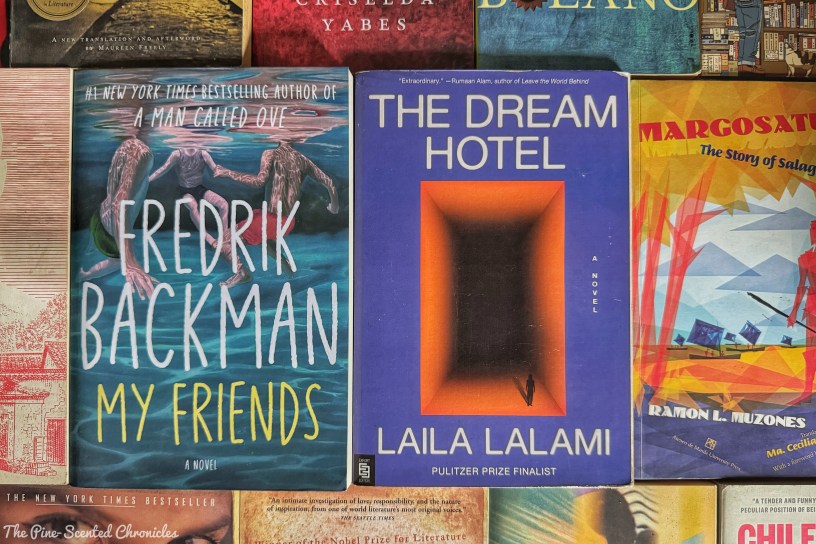
Because of this untapped potential, dreams have also been the subject of literary inquiry. One such example is Laila Lalami’s latest novel, The Dream Hotel. Set in the not-so-distant future, the novel charts the fortunes of Sara Hussein, a 38-year-old Moroccan American woman working as a historical archivist at the Getty Museum in Los Angeles. She is married to Elias, with whom she has twin children, Mohsin and Mona, who are under a year old. However, the novel opens with Sara waking up on her birthday in retention at Madison, a former elementary school in the Californian desert repurposed by the contractor Safe-X into a facility for women deemed high risk. She has been in retention for ten months, even though the standard period is only 21 days. Moreover, she has not been granted the basic right to a hearing due to repeated delays, despite asserting her innocence. This sets the stage for uncovering the circumstances behind her arrest.
She must turn her gaze to the future instead, start thinking like a scientist, or better yet like a software engineer. Historians observe the world, and scientists try to explain it, but engineers transform it. Step by step, they’ve replaced village matchmakers with dating apps, town criers with social media, local doctors with diagnostic tools. The time has come for sages, mystics, and prophets to cede to an AI.
~ Laila Lalami, The Dream Hotel
To understand Sara’s situation, the novel flashes back to the moment she was taken into custody by government forces. After deplaning from a return flight to Los Angeles following an international conference in England, she was stopped by law enforcement. She had no idea what she had done to warrant such action. Despite her repeated pleas of innocence and requests for an explanation, she was detained. She had no recourse, even as her husband and children waited for her outside the airport. Her belongings, including her phone, were confiscated. Interestingly, the interrogation began with an innocuous question: What happened during the flight? The first thing she recalled was how a fellow passenger seated next to her experienced discomfort just as the plane was about to depart. Sara alerted the flight crew, leading to the passenger’s removal from the flight. Before being escorted off, the passenger accused Sara of harassment. This incident, however, was only the beginning.
Before the conference, Sara had been classified as “Low Risk.” In this futuristic society, individuals are assigned risk scores based on their perceived threat level; even having a distant relative with a criminal record can raise one’s score. Upon her return, Sara’s risk score had inexplicably spiked to 518—above the critical threshold of 500. But how are these risk scores determined? Enter the Risk Assessment Administration (RAA). After a deadly shooting that claimed 100 lives was broadcast live during a Super Bowl game, the RAA began employing devices such as the Dreamsaver. The Dreamsaver is a portable device that tracks, records, and analyzes people’s dreams. Data from these devices is fed into an AI algorithm that assesses an individual’s risk level. Even dreams now contribute to one’s social risk score. For Sara, the device initially offered relief from the insomnia she experienced as a new mother.
What most people fail to realize, however, is that embedded in the device’s terms of service is a clause allowing the extraction and sale of users’ biometric data, including the content of their dreams. When Sara was flagged, she was baffled. She had no idea what could have caused the sudden surge in her risk score. At first, she believed it was due to her racial background. As a Moroccan American, she had witnessed her father being profiled and humiliated while she was growing up, particularly during family travel. Sara herself was no stranger to prejudice. She attempted to plead her case, arguing that her score barely exceeded the threshold and could be forgiven. However, events quickly escalated. A small lie about who funded her trip began to snowball, and her continued defiance toward the officers ultimately led them to enforce the law and send her to Madison. She was meant to stay for 21 days, until her risk score dropped below the threshold. Instead, repeated delays left her without a hearing, extending her retention indefinitely.
Although institutions like Madison are government-run, such retention centers are thinly veiled euphemisms for prisons. Detainees are assigned jobs that supposedly help lower their risk scores; refusal to work, however, results in an increased score and an extended stay. At Madison, Sara is particularly defiant during her early days, accumulating infractions that worsen her situation. At one point, she is tased for attempting to check the spelling of her name on an official’s computer. As time passes and with no other recourse, Sara is forced to comply with the facility’s rules if she ever hopes to be released. The novel poses a pressing question: Will Sara be able to fight the system and reclaim justice?
When she was a child, her father made the family go to the airport three hours early every time they went on vacation, in order to allow enough time for the extra searches. He liked to plan for every eventuality, a habit that owed less to his training as a physicist than to the immigrant’s chronic fear of anyone in a government uniform.
~ Laila Lalami, The Dream Hotel
The premise is both fascinating and chilling. It is impossible to ignore the growing prevalence of surveillance in both private and public life, often justified as a means of protecting the state. The idea of state surveillance has long been explored in literature, with classics such as Yevgeny Zamyatin’s We and George Orwell’s 1984 depicting futures in which citizens are subservient to authoritarian regimes. In these works, individual actions are strictly monitored, and acts of defiance are met with severe punishment. In today’s political climate, such visions feel increasingly plausible. In her fifth novel, Lalami presents an especially timely and unsettling prognosis. The state’s obsession with eliminating perceived threats enables it to weaponize dreams—those fleeting fragments of the subconscious. The government gains access to our innermost thoughts, even those buried beneath layers of consciousness.
Imagine dreaming of harming a loved one and having that dream admitted as evidence. You are labeled a murderer, even though no crime was committed. In Sara’s case, dreams are interpreted by the RAA as direct expressions of desire, causing her risk score to rise. Even more disturbing is how risk scores are monitored much like credit scores. A score above the threshold can result in the loss of basic privileges, including freedom. Intertwined with this examination of dreams is a critique of society’s increasing reliance on artificial intelligence. While AI can be a powerful tool, it can also become a means of policing thought and surveilling the deepest corners of the human mind. Constant data tracking becomes oppressive, encroaching on individual liberty. The novel raises an unsettling question: how far are we willing to go in maximizing AI’s potential? Like most tools, AI carries both promise and peril, and Lalami’s fictional world feels alarmingly real.
Meanwhile, at Madison, Sara is forced to confront her past. Isolated from her former life, she experiences delayed grief over her mother’s death from cancer, and lingering guilt over her brother’s childhood death resurfaces. She begins to question her individuality and even her existence. With staff scrutinizing the detainees’ every move, Sara realizes how little room remains for personal identity. Everyone is reduced to an algorithmic profile. In retention, her dreams grow increasingly violent, exacerbated by the algorithm itself. Her existence becomes a mere data point in a system that constantly evaluates her potential for criminal behavior.
As Sara grows disillusioned, she reflects on the broader implications of her ordeal. Alongside her fellow detainees, she experiences the dehumanizing effects of surveillance. The emotional backbone of the novel lies in Sara’s quiet resistance. She asserts her autonomy by exploiting loopholes in the system whenever possible, evading invasive facial scans and neuroprosthetic devices that monitor physical and emotional responses. Writing in her journal becomes a lifeline—a reminder of her identity in a place that offers only two options: comply and reduce her risk score, or resist and fight back.
Entire generations have never known life without surveillance. Watched from the womb to the grave, they take corporate ownership of their personal data to be a fact of life, as natural as leaves growing on trees. Detaining someone because of their dreams doesn’t exactly trouble Americans; most of them think that the RAA’s methods are necessary.
~ Laila Lalami, The Dream Hotel
At the retention center, Sara forms with her fellow retainees, such as Emily, Marcela, Toya, and Lucy. Shared suffering fosters solidarity, a crucial element in resisting oppression. Toya, who shares a similar story with Sara, is the rising voice of action and resistance. Meanwhile, Lucy was the embodiment of the human capacity for hope, especially in the midst of an oppressive and dehumanizing system. She is a reminder that emotional connection and personal strength can prosper. Their relationships underscore the idea that many of these women do not belong in retention; they are victims of a system that values data over human autonomy.
Interspersed meeting notes from administrators and excerpts from Sara’s medical files reveal the inner workings of the system. Despite her small acts of rebellion, the machinery of control often feels overwhelming. Corruption further entrenches oppression, turning detainees into expendable resources. Scenes at Dreamsaver Inc. expose a toxic corporate culture that filters down into the retention centers. Free labor allows these facilities to impose harsh conditions, selling basic privileges such as mail and snacks. Underfunding and corporate greed force detainees to work longer hours to boost profits.
The Dream Hotel is rooted in the idea of preventing crime before it occurs—an idea that fundamentally undermines the principle of innocence until proven guilty. Lalami enriches this discourse by integrating artificial intelligence and surveillance technology, asking how much personal autonomy society is willing to sacrifice for collective safety. The novel presents a horrifying vision of a future in which personal data determines freedom. Privacy becomes a fragile illusion, as even dreams—our final refuge—are weaponized against us. Amid these oppressive systems, Sara’s story affirms the power of solidarity, human connection, and the indomitable spirit to endure.
But didn’t they say earlier that her file was clean? Or was that a lie? Doubt gnaws at her, depleting the confidence she has tried to project. She doesn’t know how to respond. Everything that comes out of her mouth seems objetionable to these agents, another reason to keep her in retention. She has no idea when this will end. Perhaps never. Perhaps she will never regain her place among the living.
~ Laila Lalami, The Dream Hotel
Book Specs
Author: Laila Lalami
Publisher: Pantheon Books
Publishing Date: 2025
Number of Pages: 322
Genre: Literary, Dystopian, Speculative
Synopsis
Sara has just landed at LAX, returning home from a conference abroad, when agents from the Risk Assessment Administration pull her aside and inform her that she will soon commit a crime. Using data from her dreams, the RAA’s algorithm has determined that she is at imminent risk of harming the person she loves most: her husband. For his safety, she must be kept under observation for twenty-one days.
The agents transfer Sara to a retention center, where she is held with other dreamers, all of them women trying to prove their innocence from different crimes. With every deviation from the strict and ever-shifting rules of the facility, their stay is extended. Months pass and Sara seems no closer to release. Then one day, a new resident arrives, disrupting the order of the facility and leading Sara on a collision course with the very companies that have deprived her of her freedom.
Eerie, urgent, and ceaselessly clear-eyed, The Dream Hotel artfully explores the seductive nature of technology, which puts us in shackles even as it makes our lives easier. Lalami asks how much of ourselves must remain private if we are to remain free, and whether even the most invasive forms of surveillance can ever capture who we really are.
About the Author
Laila Lalami (ليلى العلمي) was born on February 24, 1968, in Rabat, Morocco to a working-class family. Lalami earned her licence ès lettres in English from Mohammed V University in Rabat. She then received a British Council fellowship to study in England in 1990. There, she completed an MA in Linguistics at University College London. She had then chosen linguistics in order to be involved with the study of language. After graduating, she returned to Morocco and worked briefly as a journalist and commentator. In 1992, she attended the University of Southern California in Los Angeles. There, she completed her PhD in Linguistics.
Lalami’s interest in writing and reading started at a young age. Her parents were both widely read in a variety of genres. Her parents even encouraged her writing, but the young Lalmai thought she needed to study a profession other than writing. Nevertheless, in 1996, Lalami started writing fiction and nonfiction in English. Her literary criticism, cultural commentary, and opinion pieces have appeared in The Boston Globe, Boston Review, The Los Angeles Times, The Nation, The New York Times, The Washington Post, and The Daily Beast, among others. In 2016, she was named both a columnist for The Nation magazine and a critic-at-large for The Los Angeles Times Book Review. In 2005, she made a breakthrough with the publication of her first book, Hope and Other Dangerous Pursuits, a novel composed of interlinked stories.
Building on her initial success, Lalami published her second book, Secret Son, in 2009. Her biggest breakthrough, however, came with her third book, The Moor’s Account. Published in 2014, it won the American Book Award, the Hurston/Wright Legacy Award, and was a finalist for the Pulitzer Prize for Fiction. Her 2019 novel, The Other Americans was a finalist for National Book Award for Fiction and the Kirkus Prize. It also won the 2019 Joyce Carol Oates Prize. Her most recent novel, The Dream Hotel, was published in 2025. It was a finalist for the Women’s Prize for Fiction and the Pulitzer Prize. Lalami has also published Conditional Citizens: On Belonging in America, a collection of essays, in 2020. Lalami has received an Oregon Literary Arts grant, a Fulbright Fellowship, and a Guggenheim Fellowship. She was selected in 2009 by the World Economic Forum as a Young Global Leader.
She is a distinguished professor of creative writing at the University of California, Riverside, and a Harvard Radcliffe Fellow. She is currently residing in Los Angeles.
 The Pine-Scented Chronicles