
Happy Wednesday, everyone! Technically, it is already Thursday. Woah! Just like that, we are two-thirds through the first month of the year. How has the year been so far? I know it is too early for a checkpoint, but I hope that the year is going well for everyone. I know that most of you are probably still recovering from the Holiday break. It is unfortunate, but we must go back to our realities. Regardless, I hope the rest of the work week will go smoothly.
With this said, the middle of the week also means a fresh WWW Wednesday update. WWW Wednesday is a bookish meme hosted originally by SAM@TAKING ON A WORLD OF WORDS.
The mechanics for WWW Wednesday are quite simple: you just have to answer three questions:
- What are you currently reading?
- What have you finished reading?
- What will you read next?

What are you currently reading?
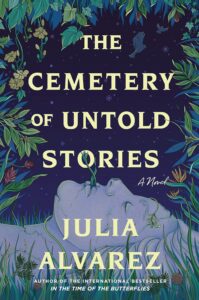
It’s already the middle of the week. This also means we have only two more days to go before the weekend. I hope everyone makes it through the workweek. Reading-wise, my 2026 reading journey is going as designed. I am currently in the midst of a foray into the works of Latin American literature. It has been quite some time since I dedicated a month or two to reading works by writers from the region—if my memory serves me right, the last time was in 2023. The time is now ripe for a return. My current read takes me to the Dominican Republic, to a literary landscape that has gradually been gaining my interest. It is thanks to the works of Julia Alvarez and Junot Díaz that I have started to appreciate the country, its culture, and even its dark past. I do hope I get to read more works of Dominican writers, but for now, I am more than satisfied reading the works of Alvarez.
It was in early 2024 that I learned about Alvarez’s most recent release, The Cemetery of Untold Stories. I was looking forward to reading the book. Unfortunately, I was unable to acquire a copy of the book. It was only recently that I was able to do so, and without ado, I immediately made it part of my ongoing venture into Latin American and Caribbean literature. Alvarez immediately introduced me to seminal events and figures in contemporary Dominican history. The dictator Richard Trujillo, a figure who looms not only in modern Dominican history but also in modern Dominican literature, was already named. He is among the figures in a book written by the novel’s main character, Alma. In a way, Alma is Alvarez’s alter ego. Trujillo’s horrific massacre of Haitians on the Dominican border was also referenced early in the story; I believe it was also Alvarez who introduced me to this atrocious act.
Anyway, the blurb mentions determining whose stories get to be told, vis-à-vis history. After all, history is written by the victor, hence the repeated challenge to the way we understand and view history. José Saramago’s The History of the Siege of Lisbon is a recent read, which also deals with the same subject. It seems that Alvarez is adding her own take to this timely and relevant subject. I haven’t gone too far into the story as I just started reading the book, and I can’t wait to see, rather read what my third Alvarez novel has in store.
What have you finished reading?
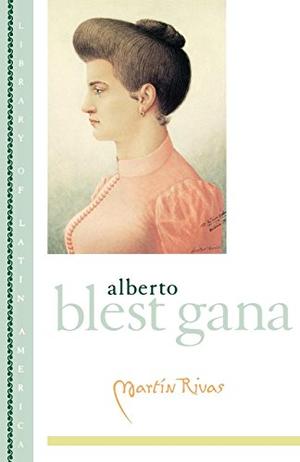
Despite my increasingly hectic work schedule, I can say that I am finally gaining some reading momentum. This comes after a slow start to the year. Over the past week, I completed three books—above my average of two books per week. Furthermore, I have a number of works by Latin American writers that I am eager to read. Take Alberto Blest Gana’s Martín Rivas, for instance. Before the pandemic, I had never come across this Chilean writer. He is now an addition to my growing list of Chilean authors whose oeuvre I have explored; Isabel Allende was my gateway into this part of the literary world. I even included Martín Rivas in my 2026 Top 26 Reading List.
Originally published in 1862, Martín Rivas is widely acknowledged as the first Chilean novel. This further deepens my exploration of Chilean literature. The titular Martín Rivas was born into a poor family in Chile’s northern mining region. Following the death of his father, a gold-rush speculator, the adolescent Martín travels to the country’s capital to pursue university studies. In Santiago, he joins the household of Don Dámaso Encina, his late father’s well-off friend, to whom his father had entrusted him. Martín’s intelligence and honesty immediately charm the Encina household and help him gain friends among his peers, such as Rafael San Luis. Despite his relative youth, Martín’s wisdom seems boundless, and he is often consulted by his friends—and even by members of the Encina family—for advice. The novel’s main thread, however, is Martín’s growing fascination with Leonor, the haughty yet beautiful daughter of Don Dámaso. The early chapters portray a push-and-pull dynamic between them. It is a slow-burning romance that immediately reminded me of high school infatuation. Interestingly, everyone knows they are in love with each other, yet they keep their feelings carefully obscured. Still, I find their story and budding romance quite compelling.
Their relationship, however, is also strongly influenced by the people around them. At the outset, Leonor and Martín are preoccupied with the personal concerns of Matilde, Leonor’s cousin, and Rafael, Martín’s friend. As they attend to the problems of those around them, Leonor and Martín grow closer. Nevertheless, they remain reluctant to reveal their true feelings for fear of rejection. The novel, however, is far more than a simple romance. The love story is juxtaposed with a vivid portrait of a young nation reeling from a decade of civil conflict. The novel captures social dynamics through its portrayal of class divisions and the exploitation of the lower classes by the affluent. A recurring theme is the influence of parents—particularly mothers—on their children’s choice of marital partners. Exploring morality, politics, and friendship, Martín Rivas proves to be a thoughtful and rewarding read.

From one unfamiliar writer to a more familiar one—though still moving from one Chilean author to another. Apart from Isabel Allende, another Chilean writer who has profoundly impacted me is Roberto Bolaño, whose name is a constant presence on must-read lists. The highly celebrated writer is best known for 2666 and The Savage Detectives—both of which I have read and loved—but I was also keen to explore his other works. In 2024, I read Amulet, and this year I am reading The Skating Rink, my fourth Bolaño novel.
Originally published in Spanish in 1993 as La pista de hielo, the novel was translated into English in 2009, following what appeared to be a surge in interest in Bolaño’s work. The Skating Rink transports readers to the fictional seaside resort town of Z on the Costa Brava, north of Barcelona. The story unfolds through the alternating narratives of Remo Morán, Gaspar Heredia, and Enric Rosquelles, each embodying a different facet of society. Remo Morán is a Chilean novelist and poet who immigrated to Spain and became a successful entrepreneur. Despite his business success, he remains a solitary figure haunted by his past. Gaspar Heredia, also a poet, is a Mexican and Morán’s friend. Living on the fringes of society as an undocumented immigrant, he is hired by Morán to investigate the world of the homeless; in the process, he befriends illegal immigrants and tourists alike. His life is intertwined with that of Carmen, an aging street singer, and her sickly friend Caridad, both of whom struggle to survive. Meanwhile, Enric Rosquelles is a Catalan bureaucrat who holds a position of power within the Socialist Party. The mayor’s assistant, he is ironically socially awkward and morally dubious. To be fair, all three men have something to hide, adding to their unreliability as narrators.
At the center of the story is its muse, Nuria Martí, a beautiful figure skater training for the Olympics and Morán’s former lover. Rosquelles, too, is enamored of her. Nuria’s life takes a sudden turn when she is dropped from the Olympic team. Enric then commissions the construction of the titular skating rink in a ruined mansion on the outskirts of town. What is meant to be a monument to his love soon transforms into something far more sinister. While romance underlies parts of the narrative, corruption emerges as the novel’s overarching theme, capturing how obsession can turn deadly and horrific. Through Heredia, the novel also portrays the plight of immigrants in Spain. Before gaining recognition as a writer, Bolaño himself settled on the Mediterranean coast near Barcelona, in the Costa Brava, where he worked menial jobs while writing in his spare time. Heredia thus seems to serve as a conduit for examining the conditions Bolaño may have witnessed and experienced. Although not as powerful or as enchanting as his most renowned works, The Skating Rink remains an engaging and worthwhile read from one of Latin literature’s most influential figures.

It seems that, without design, I have been alternating between books written by new-to-me authors and those I am already familiar with. Capping my three-book stretch is a writer whom I first encountered in 2024. Typically, toward the middle or end of the year, literary publications release their lists of the best books of the year. Among the titles that appeared on such lists was Gina Maria Balibrera’s novel, The Volcano Daughters. My interest was immediately piqued by its haunting cover. I suppose there is something irresistible about it as well; I have always been inclined to acquire books because of intriguing titles or covers.
The Volcano Daughters is apparently Balibrera’s debut novel. I was surprised to learn that it is set in El Salvador, a literary landscape I have rarely ventured into. The only work by a Salvadoran writer I have read is One Day of Life by Manlio Argueta. At the heart of the story is Graciela, who was raised by her mother, Socorrito, in destitution on a coffee finca (plantation) on the slopes of Ilzaco, a volcano in western El Salvador. She grows up alongside four girls—Lourdes, María, Cora, and Lucía—who become her closest friends. The harmony of their simple existence is disrupted one day in 1923 when Socorrito receives a summons from El Gran Pendejo, the dictator whose brutal regime casts a long shadow over the nation. Mother and daughter are ordered to attend the funeral of Germán, Graciela’s estranged father, who abandoned them to begin a new life in San Salvador. He eventually rose through the ranks to become the dictator’s advisor. In the capital, Graciela also meets her sister Consuelo, who was taken from the finca at the age of four and now lives in luxury with her adoptive mother, Perlita. It soon becomes apparent that El Gran Pendejo intends for Graciela to assume the same advisory role her father once held.
This summary barely scratches the surface of the novel. The story unfolds through the voices of the spirits of the four friends Graciela left behind on the finca—girls who later fall victim to the 1932 massacre known as La Matanza. This historical atrocity provides one of the novel’s most powerful contextual layers. Socorrito herself disappears, while Graciela, now orphaned, becomes a reluctant symbol in the dictator’s propaganda machine. The novel spans three decades and transports readers from El Salvador to Paris, San Francisco, and Hollywood. There are several layers to The Volcano Daughters that I find compelling. While the historical contexts elevate the narrative, the references to Salvadoran mythology are particularly intriguing. However, the story eventually begins to lose momentum as Balibrera attempts to weave together too many themes and cover too much ground. Some plot threads feel fleeting, and the narrative loses focus in places. Nevertheless, I remained enamored of the prose and the integration of magical realist elements—hallmarks of Latin American storytelling.
What will you read next?


 The Pine-Scented Chronicles